
Stage 12: Salobreña - Peñas Blancas. Estepona
Date: Thursday, September 1, 2022
According to local riders, one thing is guaranteed to strike you when you climb Penas Blancas, the main ascent of stage 12 in the Vuelta a España, for the first time. It’s not its considerable length or the painfully difficult early gradients as you ease away from the Mediterranean coastline inland and upward, nor the horrendous destruction wreaked by a series of forest fires last year on each side of the steadily rising road. Given this is the top of a mountain that towers over the coastline below, what takes your breath away is the view.
“It’s simply amazing,” Luis Ángel Maté, the professional with Euskaltel-Euskadi from nearby Marbella who has ascended Penas Blancas "loads of times", told Cyclingnews. “You can see Africa, Sierra Nevada, the Sierras de Ronda: loads of different places, all from the one lookout point."
Maté’s campaign to help replant trees destroyed in the forest fires on Penas Blancas via breakaways in the Vuelta, is still ongoing until September 11th in Madrid at least. But when the Vuelta tackles Penas Blancas, as the only classified ascent of the day, the climb will define the entire stage.
“It’s basically flat or only with slight climbs on the run-in beforehand,” Maté said, “so if something big happens, by rights it will happen there on Penas Blancas.”
“In some ways, that's a pity. Because it gets me that they didn’t want to include so many of the other great climbs around on the same day. Penas Blancas has three roads up it, for one thing, or they could have gone into the Sierra de Ronda and done a 5,000 metre climbing stage.”
“But I guess you can’t have every stage like that, and they didn’t want to overdo things. We’ll have the big day out here another year.”
The upshot is that what is a fairly long stage, at 192.7 kilometres – and with some risk of coastal cross winds – along the Mediterranean will likely boil down to the final hour tackling Penas Blancas. But riders like VIncenzo Nibali, present when it was last used in 2013, with a win for Leopold Konig and a leader’s jersey for Nicolas Roche, may be surprised when they do so.


That's because this time round it has been extended beyond the climb of nine years ago by nearly five kilometres. And all in all, as Maté points out, at 20 kilometres long and with around 50 minutes of climbing time, a lot could happen on a climb so tough as Penas Blancas.
“You start at sea level and you go all the way to 1,400 metres and the steepest ramps are right at the bottom,” he adds.
“The second segment is more stable, mostly at around 7 per cent, but then the final, new part up to Los Reales, running at averages of between eight and ten per cent, is really difficult”
“It’s the hardest part: you’ve been riding for quite some time, the roads change and get a lot narrower, and above all, that’s where the toughest parts of the climb are.”
“It could have been even harder, but they resurfaced it all a couple of weeks ago. Yet it’s the longest climb of the Vuelta after Sierra Nevada, and that’s what really matters.”
As a testing ground for the fast approaching weekend of Andalucian climbing in La Pandera and Sierra Nevada, Penas Blancas cannot be faulted. Both with the sheer length and the heat – with the weather likely to be in the high thirties along the coast just as it will be inland – Penas Blancas will be a trial not only for the GC leaders, but their teams as well.
Still, the Sierra de Bermejo – which means the red sierra – has some other features that set it apart and one is geological.
“It’s also placed with the biggest surface area of a rock formation called Peridotite in the world,” says Maté. “It’s a kind of rock that very rarely reaches the surface of the earth, and it’s very toxic. But the vegetation in the area,” a kind of pine tree called pinsapo in Spanish, “seemed to thrive on it. The shame is that the forest first of last year destroyed so much that a lot of the vegetation has gone and for part of the climb all you can see are burned-out trees.”
How burned out the riders are, too, by such a long, arduous ascent after 12 days of hard racing remains to be seen. The opportunity for racers like leader Remco Evenepoel (Alpha Vinyl-Quick Step) and Primož Roglič (Jumbo-Visma) is there without a shadow of a doubt. As Maté said simply “with or without the previous climbs, it’s going to be hard.”
Whether Evenepoel will be in any mood to enjoy the view from the top, in any sense of the word, we'll find out some time late on Thursday afternoon.
-

Tour of the Gila: Grace Arlandson and Adam Lewis claim first UCI wins from breakaway on stage 3
Stage runner-up Lauren Stephens still solidly in the women’s race lead as Walter Vargas retains men’s top spot -

Taper less, ride more? Why pro cyclists are training harder than science often suggests
Reducing your training load ahead of a race or event is widely considered a tried-and-tested training technique across endurance sports, but do the studies align with the demands of road cycling? Cyclingnews and JOIN assess the art of tapering -
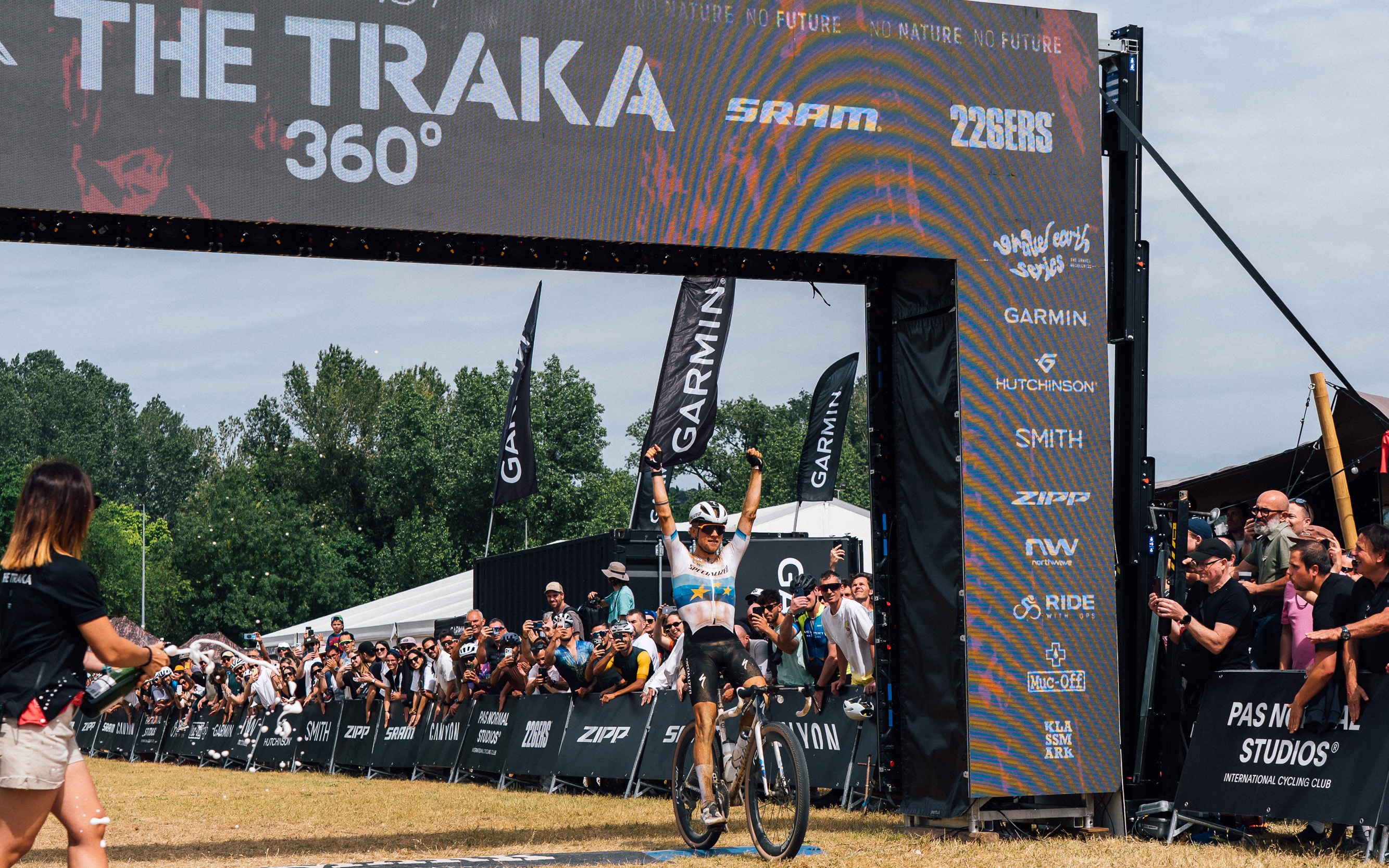
The Traka 360: Mads Würtz Schmidt completes the double with dominant victory, as Rosa Klöser wins with impressive 90km solo on challenging Girona gravel
Drechou and Beers complete men's podium, Dubau-Prévot and Scheurs second and third in women's -

'Personally, I’m also here to make progress as a stage racer' – Pauline Ferrand-Prévot and Visma-Lease a Bike focussed on stage wins at La Vuelta Femenina
Frenchwoman joins Marianne Vos and Sarah Van Dam on Dutch squad for Spanish Grand Tour


