'I get the feeling they are waiting to see where Paul Seixas really pushes Tadej Pogačar' - Philippa York analyses a 'non-traditional' 2027 Tour de France route
Cyclingnews' expert columnist dissects the time trial-heavy route, but says Pogačar remains the favourite
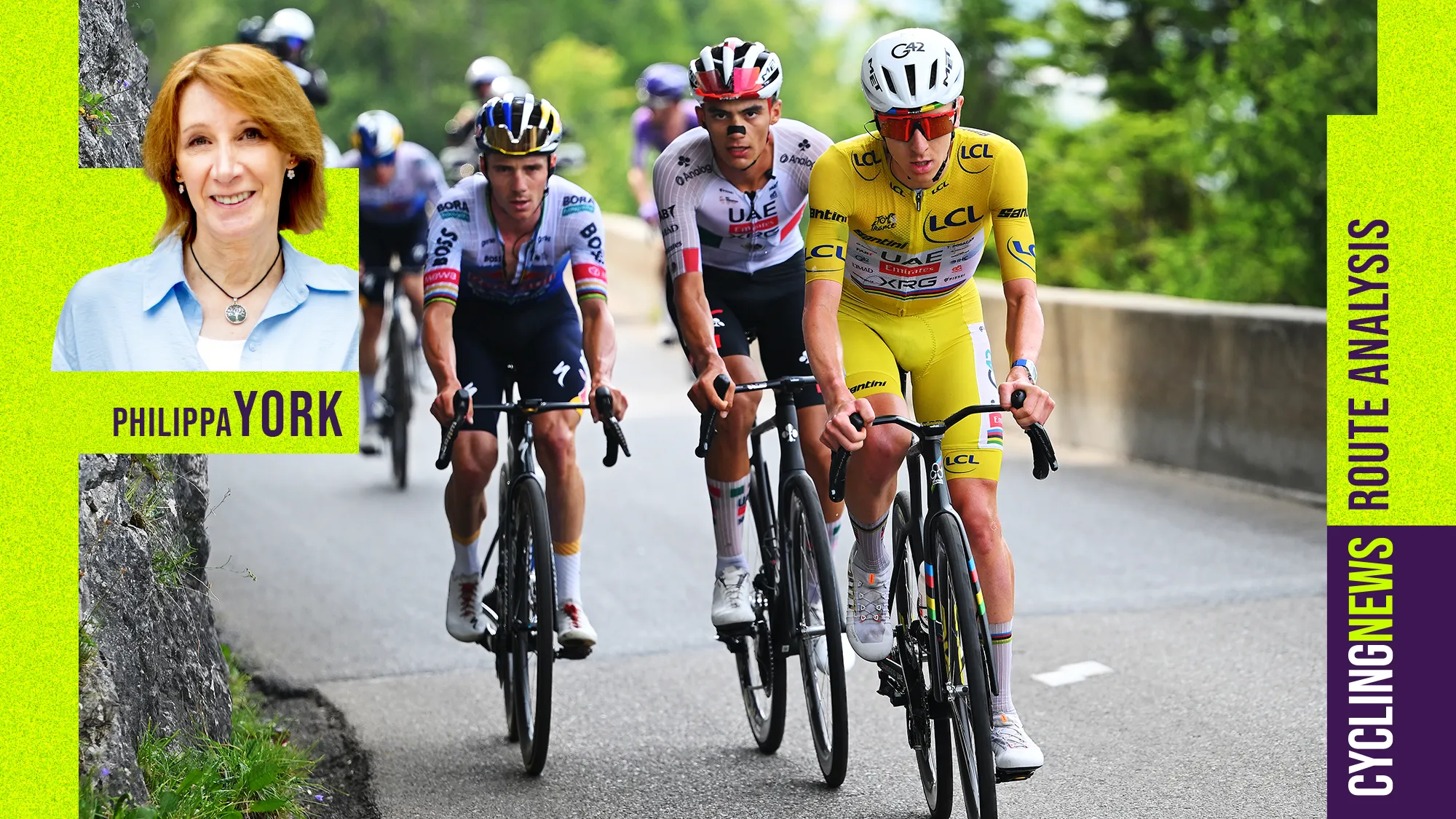
With more time trials, less climbing, and the most northerly Grand Départ in Edinburgh, the first impression is that ASO is definitely looking for something different from this edition of the Tour de France. By the time the peloton rolls into Paris, I’m not sure they'll get it in terms of who stands on the top step of the podium, but the suspense, entertainment, and tactical choices will be different from what we’ve seen lately. A traditional Tour this is not.
There are elements to it which are going to complicate how riders and teams deal with the challenges the route is going to throw at them along the way.
The opening three days in the UK are a perfect example of potentially unpredictable weather and longer-than-average stages with unfamiliar infrastructure. Of course it might be sunny and warm, which would make the visit slightly safer, but as we’ve seen in the past, there are quite often a number of incidents in the first week. Although there’s nothing too tricky in terms of terrain, the stress levels will be high.
For the riders, thinking about the overall title, it’ll be all about surviving without crashing or being on the wrong side of a split, whilst for the sprinters’ teams it’s an opportunity to take the race lead. Two very different objectives, but both require constant vigilance and staying at the front, so there's extra danger when confronted with road furniture and layouts, which they are used to negotiating. The race is only going to settle down once back in France.
An uncomfortable first half
It won’t be that comfortable, though, as the first half of the race has four big transfers as they head east toward the Alps, so riders’ recovery will suffer and the team staff will have extra workload to absorb. Thankfully, the route then becomes more manageable in terms of what to expect in the daily grind of the Tour.
For the general classification, the Normandy and Bretagne stages are pay attention days; take time if possible, but like the UK, don’t mess up. Then it heads east toward the first GC moment: the Blois time trial. Another long day, then the opening mountain stage in the Alps. None of the iconic climbs, but the Grand Colombier is long enough to establish a hierarchy.
First proper rest day in the Alps, then two days of brutality with finishes in Sallanches and Les Saisies. Stage 10 is more dynamic and open to a more attacking race whilst the following day is more traditional in that it’ll come down to a typical mountaintop finish. The Bisane climb isn’t well known and is much harder than the more usual Col de Saisies route.
Then the route heads south to Valence and Montpellier, where you're watching for possible echelons before heading north again toward Mende. The Montée Jalabert, a horribly steep end to a day most likely spent being scorched by the sun.
It’s more of the same the next day on the route from Rodez to Albi, but with added stickiness from roads that suck all energy from the legs, and that’s the second week done.

The final week begins with the second individual TT, 5km shorter than the Blois stage but with a hill to complicate things. At least there’s a flat stage to follow before the Pyrenees.
Strangely, the Queen stage falls on a Thursday, not a weekend. Soulor and Tourmalet are pretty iconic, but the decisions will be made later on Ancizan and Col du Portet. The classic Pyrenean stage with a slightly different end to it this time.
Then comes the last GC action on the way to Laruns, 1,000 metres less of elevation than the day before, but the hectic climb of Marie Blanque in the final. Scene of Tadej Pogačar’s first Tour stage win in 2020.
Then what ought to have been a sprint day - that surprisingly doesn’t go to Bordeaux - and the long haul up to Paris for the Champs-Élysées. A mix of the traditional laps and two with the Montmartre climb, and that’s it ... all over.
It's complicated
For the teams and riders, it is complicated to plan depending on what the objectives are. For the traditional climber types, there aren’t the usual number of mountaintop finishes, and they’ll be looking at the 71km of time trial with trepidation. Do they train more on the TT bike and sacrifice some of their natural climbing ability, or accept that they’ll lose time in each TT, ride easier and hope to take back minutes by being in an escape?
Even for the GC riders who do a decent TT, there are changes to be made, as this route doesn’t have many of the big-name climbs, the ones that require a long seated effort. The mountains look to be more punchy, and that requires an ability to cope with accelerations. That’s not something everyone does naturally so adaptions have to be considered.
The number of flat stages, seven according to the organisers, means the four big GC teams can count on the sprint squads to control more often. It possibly means, for the likes of UAE and Red Bull, less work on the transition stages, which becomes less freedom for everyone on the big rendezvous days.
Looking at the route overall, it’s definitely a move by ASO to make things less predictable by moving the first GC moments further into the race; however, I don’t see it necessarily making things harder for Tadej Pogačar to secure a sixth win.

Sure Remco Evenepoel will look at the time trials and smile, but Pogačar won’t lose that much time to the World TT champion. Checking back on previous Tour de France TT performances, the gaps aren’t significant between them, but come the mountains, Pogačar buries the Belgian.
When there were six mountaintop finishes UAE and Pogačar rode conservatively on half of them, with only three in this edition, they are going to race them flat out with no hesitations.
He won’t be scared of the stages with steep climbs near the end either, and he won’t be that affected if it’s bad weather. The team are strong enough to keep him positioned on the hectic days, and when it comes down to sorting out his rivals, he can certainly do that too.
Pogačar has all the elements to cope with this route
For me, Pogačar has all the elements to cope with this route despite less climbing and more TTs. Individually, he has the specific requirements that will be needed: the explosiveness for the punchy climbs, an excellent TT, recovers brilliantly, and a team dedicated to his cause. The question of whether he will have any recurring problems after his Vuelta crash doesn’t really come into it. Unlike recent top riders who have been victims of crashes, his injuries were quite straightforward, painful, yes, but not career-threatening and not affecting major muscle groups. Healing has been much less complicated.
The other podium positions are going to be closer than usual. Evenepoel has his TT advantage, but Paul Seixas will be one year stronger, and Decathlon will line up with a team no longer wondering if the young Frenchman can compete over the three weeks. His Lombardy win was emphatic, so he has the ability to deal with classic-style racing that this route is going to throw at the peloton, and with less 2,000m of altitude climbs, he’s bound to be fresher in the final week.
Then there’s Isaac Del Toro and Jonas Vingegaard to consider. The Mexican was third last year, helped and guided by Pogačar, but that is something they may not have as much opportunity to play with in 2027. Fewer big mountains is a bonus; more TT not so much. His attacking ability is a definite plus, and that can be a tactic UAE explore. If he is part of the team selection, then don’t be surprised that he takes the yellow jersey at some point.
For Visma, there are two objectives. It’s a route where Wout van Aert can look at targeting stages and the points classification whilst all the time taking care of Jonas for the GC. Does the Dane concentrate on his climbing, especially the acceleration needed to match Pogačar and Seixas or go with more aero work to be nearer to Remco? Probably needs both, which will be a tricky ask, but it’s a dilemma facing everyone looking at the overall.

In terms of race tactics, the sprinters' teams have an easier task than usual. Seven flat days, seven chances. They can line up knowing that UAE, Visma, Red Bull and Decathlon are controlling the GC, and all they have to do is manage proceedings later on.
The deal for the teams that don’t have one of the big sprinters and don’t have a podium contender is going to be complicated. Removing the usual scary final week from the race makes it more open for everyone to be competitive on the ‘normal’ stages.
The mountain classification won’t be the domain of the GC favourites because there are fewer finishes in altitude and so points gained on the smaller climbs become more important. Making the break on those days then becomes crucial, as does the ability to recover from that effort.
Overall it’s an interesting move from ASO to serve up a route with fewer iconic mountains and more individual time trialling. It’s quite striking that it is a very rural Tour with no Bordeaux, Lyon, Marseille or Lille involved. No pavé, no team time trial either. Most of the big moments are midweek too, so the intensity has been spread out too.
I get the feeling they are waiting to see where Paul Seixas really pushes Tadej Pogačar and then there’ll be more of that in the following years but for the meantime the Slovenian remains the favourite.


Philippa York is a long-standing Cyclingnews contributor, providing expert racing analysis. As one of the early British racers to take the plunge and relocate to France with the famed ACBB club in the 1980's, she was the inspiration for a generation of racing cyclists – and cycling fans – from the UK.
The Glaswegian gained a contract with Peugeot in 1980, making her Tour de France debut in 1983 and taking a solo win in Bagnères-de-Luchon in the Pyrenees, the mountain range which would prove a happy hunting ground throughout her Tour career.
The following year's race would prove to be one of her finest seasons, becoming the first rider from the UK to win the polka dot jersey at the Tour, whilst also becoming Britain's highest-ever placed GC finisher with 4th spot.
She finished runner-up at the Vuelta a España in 1985 and 1986, to Pedro Delgado and Álvaro Pino respectively, and at the Giro d'Italia in 1987. Stage race victories include the Volta a Catalunya (1985), Tour of Britain (1989) and Critérium du Dauphiné Libéré (1990). York retired from professional cycling as reigning British champion following the collapse of Le Groupement in 1995.
You must confirm your public display name before commenting
Please logout and then login again, you will then be prompted to enter your display name.
