


Stage 14: Saint-Étienne to Mende
Date: July 16, 2022
Distance: 192.6km
Stage timing: 12:15 - 17:05 CEST
Stage type: Hilly
"Like riding up the side of a house," was how The Guardian newspaper memorably once described the ascent to Mende, and although that's perhaps an exaggeration, the final ascent of Saturday's stage of the 2022 Tour de France is certainly one where the ferociously hard inclines make almost all the difference.
Preceded by 189.5 kilometres of rolling terrain from Saint-Étienne taking the Tour south and west across the lower foothills of the Massif Centrale, the day's decisive ascent to Mende airfield is just three kilometres long.
Yet with an average gradient of 10. 2 percent, for all Mende is not as ridiculously tough as, say, the Angliru, its relentlessly vertical gradients can see spectacular battles unleashed in a very short distance. Yet interestingly, although it has rarely made a difference on GC in the Tour de France, the idea that a climb like Mende generally favours the climbers is definitely mistaken.
Rather, as Ineos Grenadiers lead sports director Steve Cummings proved with his memorable stage win at Mende over the much lighter-built French duo of Thibaut Pinot and Romain Bardet in 2015, over such a short but testing distance, more than full-on climbing ability, it's calculating your strength that matters.
"As you say it's steep, but not the steepest climb," Cummings tells Cyclingnews, "so being on another rider’s wheel and drafting is less significant but still matters a bit, while if you go into the red, you pay for it very fast.
"You've got to take a fine line between following another rider to try and benefit what little you can from their slipstream, and avoiding finding yourself going too hard because you're shadowing that rider too closely and potentially exploding as a result.
"Mende is best raced like it was a time trial, but remembering you're in a race. So it's about trying to get as fast as possible from A to B like in a TT but using the people around you too. It's about distribution of effort."
Narrow, and mostly straight for much of its middle section, from the moment it starts to rise on the edge of the town of Mende the climb to the runway has no breaks in its upward gradient whatsoever. Rather what is effectively an exposed, cars-width strip of tarmac plastered vertically onto a steep, houseless, hillside only eases out in the last few hundred metres.
After such a tough climb it feels almost ironic that the road, having risen 250 metres in altitude in barely 2,000 metres of forward travel, then swoops down for half a kilometre through three or four broad curves to the finish on the ultra-flat runway itself.
Part of an 18-rider break back in 2015 including Greg Van Avermaet and Peter Sagan which reached the Mende ascent with no significant differences between them, Cummings rode the stage finale first by letting more impulsive racers get away at the foot of the climb. He then rode at his own pace up most of the ascent, while jumping from one rider's slipstream to another for a bit of respite, before deliberately going into the red just as the summit hove into view.
"That way I gained maximum advantage over the top but could use the other side on the downhill to maintain my momentum," Cummings, who then stormed past Pinot and Bardet on the corners, opening enough of a gap and a relentlessly high pace that harked back to his days as part of the Team Great Britain pursuit squad, to stay away to the finish.
Coming as it did on Nelson Mandela day, Cummings' victory for African-sponsored squad MTN-Qhubeka, their first in the Tour, represented a landmark for the team. Fast forward seven years and while a break seems very likely, if somebody chooses the wrong strategy, as Cummings says, they could pay a hefty price.
While heat will almost certainly play a major role, Cummings says the support of the public, who in previous years have formed a less rowdy version of the 'walls of fans' in Alpe d'Huez, will also help riders’ motivation considerably.
"As I told a rider, I'm not going to say who, the other day, you've got to learn to enjoy the suffering through that, try and embrace the passion that people feel for the race and use it," Cummings says.
"That, for me, gave me goosebumps as I was going up Mende and brought me up a little bit. But at the same time, if you pay too much attention to the crowd you can get wound up, go into the red and explode. So it's that fine balance again of using the crowd in the right moments."
One of two Tour stage wins for Cummings, the Briton says that rather than dwell on his past success, "I do think about it, but more for what it means for our team in the present, not so much in the past. You've got to move on."
"But" he adds, and as Ineos Grenadiers rider Tom Pidcock found out very recently on the Alpe d'Huez, "whenever it happens, tomorrow, I do know it's a beautiful thing to be racing out front on a Tour de France climb, for sure."

-
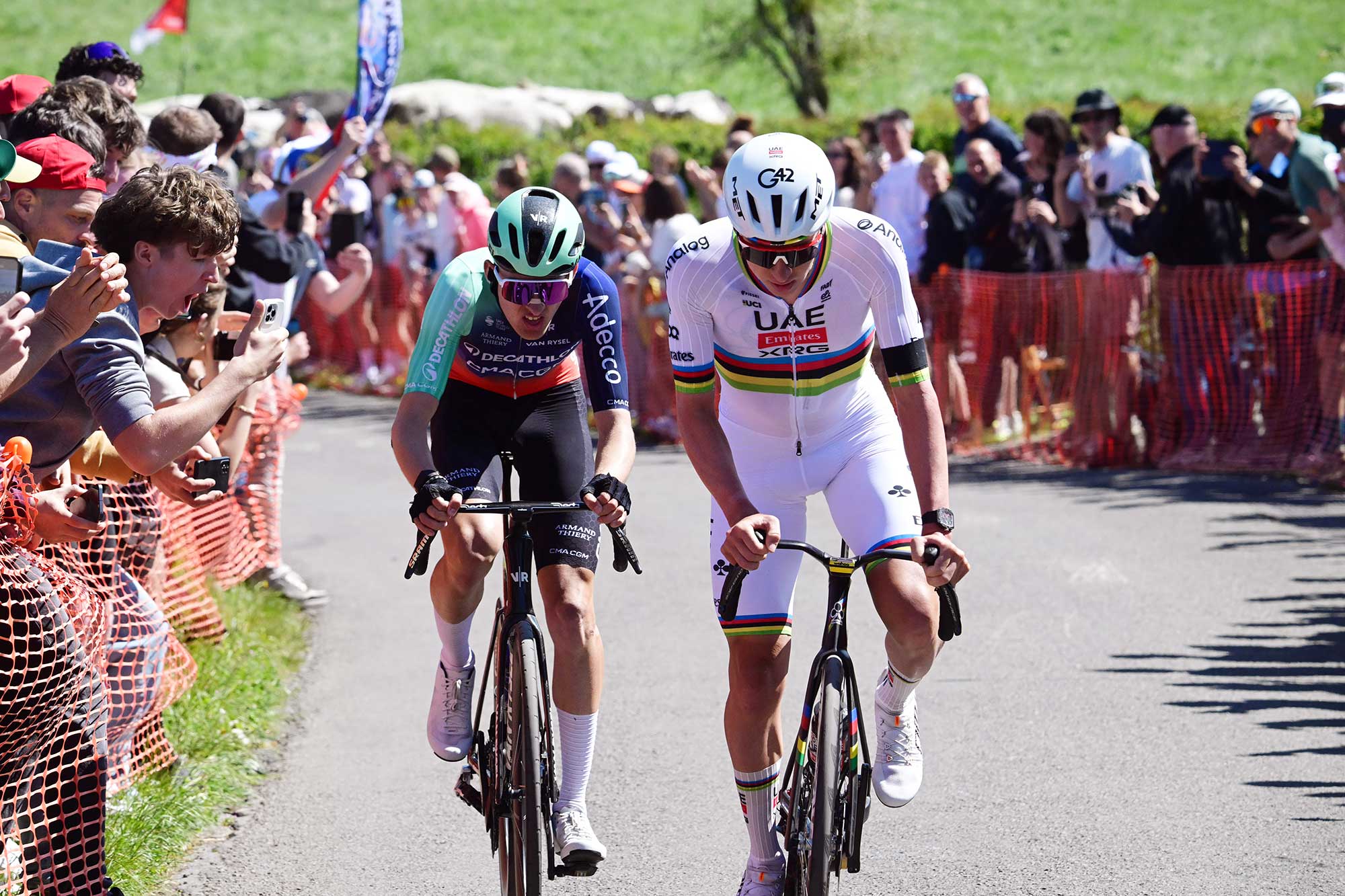
Sean Kelly's Classics column: Just like Pogačar, Paul Seixas has the whole package, but he shouldn't ride the Tour this summer
The two-time Liège-Bastogne-Liège winner shares his thoughts on Tadej Pogačar's stunning fourth La Doyenne title, Demi Vollering's untouchable climbing credentials, and where next for France's super talent -
'That is impossible. Not you' - 21-year-old nephew of Sep Vanmarcke dies after being struck by a driver while training
21-year-old Milan Bral had planned to race Gent-Wevelgem under-23 race in May -
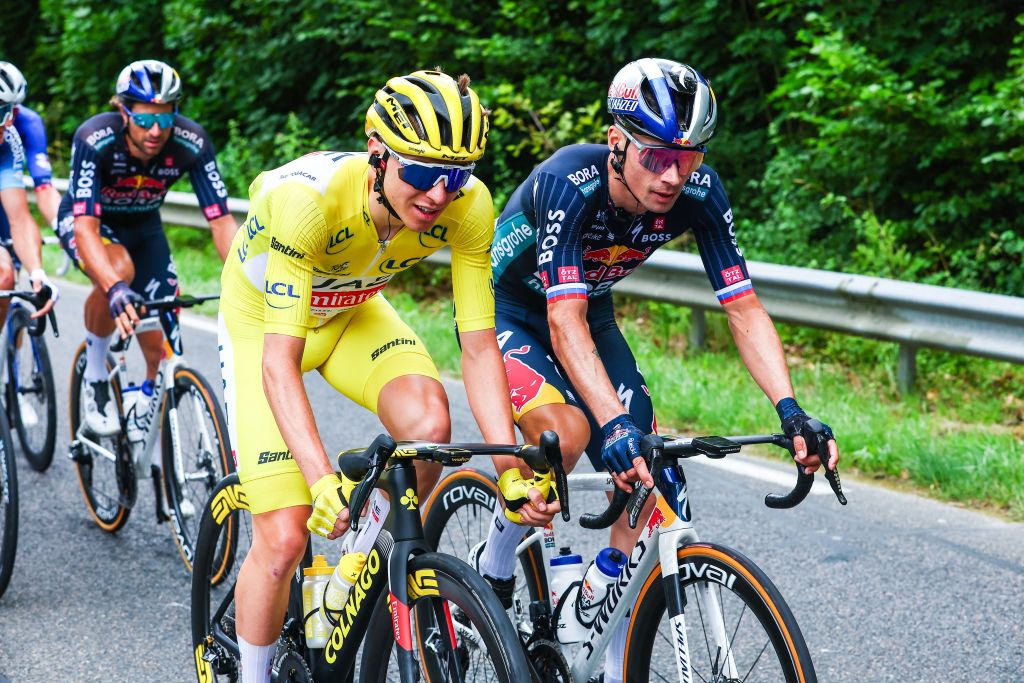
How to watch 2026 Tour de Romandie – Free streams, TV channels for the Swiss WorldTour stage race
Tadej Pogačar, Primoz Roglič, Florian Lipowitz, and Oscar Onley do battle over six challenging days in Switzerland -
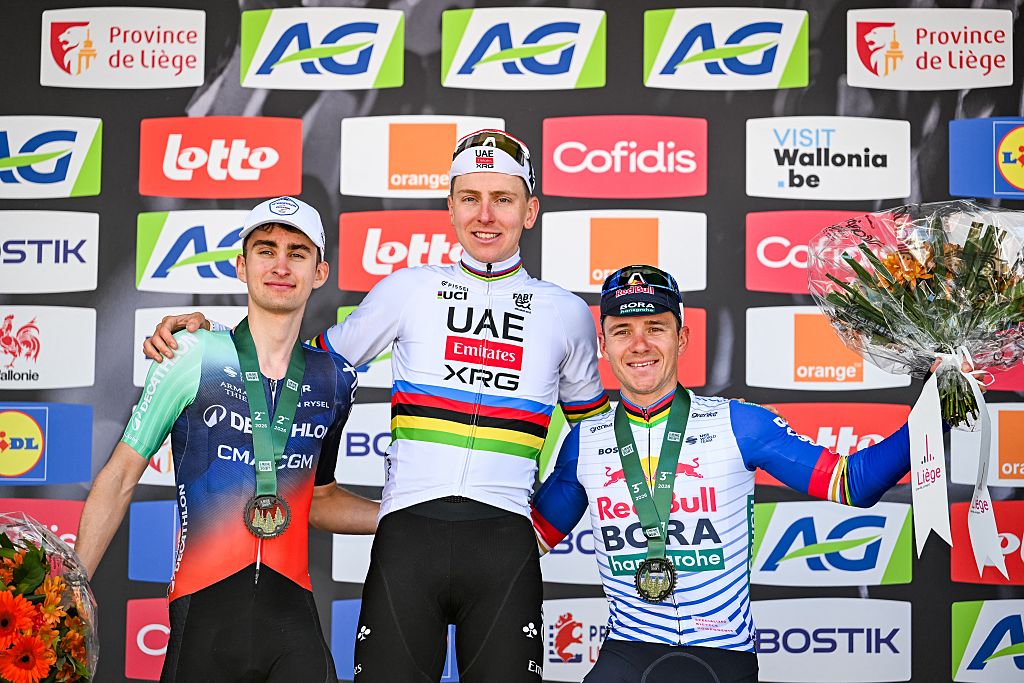
Tadej Pogačar fined 5000 CHF for jersey design worn on Liège-Bastogne-Liège podium, later overturned by race jury
Officials remove hefty fine initially handed down for personal sponsor, reason given for penalty was 'wrong place of the publicity on the world champion jersey during the award ceremony'


