There may be signs of spring on the horizon, but winter riding isn’t done just yet in the northern hemisphere. If you’re still braving the chill, or planning ahead for next year, now can be a particularly good time to pick up a winter cycling jacket at a reduced price, as retailers start to clear seasonal stock.
A winter jacket keeps your core warm, which in turn helps protect your extremities. For colder early mornings or late evenings, you’ll still want to pair it with the best winter cycling gloves and some of the best winter cycling socks, but if your torso stays warm, everything else becomes much easier to manage.
Last updated on 27th February 2026
Since the last update, all products have been checked to ensure current availability. The top six product descriptions have been shortened to improve readability, while the jacket descriptions in the Also Consider section have been expanded to provide more detail.
Best Winter Cycling Jackets
You can trust Cyclingnews Our experts spend countless hours testing cycling tech and will always share honest, unbiased advice to help you choose. Find out more about how we test.
Best overall


✅ You want most bases covered most of the time: If you don't want to think, buy this jacket. It'll be more or less perfect for most things and can be layered if you need more insulation or waterproofing. That's why it's the best overall.
✅ You don't want a bulky jacket: It's a pretty racey fit, no big baggy insulation or loose flappy sections of material.
❌ You want room for a thick mid-layer: The trimmer cut means you'll have to be more selective with what you wear underneath when it gets bitter.
❌ You want a two-way zip: It's a small point, but being able to open a jacket from the bottom can be useful sometimes, and it's missing from this jacket.
You can maximise your budget by layering with a shell, and in milder climates, a lighter softshell may be enough. Assos takes a different approach, positioning this jacket to replace a jersey and be worn over just a base layer. In practice, I prefer adding a jersey underneath, and there is definitely room for a thin but fleece-backed winter jersey and a decent base layer to keep it going into really cold temperatures.
A proper mid-layer won’t fit, so expect a snug, race-cut fit. Off the bike it feels a little odd, but once riding, the exceptional tailoring provides light compression and excellent freedom of movement. While fit is important, I was not only very impressed at how such a thin layer performed in low temperatures, but also the range. It’s stood me in good stead in temperatures as low as -6ºC/21ºF on pacey rides, and up to higher single-figure temperatures, and has fast become the jacket I reach for.
At the front, Assos’ AIRBLOCK-EVO.888 softshell fabric is backed with a breathable, free-floating liner which creates an air gap that acts as a buffer between you and the biting wind. The lining wicks moisture effectively, and paired with the thin back panel, it keeps sweat under control and prevents sudden chills.
The jacket will fend off thick, chilling fog and patchy drizzle, but you will want a proper waterproof layer in actual rain. Luckily, the close fit means the Habu can be comfortably worn under an overlayer.
It's expensive, but you're getting a very advanced garment that offers exceptional comfort across a wide range of conditions. To find out more, check out our in-depth Assos Equipe R Habu Winter Jacket S11 review.
Best budget


✅ You already have a decent outer shell: This jacket works well as a mid-layer to add a good degree of insulation to a jacket you already have.
✅ You want puffy jacket insulation without the bulk: Riding in a full down jacket is too hot unless it's well below zero. This gives you that puffy insulation, but not so much that you overheat.
❌ You want a bit of water resistance: It has a DWR coating, but it doesn't shrug off the odd shower like the Assos or Castelli options.
❌ You like a short torso: The body is quite long, so if you have a short torso, then try something a little more cropped.
What makes the Endura Pro SL Primaloft II Jacket so good is its versatility: it works equally well as an outer layer or as a mid-layer. Brilliant mid-layers like the Pearl Izumi Pro Alpha or Velocio Alpha Long Sleeve add insulation under a jacket, but don't work terribly well on their own. Here, you can throw it over a jersey on cold days or layer it under an outer shell like the Velocio Alpha Zero for near- or below-freezing rides.
The fit is comfortable, and the Primaloft insulation provides plenty of warmth without bulk. A DWR coating on the outer face helps in light mist, and the jacket blocks wind effectively. The drop tail has three rear pockets, including a zippered valuables pocket, and the jacket is packable enough for bikepacking.
Yes, it is more expensive than what I have recommended as 'best for gravel' further down the page, but the versatility you get here adds so much value. You can add pieces over time as you need, be they warmer base layers, a waterproof shell, or a super warm outer layer, and you'll eventually end up fully geared up for about as bad weather as it's reasonable to ride in.
One thing to bear in mind is that the torso is quite long, so if you do have a particularly cropped, race-fit shell jacket that you want to layer up under (I'm talking things like the Rapha Pro Team Gore-Tex Jacket), you may risk having the Endura poke out the bottom.
My former colleague Josh Ross reviewed the Endura Pro SL Primaloft II Jacket, while Immy shares a woman's perspective in her review of the Endura Women's Pro SL Primaloft cycling jacket.
Warmest winter cycling jacket
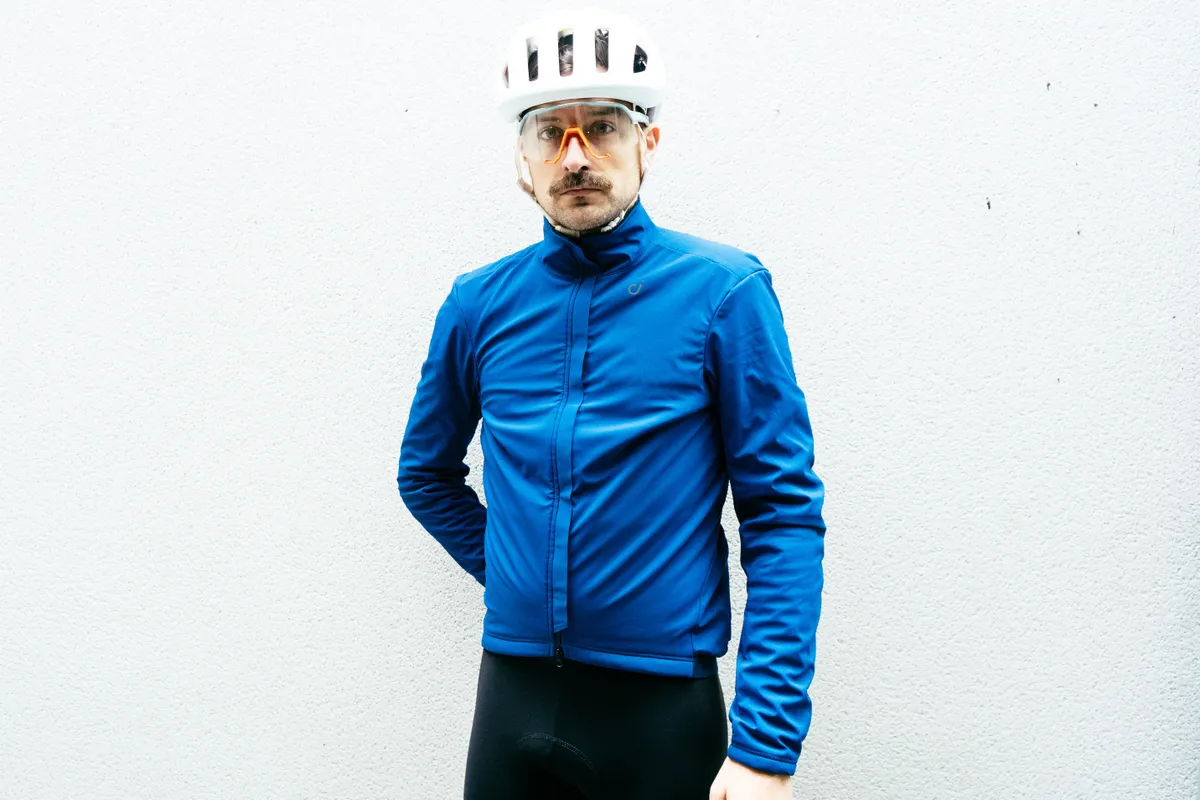


✅ You want to be toasty warm: The combination of the Polartec Alpha fleece insulation and the Power Shield membrane makes for a very warm, windproof, and somewhat waterproof jacket too.
✅ You want room for layering: If you really suffer in the cold, you can fit something big underneath it still. I recommend the Velocio Alpha Long Sleeve mid-layer if you want the warmest possible setup, or even a mini down jacket.
❌ You run hot: If you're a sweaty rider who runs hot even in the cold, then this may well be too warm for you. Likewise, it's likely too hot for really hard efforts. For long zone 2 winter riding, it's perfect, but for intervals, go for something like the Assos or Castelli option.
❌ You want a race fit: Fluffy insulation needs to stay lofted to work, so the cut is pretty roomy. If you want to stay aero all year, then go for the Assos option.
The Velocio Alpha Polartec Alpha Jacket is the successor to my previous favourite, the Velocio Alpha Merino Air. It swaps merino insulation for high-loft Polartec Alpha fleece and adds a waterproof membrane, making it the ultimate zone 2, big winter trundle, super cosy, comfortable jacket. Paired with a high-loft mid-layer like the Alpha Long Sleeve from the same brand, or the Endura Pro SL Primaloft, you'll have a jacket that's capable of seeing you into sub-zero temperatures with ease.
The insulation is the highlight, covering the chest, leading edges of the arms, and collar, while the super-fleecy neck traps heat where it’s most needed. The outer fabric has a solid DWR treatment, so it can shrug off some rain, and the membrane blocks wind and retains warmth, though a lack of taped seams means it’s best for light rain rather than heavy downpours.
The fit is far from racy, with more than enough room to add a really warm mid-layer without compressing the insulation to such a degree that it ceases to become effective, or making the whole setup uncomfortable. Even fully layered up, there's no constriction anywhere, with complete freedom of movement. The cuffs are a little baggy, but considering that when you're wearing this, you will almost certainly also be wearing big winter gloves, they make total sense.
This is not the jacket for doing hill sprints in or a chain gang. Its warmth is also its weakness when you start heading towards the higher heart rate zones. Protracted climbs are fine when you can open the chest up or the bottom end of the zipper, but for really hammering it, then the Assos is probably a better option when it's very cold.
Check out our Velocio Alpha Zero jacket review for more details.
Best for gravel
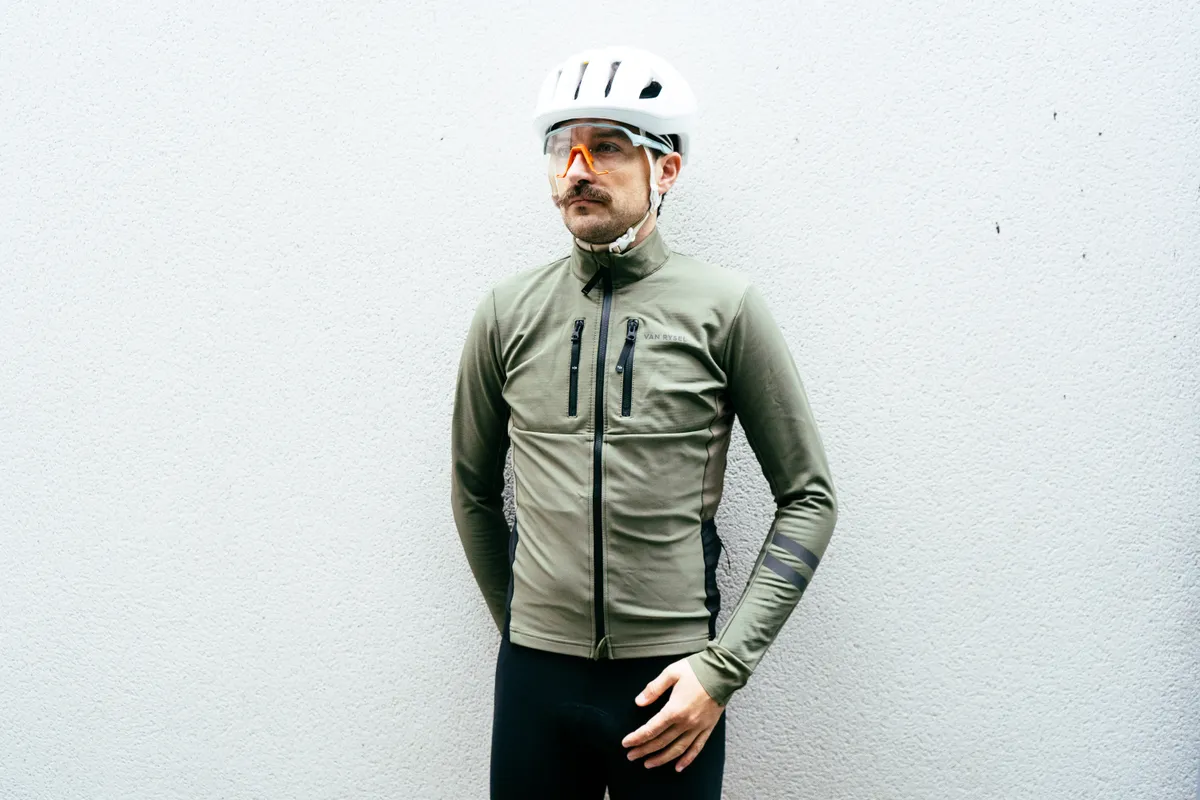


✅ You don't want to spend a fortune on a jacket you'll get filthy: It's certainly not absolute rock bottom in terms of pricing, but compared to most other options on the market, it's very reasonably priced, so less of a worry about getting it filthy or damaging it if you have a crash.
✅ You want a tonne of storage space: Ten pockets are more than anyone could ever ask for. If you need more than that, then it's time to think about a frame bag or a bar bag.
❌ You want a two-way zip: It's less of a problem with winter jackets than it is on a waterproof shell, but in any case, this jacket doesn't have one.
❌ You want a well-fitting jacket: It is a little tight in the forearms, but then if you went up a size, the shoulders and chest would be rather baggy. This probably matters less when you're trying to think about not landing in a muddy puddle though.
Here’s my not-so-hot take: if your gravel rides are clean and dry, just stick with road gear. In Britain, and likely in wetter parts of North America, winter gravel means mud, puddles, and an increased risk of falling off. It’s hard to justify spending hundreds on a jacket that’s going to get trashed. For years, I used a £12 Aldi jacket for muddy rides, saving my Castelli Gabba for the road. It worked and let me enjoy winter gravel without fear of ruining my expensive kit.
My tip is to tone down your outer layer: something wallet-friendly like the Van Rysel jacket. Olive green plus ten pockets makes it perfect for gravel. The fit can be tight in the forearms, so size up if layering in winter.
What you get is a pretty well thought-out softshell jacket, fleece-lined, with sensible panelling that balances more windproof areas on the chest with more breathable ones elsewhere. Key for me is a waterproof zip, but not necessarily to keep water out. The jacket has a membrane, but I wouldn't wear it in heavy rain. There is a waterproof zip, so the teeth are less likely to get clogged by muck and grit, which can be the death of some zips over time.
The pocket arrangement is also more than you'd ever need. The two chest pockets are useful for small items like keys and cards to keep them out of any spray from your rear tyre, there's a pair of hip pockets, and as well as the standard three rear pockets you get two zipped valuable ones at the back, as well as a full width outer pocket in which you can stuff bigger things like that warmer mid layer I mentioned earlier or thick gloves.
Read more in our full Van Rysel Winter Road Cycling Jacket Endurance review.
Most packable


✅ You want an ultra-portable extra layer: This jacket takes up no more room than a gilet in a jersey pocket - less in some cases - but is warmer. You can take it with you on every ride where there is a risk of getting chilly.
✅ Your outer shell is race fit: Even under something like a race cut waterproof jacket, there's enough room for it to fit and still function properly.
❌ You want loads of insulation: This is not a full-on winter jacket, if you want something to ride all day in, then go for another option.
❌ You want a stuff sack: In the name of packability, it doesn't come with a little stuff sack, so it is hard to get it to its smallest size on the fly.
Sometimes you don’t need a full winter jacket, but it’s too cold for a wind jacket or even the warmest of the best cycling gilets. For chilly rides, this is about as good as a super-packable winter layer gets.
It takes the basic form of a classic wind jacket - a close-fitting, lightweight, windproof nylon shell - and adds a thin, perforated layer of synthetic insulation across the chest and upper arms. Its packability means it can come on every ride - ideal for café stops or as a superlight layer for bikepacking.
It adds a surprising amount of warmth for its size and keeps biting wind at bay. It also works as a minimal mid-layer under a shell for extra warmth without bulk. I wore it all day in misty, damp, windy conditions around 13°C over a long-sleeve jersey, and it would probably be comfortable down to the low single digits.
In order to counteract that boil-in-the-bag feeling that befalls so many wind jackets, the pits feature big, laser-cut perforations, and the insulation itself also has small holes puncturing through it. A double zip also means you can vent a lot of heat from the bottom without having to have it constantly flapping about the place. Despite such a lightweight build, Albion has made a really sensible choice in adding a proper lower hem cinch.
The RRP is high for such a lightweight jacket, but that’s typical of premium lightweight cycling gear. You’ll likely use it well into spring and early fall too.
If you're hungry for more info, then head to my Albion Ultralight Insulated Jacket review for the full rundown of this versatile little number.
Best for racing


✅ You want to ride hard: The Perfetto RoS is unlined. This keeps it breathable for high-tempo riding in chilly, showery, and windy weather.
✅ You don't ride in really bad weather: Its lack of any insulation means it isn't suited for deep winter riding, and nor is it waterproof enough for sustained downpours unless you don't mind getting wet.
❌ You want plenty of insulation: You can add a decent amount of extra warmth with sensible layering choices, but a fluffy, puffy, super warm jacket it is not.
❌ You want some waterproofing: The Perfetto can shrug off the odd shower or sustained drizzle, but if you want something similar but with a bit more water resistance, try the Castelli Gabba R instead.
The Castelli Perfetto Ros 2 isn’t heavily insulated, but its Gore-Tex Infinium construction makes it windproof and surprisingly capable in the rain. As long as you are moving fast and generating some heat, you'll be able to handle far more than you'd think with the Castelli Perfetto Ros 2.
That focus on performance does mean you should expect a race fit jacket. The sleeves and torso are long to accommodate a thin fit, and the collar is tall and comfortable. Many riders will need to size up, and there’s limited room for layering - a couple of thin merino base layers or a fleece-backed jersey are all you'll have room for.
If you want something of a similar cut, but warmer, then go for the Assos option, but if your winter riding stops short of heading out when it's really cold, then this could well be a far more useful purchase than a warmer option.
Pockets are a highlight as well. After a few years of using a two-pocket design, Castelli has gone back to a standard three-pocket design, and they are tall and stretchy. You can fit everything you need for a long day, or you can stay light for racing.
You may be wondering why we recommend the Castelli Perfetto ROS 2 over the updated Perfetto ROS 3. Castelli has taken a different approach with the ROS 3 and while it works really well on cool and dry to warmer days with light showers, it isn't as capable when it comes to proper wintery conditions. If you're looking for a race-focused jacket for fast winter riding, we recommend going for the ROS 2 while it's still available.
My feelings on the Perfetto echo what can be read in Josh Ross's Castelli Perfetto RoS 2 jacket review.
Also consider
The six jackets above represent the best out there, but they aren't the only ones myself or my colleagues have tested. These don't include any shell jackets, they're covered in my guide to the best waterproof cycling jackets to avoid any confusion.

✅ You want a single-layer winter solution: The Essential Thermal jacket is incredibly warm and can be paired with just a base layer underneath.
✅ You want a jacket that nails the fit: It is an aggressive fit with a short front, but it's paired with an exceptionally long drop tail and long arm length, with a square cut to the shoulder that keeps movement easy.
❌ You want a two-way zipper for more ventilation: The Essential Thermal jacket has a single-direction zipper, so no unzipping from the bottom, but there are zippered vents on either side to help with airflow.
❌ You want some waterproofing: Polartec Power Shield Pro is technically waterproof, but if you plan to be in heavy rain for any period of time, you don't want to be in this jacket, as it will kill the breathability.
Another great softshell jacket is the Pas Normal Essential Thermal Jacket, which uses the previous generation of Polartec softshell - Polartec Powershield Pro - but it's still an exceptional choice for softshell jackets. The result is a jacket that feels luxurious, highly breathable, and exceptionally comfortable across a wide range of temperatures.
If, like me, you prefer wearing just one layer under your winter cycling jacket, this is the one for you. The dense, breathable fabric with sealed arms and collar provides excellent warmth when paired with the right base layer. Our tester Josh rode it with just a long-sleeve base layer in near-freezing temperatures, and with a summer base layer in conditions up to around 13°C.
PAS Normal jackets are outstanding when it comes to comfort and fit. This jacket is designed for aggressive riding with a short front and an exceptionally long drop tail and long arm length. One of the better features of PAS Normal jackets in general is the square cut to the shoulder that keeps movement easy.
Power Shield Pro is a softshell fabric that's technically considered waterproof, but it didn't handle occasional rain well, so if you only ride in the dry, it's worth considering. Otherwise, the PAS Normal is fantastic at tailoring a jacket for aggressive riding and the dense fabric feels amazing next to skin, plus the simple styling looks great too.
For more details, check out our full Pas Normal Essential Thermal Jacket review.

✅ You want to stay visible: Depending on the colour choice, the C5 Gore-Tex Infinium can be incredibly bright. There's also plenty of reflectivity on the more subdued colours.
✅ You want a workhouse jacket that can handle varied winter riding: What you get is a quality and well-made piece that stops wind completely and can handle light rain as well.
❌ You want plenty of pocket space: The centre pocket is larger but the two side pockets are very narrow.
❌ You want a low-maintenance jacket: You may struggle getting the lighter colours clean after a day of heavy road spray.
The lengthily named Gore Wear C5 Gore-Tex Infinium Jacket doesn't cut a unique path, but it does what it's supposed to do very well. It's a great workhorse jacket and what you get is a quality and well-made piece that you'll grab over and over in a range of conditions.
The jacket uses Gore Infinium fabric with Windstopper technology, which blocks out cold breezes, repels light rain and offers good breathability.
Depending on what colour choice you make, the C5 Gore-Tex Infinium Jacket can be incredibly bright; in the Neon Yellow version, there's definitely no blending into the background. If you go for a more subdued colour, there's plenty of reflectivity at the waist in the rear, both cuffs, and the bottom of the sides.
As for the fit, it's a far cry from the more extreme fits you'll find in some brands like Assos and Pas Normal Studios, but there's no extra material either. The added elasticity at the sides helps with the fit too. This is a very comfortable jacket.
Gore has really focused on the details, stitching is great and panelling adds comfort and helps seal against the elements without getting in the way. Unfortunately, the pockets let it down a little as they're rather narrow and sit high up the back.
It's worth mentioning that Gorewear is closing down on March 31st 2026, so there's likely to be some good deals in the coming weeks. For all the details, head over to our full Gore Wear C5 Gore-Tex Infinium Jacket review.

✅ You want plenty of storage: There are well-designed pockets everywhere - nine in total, which adds options for longer riding.
✅ You ride in a more upright position or off-road: The SuperGiara jacket is marketed as a gravel jacket with an eye toward a more upright riding position. It's fitted but with comfortable tailoring.
❌ You want a thick outer layer: This jacket has a little less warmth than others, making it a good candidate for layering.
❌ You want some rain protection: You can manage short showers, but it doesn't take much to overwhelm the rain protection of this jacket.
The design of the Sportful Supergiara Jacket is very different to anything else on the market. The main fabric looks a lot like Polartec Neoshell on the Total Comfort Jacket, but it's not the same. The weave is tight enough to stop wind, and there's a DWR coating to repel light rain, but the emphasis is on breathability.
What's really different are all the pocket options - nine in total. There's one on each side of the chest, as well as a third on the left bicep. There are another three that sit over the top of the traditionally designed low back pockets, so there are plenty of storage options for all-day riding.
The old version of the Supergiara Jacket can be picked up pretty cheaply now that it's been superseded. Like the Van Rysel, it has plenty of extra storage and Polartec Alpha insulation.
Sportful markets the Supergiara Jacket toward gravel riding, but don’t get too hung up on the label. It's a versatile softshell with added storage that works well across a wide range of riding styles. The fit is slightly more relaxed, favouring a more upright position with a shorter drop tail than racier options in this guide, such as the Pas Normal Essential Thermal Jacket. Even so, our tester Josh found the fit spot on and very comfortable.
A more detailed overview can be found in our full Sportful Supergiara Jacket review.

✅ You want something that feels like a thermal jersey: This works best in similar conditions to using a thermal jersey while offering a little extra protection from wind and drizzle.
✅ You want a very comfortable jacket: True to its name, the Total Comfort jacket is comfortable against your skin, breathes well, and has a good fit.
❌ You want protection in the worst conditions: The Total Comfort jacket is great for moderate winter weather but is not designed for the worst days out.
The Sportful Total Comfort jacket uses Polartec fabrics throughout, and right from the start, that makes for something that stands out. It's not a full winter jacket, better to be considered as a heavy thermal jersey that can handle some wind and rain. We are big fans of Polartec's work, and the Total Comfort is lined with Alpha Direct, which is nice against the skin and traps heat. On the outside, it's faced with Polartec Neoshell to fend off light rain.
The pockets on the Sportful Total Comfort jacket use a jersey-style arrangement in the rear. There are jackets with wider pockets, but Sportful keeps them low and wide enough to easily get your hands in. Plus, there's a zippered side pocket which is big enough for modern phones.
The insulation is super comfortable without adding bulk. In terms of temperature range, tester Josh found it worked best in similar conditions to using thermal jerseys like the Gore C5 Thermal jersey. Think of it less like a jacket and more like a heavy thermal jersey that can handle some wind and rain.
The Total Comfort Jacket is absolutely comfortable, but I don't think it does anything the Velocio Alpha Zero doesn't do. That said, it's still a great cosy addition to your winter wardrobe. It's been around for a few years now, so it can be found with some good discounts, making it a great value option too.
Read our review to find out more about what the Sportful Total Comfort jacket is all about.

✅ You want a great jacket for on and off the bike: It doesn’t look, nor wear, like a bike-specific jacket, but is in fact a very good piece of cycling kit.
✅ You want a warm, lightweight and packable jacket: It's packable down to 21 x 11cm, and there's tonnes of insulation for a jacket that weighs only 255g.
❌ You prioritise visibility: There are no reflective details here, although this does make it more wearable off the bike.
❌ You want a cycling-specific design: There's not much of a drop tail, there’s no dedicated venting, and storage is limited to two pockets.
If you want a jacket that works just as well off the bike as on it, the Rapha Explore Down Jacket is worth considering. It doesn’t have cycling-specific features like reflectivity, a dropped tail, or ventilation, but it makes up for it with superb insulation, light weight, and excellent packability. The hood doesn't quite fit over a helmet, but it is detachable.
The Explore Down Jacket has a relaxed fit, and the sizing is very generous, so there's lots of room to layer up. An adjustable elastic pulley at the waistband lets you cinch it in for a closer fit if needed.
Rapha has maximised the warmth retention and created a jacket seriously geared up for deep winter weather. Immy felt the most comfortable in it at about -5 degrees celsius up to about 5 degrees celsius on the bike.
This jacket is far warmer than even the Velocio Alpha Zero, and while it reviewed well, it is too warm for normal riding. If you're actually kicking about in sub-zero conditions regularly, then it could work for you, but in general, it's more of a lifestyle piece.
At £280, it's not cheap either, but its versatility both on and off the bike - along with its impressive lightness and packability for longer adventures - convinced Immy to see it as a true investment piece. To find out more, read our full review of the Rapha Explore Down Jacket.
How to choose the best winter cycling jacket
Dressing for riding in winter is always going to pose more of a challenge than getting your summer outfit right. Aesthetics are always important, but given the consequences of getting your kit wrong in freezing weather are much higher, I urge you to take a function over fashion approach when in doubt.
- What sort of winter riding are you doing? The trick is, as with any big bit of kit, to be honest about the sort of riding you want to do. There's no point buying a race-ready winter jacket if you're heading out on long, slow rides; you'll freeze. Likewise, for hard riding in milder conditions, you don't want the warmest kit on the planet or you'll end up a sweaty, uncomfortable mess.
- Do you want a layer that can be worn in a range of conditions? If you're coming at this fresh, then aim for versatility rather than specificity; you'll get more for your money that way. Something like the Endura option above that works as well as a mid layer as it does as an outer layer is a perfect place to start, and to that you can add a better winter base layer rather than trying to buy the warmest jacket from the off.
- What layers do you already have? If you already have warm layers, consider how these can complement your winter jacket. Having several layers, rather than relying on one big jacket, will be more comfortable and flexible if conditions change.
- Does it need to be packable? One thing that can really help you stay warm that's rarely mentioned is adding some on-bike storage. Through the winter, I fit a big saddlebag, into which I can stuff a mini down jacket, or other layers, and it gives me space to take layers off if I get too hot, which is just as key to staying comfortable. If you don't have any on-bike storage, then invest in a layer that's more breathable or packs down small.
Everything you need to know about the best winter cycling jackets
How do you stay warm while cycling in the cold?
Layering, that's the really simple answer. Just using one really warm layer, like a down jacket, while it may keep you really warm if the conditions are just right, will normally be either far too hot or too cold if you unzip it.
While I'm a huge advocate for decent winter outer layers, starting with one of the best cycling base layers will give you a great foundation. It'll insulate you immediately and help manage the sweat that will occur, so you are less likely to get chilled when it hits the cold air.
Many of the jackets here are standalone pieces that can be worn over a base layer, but some are more roomy to allow layering underneath. If you really suffer in the cold, then an insulated mid-layer like the Endura Pro SL Primaloft, or a fleecy option like the Pearl Izumi Pro Alpha, will seal in more of your body heat and mean your winter jacket has to work less hard.
Finally, don't neglect the rest of your body. For years, I rode around in a softshell winter jacket, bolstered by a gilet, winter hat and gloves, a neck warmer, and winter socks... and summer shorts. Your legs are the engine room, and if they get cold, the increased blood flow to them during exercise is going to cool you down fast.
Personally, I run quite warm, so I usually opt for a set of winter cycling shorts and some leg warmers, but most people prefer to opt for a set of the best winter bib tights. Add in even a basic set of winter cycling socks and overshoes and a hat, and you'll stay far warmer than relying on a winter jacket alone.

What layers should I wear for winter cycling?
To keep things simple, here's my general breakdown. Obviously, your mileage may vary, but this is what I'd do for normal riding. If I were doing hill reps or similar, I'd go up a temperature category to avoid overheating:
>15ºC/59°F - Midweight base layer, long sleeve jersey, gilet or wind jacket as preferred.
10-15ºC/50-59°F - Winter base layer, softshell jacket or midweight base layer, long sleeve jersey, winter jacket.
5-10ºC/41-50°F - Winter base layer, long sleeve jersey, winter jacket
0-5ºC/32-41°F - Winter base layer, insulating mid layer, winter jacket
<0ºC/32°F - Winter base layer x2, insulating mid layer, winter jacket. Ice risk, consider staying home.
This goes for the top layer only, and within that, you can regulate your temperature surprisingly well with things like a neck warmer, a hat, different gloves, and socks.
Generally speaking, people tend to reach for long legs below about 15ºC, whether that's thermal shorts and leg warmers or a dedicated pair of winter bib tights.
For a full breakdown on how to dress for success on the bike, check out our ultimate cycling layering guide.

How do you stay warm while riding in the wet?
Freezing rain is about as hard weather conditions get to stay dry in. My first suggestion is that, if the weather is really that bad, do you need to ride outdoors? I get some perverse pride out of it, and it is part of my job, but given how good indoor cycling is now there's a lot to be said for spending less money on gear for that handful of truly awful rides, and investing instead in a smart trainer or things that'll improve your time on Zwift, Rouvy, or any of the other apps.
If you must head out in weather that is both cold and wet, then I'd start with the shell; if you get wet, you will get cold, so make staying dry your priority. My guide to the best waterproof cycling jackets has a load of really great options, but go for one with room to layer underneath.
Shell jackets aren't as breathable as a softshell option, so you won't actually need to layer up under as much as you would with a more breathable jacket, so just a base layer and a well insulating mid layer should keep you relatively happy underneath. The mid layers have a direct impact on the overall breathability, so don't overdo it.
In cold, wet weather it's often more your extremities you need to worry about. Your hands and feet will get wet, no matter how good your gloves and overshoes are, so my preference for cold wet rides is to make use of neoprene, not only for your hands but also for your feet. I've got by using standard neoprene gloves, but my colleague Tom raves about Velotoze Waterproof Neoprene Gloves, and I trust his judgment. On your feet, you can get thin neoprene socks, which can fit under a set of winter socks to add warmth even if everything is wet.
How cold is too cold for cycling?
You can, to some extent, set your own floor here. Obviously, if you live somewhere where the roads aren't gritted and there's an ice risk, then anything around or below freezing poses a hazard, not from a layering standpoint but just in terms of staying on your bike.
Off-road, this is less of a risk, and with the right layering, there isn't really a too-cold scenario. You chuck out a huge amount of heat when exercising, it's just knowing how to keep it at the right level - Olympic cross-country skiers visibly wear very little, operate in sub zero conditions, and have wind chill to contend with too on descents much like cycling, so don't get put off by the temperatures plummeting - I promise you it's much easier staying warm than it is staying dry, having spent years trying to do both.
If you really do suffer in the cold, then a really easy thing to do is make your rides shorter, but harder. Received wisdom is that winter is for 'base miles', which is cycling speak for long, relatively slow rides, where it's much easier to get cold. Swap these out for short, hard rides, and you'll get the same fitness benefit without having to risk getting frozen to the bone miles from home.
How do I not get so sweaty cycling in the winter?
Ah, if I had an easy solution to this, I'd be a millionaire... Proper winter layering does keep you warm, but it also brings with it the risk of overheating. On anything besides the flattest rides, you're probably going to find yourself getting a bead on if you head uphill for any period of time.
A decent base layer and double-ended zips so you can get airflow to your inner layers are about as good a solution as exists. If you're a particularly sweaty rider, then I'd advise against a single garment solution and instead use more, thinner layers, and take some way to store them on your bike if at all possible.
Should my winter cycling jacket be waterproof?
There is certainly no harm in your winter cycling jacket being able to shrug off a bit of light rain. Winter riding can come with showers, but also road spray from the rider ahead of you, and so avoiding that soaking in and evaporative cooling is always a plus.
However, I'd advise against going for an all-in-one solution. Waterproof jackets are significantly less breathable than anything in this list, and with them comes an increased risk of getting sweaty. If you add insulation to that too, the risk increases even more, making them often unpleasant if you're riding in cold but dry weather.
For wet and cold riding, I'd focus on a separate shell and a better mid layer, and that way you'll have a shell for year-round use too. For cold and dry riding, then a softshell winter jacket with a bit of water resistance is best.
What is a softshell?
If you think of a waterproof jacket, you likely picture something made of quite stiff, noisy material. They have to be like that to keep the water out. Softshells aren't like that. They often have a thin, windproof membrane to keep the wind chill off, but they are softer, more flexible, and oftentimes fleece-lined too. They're more comfortable, more breathable, and more versatile. Usually, they'll have a water repellent coating at least to shrug off a bit of light rain.
Every jacket here is some variation on a softshell. They're more versatile, but don't wear them in consistent rain unless you are prepared to get wet.
How should a winter cycling jacket fit?
There's something for everyone here: If you're riding hard and want an aero fit, then the Assos Mille GT or the Castello Perfetto RoS are great examples of effective winter jackets that have quite a trim cut. The problem with these, is that they aren't much good if you want to layer up, so if you want to add more versatility (and comfort, for the most part), then getting something more roomy like the Velocio Alpha Zero will stand you in better stead as you can add layers underneath. You'll lose some watts, but when it's around freezing, nobody is thinking about getting KOMs.

How we test the best winter cycling jackets?
Often it means getting very cold in the name of bringing you the best options. Between this guide and my guide to waterproof jackets, there are countless hours of riding in the cold and the rain. Once the seasons start to change around October, I'll be out riding in the gloom and the damp to see how well the lighter-weight jackets cope, and then throughout deep winter between December and February, I'll be out in the cold, for as long as it is safe to do so. While testing, we consider not only how warm each jacket is, but also how comfortable the fit is and whether the jackets have any additional features.
Every Wednesday, barring any other commitments, I do an extremely hilly lap of the city, which is a prime test for whether a jacket will overheat too, for those garments with a more high-tempo leaning. The trick to winter riding comfort is staying dry, and these rides really put the breathability of each jacket to the test.
Behind all of this are years and years of experience, not just from myself but from my colleagues too, which I can draw upon to give you the best recommendations. I know how annoying it is to invest in winter kit that doesn't work because I've done it enough times myself, so you to quite a large degree learning from my mistakes.

It may be an unpopular opinion, but I'd take a long ride on a crisp, bright day when the temperature is around 7°C (44.6°F) over a 30°C (86°F) summer scorcher any day. Winter riding is unendingly satisfying, and having spent years riding outside all year round, I know what works and what doesn't. I got cold and miserable, so you don't have to. Winter jackets are a big-ticket item, so I want to make sure you're getting the best possible options for your money.