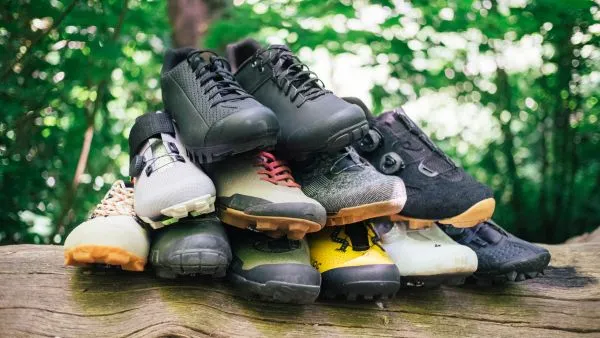
The best gravel shoes are stylish, comfortable, and can, most importantly, deal with all the challenges and tests that come with riding on mixed terrain.
Gravel shoes, like the best road bike shoes, meet the needs of a variety of different riders. Whether you're looking for a stiff, aggressive race shoe, a commuter model or something a little more comfortable for more relaxed all-around gravel riding.
They are also designed to work seamlessly with the best gravel pedals, which are hard-wearing and deal with dirt very well, meaning you can still clip in (on either face) even when covered in mud – something dedicated road pedals struggle with.
We have tested all the best gravel shoes on the market, and narrowed down our selection to the ones featured here. We think we have come up with straight-to-the-point buying advice to help you find the right options for you, covering shoes that perform well on and off the bike, fit a variety of foot shapes, with a range of closure systems, materials, and price points.
It's meant some uncomfortable rides at times during testing, but also some truly sublime experiences. I've learned a fair bit about what works and what doesn't, not just for specific models but in general. As well as specific product recommendations, I'll try to share what I've picked up in general terms along the way too.
Our top pick is the Specialized S-Works Recon shoe, a top-end race shoe that's one of the lightest gravel shoes on the market. Its design has also been informed by the Retül bike fit system.
As always, head to the bottom of the page for buying advice and our how to choose section with tips and answers to help you pick the right pair.
The best gravel shoes you can buy today
You can trust Cyclingnews Our experts spend countless hours testing cycling tech and will always share honest, unbiased advice to help you choose. Find out more about how we test.
Best gravel shoes overall

✅ You want a gravel race shoe: The S-Works Recons are stiff, light and designed for racing at the top level.
✅ You want a premium package: The Recons have real presence, thanks to their sculpted carbon fibre sole, and high-end construction.
❌ You're on a budget: The Recons are the most expensive shoes here.
❌ You walk a lot in your gravel shoes: The stiff soles make walking any distance awkward and not the most comfortable.
An unapologetically racy gravel shoe, the S-Works Recon is one of the most expensive on the list (though, should you want even pricier, see the S-Works Recon Evo). If you fancy a pair, the main drawback is going to be the cost, so what do you get for your money, then?
The fit of these shoes is excellent, with an especially well-thought-out heel cup that keeps your foot positioned perfectly. Heel cups on Specialized shoes, especially top-end options, are always good, but also made of very stiff material that doesn't always play nicely with ankles. Here, the dropped outer ankle area keeps things comfortable when you're throwing the bike from side to side, or over rough ground.
The forefoot is also wider than previous generations, and the dual Boa closure means you get a shoe that feels more of an extension of your body than any other I've tried.
They're also extremely lightweight - the lightest pair on test, combining a lightweight carbon sole with a design that uses very little padding. There's only a ridge of firm foam around the rim of the ankle for support, but don't mistake this for a lack of comfort.
They are very much a race shoe, essentially a gravel version of the S-Works Torch, and that distinction matters more off-road than it does on the tarmac. I wouldn’t want to walk off-road for long periods in them, just as I wouldn’t in road cleats; the outsole is really there to get you to and from the bike.
If you’d rather a race-focused shoe that you can walk in, the Fizik Vento Ferox Carbon is a better option, particularly for riders with narrow feet.
For more details on why these are our favourite gravel shoes, check out our in-depth Specialized S-Works Recon gravel shoe review.
Best value gravel shoes

✅ You're looking for the best value: This is a great gravel all-rounder for the price.
✅ You want a shoe that is comfortable to walk in: The Hammer Plus sole has built-in flex that's fantastic for walking too.
❌ You want really light shoes: The Hammer Plus aren't the lightest models out there.
❌ Your feet run hot: There's not the ventilation on offer for warm days that other shoes provide.
The Northwave Hammer Plus is our pick for the best value gravel shoe out there. This durable, comfortable and stylish shoe offers fantastic value for money, and you can find them for some very competitive prices online.
For all-around gravel riding and walking, it's one of the most comfortable shoes I have used, and they are perfect for the cafe or a pub stop. My top tip, for an even more enjoyable walking experience, remove the two metal toe studs in the front of the foot to eliminate any harsh metal-on-rock feel underfoot.
As you'd hope from a pair of gravel shoes, the Hammer Plus shoes are very durable and have survived a good scrape from a barbed wire fence.
Foot retention from the single closure dial is good, but I find the Velcro strap a little redundant.
It's available in four colours and a wide range of sizes, so it should suit most. For everything from more intense efforts to social gravel spins, playing in the woods and walking off the bike at the bar or cafe, these shoes will have you covered.
To find out more, check out our Northwave Hammer Plus shoes review.
Best gravel shoes for bikepacking

✅ You walk in your gravel shoes: The sole plate has plenty of flex ahead of the cleats, making hike-a-bike easier.
✅ You like the adjustability of laces: The laces make it easy to fine-tune the fit for foot comfort.
❌ You frequently ride in the wet: The venting can quickly make for damp feet.
❌ You want extra grip: The Recon ADV's sole isn't as aggressive as some and can slip around when walking in muddy conditions.
Nominally, the Recon ADV is Specialized's 'adventure shoe', sadly another victim of the great gravel vowel shortage.
While the outsole isn't a huge amount more chunky than the S-Works Recon, bikepacking does, from time to time, tend to involve a bit of walking. With this in mind, the Specialized Recon ADV has a thinner carbon sole in front of the cleat plate, making the front more flexible for walking.
It sounds like a gimmick, but it really does work, especially on loose terrain where stiff soles often make you feel like you're wearing crampons. They're never going to compete with an actual walking boot for off-road hiking, but for the sort of hike-a-bike that goes on while bikepacking, it's just enough to make them decent without sacrificing shoe stiffness, as the sole under and rear of the cleat plate is just as stiff as ever.
It may just be because the Recons are newer, but the Recon ADV are a more attractive shoe, though the wider spacing of the side panels across the upper foot does have the effect of making your foot look a little more chunky.
The lace closure ensures day-long comfort while riding, too, and they are constructed very well, so they should stand up to the additional abuse that bikepacking throws up.
Best gravel shoes for a custom fit

✅ You want plenty of width options: With four widths on offer, you should be able to find one that fits.
✅ You have odd-shaped feet: The Bont shoes can be heat-moulded to fit better.
❌ You want to walk comfortably: The bathtub sole makes for a very stiff shoe, so the Bonts are best if you don't walk much.
❌ You don't race: These are really race-only shoes.
Like the S-Works Recon, the Bont Vaypor G are up there with the most expensive shoes in this guide, and are also firmly aimed at gravel racing.
Carbon-soled cycling shoes, whether gravel, road or MTB, are usually constructed around a flat carbon leaf sole. Bont, on the other hand, uses a 'bathtub' option, whereby the sole extends up the sides to encase the foot entirely in a carbon hull. This has the effect of making a mind-bogglingly stiff shoe; think about how a steel sheet is always going to be more floppy than a steel I-beam.
They are stiffer than any other shoe I have used by a noticeable margin and given the stiffness, they are rather unforgiving over particularly rough ground. That said, as a race shoe, they rival the S-Works option, and could even beat it if you get the fit spot on.
Wide fit shoes are great, but if you want a perfect fit, then Bont's Vaypor G gravel shoes offer up a sole that is heat mouldable along its entire length. Given the bathtub construction, the heat moulding process is paramount to make sure you avoid any pressure points. Twenty minutes in the oven at 70 degrees is enough to render the soles pliable, enough for a few millimetres of adjustment in any case.
Bont does offer four different width options, and choosing the correct one is key because, try as you might with the butt end of a screwdriver, if your feet are too wide for the bathtub, there is nowhere for them to go. No soft material, just hard, immovable carbon fibre.
Sadly, I was just a hair too wide for the regular width, so I didn't have the most comfortable experience. But I did tune the fit enough to learn that if you want a shoe that gives you the feeling of total power transfer, then it's hard to find anything that touches the Vaypor G.
The closure system makes for a comfy upper, even if the sole is hard going, with a wide flap meaning no pressure points occur even when cranked up for an all-out effort. The toe box, too, is wide like that of the Lakes, so your little piggies can move around happily.
We've got a full Bont Vaypor G review if you need a bit more info.
Best gravel shoes for versatility

✅ You want versatility: The Gran Tourer XC works well for gravel racing, XC, and bikepacking, making it a true all-rounder.
✅ You want durability: The tough upper and full-coverage TPU sole mean the Gran Tourer XC handle long rides and tough hike-a-bike sections with minimum wear.
❌ You want grip when walking on wet surfaces: The hard-wearing tread can feel slippery on wet rocks.
❌ You want closure that can be easily fine-tuned: The dials don’t offer the same micro-adjustability as higher-end BOA systems.
The Quoc Gran Tourer XC is a true all-rounder that's equally at home when gravel and XC racing as it is taking on bikepacking adventures. Doing lots of things well and not straying too far in one direction makes them a highly capable and versatile shoe. And they are pretty easy on the eye as well, always important!
I required a little break-in period, but after a few short rides, the uppers were very comfortable and as a result, these are the shoes I have been reaching for when I have a big adventure day on the bike planned. The sole is performance-oriented, so it’s stiff enough to deliver efficient power transfer, although the large lugs mean these shoes are still very walkable off-road.
They aren’t the lightest shoes around, but the few extra grams are invested in durability. I have used these for several big rides, which demanded some serious hike-a-biking, and so far they have shrugged off miles of trudging along paths littered with jaggy rocks.
The trade-off for the hard-wearing tread is that they can feel a bit precarious on wet rocks, though they still outperform most other gravel shoes in this regard - only Rapha’s chunky-treaded Explore, with its grippier rubber outsole, surpasses them.
Quoc use their own branded dials, which work well, but personally I’d prefer BOA dials on the Gran Tourer XC's for the extra micro-adjustability they offer. The Quoc dials do click tighter, allowing good fine-tuning, and spinning them in reverse quickly releases tension, making the shoes easy to take off.
I’ve been riding the Gran Tourer XC version that’s equipped with two dials, but there is also a more affordable single dial version and classic lace-up, which share the same sole and uppers.
Best gravel shoe for commuting

✅ You want a comfortable shoe to ride to work in: The Tempo Beats are comfortable and have a trainer-like feel. The soft sole is nice to ride and walk in.
✅ You want a shoe that looks 'normal': With their laces and simple sole, you could mistake these shoes for trainers, especially in black.
❌ You want to run road cleats: As gravel shoes, the Tempo Beats have a two-bolt cleat drilling for a recessed, SPD-style cleat.
❌ You don't want laces: Laces take a bit more time to do up than a Boa or Velcro.
Fizik launched the Tempo Beat a couple of years ago, describing it as a “versatile, casual road cycling shoe” for riders both on and off road. It’s a lace-up shoe with a more relaxed fit and a chunky, moulded sole, making it well-suited to commuting, walking, and a variety of riding. The beauty of the Tempo Beat is its all-around capability - you can comfortably commute in them, but they also handle road and gravel riding with ease.
The shoes come in three colours, including a sensible black version, which might be perfect for riding to work in and maybe even wearing at work, depending on your job; they just look like lace-up trainers or shoes. Plus, they aren't super expensive, so you can keep some extra cash back for bike upgrades.
The recessed, two-bolt cleats drilling means you can walk easily around in them, and the tough rubber feels soft underfoot. The shoes also received a wider toe box from Fizik to promote comfort and give toes a bit more wiggle room.
I've tested these shoes both on and off road, and have spent plenty of time walking in them at cafe stops and bike launch events. They’re a comfortable, casual, and highly capable all-rounder.
For more details, head over to our Fizik Tempo Beat shoe review.
Best gravel shoes for wide feet

✅ You have a wide foot: Lake produces some of the widest shoes around with bigger toe boxes, which will suit some riders' feet.
✅ You are looking for durability: These are high-quality shoes that will last you for years. They stood up to all sorts of abuse in our testing.
❌ You need a light shoe: The MX333s are on the heavy side, thanks to their sturdy, quality construction, which means they aren't the lightest.
❌ You like to run your cleats quite far back: We found you can't get the cleats on the MX333's into a really rearward position.
While these are an expensive pair of cycling shoes, with an RRP of £400, the comfort and quality of construction go a long way to justify such a price, especially for the wide-footed generalist. They aren’t a svelte race slipper like the S-Works Recon or Bont Vaypor G, but they have stood up to a year of constant abuse without skipping a beat, all while being extremely comfortable.
The uppers are constructed from an extremely hard-wearing leather that has the look of sandpaper but is a lot softer to the touch. They won’t scuff, and I haven’t needed to give them any kind of treatment or special care despite covering them in mud through an entire winter without a clean and with no cracking, even after I had to literally chip mud off them before photography.
The carbon midsole is well protected by a heavy-duty outsole that, combined with a stiffness that isn’t overkill, makes for a pair that is more than decent for hike-a-bike, and the retention is certainly good enough for general riding, especially over the midfoot.
They are heavy, so not the one for weight weenies, and I needed to slam the cleats all the way back to get my preferred setup, but in all other respects, the Lake MX333's are a supremely good pair of gravel shoes and they have been faultless.
Read more in our Lake MX333 cycling shoe review.
Also consider

Fizik's Terra Atlas shoes feel more rooted in MTB thinking than most models. They're bulkier than other Fizik options with a fully rubberised sole, substantial cleats, and greater reinforcements around the lower part of the upper. The single BOA dial does a solid job of keeping the foot retained across the whole length, even if it's a lower-end version. It's best suited to adventure riding, though you could happily use it for MTB too.

These Powerweave shoes feature a grippy Vibram/carbon fibre sole, a low knitted ankle cuff, and a design that makes them easy to clean. The standout feature is the comfortable fit of these shoes and the way the soft material, paired with the dual dials, closes around and holds your foot; it feels great. They are expensive, and although they are very nice, comfortable shoes, you may be able to find something that works for you at a lower price. For more, see our full Rapha Pro Team Powerweave Gravel shoes review.

This second-tier model in the Fizik gravel range has a carbon fibre/nylon-infused sole. The Vento Proxys feature good ventilation and reinforced protection at the front of the shoe, helping shield your feet from rock strikes. We found them to be great all-rounders. Though they are possibly better suited to warm weather riding, thanks to their excellent ventilation. For more, see our full Fizik Vento Proxy review.
How to choose the best gravel shoes for you
As with any purchase, the best way to get what's perfect for you is to start by being honest about your use case. If you don't race, you don't need race shoes, for example. It's so easy to fall into the "ah but what if one day I..." trap, but I implore you to really define what you need now before you home in on what you may one day need down the line.
Once you're done with the function, the fit is the next key thing to consider (yes, more than closure, sole material or even aesthetics, I'm afraid). Footwear is a huge part of one of the main contact points with your bike, and getting the fit wrong can have knock-on implications up the biomechanical chain.
More than choosing the perfect gravel bike saddle or the best cargo bib shorts, footwear can play mischief with your tendons rather than your soft tissue. If you don't know how wide your feet are, then do some research; I assumed I had the dainty, narrow feet of a ballerina, but after getting a bike fit, I found out I actually have troll feet, so you may be surprised.
Then you can think about closure and aesthetics. These are more down to personal preference and don't have any real drastic impacts so you can pick your poison as you please.
- How much should I spend? Cycling shoes can be frighteningly expensive, but all can get the job done. Entry-level shoes are fine for casual riding, though more expensive options may offer a better fit, performance and more features.
- What type of closure system? There are single and dual-dial closures, laces and Velcro options. Dial closures allow you to fine-tune your fit, though lace-up shoes are usually lighter but can't be adjusted on the fly.
- How stiff is the sole? If you're racing, a stiffer carbon sole will be more efficient, but for bikepacking or commuting, less stiff soles are easier to walk in off the bike.
- What type of pedals and cleats? For gravel riding, commuting, or if you expect to walk in your shoes, a two-bolt MTB design is best.
- What fit and width options are available: Your cycling shoes need to be close, without being constrictive. We'd recommend trying before you buy, as there's a wide range of fit and sizing isn't always consistent between brands. Some shoes run narrow while others offer wide options. Many shoes are available in half sizes.
Everything you need to know about the best gravel shoes
Can I wear mountain bike shoes for gravel riding?
Of course you can, but mountain bike shoes are generally more overbuilt and have soles suited to the demands of the chosen discipline. Cross-country (XC) shoes are the closest analogue to gravel shoes, and before gravel-specific footwear existed, they were the next best thing.
At the other end of the spectrum, just because you can clip into your gravel bike with a set of downhill MTB shoes doesn't mean you should. You'll rub your cranks, your feet will overheat, and you'll probably get blisters.
Overall, while XC MTB shoes will get the job done, gravel-specific shoes are generally a little more forgiving, lighter and relaxed than their mountain bike cousins.
Can I wear road shoes for gravel riding?
You can, but you shouldn't. At the very competitive end of gravel races, it is something we see as they do offer a better pedalling platform thanks to the larger cleat, but this only really works though, as the racers are unlikely to put a foot down over the course of the race, and also probably get free cleats. In wet and muddy races, it's rarely seen at all, as road pedals are much more prone to clogging.
In short, if you're going to ride off-road regularly, then get some off-road shoes. I took my road bike on an excursion down a bridleway once and my Look Keo Blade pedals got so clogged that I blew the carbon spring out of one of them trying to get my cleat to clip in. Learn from my mistakes.
Do I need toe spikes for gravel riding?
No, not unless you really want them. Toe spikes are primarily added to shoes for cyclocross racing and CX MTB racing, where the chances of having to run up a steep, muddy incline are much higher. The toe spikes dig in and stop you from failing to make any forward progress.
Gravel riding generally doesn't involve fast, crazy steep run-ups, but if you also race 'cross, then having the option to fit them when necessary will be hugely beneficial.
My top tip is to make sure you remove them for general use too; throwing a leg over your top tube and accidentally scoring it with a sharp stud is a mistake you only make once.
Are laces better than dials?
There isn't a 'better', they're just different. Each has advantages and disadvantages. Laces are infinitely adjustable, superlight, and durable, but are fiddly (especially when covered in muck), and cannot be adjusted quickly on the fly. Dials, on the other hand, spearheaded by BOA, offer easy adjustment to the fit of your shoes while you're riding.
You'll notice a conspicuous absence of Velcro in this guide, save for the one strap on the Northwave Hammer Plus. Velcro has a finite service life at the best of times, and this is accelerated when you throw mud and dust into the mix, so if you can avoid it, then steer clear, especially if it's the main closure system on the shoe.
Should gravel shoes be stiff?
This depends on what sort of gravel riding you're doing. For racing, then you probably want a stiff shoe, as it's claimed to offer better power transfer. Given composite soles are also light, it doesn't necessarily offer a great weight saving though, and if you're going to walk around in your gravel shoes a lot, then a carbon sole can actually be a downside as it makes the shoes uncomfortable and ungainly to clip-clop about in compared to the more flexible feel of a composite sole.
How should my gravel bike shoes fit?
We are conditioned in cycling to want everything to be skintight, but your feet need room to spread out to their full width under load to best transfer power, so don't go forcing yourself into a too-narrow shoe just because you want it to fit. You aren't the ugly step-sister; you are Cinderella and you deserve a gravel-specific glass slipper of your own.
Ideally, you want enough room for your forefoot to spread out, with a heel narrow enough to prevent it from lifting on the upstroke. In my experience, the former is more important than the latter, though if you have stiff shoes and are walking a lot, then heel retention does become more important, as the heel wants to lift away from the shoe each stride if the sole doesn't flex.
In general, Italian shoes tend to be the most narrow, so that's Fizik from this list, but also Sidi. Giro also comes up narrow, but the outer material is often softer, allowing more leeway in the fit.
If you do have wide feet, then some brands offer wide fits or are wider out of the box anyway. Bont shoes come in four widths, and Lake shoes are both wide as standard and come in a few even wider options.
I usually wear a size 44, so from the "weight" stat box for each shoe, you can also see whether I was true to size, or had to go up or down.
How we test the best gravel shoes
Primarily by riding in all of them, you'd be unsurprised to hear. I spend a lot of time riding on gravel anyway, but heading out with several shoes isn't unusual, to be able to try back-to-back options to see how they stack up. I also tend to get distracted and head down interesting trails, usually ending up with me walking back up again when I get to a dead end, so how they grip off the bike is also at the forefront of my mind.
As for walking about, I get about by bike in town and to the office, so as much as anything else, these shoes became my daily options for some time too.
Finally, given the UK climate, I've been truly #Blessed to have had my fair share of mud as well as beautiful fast dirt to see how they handle getting filthy and how they clean up afterwards.
For more on our testing, see Cyclingnews' how we test page.