Inside Bulgaria's Giro d'Italia start: Marred by political turmoil and team disputes, can it still deliver a lasting legacy?
Cyclingnews takes a deeper look into a maligned yet fascinating foreign start for the 2026 Italian Grand Tour
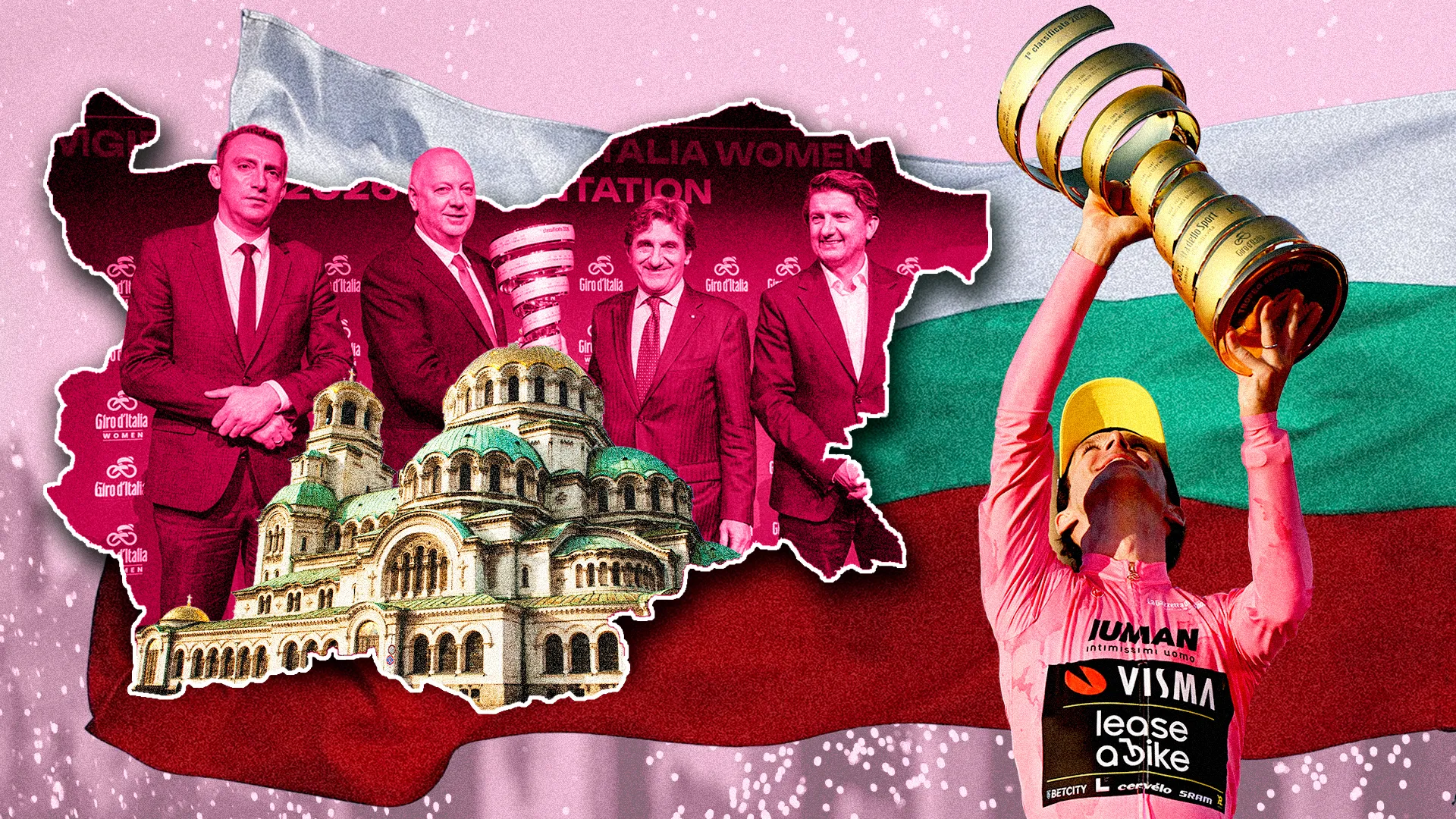
For the 15th time in its 109 editions, the Giro d'Italia will start on foreign soil in 2026, this time heading east to the Balkan nation of Bulgaria. A surprising choice at first glance, and this has not been a Grande Partenza without challenges, but Bulgaria is a nation with a history in the sport as long as the Giro itself.
With its Black Sea coastal plains to the east and high mountains to the west, Bulgaria will provide a varied opening three stages to kick off the Giro d'Italia, but the story of this start goes far beyond the route itself.
The 2026 Giro d'Italia will begin some 1,400km east of where it finishes in Rome, in the historic town of Nessebar, known as the ‘Pearl of the Black Sea’. The peloton will travel a short distance down the coast to Burgas on the opening day, where a sprinter can be expected to pull on the first maglia rosa before the race cuts inland towards the hills and finishes its Bulgarian appetiser in the capital of Sofia.
There's plenty of racing excitement surrounding this particular Grande Partenza, but there has also been a fair share of controversy and instability off the road; from an unhappy dispute over team participation fees to a political crisis in Bulgaria and a cycling federation in turmoil.
Ahead of the international peloton and media descending on Nessebar this week, Cyclingnews set out to investigate how the Giro got here, what it means for Bulgaria, and the impact of the complications along the way.
Team dissatisfaction threatened to derail Bulgarian start
There is an increasing trend in professional cycling of Grand Tours choosing to stage starts abroad more and more regularly, with organisers often pocketing significant sums from national governments for the privilege. Bulgaria is the Giro’s eighth foreign start since 2010.
Bulgaria is inexperienced when it comes to hosting major sporting events, and the Giro will be the first cycling race above UCI .2 level ever to be staged in the country. The 2018 Men’s World Championships in volleyball is the biggest sporting event held in the country over the last decade. There was some concern about whether the Bulgarians would be able to pull the Grande Partenza off, but all signs from Sofia are sounding positive.
"Last year, when the talks were in [an] advanced phase, I was not concerned, but I was also not so sure if Bulgaria could host this kind of event and such a big event like the Giro d'Italia," Bulgarian cycling commentator Simeon Kichukov told Cyclingnews, fresh from a four-day press trip held by Giro organisers RCS to show off the organisation of the event.
"The last four days, I'm very impressed with the readiness, the motivation of the people and their passion to do it. In every municipality, in every small town, they know about the Giro. They try to tell the people to be ready."
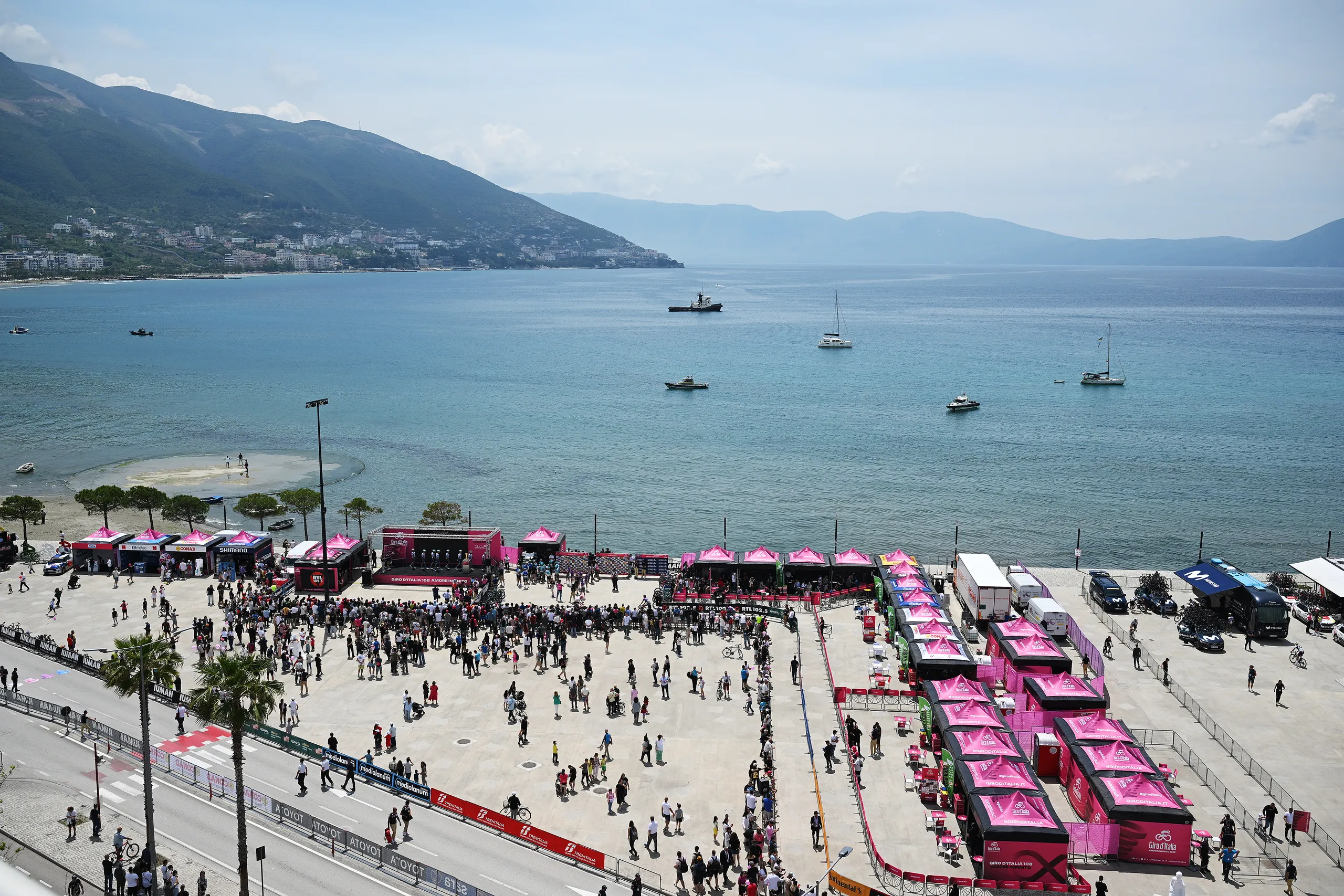
While the organisation of the Grande Partenza itself appears to be in place, several other major issues have threatened to thwart its success over the last year, including a dispute between teams and RCS.
Whenever a Grand Tour start takes place outside of the race’s host country, race organisers will offer teams a one-off participation fee in order to cover the additional costs of travel for each squad’s growing armada of vehicles and staff. That fee is usually in the region of €50,000. However, according to reports by Escape Collective, additional travel outgoings for this Grande Partenza have led teams to request participation fees more than triple the normal amount.
The challenge for teams, according to Escape Collective, is that with more than 1,000 kilometres between stage 3’s finish in the Bulgarian capital of Sofia and stage 4’s start in Catanzaro in the south of Italy, teams require two fleets of vehicles to be able to compete in the race – one to cover the three days in Bulgaria, and another for the rest of the Giro – adding to the overall cost and potentially forcing some teams to withdraw from other races taking place at the same time.
Cyclingnews understands that the AIGCP, the International Association of Professional Cycling Teams, has engaged in negotiations with RCS Sport since the start of the year in an attempt to secure a more appropriate participation fee to cover the costs.
The AIGCP’s Managing Director, Marc Chovelon, told Cyclingnews that teams had "requested financial support to help offset the major impacts" of the Grande Partenza. The AIGCP and RCS were able to come to an arrangement, but according to Chovelon, the final figure "fell below the level requested by the majority of our teams," leaving many of the Giro’s squads unhappy and out of pocket, though they are all expected to start the race.
Political turmoil, inside and outside cycling
Adding to the issues surrounding this Grand Tour start has been Bulgaria’s state of political insecurity, which dates back three decades but came to a head in the last few months.
In December, the sitting Bulgarian government collapsed after a wave of anti-corruption protests in which 100,000 people lined the streets of the country’s biggest cities in a show of opposition to the government.
On April 19, just three weeks ahead of the start of the Giro, Bulgaria held its eighth snap election in five years, illustrating the political crisis that grips this nation. Unexpectedly, and for the first time in 29 years, one party won an overall majority, possibly bringing to an end a long period of political uncertainty.
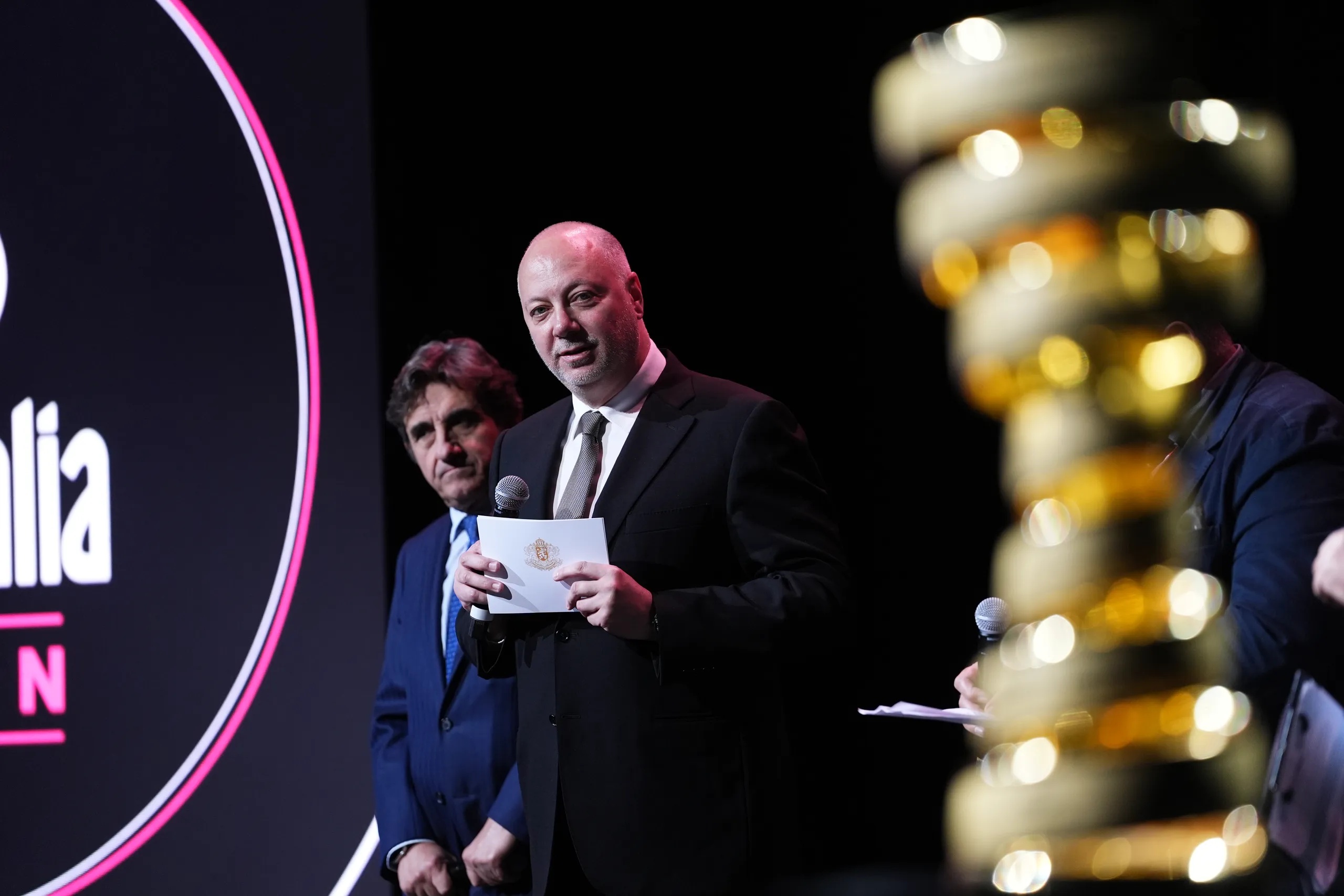
The Giro itself was far from being in danger; however, the government's collapse would have caused nervousness for the race organisation and teams alike.
While things are settling on the political front nationally, the same cannot be said for Bulgaria’s national cycling governing body. Last year, both the president and vice president of the Bulgarian Cycling Federation were fined and suspended by the UCI’s Ethics Commission. Both President Evgeniy Gerganov and Vice President Danail Angelov were found by the commission to be in breach of several articles of the UCI’s Code of Ethics.
A UCI statement in August 2025 said that both Gerganov and Angelov had been guilty of "abuse of authority due to repeated actions aimed at consolidating personal control over the National Federation, in particular, by modifying internal structures and retaliating against opponents, and, generally, placing their own interests above the applicable rules."
Both were also found to have breached conflicts of interest and engaged in verbal assault and intimidation, while Angelov additionally modified start lists to grant undue advantages to certain athletes. Gerganov was fined CHF 10,000 and Angelov CHF 5,000, and both were suspended from any involvement with the Bulgarian Cycling Federation for two years.
The incident has had an impact on Bulgarian cycling, with sponsors pulling out support for the federation. The pair have been temporarily replaced by other sitting members of the Bulgarian Cycling Federation Council, with permanent replacements being sought.
All negotiations for the Giro took place between RCS and the previous national government, with the federation only playing a small part in the organisation of the three stages.
"It was a big, big hit for the reputation of Bulgarian cycling," said Kichukov. "It's not a good image, and it could make problems in the future… We still don't know when the Tour of Bulgaria will be and in which cities it will come."
"The [temporary replacements] are good professionals, but they're limited by some factors, like a lack of money. The federation itself doesn't have the power to transform everything, but I know that the people love cycling," Kichukov added, hoping that fresh leadership and the impact of the Giro can begin a new dawn for cycling in Bulgaria.
‘This will have a positive benefit for Bulgarian cycling’
All that said, Bulgaria has a long and storied cycling tradition which belies its current status in the sport. The Balkans’ easternmost nation’s cycling federation is one of the world’s oldest, founded in 1902.
In 1909, the same year of the first Giro, there are records of Bulgaria’s earliest road race named the Tour of Vitosha, which took place in the mountainous region south of Sofia. The Tour of Bulgaria was founded in 1924, and remains one of the longest-running stage races anywhere in the world.
Despite its long history in the sport, Bulgaria has never produced cyclists of the very highest levels, and there are no current Bulgarian professional riders at WorldTour or ProTeam level. Only one rider from the country has ever competed in a Grand Tour: Nikolay Mihaylov, who raced the Giro d’Italia in 2015 as part of the Polish CCC Sprandi Polkowice team. Nentcho Christov is perhaps the nation’s most successful cyclist in its history, as the winner of the Peace Race in 1957.
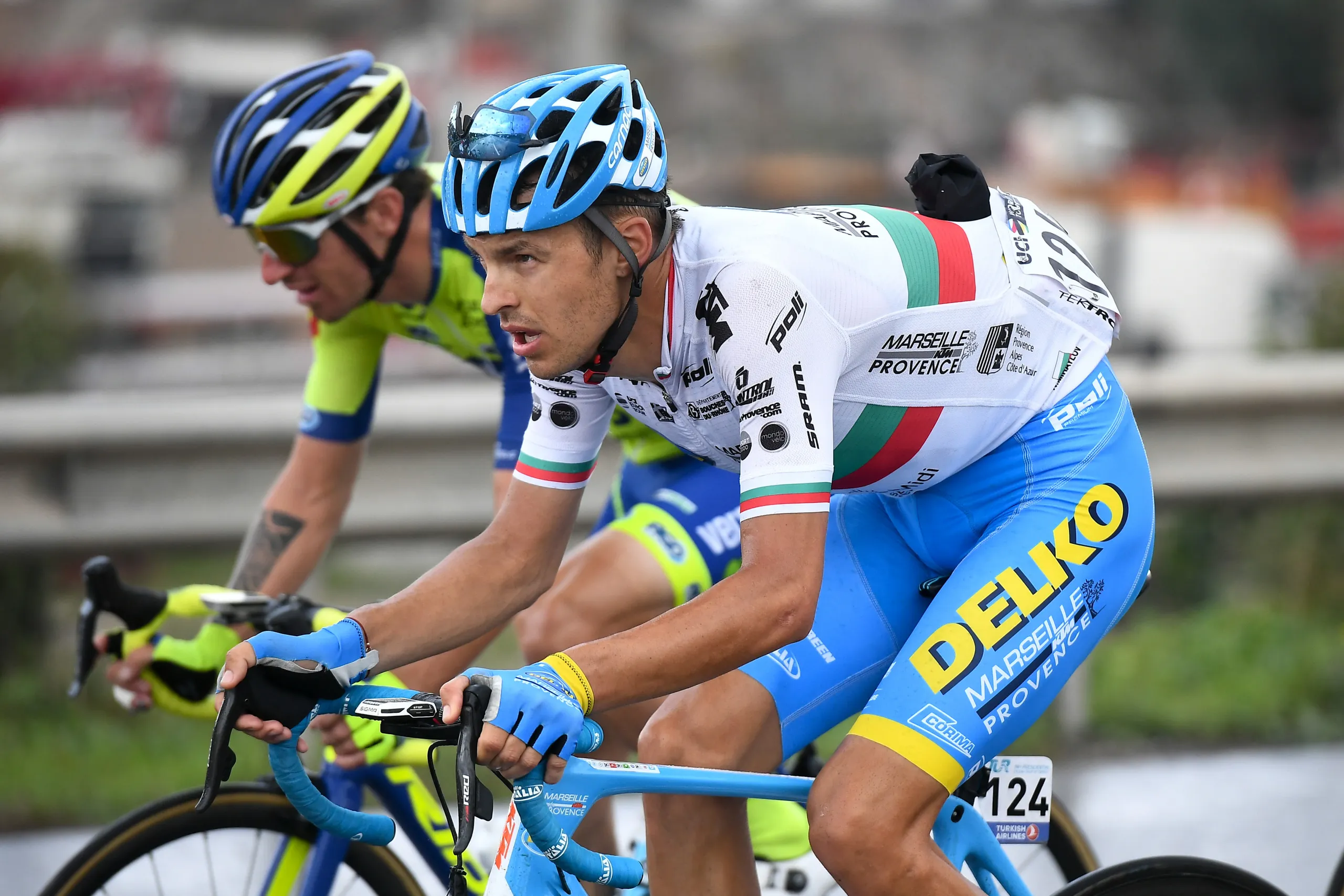
"Bulgaria has a rich history in cycling," Kichukov said. "It’s not like countries like Belgium or Spain, but from between the countries in this region, Eastern Europe, we were one of the best."
There may be a long tradition of cycling in Bulgaria, but the sport lags behind football and other sports in popularity. Traffic and negative attitudes towards cyclists on the roads also hold the sport back.
Prominent figures within the Bulgarian cycling community are hopeful that the Giro’s visit will have a positive impact.
"It was unexpected for me to start [the Giro] from Bulgaria, but I'm really happy this is happening and I think this will have a positive benefit for Bulgarian cycling as well," said Martin Papanov, the 2022 men’s national road race champion. "Cycling could become a little bit more popular in Bulgaria and maybe the drivers will be a little bit more patient when they see some cyclists on the road."
"A lot of people start asking me, ‘What is this Giro d'Italia? What's happening in our country?' They're curious about the race," Papanov added.
A varied route from the Black Sea to Sofia
The route for the first three days of the 2026 Giro d’Italia will show off the country’s vast array of differing landscapes, with a mixture of riders potentially able to grab some glory.
The opening day will be one for the sprinters, taking in a beautiful stretch of Black Sea coastline around some of Bulgaria’s most popular holiday destinations. The roads are familiar to Papanov, who previously raced for a team based in the city of Nessebar. He suggests that under the correct conditions, the opening stage could pose questions.
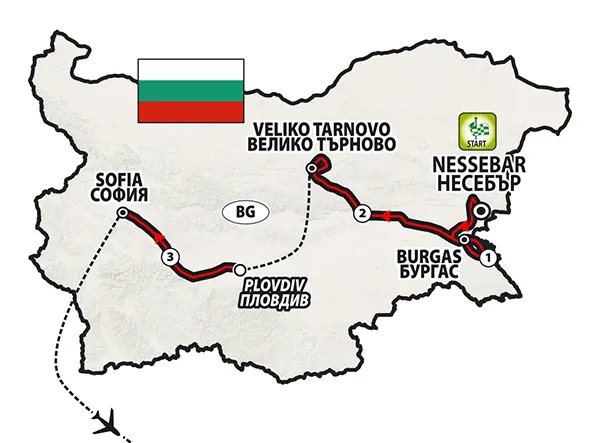
"I'm excited to see the first stage. It is nearby the coast. I used to ride there and I know that it is always windy so it could be interesting, but depends on how the peloton decides to ride," he said.
Stage 2 will head west and inland for a hilly 221km from Burgas to Veliko Tarnovo with three categorised climbs, the final one finishing with 11km to go before a drag to the line. Several technical descents will make this stage one to be aware of.
The third and final stage in Bulgaria goes between the country’s two biggest cities, Plovdiv and Sofia. It’s on this day that the Grande Partenza will reach its highest peak, the Borovets Pass. This climb reaches up to 1,334 metres of altitude with a maximum gradient of 11%. Its distance from the line means that fireworks are unlikely, but it will provide one final display of what cycling in Bulgaria has to offer. "I'm looking forward to seeing what will happen there," said Papanov, who knows the Borovets Pass well.
Against significant headwinds, both on and off the road, the Giro’s Grande Partenza in Bulgaria will set the scene for the season's first three-week race, as Jonas Vingegaard sets out on his quest to claim all three Grand Tours.
This is a Grand Tour start that many will be puzzled at how it happened at all, but scratch below the surface and there is plenty to be intrigued by on the roads between Nessbar and Sofia.
Dan is a freelance cycling journalist who has written for Cyclingnews since 2023 alongside other work with Cycling Weekly, Rouleur and Escape Collective. Dan focuses much of his work on professional cycling beyond its traditional European heartlands and writes a regular Substack called Global Peloton.
You must confirm your public display name before commenting
Please logout and then login again, you will then be prompted to enter your display name.
