The waterproof cycling jacket landscape has changed drastically in the last three years that I have been curating this guide.
The banning of the use of PFAS forever chemicals in the production of waterproof membranes and durable water repellent (DWR) coatings has made the finished garments better for the environment, but on the whole, they simply don't perform as well as pre-ban models.
Updated on 16th March 2026 A new 'best overall' option to bring things fully into the post-PFAS landscape, along with a new 'best commuter' following some further testing, and a paring back of the recommendations to make them as useful as possible.
Best waterproof cycling jackets available today
You can trust Cyclingnews Our experts spend countless hours testing cycling tech and will always share honest, unbiased advice to help you choose. Find out more about how we test.
Best overall


✅ You want the ultimate protection: This jacket can handle the worst of the elements and come up swinging.
✅ You want to layer up: There's room for proper midlayers, even up to small down jackets underneath for tackling freezing rain, sleet, and snow.
❌ You only ride in light rain: If you only ride in the rain occasionally and just want something for emergencies then this is likely overkill.
❌ You want a true race fit: The room for layers means the jacket isn't as close fitting as others in this guide.
The Pas Normal Mechanism Shield jacket is the first of the latest generation of post-PFAS waterproofs that isn't just not bad, but is actually good. I found the DWR held up extremely well even for prolonged use, and the breathability was sufficient to keep me from becoming a horrible sweaty mess even after repeated hill sprint efforts in the rain.
It's a little more heavy duty than the likes of the Maap Atmos, and isn't pocket friendly, but it makes up for this by being hugely protective in the worst weather you're actually likely to ride in. You get a couple of very roomy pockets in the rear, which I often stowed gloves in, and a sturdy drawstring on the hem to keep spray out from below.
The cut is quite short, as is the case with most Pas Normal garments, but with the cinch you can avoid most of the seepage from below that can occur. While short, it is also roomy, and the fabric has a pleasant stretch. It's rustle-free, and while it is perhaps less aerodynamic, the additional room means it never sits against your skin and clings as lightweight, race-fit models often can, and you have room underneath to layer up with sufficient extra clothes to tackle really severe, cold conditions.
It isn't cheap, but it's on a par with other top-flight jackets and actually justifies itself better than most by performing excellently. If you're planning on riding in bad weather regularly this should be top of your list, but if you just need something for emergency usage then look to lighter, more packable or cheaper variants like the Maap Atmos or Rapha Core.
For all the ins and outs that I don't have space to go into here my Pas Normal Mechanism Shell Jacket review covers all the bases.
Best budget waterproof cycling jacket
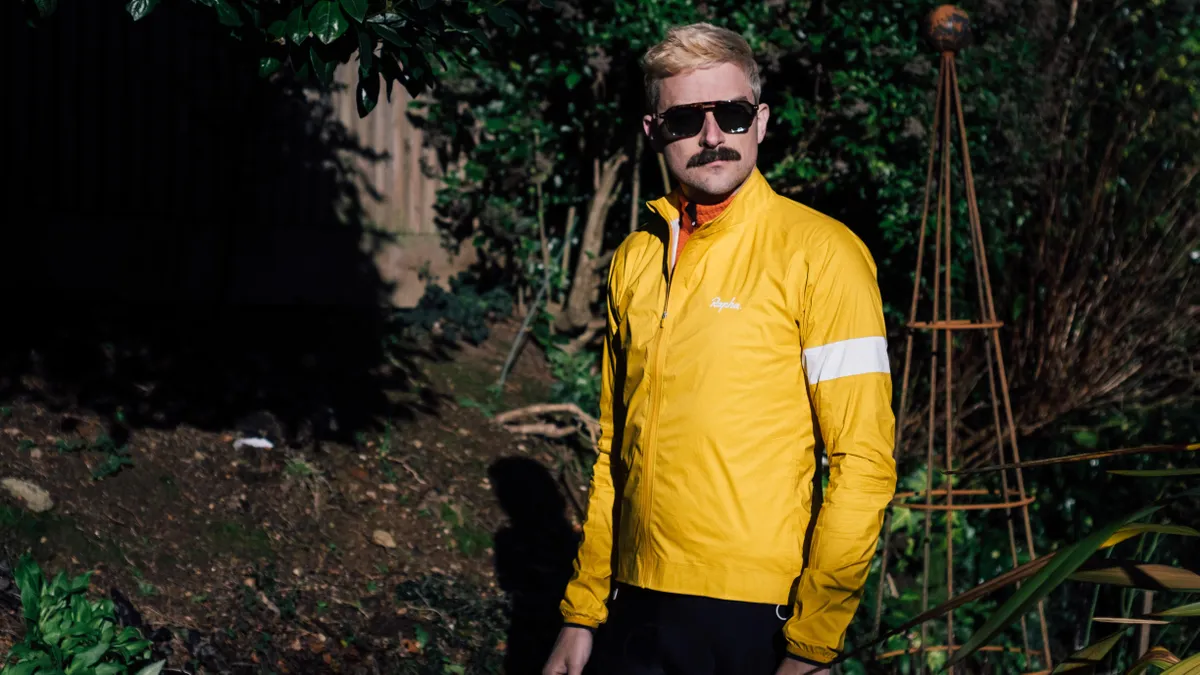


✅ You're only riding in the rain infrequently: If you only venture out in the rain when you have to, it'll do the job. It isn't as good as the Pro Team, but it's a lot cheaper.
✅ You want colour options: You'd be surprised how much difference this makes when the weather is grim. My sunny yellow one is discontinued, but there are still more options here than is the norm.
❌ You want a super breathable jacket: It can get a little clammy, especially during high-output riding. If your wet riding is mostly zone 2 cruising, you'll be ok, but it's not one for doing hill reps in.
❌ You often wear a jacket next to skin: The backing fabric is a little tacky and can grab at the skin a little when damp, so it's one ideally used with a long sleeve jersey or arm warmers for optimal comfort.
The fabric used in the Core rain jacket is pretty similar to that used in the Rapha Commuter jacket. It's nowhere near as thin as a Maap Atmos, but on the flip side, it did feel more protective in sustained or heavier weather. Think of it as a budget waterproof cycling jacket for colder conditions; better in the wet and cold, but not so good when the temperature rises, and not as ideal as a secondary-use windbreaker.
The jacket itself is visually very pleasing. While the Gore-Tex option is in my view the very top-end of road performance in this sector, I find it hard to resist adding some colour to my outfit and the yellow is cheering on miserable days, though the colour palette is now slightly more muted. In order to counteract the lower breathability of the fabric (sadly, Rapha doesn’t offer up figures), there are armpit perforations much like the POC Motion, which certainly help.
The Rapha Core Rain Jacket II does ape a lot of its design from the old Shakedry model, but the cut is roomier to allow for layers, and it’s longer at the front, so better if you don’t have a hyper-aggressive position on the bike. As per the rest of Rapha's jackets, I find you need to go up a size from your usual jersey. The hem is a drawstring which is no bad thing if you want to cinch, and while the offset zip certainly adds an aesthetic point of interest, I don’t think it has any real performance benefit; if it did, it would also feature on the Shakedry models.
I have a full review of the Rapha Core Rain Jacket II on-site if you want to know all the details.
Best waterproof cycling jacket for gravel

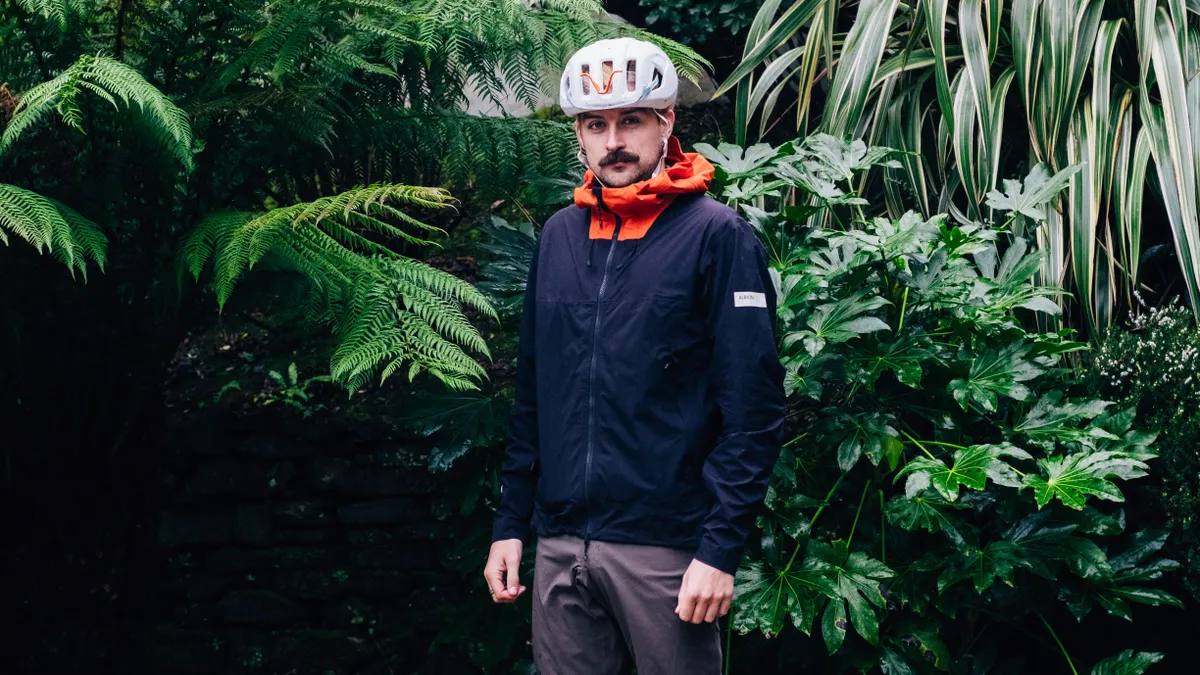


✅ You want the ultimate gravel protection: I've used this in the worst weather and it's brilliant. The hood is actually decent too, and the arms are long enough not to leave your wrists exposed.
✅ You want to use it off-bike: As well as being great for gravel riding, I took to using it for hiking and just generally day to day, as it's cut much more casually than a road jacket.
❌ You want an aero fit: This isn't a race fit jacket, and you can happily fit a puffy mid-size down jacket under it for use in the harshest conditions.
❌ You want a packable jacket: A great adjustable hood, large face box, adjustable cuffs and hem, and giant pockets come at the cost of packability.
The Albion Zoa Rainshell is the jacket in this list that most closely resembles a general-use, high-performance outdoors waterproof jacket. It’s cut for cycling, but not nearly as much as other options. The dropped tail is subtle, but the hood is equal-best for wearing with a helmet, on a par with the Rapha Trail jacket. In the case of the Albion though, it has a mouldable peak, more akin to what you’d find on a jacket designed for climbing mountains.
The Pertex Shield Air three-layer waterproof fabric is plenty breathable enough for high-output riding, and for those times when you do get too hot the double zip works wonders, as do the vent pockets if they're empty. The cut is also a little roomier, allowing some more winter layers underneath if you want to venture out in very cold conditions - I’ve taken it out down to about -15 degrees Celsius, but at this point, it’s more of a test for the mid layers than the shell.
I see the Zoa rain jacket as ideal for proper backcountry expedition gravel riding, or MTB if that’s your poison. It’s definitely durable enough (I’ve run one for a year and besides a few oil stains, it’s held up very well), but the cut lends itself more to a relaxed position, along with the front pockets for storage. My main criticism of the Zoa comes from the cuffs, which have a novel design that doesn’t work as well as a standard Velcro option.
The double zip on the pockets has sensibly been discontinued in favour of a normal zip in recent seasons, which avoids any risk of accidentally thinking you've done them up when you have just opened them from the bottom. They're only good for venting if they’re empty, as if you leave them open when they’re full, you’ll lose all your stuff on the trail. I opted for a size up from my usual jersey in this case, because for deep winter use, I like to use this and thicker layers beneath, but you can probably get away with your actual jersey size if you want a closer cut.
The Albion Zoa Rain Shell certainly did well in testing. Go read the full review if you're curious.
It's worth noting that the Zoa is often out of stock and only available in the UK. I do rate it as the best, but if you're stateside or you need one right now and it's not available, then go for the Rapha Explore Gore-Tex instead.
Most packable waterproof cycling jacket


✅ You want the most packable jacket out there: This thing is tiny when all scrunched up. It'll easily fit in a tool caddy or a bar bag, and is swallowed whole with room to spare by all but the most diminutive jersey pockets.
✅ You ride in summer showers: Its lightness and packability are married with great breathability, making it the perfect jacket for a summer downpour where you want to avoid overheating.
❌ You want a jacket for proper grim weather: The gossamer thin fabric can easily end up pressed against your skin and feel as though it's wetted out. It hasn't, but it amounts to the same thing in terms of sensation.
❌ You're tough on your gear: With lightness and packability comes a degree of fragility. This isn't the jacket for you if you're riding off-road or through foliage.
The Maap Atmos is proof that you can have really decent wet weather protection in a superlight, ultra-packable package. The Pertex Shield membrane is the same as you get in something like the Albion Zoa, so it absolutely keeps water out, but the face and liner fabrics are so thin and the features so pared back that it's a totally different option.
The POC Supreme kind of did the same thing, but the fit was all wrong and it was far too expensive. Here you get a jacket you can stuff into a pocket with room to spare and have it still keep some pretty heavy rain out all in one.
The fit is racy, very much like the Rapha Pro Team, but everything is a bit lower profile. The zip, cuffs, and hem are all just a bit more slimline, and the cuffs and hem especially use a thinner elastic band. The fit is still good, but the cuffs especially don't grab quite like the Rapha ones too.
This is the jacket that spent many hours stuffed away in a bar bag on changeable weather days, hoping to never be used. If you ride plenty in spring and fall and tend to stay inside when it's really grim, it's absolutely as much jacket as you'd ever need for a heavy April shower. I threw it on during summer thunderstorms and it was perfectly fine, but for really protracted, cold downpours, it does feel a little less protective.
Part of this comes from its lightness. Skin doesn't actually have any 'wet' detection capability, only temperature and pressure. Modern DWR treatments are more easily overwhelmed, especially on leading edges like your forearms, so you can get to a point where you have this wet, cold material resting directly on your skin and it feels wet even though it isn't actually letting water through. Feeling wet and being wet amount to the same thing in my eyes, and while this is totally fine when it's not that cold, for deep winter use, I'd go for something with a bit more rigidity to it.
It does come in a really lovely range of colours. I know this is purely an aesthetic point but jackets don't have to be either black, dark green, or high-vis yellow, and having a wide choice of muted tones might actually be the difference between getting out and enjoying a damp ride and just sitting on the turbo, or the sofa.
More than any other jacket that I've tested, the Atmos works really well as a wind jacket too. There are rides where the rain hasn't been forecast, but I've taken it out anyway as an extra layer all the same, and been glad of it when the heavens do randomly open.
For all the ins and outs, my Maap Atmos jacket review goes into everything in a lot more detail to help you decide on whether to pull the pin.
Best budget waterproof cycling jacket for gravel
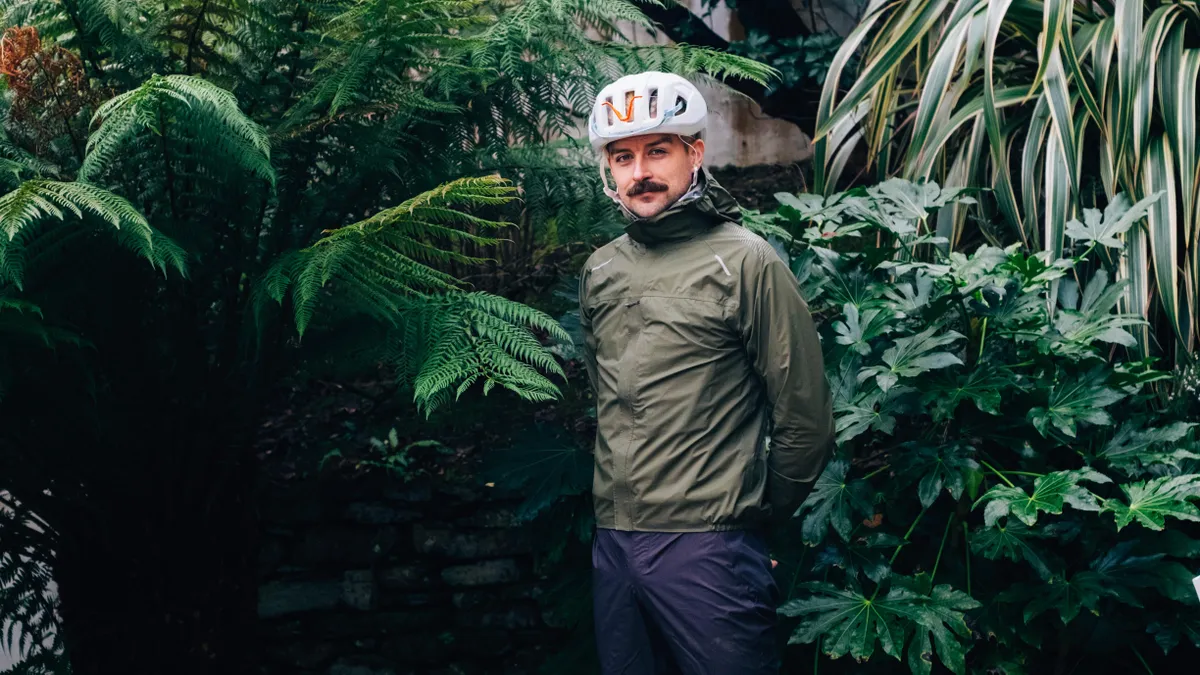


✅ You trash your gear: The GV500 is both really hardy and pretty cheap for a decent jacket. It'll stand up to abuse, and if you do trash it, it's less expensive to replace.
✅ You ride with a backpack: The shoulders have silicone grippers to keep backpack or hydration pack straps from sliding about in the wet.
❌ You're very broad shouldered: I found it a little tight in the shoulders, but this is only really an issue in a racy gravel position with narrow bars - if you're relatively upright you should be golden.
❌ You want a name-brand membrane: There's no Gore-Tex or Pertex here, which matters to some. This doesn't mean the membrane it does have is useless though; it wouldn't be in this guide if it was.
The GV500 is to my mind the best budget option for gravel riding and can mix it with the more expensive options too. It doesn't perform quite as well as truly high end options like the Albion Zoa and the soon-to-be-discontinued Rapha Explore Gore-Tex, but for shorter, non-extended sessions in horrible weather it's pretty great.
The fabric is similar to that of the Pro SL road jacket from the brand but moderately less breathable. While this may sound like a bad thing if you’re really giving it beans (which it is), for those times when you’re standing around looking at the view, or trying to plug a tubeless tyre in bad weather, it keeps you a little more protected from the elements.
The hood is big enough to accommodate a helmet without being restrictive, and the rubberised shoulders for keeping a backpack in place are a well-thought-out touch. The cuffs, like the road jacket, are well designed with a longer flap on the back of the hand to offer additional coverage.
The main reason I recommend this over other budget options is that it feels more durable and has slightly better specs. Gravel riding is harder on equipment, and while I haven’t had the chance to see which lasts longer in real-time, my money is on the Endura. Aesthetically, I’d rather the zip storm flap was on the inside, but that’s a pretty minor detail.
My full review of the Endura GV500 Jacket after countless hours in the rain should cover any questions you have.
Best waterproof cycling jacket for commuting


✅ You want to stay visible, but remain breathable: It's bright yellow, and not an absolute sweatbox.
✅ You still commute in cycling kit: It's a road-fit jacket, so not one to sling over a suit.
❌ You want the best fit: It's a bit tight across the shoulders, but the arms are suitably long.
❌ You like adjustable cuffs: There is just a half-elastic, and it's roomy to make room for gloves but quite breezy without.
If you want a waterproof jacket that'll stand you in good stead for getting to and from the office in a dry, visible manner without overcooking you while you have one of the best cycling backpacks on, as well as perform decently well for the occasional rainy club run at the weekend then the Endura Pro SL Waterproof Shell Jacket is probably the one for you.
The 10,000mm waterproof rating isn't class-leading but it is totally adequate for moderate rain, but a 60,000 breathability rating is excellent, and really helps when half your torso is covered by luggage. It's not as visible as the likes of the Proviz jackets, but those are like riding in bin bags by comparison.
I found the cuffs a little roomy, but if you're normally riding in gloves when it rains (I am not) you'll fill the breezy gaps easily. Unlike the Pas Normal option it has a lovely, old school dropped tail, which makes for a less trim silhouette, but a more dry rear end, which helps if you're only riding a short distance without mudguards... and if you are riding to work regularly without mudguards we probably need to have a chat, but that's for another time.
For more info as to why this is the ultimate commuter in my eyes then have a read of my Endura Pro SL Waterproof Shell Jacket review.
Best waterproof cycling jacket for racing


✅ You're riding HARD in the rain: What the Gabba R lacks in waterproof-ness it makes up for in breathability, which is key when you're pumping out a ton of heat in the rain.
✅ You want the most aero option: According to Castelli the Gabba R is more aero than the brand's San Remo skinsuit.
❌ You ride in the cold: There's no room for layers underneath, and the skintight fit means any evaporating water on the surface cools you rapidly.
❌ You are self-conscious: There's no getting around the fact that it has a distinct look to it. I don't mind it, but then years of testing all sorts of gear have numbed me to looking daft.
The relatively new Gabba R takes a lot of what was good about the old Gabbas of old, that being a proper aero cut, excellent breathability, and a focus on heat management rather than absolute water repellency, and adds a proper 'waterproof' membrane into the mix. The quotes are doing an amount of lifting here, and while it's certainly more waterproof than a softshell jacket, it's about half as waterproof as it needs to be to be classed as properly waterproof.
All that aside, for its intended purpose as a race jacket for heavy rain, it is marvellous. The outer fabric is similar in look to the old Shakedry, but does have a DWR treatment and can get wetted out with enough effort. In heavy rain, if you are riding full gas, there's nothing that can touch it for breathability. I used it in temperatures up to 16ºC in the sun without being horribly uncomfortable.
Rain will eventually get in, but if you're riding har,d you're going to be sweating and you'll get a bit damp whatever happens, I'm afraid. Here though, you'll stay at a comfortable temperature and be far, far more aero. Castelli claims the Gabba R is more aero than its San Remo skinsuit, and from the cut, I can believe it.
There's no room for layering underneath beyond a base layer and a thin jersey, so you have to get your strategy right. The seams aren't taped either to allow for a more form-fitting fit, and on any other jacket I'd view that as a horrible oversight but here I'm OK with it.
The close fit and lack of layering room can mean it's very easy to get cold if you stop riding hard. With the jacket essentially acting as a second skin, you get far more evaporative cooling, and it's definitely colder than the normal Gabba in this regard.
The aesthetics are going to make or break it for a lot of people too. I don't mind it, but as I've said in some other reviews, I am slightly numbed to looking a bit daft. It is fast and performs excellently, so if you can put the looks aside, you may be onto a winner.
It is available in both a long and a short sleeve option, and I think if you're seriously considering buying one, then you should get the short sleeve and add a pair of Nano Flex arm warmers. It'll be a far more versatile setup and see you better placed for Fall and spring than the long sleeve version.
My Castelli Gabba R review goes into all of these points in more detail if you're considering taking the plunge.
Also tested
While the eight jackets in this guide are what I believe are the best of the best, there are a tonne of other options that either nearly made the cut, or have recently been bumped out of their respective spots.

Our Tech writer Tom tested the Pas Normal Mechanism Pertex Rain Jacket and really liked that it's lightweight and packable whilst still offering an impressive level of waterproofing, which kept him dry out on the road. It's got enough breathability that Tom was able to keep it on while riding hard between downpours as well, without getting hot and bothered.
Not only does it perform well, but it also looks great, although Tom points out one important flaw that stops it from vying for the top spot. While he found the close fit to be very comfortable, the rear of the jacket comes up a little short and can expose the layers underneath, allowing rain and wheel spray to soak them.
For more details, check out our full Pas Normal Mechanism Pertex Rain Jacket review.

Similarly, the Albion All-Road Pertex Shield Rain Jacket ran the Rapha pretty close. The membrane performs much as the Zoa Rain Shell does, protecting you from the rain whilst still offering an impressive amount of breathability. Albion has designed the All-Road jacket with an unconventional zip configuration. Rather than using a double-ended zip, the jacket features a second zip that runs in parallel for opening up the front of the jacket from the bottom. It stops it from unzipping entirely, but the extra zip seemed like another potential failure point for me. If you want a slightly more forgiving fit, better for layering, then this is a great option in that regard.

For gravel jackets, the only real competitor to the Albion Zoa is the Rapha Explore Gore-Tex jacket. This is a really good option and one of the last remaining Gore-Tex Active membrane jackets on the market. It's hugely protective, even in the worst weather imaginable. Rapha has really gone all out on the attention to detail as well. There are large back vents to enhance ventilation, the hem and hood are easily adjustable and poppers which secure the front section of the hem inside the jacket when the jacket is unzipped from the bottom to stop flapping - a feature we think is particularly neat.
However, the price and the fact that the hood is noticeably more claustrophobic than the Zoa, swayed me towards the Albion option. I also considered including the very excellent Velocio Anorak, but it doesn't do anything that the Zoa doesn't also do, with the disadvantage of being harder to ventilate and put on/take off.
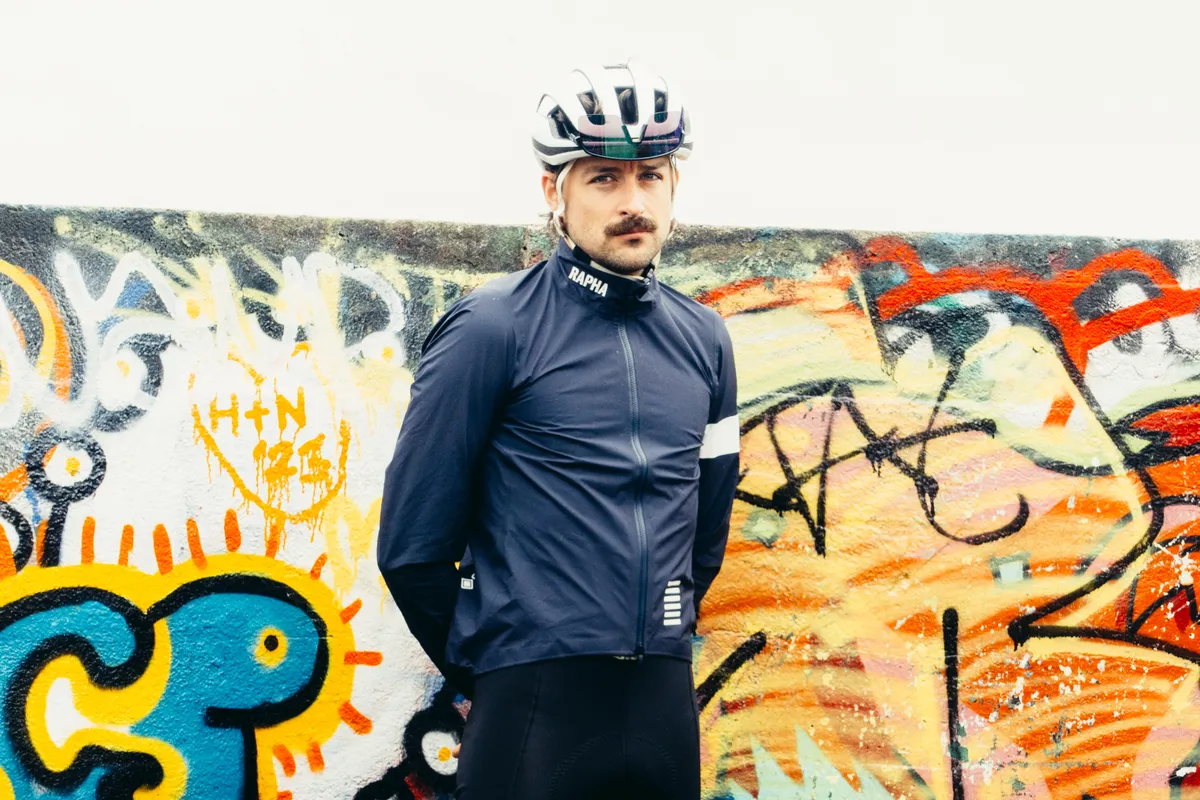
This used to be the 'best overall', but it's becoming increasingly hard to find due to its PTFE membrane and older DWR treatment. If you can find it then it is still an absolutely sensational bit of kit that outperforms every other road jacket bar the old Shakedry options for both protection and breathability. If it were not for supply issues and dwindling stock it would still reign supreme, and I've used this in absolutely biblical weather for hour and come home dry as a bone; it's truly marvellous.
It's easier to find it in the UK, but it is my understanding that you can pick it up in some states in the USA, but not all of them. Hunt around and you may be able to pick up something that, if you look after it, will look after you for many years.

The POC Motion is a great waterproof jacket if you're commuting in more casual attire, or you want something that doubles up as a casual jacket. It was previously the 'best commuter' option, showing how much I rate it, but ultimately our audience is quite roadie and more likely to find the Endura option handy.
I use mine still very frequently, on the bike and just around the city when I'm not chucking lycra on, and I always value how durable it feels. It's let down slightly by not having a waterproof zip, but the storm flap behind it holds up really well.
How to choose the best waterproof cycling jacket for you
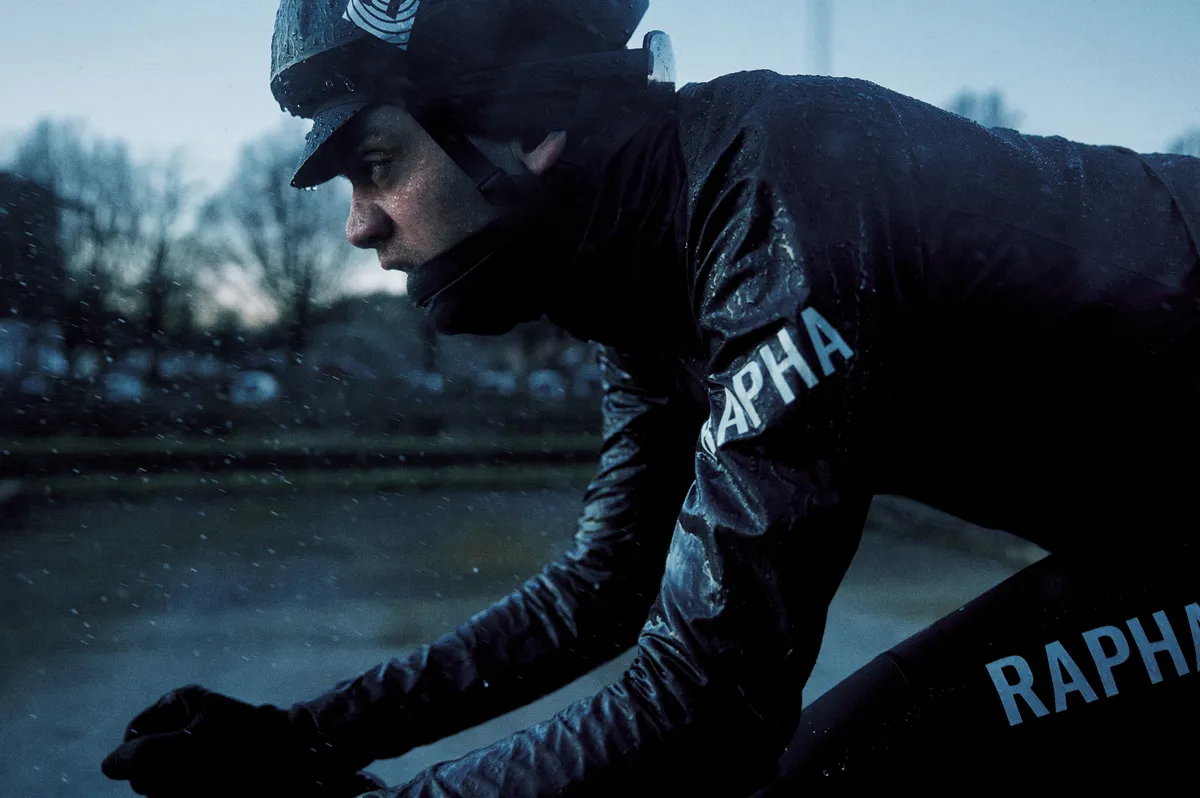
Picking the best waterproof jacket for cycling is no simple decision, so if you’re buying for the first time, I’ve outlined all of the options you should consider before pulling the trigger. You might think it’s as simple as “does it keep the rain out?”, but as you’ll see, there’s a lot more to it than just that.
1. Waterproof or breathable?
It’s inevitable that the more waterproof you make something, the less breathable it's likely to be. This means that you need to think about what exactly it is you want from your jacket. If you’re commuting on short journeys, then it makes sense to go for something that’s more waterproof. If you’re riding hard or long, then breathability should be at the top of your wish list.
Most of the jackets in this guide have a waterproof rating, which is measured in mm. This is based on a hydrostatic head test, where a column of water is placed against the fabric and slowly filled to determine how much it can withstand before water starts to seep through. Put simply, the higher the number on the waterproof rating, the better it’ll be at rejecting the rain.
On the other hand, you also have a breathability specification, which is measured in g/m2. The test for this is seeing how well vapour escapes through the material over 24 hours, called the Moisture/Water Vapour Transmission Rate (MVTR/WVTR). Like the waterproofing test, the higher the number, the more breathable the fabric will be.
2. Find your fit
Getting a jacket that fits you well is something else you need to consider. The last thing you want is a jacket that flaps around like a parachute on a windy flat, but likewise, you want to be comfortable on the bike.
There are jackets in this guide that will cover those who need something comfortable for commuting, like the Rapha Commuter Jacket, as well as more racy options like the Castelli Gabba R for cyclists who are all about being as aero as possible.
Personally, I've found that getting the balance between the comfort and performance options is the difficult part, so you may need to try a couple of jackets before you find your perfect fit. Don't be tempted to size down to get a more snug fit either, as this can backfire, particularly when it comes to the waist part of the jacket, which can end up being uncomfortably tight - ask me how I know that one!
3. Packability
We’ve all been on those rides where the weather can’t make up its mind, so having something that’s easily stowable in the back pocket of your cycling jersey is a must, particularly when you’re going on longer rides. Again, there’s a compromise to be made here, as a smaller, thinner jacket that’s easier to pack probably won’t have as much waterproofing as bulkier ones that require more storage space.
Everything you need to know about the best waterproof cycling jackets
What is the best waterproof fabric?
Gore-Tex for decades really has been the big name in waterproofing, but it’s not as binary as Gore-Tex = good, everything else = bad.
Gore-Tex encompasses many different flavours of waterproof fabrics, from Gore-Tex Pro (the absolute highest level of protection, great if you’re going up K2 or Everest, but not nearly breathable enough to handle high output activities like cycling), through to Gore-Tex Infinium (not really waterproof, but can shrug off rain and is incredibly breathable for use in changeable conditions).
At the heart of every waterproof jacket worth its salt is a waterproof membrane, made from either PTFE (polytetrafluoroethylene), or more commonly PU (polyurethane) now that regulations are being brought in to curb the use of fluorocarbons. This has tiny holes in it that are too small to allow liquid water to pass through, but large enough for water vapour (sweat) to pass out to the outside. This is the same whether you’re getting Gore-Tex, Pertex, or any other type of tex (they all seem to have -tex as a suffix by convention).
You’ll usually see two figures listed for the fabric performance, the waterproof and breathability ratings. The waterproof rating, known as the hydrostatic head, is a measure of how tall a column of water a square of fabric can support before allowing water to be forced through. At a minimum, it must be able to support a 1m column to be called 'waterproof', but for reference, some Gore-Tex options can support 35m. The breathability, measured in grams per square meter, shows how much vapour can escape per unit area of fabric over a 24hr period. For cycling, you want to look for 10,000g/m2 or higher, unless you’re only pootling about.
Since Shakedry has been discontinued there's been a bit of a shakeup at the top of the tree, with brands reaching for alternatives from Gore, Pertex, or in-house. In the last year I've certainly seen a lot more of Pertex Shield than I have anything else, and given how well it performs, and how versatile it can be (anything from the feathery Rab Cinder Phantom to the much more sturdy Albion Zoa) this can only be a good thing in my eyes.
Finally, it’s worth noting that while supporting a column of 5m of water may sound like a lot, if you’re wearing a backpack the load on the straps can physically force water through the waterproof membrane of less waterproof fabrics, so be sure to up-rate your options if you do ride with a pack. Also if you're descending at high velocity, hitting a raindrop at 65km/h can force water through lesser membranes.
Waterproof fabrics can be a hugely confusing world to navigate, so I've written a whole waterproof fabrics explained piece to help demystify things for you if you are confused, all of which stands not just for cycling but also any waterproof tech.

What is DWR?
DWR stands for Durable Water Repellent. Most waterproof cycling jackets have an outer fabric for durability and aesthetic reasons. This DWR coating is a chemical treatment that renders the outer fabric hydrophobic, causing water to beat up and run off.
With bad or old DWR treatments the water ceases to bead up, instead saturating the outer fabric and blocking any water vapour from escaping: Essentially it massively reduces the breathability of your jacket, but with wash-in treatments like NikWax, you can easily restore the DWR over and over again.
Brands are, in general, currently making a switch en masse to DWR treatments that don't contain PFCs. These don't always have the same longevity, but its all part of the general push to curtail the use of PFCs, or so-called 'forever chemicals'.
How should I wash my waterproof cycling jacket?
You need to avoid standard detergents as if your life depends on it as they destroy the waterproof membrane. You need to buy a special waterproof wash from a reputable supplier, and ideally run your washing machine empty on a rinse cycle first to clear out any soap residue. Then it’s just a case of following the instructions on your jacket and the wash-in product.
What is the most breathable waterproof fabric?
Gore-Tex Shakedry held the crown, but that doesn’t mean other options aren't as viable or even more so for different use cases. I've tried my best to explain where each jacket fits best in terms of intensity of use, but if the jackets here don’t float your boat then use them as a guide in terms of breathability to guide you in your purchasing decisions. Of all the general use jackets the Maap Atmos is the one I'd ready for for breathability, but it's not so protective as some; everything is a balancing act.
Every jacket here will keep the water out to an acceptable level for its intended use, so it’s probably the breathability figure that you need to be most concerned with. Bear in mind though that more breathable jackets dump your heat faster, so if you find yourself getting cold regularly, or are riding in colder climates you can also read ‘less breathable’ as ‘more warm’.
It's also worth bearing in mind that every jacket has a large hole in the top for your head, two small ones for your hands, and a massive void for your lower torso, all of which are great placed for water to get in. I'm yet to test a jacket that, when faced with protracted torrential rain, can keep water out totally.
Do I need a high-vis waterproof cycling jacket?
For commuting especially, some level of additional visibility is definitely advantageous, be that a bright colour or reflective details. Off-road away from traffic, this will obviously be less of a concern.
That being said you'll stay much more visible with a set of the best bike lights. If you want to add more visibility then there are plenty of reflective accessories that you can adorn yourself with whilst still keeping yourself dry
How should my waterproof cycling jacket fit?
For road riding you want something close cut to avoid flapping and the annoying noise and aero drag that comes with it. Remember to leave room for layers though. You’ll want something that’s short at the front with a long tail so it fits well in a more forward-leaning position. This rings true for gravel too, providing you’re also riding in an aggressive position.
For less speed-oriented riding you can go for something a little more casually cut. This is especially important for expedition-type riding where you may need to layer up underneath substantially if the weather turns on you.
For commuting, unless you get a thrill from racing the other people on their way to work, you can go for a jacket that fits as a casual jacket would, though the options here and from cycling brands will feature design features to make them more adept at being used on the bike, such as dropped tails and reflective details.

Does my waterproof cycling jacket need a hood?
There seems to be two camps here: Road jackets are almost universally devoid of hoods (none in this guide are hooded), while gravel and MTB jackets opt for them for the most part. It’s true that a hood will keep your head dry in the rain, but if you aren't riding with the hood up then they do tend to act as a bit of a wind sock behind you if you’re in a flat, racy position.
Hoods, ideally, should go over the helmet in my view. It looks a little silly at first, but it means you don’t have to stop and take your helmet off if you want to put your hood down.
Personally I prefer no hood most of the time, and wear a POC Ventral Tempus rain helmet (yes, they exist) to keep the worst off my head.

Does my waterproof cycling jacket need pockets?
Most waterproof cycling jackets are designed to be a final shell to go over your usual cycling attire. It’s assumed, particularly for road jackets, that your jersey pockets will suffice for storage, and most instead will just have ways for you to access these pockets, normally by a two-way zip. Gravel jackets will feature pockets more readily, the better to pack all of your gravelly accessories into, and the same goes for any jackets designed for MTB.
Gravel jackets though sometimes assume that most of your portage is taken care of either by a jersey or on-bike luggage like that oh-so-fashionable framebag. Pockets on a waterproof aren't essential, but that doesn’t mean they don’t help in some cases, particularly for bikepacking where you more regularly stuff random objects about your person.
Should my waterproof cycling jacket be packable?
It’s helpful if it is, but it isn’t necessary. Lightweight road jackets sometimes come with a stuff sack, but more often than not these are more of a pain to use than the benefit they offer. Simply roll the thing up and slip it into a back pocket instead. If you want packable then the Maap Atmos is the way to go.
More bulky jackets will rarely offer a dedicated stuff sack, but if you want to pack it away the best bet is to lay it flat, fold the arms in line with the body, and roll the whole thing away into the hood.
Why are some waterproof cycling jackets so expensive?
The answer is a mixture of supply, marketing, and the technology that is included as with almost all items available for purchase.
Cheap waterproof cycling jackets may not be made to the same standards, be made of as high a quality of materials, or simply won't be as waterproof or breathable as the top-end models.
Gore-Tex, and other waterproof fabrics, involve sandwiching a waterproof membrane made of expanded plastic a handful of microns thick between an inner and an outer fabric without damaging the membrane. This has then got to be made into a well-fitting garment that lasts, keeps the elements at bay, doesn't leak at the seams, and looks pleasing too. All this costs a lot to achieve, unfortunately.
Again it's good to be honest with your use case; do you need a top-end waterproof or do you want one? The latter is just as viable a reason to purchase one, but if you need to save money and don't need the absolute best then go for the cheaper option.
How long should a waterproof cycling jacket last?
This depends on how much you use it; a daily commuter jacket may look a little tired after a couple of hard winters, while a race jacket that's only used twice a season may last you a decade or more.
Treat your jacket well, wash it according to the care instructions with the appropriate cleaning products, and reproof it regularly and it'll last far longer than if you ignore it and leave it damp in a musty garage.
There are plenty of places now that'll repair waterproof jackets too, so even if you end up with a hole somewhere following a crash you needn't have to buy a whole new garment.
I've got a fabulous mountaineering jacket that I use all the time for wandering around the high street in the rain, plus the odd bit of skiing and hiking, and it's ten years old and going strong. There's nothing to say you can't get this level of wear if you're careful.

How we test
Unfortunately for me it means many many miles in pretty miserable conditions. At every wet opportunity, I've been out both on and off road, trying my best to find weaknesses in each of these options to bring you the best possible information. I have taken delivery of well over 50 jackets in the last few years and it is very quickly apparent which ones cut the mustard when you've got that level of experience.
I managed to destroy a front light in under an hour, so wet has the riding been, and I've also regularly had to throw on a still-wet pair of shoes from the previous test. On one memorable occasion, I misjudged a puddle and ended up submerging my bottom bracket in a mini flood.
As well as the ability to repel water, a key factor besides fit and form is how breathable these options are. Naturally, the testing mostly mirrors the intended usage; I wasn't doing hill reps in the commuter jackets, but anything designed for high-output riding was ridden in such a manner, meaning some pretty bleak evenings doing time trial efforts or some hilly inner city laps in the driving rain.
Sometimes it even means bringing multiple jackets on the same ride to do some proper back to back testing. If you want to learn more about what I've learnt getting wet (or not, in some cases), I've outlined the six things I learned testing waterproof jackets so you can learn from my mistakes.
It doesn't stop at physically testing either; I've also immersed myself in the production, the background chemistry, the regulatory framework and the future of all waterproof fabrics so I can give you the best possible steer on which products are going to be futureproof, sustainable, and safe.
In short, each jacket here has been given pretty thorough treatment in line with how we test everything else here at Cyclingnews.
Meet the tester

I've been testing waterproof jackets for Cyclingnews for three years now. Every fall as my colleagues retreat to Zwift I pop the mudguards on and venture into the wet. Having tried a huge variety of waterproof jackets I've got a real eye for what works and what is just a gimmick, and I've spent my time doing my homework on the science behind the changing world of waterproof membranes to help demystify things for you.