Gravel bikes wind tunnel tested: How does the new Specialized Crux stack up against the Argon 18 Anti Matter, Wilier Rave, Lauf Seigla, and more?
In the battle of the aero gravel race bikes, which will come out on top?
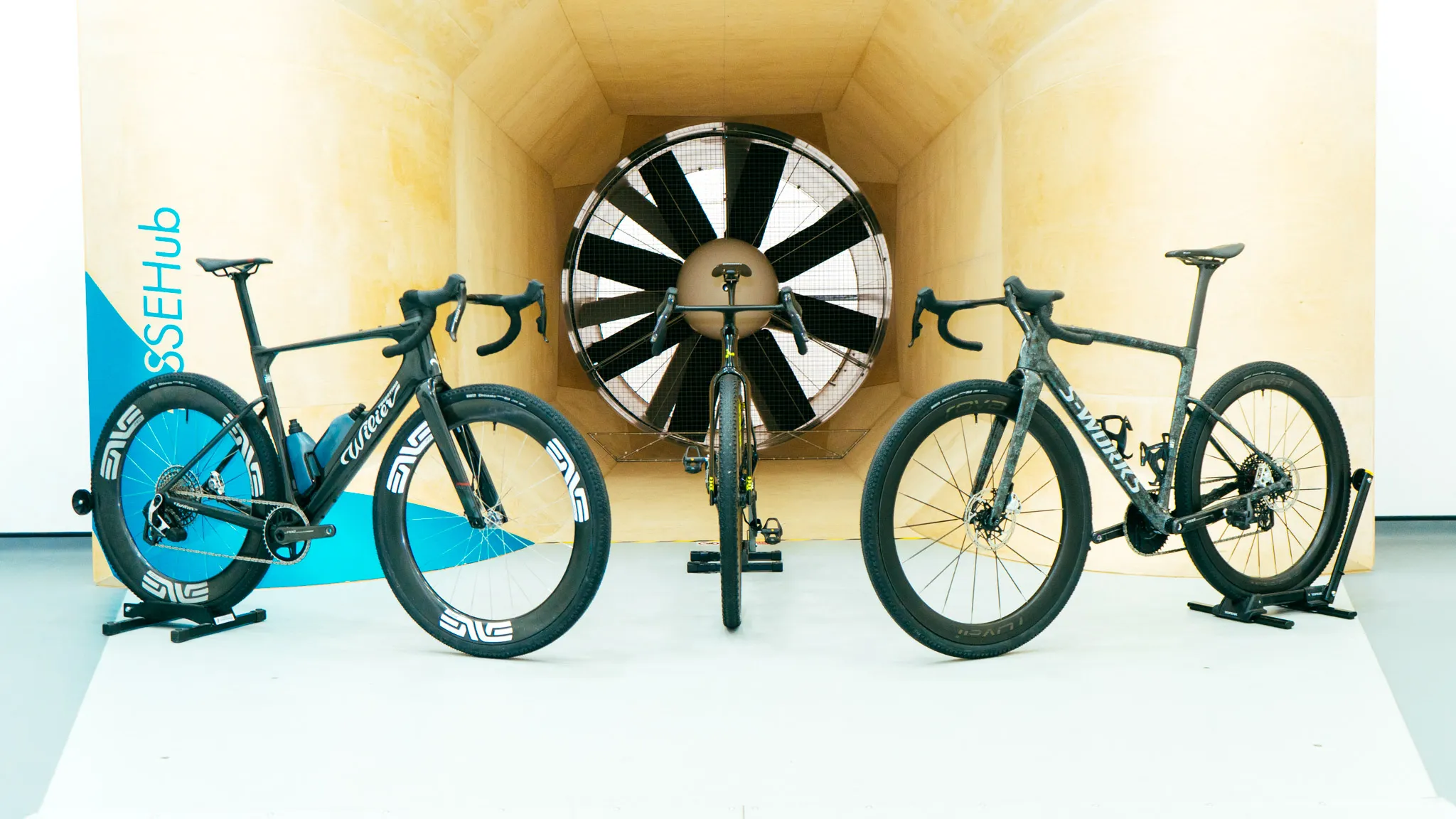
- The bikes
- Protocol and standardisations
- Confidence margin
- Additional disclaimers and caveats
- Sponsor declaration
- The results
- Bike only, stock wheelset
- Bike with rider, stock wheelset
- Bike only, standardised wheels
- Conclusions and takeaways
- Comparing to road bikes
- Individual bike results
- Baseline: Trek Emonda ALR
- Specialized Crux 5
- Wilier Rave SLR ID2
- Argon 18 Anti Matter
- Pinarello Dogma GR
- Reap Type 300
- Trek Checkmate SLR
- 3T Racemax 2 Italia
- Basso Palta III
- Lauf Seigla
- Thank yous
Ten years ago, gravel bikes didn't know what they were. Some were bikepacking bikes, others mountain bikes with drop bars, others cyclo-cross bikes with new titles, and others were just a blended mix of everything.
But as races have grown in prominence and prize money has increased, competitors have become more… well, competitive. Flannel shirts and post-ride beers have been replaced by ice vests and high-carb recovery drinks. Talk of handlebar moustaches has been replaced by talk of handlebar width. And tyre width is everyone's favourite subject, from the amateur ranks right through to the pros.
As all that has changed, bike brands have scrambled to keep up, with riders wanting bigger tyre clearance, aero frames, narrow handlebars and more. And as a result, a new category of gravel race bike has formed.
I've long been curious which of these new bikes is most aero, and I strongly suspect our readers are too, but there's a big caveat that's stopped us testing it 'til now: tyre clearance.
The term 'faster' doesn't solely come down to a bike's aero drag, and that's especially true on the rougher surfaces of gravel. A bike could have 40mm tyre clearance, be incredibly aerodynamic, but really slow on balance once you've factored in the rolling resistance against a bike with 57mm clearance.
We've long understood that wider tyres offer lower rolling resistance, but it wasn't until earlier this year, when we published a test that measured the combined differences of rolling and aero drag across different widths, that we could put some numbers against it.
We've got more tests planned in that field to refine our data and improve its accuracy. But for now, we're in a position to confidently measure the aero drag of gravel bikes with that context in mind. So that's what we did.
Just as with our road bike wind tunnel tests, we've taken a cohort of gravel race bikes to the wind tunnel at Silverstone Sports Engineering Hub to put them to the test.
The bikes
- Lauf Seigla
- Argon 18 Anti Matter
- Specialized Crux 5 (the new one)
- Trek Checkmate SLR
- Wilier Rave SLR ID2
- Basso Palta 3
- Reap Type 300
- Pinarello Dogma GR
- 3T Racemax Italia²
- And our trusty Trek Emonda ALR, for benchmarking and comparison purposes
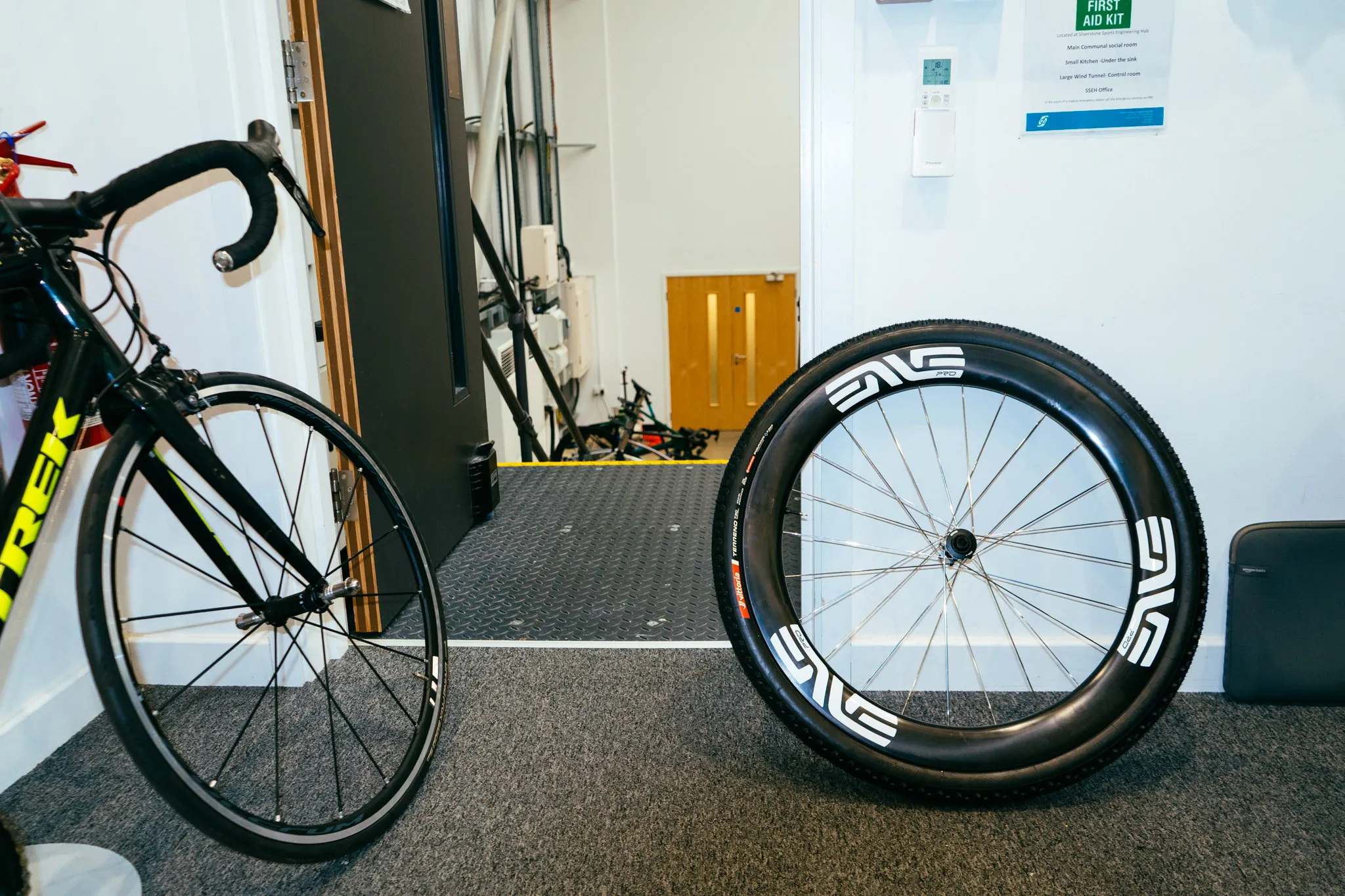
With that Emonda ALR, we built a protocol that gives us an element of comparability to our road tests, just for a second layer of info, but the primary aim here was to understand how many watts of aero drag separate the various gravel race bikes you'll find on the market today. Coupled with the reduction in rolling resistance drag that wider tyres can provide, we should then be able to assign a ranking to each bike.
This category is ever-growing, especially in 2026. Ridley, Factor and Canyon each teased new machines at the recent Traka Gravel that all look to mix deep aero tubes and big chunky tyres. Sources tell me we'll see more at Unbound, too.
We tried to get each of the aforementioned unreleased bikes, as well as the Cervelo Aspero 5, BMC Kaius and Cannondale SuperX. For context, as I feel this is important, Ridley and BMC simply couldn't get us a bike in time, despite wanting to. Cervèlo and Cannondale promised bikes, but they never materialised, likely due to logistical stresses since Cannondale's UK distribution has returned in-house. Canyon simply said it was "the wrong time," given the new bike's imminence. Factor, citing the complexities of gravel bike aero testing, refused to partake. I spoke at length with them, and while I dislike it, I respect their decision.
Speaking of complexities…
Protocol and standardisations
We tested at 35km/h. This is faster than most of our readers will be averaging when riding gravel, but there are a couple of reasons for this.
First, the slower the wind speed, the less force is being exerted on the force balance in the wind tunnel, which ultimately is what measures the drag. With lower resolution and testing with a real rider, the impact of slight movements would have an outsized effect on the result. We could have tested for longer on each capture to offset this, but that would have meant needing to hold the correct position for longer, which means potentially more movements. Therefore, testing at as high a speed as is relevant made the most sense.
Second, most of these bikes are designed for elite racing, and the pinnacle of that sport is Unbound Gravel, where the average speed in 2025 was 37.8km/h for the men, and 32.4km/h for the women. 35 is nicely central to this, and having consulted multiple aerodynamicists, I'm assured that extrapolating from tests at 35km/h down to 30km/h or up to 40km/h won't unfairly affect the results compared to testing at those speeds.
Third, even in age group racing, the decisive move in a gravel race when aerodynamics matters (ie, you're not drafting) is rarely below the average speed of a race. It's an attack, a lone breakaway, a bridge to the next group, etc. My own average speed at the 2025 Gralloch (a mediocre 26th place) was a smidge over 30km/h, but the race-deciding moment where I crashed and chased back on, was 36.7km/h (according to my Strava).
We tested at seven yaw angles, from -15° to +15° in 5° increments. At slower speeds, wider yaw angles are experienced more often, but at typical gravel race speeds, the bell curve is still a steep one that centres around 0° (direct headwind). The frequency at which you experience greater than +/- 15° is small enough to discount.
We tested each bike in three ways:
- With a rider – me – with its stock wheels and 45mm Pirelli Cinturato Gravel RH tyres.
- As a bike on its own, with its stock wheels and 45mm Pirelli Cinturato Gravel RH tyres.
- As a bike on its own, but with the Enve G SES 6.7 wheels and 50mm Vittoria Terreno T30 (previously Terreno Dry) tyres.
Each bike was a 56cm or the model's closest equivalent.
Positions were matched as closely as possible across bikes, with reach and stack matched to ensure my torso angle was consistent. We were unable to change the handlebar widths, but by rolling my wrists in or out, I was able to match the position of my arms well from bike to bike.
Each bike was fitted with 45mm Pirelli Cinturato Gravel RH tyres front and rear, inflated to 30psi to avoid any avoidable difference in tyre shape/size.
All bikes were fitted with SRAM Red XPLR or Force XPLR groupsets, except the Basso Palta III, which came with Shimano GRX wireless (2x) and the 3T Racemax 2 Italia, which had wired GRX (2x). All had 170mm cranks. We didn't control tube valve length, but instead used what came with the bike, as they best reflected the length of valve a rider would typically use on that bike.
Each bike had an Ergon SR AllRoad women's saddle, because it features the same shape and design across both alloy- and carbon-rail versions. This made it much easier to set the positions identically, and meant there was no unfair disadvantage to bikes with a 3D-printed saddle in the bike-only tests.
Where a bike comes with its own aero bottle cages and/or bottles, we used them, as we believe owners of said bikes will use them too. For everything else, we used Elite Fly bottles and Vico cages.
We removed computer mounts from all bikes and taped over the holes where necessary.
In the rider-on-bike tests, my cadence was held at an average of 90 RPM to ensure 45 full rotations per capture (and not start/finish midway through a complete revolution). And the gear was matched to ensure the wheels spun at the same speed.
I wore the same kit, helmet, shoes, overshoes and glasses throughout the day, and marked their position on my legs and arms to ensure they didn't creep out of position as the day went on.
In the bike-only tests, a powered roller spun the wheels at 35km/h. The cranks were locked in a horizontal position.
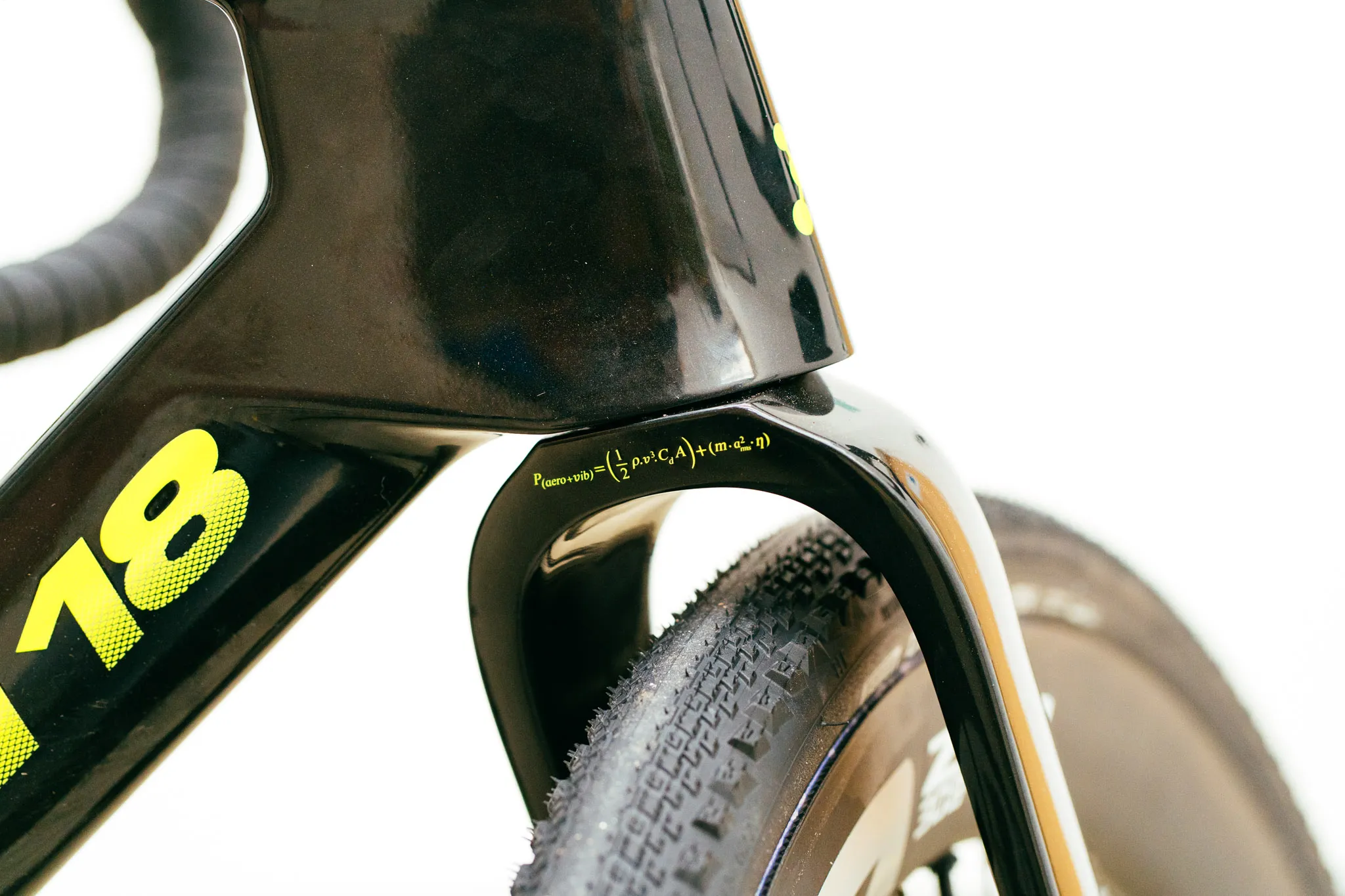
Confidence margin
By testing an identical setup at the start of the day, immediately thereafter, and then again at the end of the day, we are able to quantify the margin of error we can expect to creep into the result of other bikes. This comes from things like my position on the bike, how I grip the handlebars, the orientation of bottles in the cages, small differences in how it sits in the mounting stanchions, and so on.
| Header Cell - Column 0 | Bike only |
With rider |
|---|---|---|
CdA |
0.0005 m² |
0.0030 m² |
Watts at 35km/h |
+/- 0.26w |
+/- 1.63w |
This is similar to what we've seen in our road tests.
Positively, the raw data from the tunnel for the Emonda ALR is similar to what we've seen in previous tests too, although not close enough that we can avoid testing it altogether.
Additional disclaimers and caveats
As ever, Cyclingnews does not claim that this data is the final word on the aerodynamic performance of the bikes featured, but rather an additional stream of independent, unbiased testing and information for our readers. The data is simply a result of our own tests, under our set protocol.
We hope that by being clear about our testing procedure, our readers (and maybe even the brands themselves) can understand the data and appreciate the results without losing sight of the bigger picture.
This is especially true of the combined result that factors in the effect of tyre clearance. We have based this on the manufacturer's stated tyre clearance, not the absolute maximum tyre size that each frame could fit. And we have not tested for frame compliance, which could offset, or even further, some of the differences.
Our rolling resistance tests covered three surfaces, but only you know the severity of 'gravel' you typically encounter. The benefit of bigger tyres grows roughly in line with the roughness of the terrain. If your idea of gravel is actually just a dusty road, upgrading from 45mm to 57mm tyres will be less important than if you rode chunky rock gardens.
There are dozens of other factors you should consider, too. A bike's weight, how it rides, the stiffness, comfort, component specification, after-sales care, and even just how it looks are all metrics to weigh against one another. Only you know how important each one is to you.
It's well documented that when cycling, you experience low yaw angles more often than high yaw angles (more headwind than crosswind), so our results have been weighted in accordance with Nathan Barry's 2018 paper, A New Method for Analysing the Effect of Environmental Wind on Real World Aerodynamic Performance in Cycling. This ensures the data and our conclusions are more real-world applicable. Interestingly, a few brands have challenged this notion as being too heavily in favour of wider yaw angles. I plan to do a deeper dive into this in the coming months, but for now, we've stuck with what we know.
Also, I've run the maths to weight more heavily to 0° yaw (as if for a 52km/h rider speed), the order of bikes remains almost entirely unchanged, and any adjustments in average CdA remain within our error margin of the next bike, so I'm confident that our results aren't any less valid as a result of our chosen protocol.
Sponsor declaration
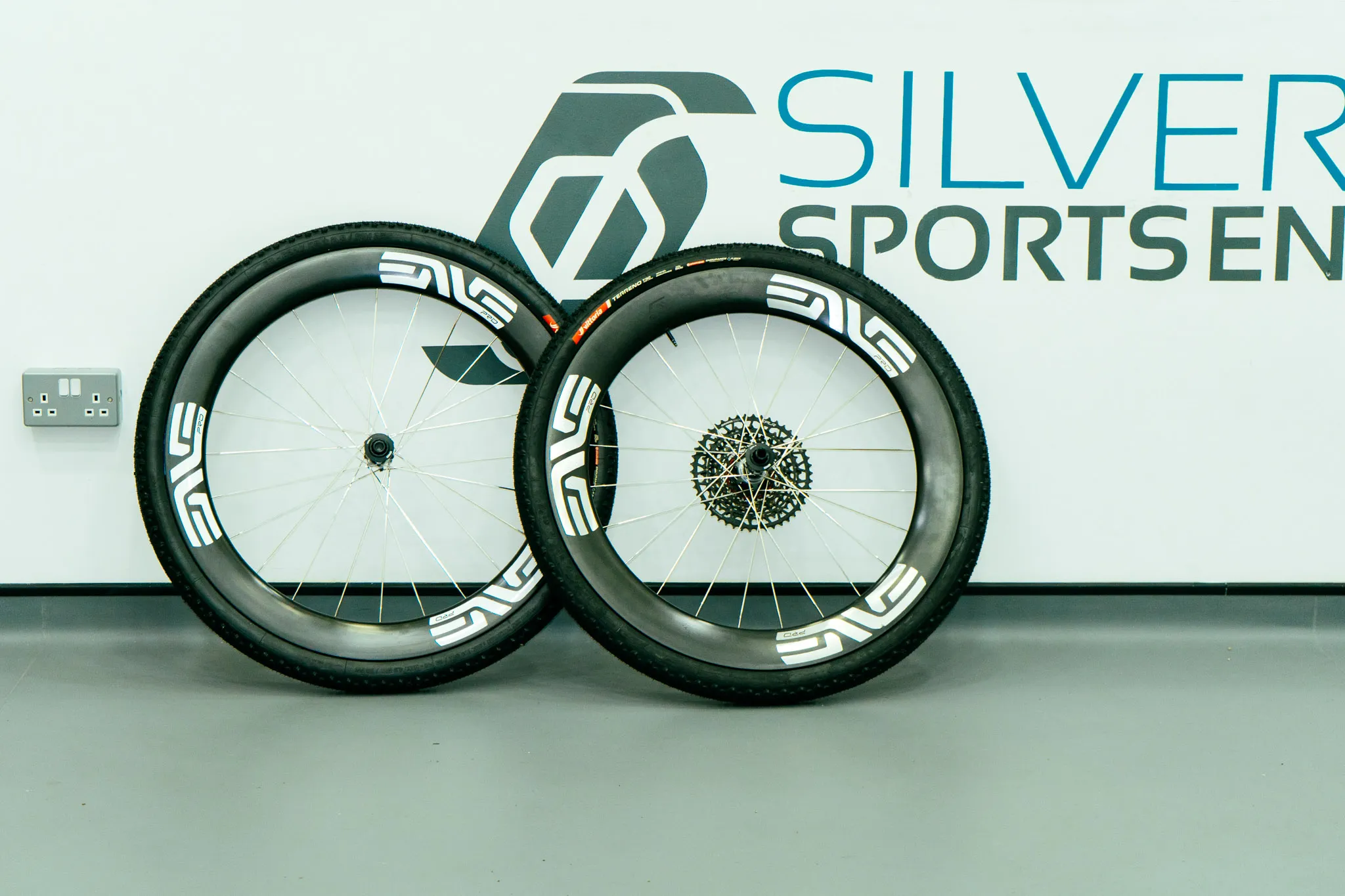
Before we get into the fun stuff, a brief interlude to say that this story includes paid product placement from Enve, hence the use of the G SES wheels as our control.
I personally approved Enve's inclusion in this test, as I do with all paid placement inclusions, having concluded it would offer no unfair bias – nor the appearance of bias – to the test.
We wanted a control wheel for the test that represented the progressive, wider, more aero direction that the gravel racing space is trending toward, and the new wheels with a 35mm internal seemed like the perfect match.
Beyond that, the test wasn't in any way sponsored. We run these tests entirely independently. Each brand loans us the bike specifically for the test (sometimes doubling up for a subsequent real-ride review), and the bikes will all be returned in due course. By the time you read this, most of them will already have been sent back.
We pay to hire the wind tunnel at the same commercial rate as any other customer. As a result, these tests cannot happen without our subscribers, so a fair and impartial protocol is essential to their success and our ability to continue doing them. If you, as a reader, don't trust our authenticity and impartiality, this whole franchise becomes a bit pointless.
The results
I'll present the results in a few different ways.
First, I'll show the raw CdA figures as they come out of the tunnel software, shown in graph format across each yaw point.
Next, having calculated the weighted average, I will calculate the difference against the baseline bike in watts. These calculations will only account for aerodynamic drag, not drivetrain friction, rolling resistance, gravity, and so on. We're interested in the differences here, rather than the absolutes.
For clarity, I will use this equation. Power (watts) = 0.5 x AirDensity x CdA x Velocity^3
Rather than then combining the aero data with our previous test on the effect of tyre width, I will simply add in an interlude now to show those results.
The reason for this is that they were complicated. The aero penalty is linear with width, as you'd expect, since a bigger tyre should create more drag. But surprisingly, we also found that the rolling resistance increased (ie, more drag) with width until you hit mountain bike sizes (57mm and 61mm), where they rapidly fell.
By our data, there's a clear advantage to any bike that can accept tyres as wide as 57mm, and slightly more again for those that can accept 61mm. But a bike with 53mm clearance isn't less good than one that can only accept 45mm tyres, because you can still run 45mm tyres in it.
I will reference the tyre clearance of each bike as results are published.
Bike only, stock wheelset
The graph above shows the CdA as it comes out of the wind tunnel software at each of the seven yaw angle plots. It's entirely normal for the CdA to increase at higher wind angles. Some bikes are able to use the sail effect to reduce drag when the wind comes from an angle, but chunky gravel bikes clearly aren't doing that.
Hover over (or click on) bikes in the key to highlight each one in turn.
The graph above is the result of the aforeshown CdA, weightings applied to reflect the real-world likelihood of experiencing each, and then using that average, I've solved for watts. It shows that the Argon 18 Anti Matter is fastest by 1.21w (+/- 0.26w error). The Crux 5 is next, despite being by far the lightest bike on test.
The Lauf Seigla, a Force-equipped bike with shallow wheels a round handlebar, separate stem and externally routed cables brings up the rear. I'm pretty surprised by the Basso Palta, which despite looking like a very premium machine, is both aerodynamically poor and heavy, at almost 8.5kg.
This is a slightly clearer graphic of the differences between each bike. Interestingly, our baseline Emonda ALR road bike is among the cohort, showing us that despite the obvious defecit of fat tyres, modern gravel bikes are able to hold their own against bikes - albeit basic ones - from a decade ago.
Bike with rider, stock wheelset
Above, we've plotted the same seven yaw angles, but this time for the bike with a rider - me - on top.
The first thing you'll call out is that the Emonda ALR is fastest. Don't read into that too much; being a road bike, the position was impossible to match against those of the various gravel bikes, so rather than get halfway there and still have rubbish comparability, we kept it as per our road tests. I stand by the notion that riders will generally be in a different position - shorter reach, taller stack - on a gravel bike anyway.
Emonda aside, a similar selection of bikes occupy the fastest spots, with the exception of the 3T, which had a very wide handlebar and a stem that couldn't be lowered without cutting the steerer, which we weren't permitted to do. Therefore, its position was a little higher and wider than the rest, and that has likely affected it here.
When we solve for watts, the Crux 5 sneaks into the top spot ahead of the Wilier Rave. The error margin means that the Argon 18, the Pinarello Dogma GR and the Reap Type 300 can all claim top spot, while the Trek Checkmate, 3T and Basso are in the relegation scrap (Premier League Football rules), and the Lauf Seigla is a distant last place.
Above, I've zoomed in a little to look at the deltas against the Emonda. As mentioned, the Emonda is fastest, but the differences between fastest and slowest gravel bike is a notable 14.45 watts. Even if you ignore the four-year-old Lauf and compare against the Basso Palta III which launched this year, there are 8.99 watts separating the fastest and slowest.
Bike only, standardised wheels
Next, it's time for the standardised wheel test, where we removed the brand's supplied wheels and swapped in a set of Enve G SES 6.7 wheels, shod with a pair of 50mm Vittoria Terreno T30 tyres.
Our aim here was to show each bike in a more consistent and more modern setup, but not so wide as to alienate half the bikes on test.
Although we did have to bench the Pinarello, since the rear wheel wouldn't fit. The Trek Checkmate managed it, just, despite claiming 45mm clearance. Everything else promises space for 50mm or above.
I spoke to Enve prior to using the wheels and learned they were actually designed around a 45mm tyre, which seems narrow for a wheel with a 35mm internal width. I was assured there wasn't a big penalty bumping this up to 50mm, though, so that's what I settled on.
If we went even wider, then we'd have to cut more bikes from the test, and it felt better to have more data than run 2.2in tyres and only manage to fit them into four of the bikes.
The aero differences between bikes shouldn't be too different anyway.
We already know the aero penalty between different sizes when all else is kept equal. There's also a rolling resistance difference to bear in mind if you do.
Here, like the earlier bike-only test, the Argon 18 is ahead of the competition. The Wilier Rave has actually snuck ahead of the S-Works Crux, while the 3T and Reap aren't far behind. Trek is next, then Basso, and then the Lauf brings up the rear once more.
The bike to gain the most from the wheelset upgrade is, unsurprisingly, the Lauf, which gained 8.38 watts. It was tested with a pair of shallow E*Thirteen wheels that offer very little aero promise.
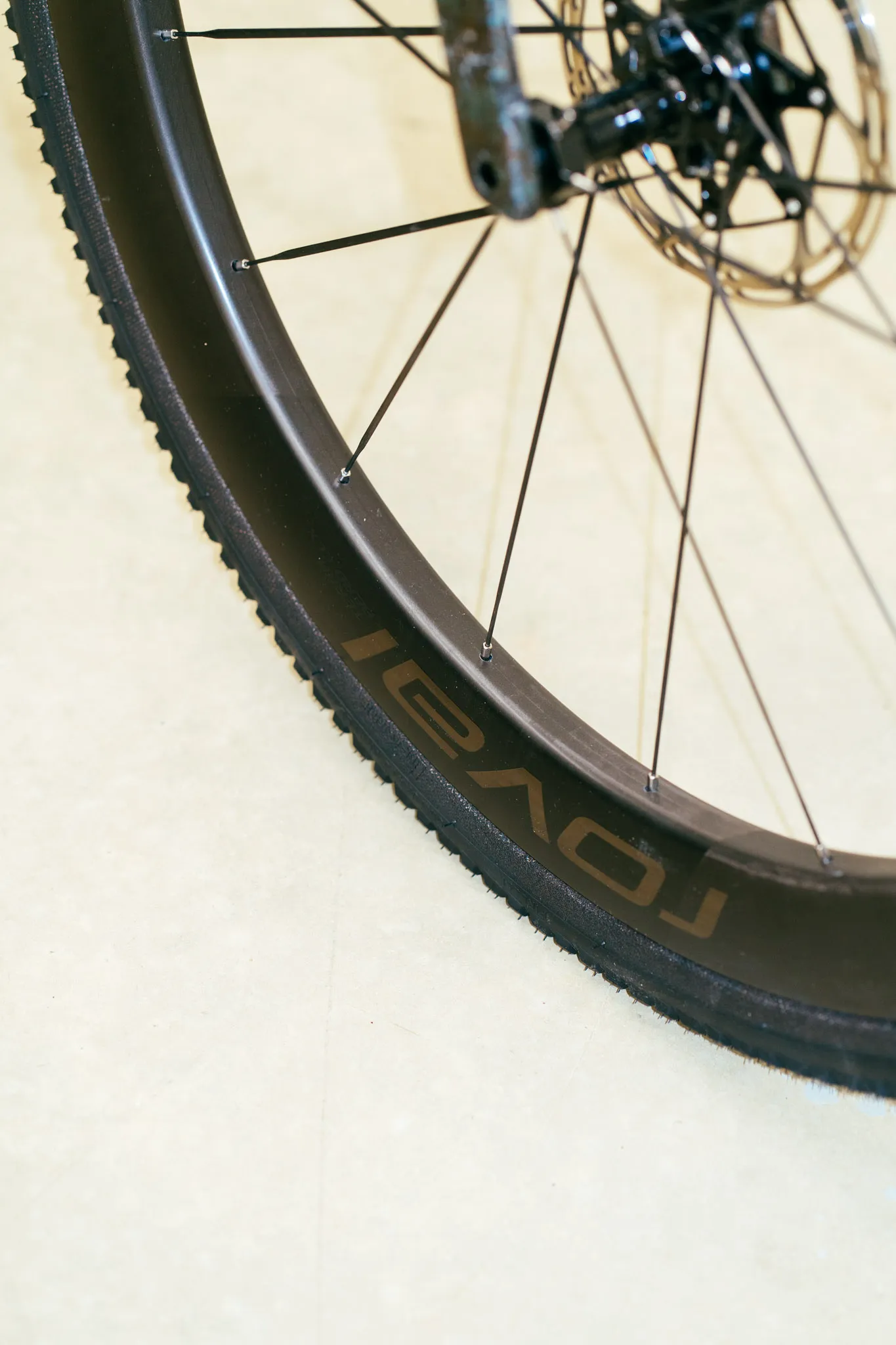
The bike to benefit least from the upgrade is Specialized, gaining 2.37 watts. The Crux's Roval Terra Aero wheels feature a clever chopped aero shape that is said to mimic the aero property of wheels with 70mm deep rims.
Conclusions and takeaways
I think the biggest takeaway is that there are aerodynamic savings to be found in gravel bikes, but that's only half the picture. You can get similar gains by simply switching to a bike with bigger clearances.
Of course, as more and more brands catch up with consumers' needs, you can now have both. A true cake-and-eat-it scenario.
The Argon 18, one of the most aero bikes here, also promises the biggest clearance at 57mm. The Crux isn't far behind at 55mm, while also being a full kilogram lighter.
The Trek Checkmate misses the target almost entirely, in my opinion. Sure, it can sneak a 50mm, but you wouldn't want to if you had to pay for the carbon repair afterwards. Hopefully, the Isospeed is picking up some of the slack there, but even then, the aero result was a disappointment.
The 3T is an interesting beast that would have fared better with more adjustability.
The Reap is the only bike here with a road Q-factor, which is impressive given it can still clear a 53mm tyre with ease. It didn't quite trouble the top spots, but it definitely looked best, and that's got to count for something.
The Lauf was perhaps unfairly treated in this test, as it was the only bike (Emonda aside) with external cables and a round handlebar. We tested it with a rigid fork, as that's what we had access to, but its party trick is that leafspring fork that would likely add even more rolling resistance gains when paired with its 57mm tyre clearance. I think if you own the Seigla and care about the aero performance, you'll give it a bit more prep work, such as a nice aero handlebar and route the cables more tidily. It's also a much easier bike to own than the rest here, so that will likely sway a lot of riders.
I denounced the Dogma GR's tyre clearance as outdated before it even launched, but with the Grevil's 50mm clearance alongside it in the range, it's actually a really smart bike for a lot of Pinarello customers. If you want the genuinely exceptional ride quality of the Dogma F road bike, with a little more capability, but don't plan on venturing beyond the Tuscan Strade Bianche in the sun (which is totally understandable, I will add), it's the perfect bike. It's not a gravel race bike designed for Unbound or the Traka, but it's the only gravel bike with less than 50mm tyre clearance I'd consider owning. I've not ridden the Cervélo Áspero 5, though, which probably lands in a similar place.
The biggest surprise to me was the Basso Palta III. Launched just this year, with 52mm clearance up front and 50mm at the rear, it's a really pretty bike, it looks seriously premium, and although the bar-stem is a two-piece aluminium affair, the aero Miche Graff Aero wheels and GRX wireless groupset suggest big things. Despite that, it was close to a kilo heavier than most of the other bikes here, almost two kilos chunkier than the Crux, and lagging behind in the aero stakes too. I'm sure a one-piece cockpit would have helped it in both cases, but I couldn't help but wonder where all the weight was coming from.
Comparing to road bikes
It's interesting to see how the gravel bikes compare to the Emonda ALR, which is the same baseline bike we use in our road bike tests.
In those road bike tests, the Emonda is 25-40 watts behind the superbikes in the bike-only setup, but here it's right amongst them (6w slower than the Argon 18, and 18w faster than the Lauf). This isn't too surprising given it has 25mm slick tyres, compared to 45mm knobbly rubber. Of course, nobody's saying the best gravel bike is actually a 2015 alloy road bike, but when you extrapolate that comparison back against the superbikes, you can infer that a gravel bike is between 19 watts (fastest gravel vs slowest road) and 58 watts (slowest gravel vs fastest road bike) slower.
When you then chuck a rider on top, the data gets muddier because the positions differ. The road bike is set up in a racy road position, and even though the gravel bikes are set up racily too, they are shorter in reach and taller in stack by default, so their positions reflect this. Specifically, it worked out 30mm longer in reach, and 30mm lower in stack.
The Emonda sits between 15 and 27 watts slower than the aero road bikes we've tested, whereas here, it's between 3 and 18 watts faster than the gravel bikes. That tells us that the deficit between gravel bikes and road bikes is - roughly - between 18 and 45 watts.
Given we've only really tested nominally 'aero' road bikes, that minimum figure of 18 watts is probably a little inflated, too. If we were to test 'non aero' frames such as the Specialized Aethos, I predict the difference will be smaller.
It also tells us that the S-Works Tarmac SL8, at 22.67 watts faster than the Emonda, and the new Specialized Crux at 3.86 watts slower, are around 26.5 watts apart from each other (when tested in these respective positions and setups). That seems like a lot, but I would be very interested to see how that gap closes if we fitted road tyres to the Crux. Likewise, if we hacked about with the cockpits to get the Crux to match the road position.
Individual bike results
The individual results listed below are done so in ascending order based on our rider-on results, as I had to pick one of the three datasets, and it's the most real-world of the bunch.
Baseline: Trek Emonda ALR
Trek Emonda ALR
Specifications
Trek Emonda ALR |
Bike only |
With rider |
Bike only (Enve wheels) |
|---|---|---|---|
Average CdA |
0.1330 |
0.3726 |
N/A |
Power at 35km/h |
73.33 |
205.44 |
N/A |
Watts saved vs baseline |
0.00w saved |
0.00w lost |
N/A |
Power at 30km/h |
46.18 |
129.38 |
N/A |
Power at 40km/h |
109.47 |
306.67 |
N/A |
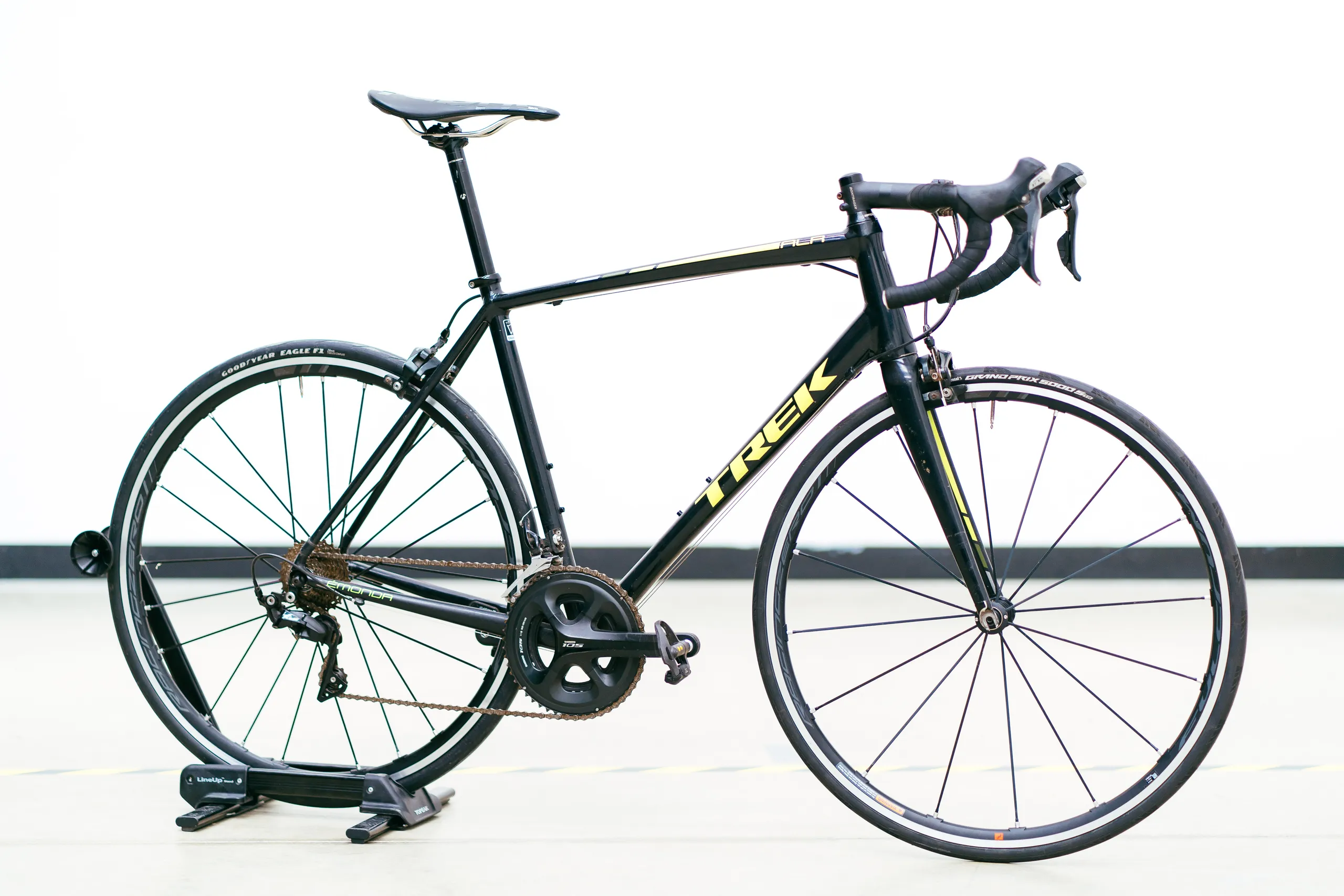
In the absence of an old, budget-friendly gravel bike to compare against, I thought it valuable to bring along our road baseline so that we have an anchor for when we come back with more gravel bikes.
The purpose of this baseline is simply to have a consistent measurement across each testing day, to normalise against good- or bad-atmospheric conditions. If the conditions are conducive to lower drag (such as lower air pressure), then all bikes will test faster than they would on a high-pressure day. If we simply took the results and compared them against a prior day's testing, we'd have an unfair test.
But by testing the Emonda on both days, and then measuring the delta of the 'subject' against that, we have consistency no matter the conditions.
By taking the road bike, we also get to see how the gravel bikes compare to our road superbikes, as I've analysed above.
Specialized Crux 5
Specialized Crux 5
Specifications
Specialized Crux 5 |
Bike only |
With rider |
Bike only (Enve wheels) |
|---|---|---|---|
Average CdA |
0.1231 |
0.3796 |
0.1188 |
Power at 35km/h |
67.87 |
209.30 |
65.50 |
Watts saved vs baseline |
5.46w saved |
3.86w lost |
12.19w saved |
Power at 30km/h |
42.74 |
131.81 |
41.25 |
Power at 40km/h |
101.32 |
312.43 |
97.78 |
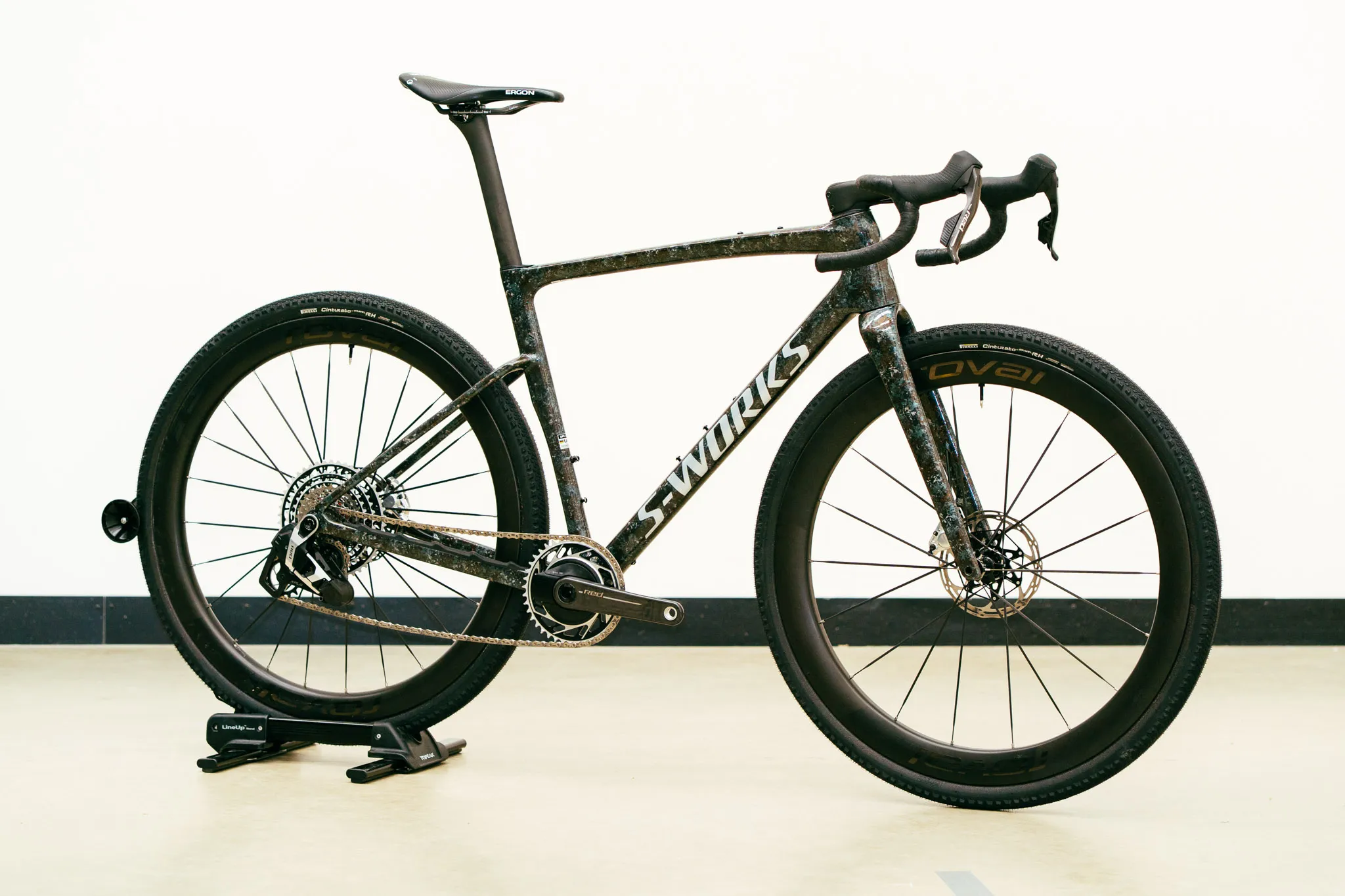
It's a mad expensive bike, but in a money-no-object sense, it's hard to see past the Crux as the best bike here. It's not only the most aerodynamic in our test with a rider on top - albeit by just a single count ahead of the Wilier and within the error margin - it's a full kilogram lighter at 7.1kg vs 8.1kg (both with bottles in cages, no pedals, no out-front mount, and no sealant in the tyres).
It's a few watts slower than the Argon 18 in its bike-only setup though, which is significantly cheaper thanks to the Force XPLR groupset.
Wilier Rave SLR ID2
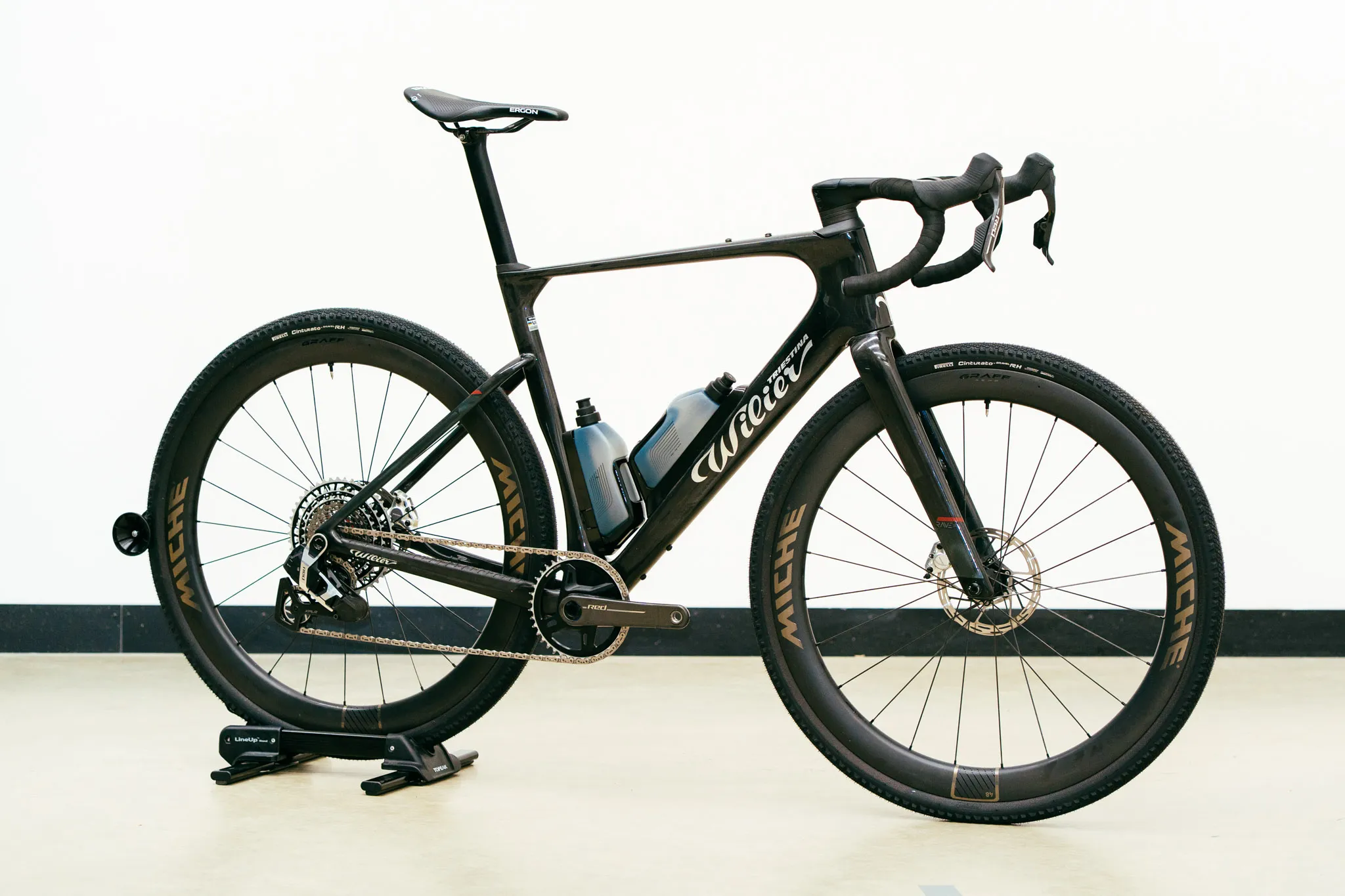
Wilier Rave SLR ID2
Specifications
Wilier Rave SLR ID2 |
Bike only |
With rider |
Bike only (Enve wheels) |
|---|---|---|---|
Average CdA |
0.1256 |
0.3797 |
0.1187 |
Power at 35km/h |
69.25 |
209.36 |
65.45 |
Watts saved vs baseline |
4.08w saved |
3.91w lost |
12.24w saved |
Power at 30km/h |
43.61 |
131.84 |
41.22 |
Power at 40km/h |
103.37 |
312.51 |
97.70 |
The Rave SLR ID2 is very much a race-first gravel bike. It first leaked at Unbound 2025, and it sits close behind the Crux in the rider-on test, but it can claim top spot due to the error margin.
It was 4th in the bike-only test, behind the Anti Matter, Crux and Italia 2 Racemax, but this climbed to 2nd when we swapped in the Enve wheels.
It's worth talking about its 'Aerokit' system, which comprises aero bottles and cages. As ever, if you have them, you'll probably use them, so we've tested with them. But in longer gravel events where you're leaving bottles at an aid station, you might need to switch to round bottles, which will reduce its performance a bit.
Argon 18 Anti Matter
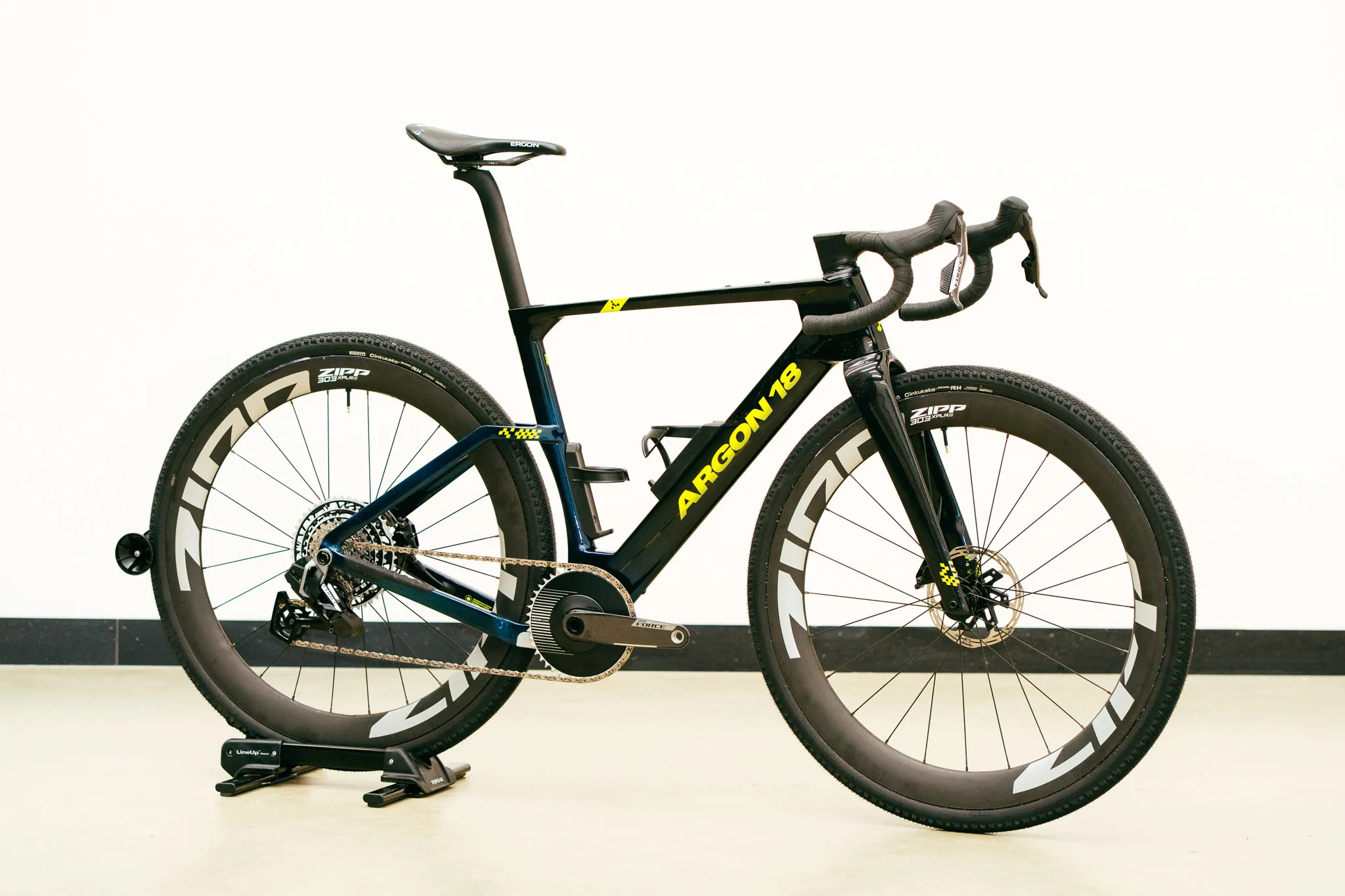
Argon 18 Anti Matter
Specifications
Argon 18 Anti Matter |
Bike only |
With rider |
Bike only (Enve wheels) |
|---|---|---|---|
Average CdA |
0.1209 |
0.3836 |
0.1142 |
Power at 35km/h |
66.66 |
211.51 |
62.97 |
Watts saved vs baseline |
6.67w saved |
6.07w lost |
14.72w saved |
Power at 30km/h |
41.98 |
133.19 |
39.65 |
Power at 40km/h |
99.51 |
315.72 |
93.99 |
The Argon 18 netted an impressive performance across the board here, with outright victories in both of the bike-only tests and third place in the rider-on tests, but within the error margin of victory.
These results are for the bike without the Apidura frame bag. We ran some extra tests on the bike with that frame bag fitted, and found a 0.75w saving (tested as bike only).
The Force equipped version we had here comes equipped with the Zipp 303 XPLR S wheels, not the slightly more premium 303 XPLR SW wheels. We tested with those too and found a saving of 2.45 watts.
Pinarello Dogma GR
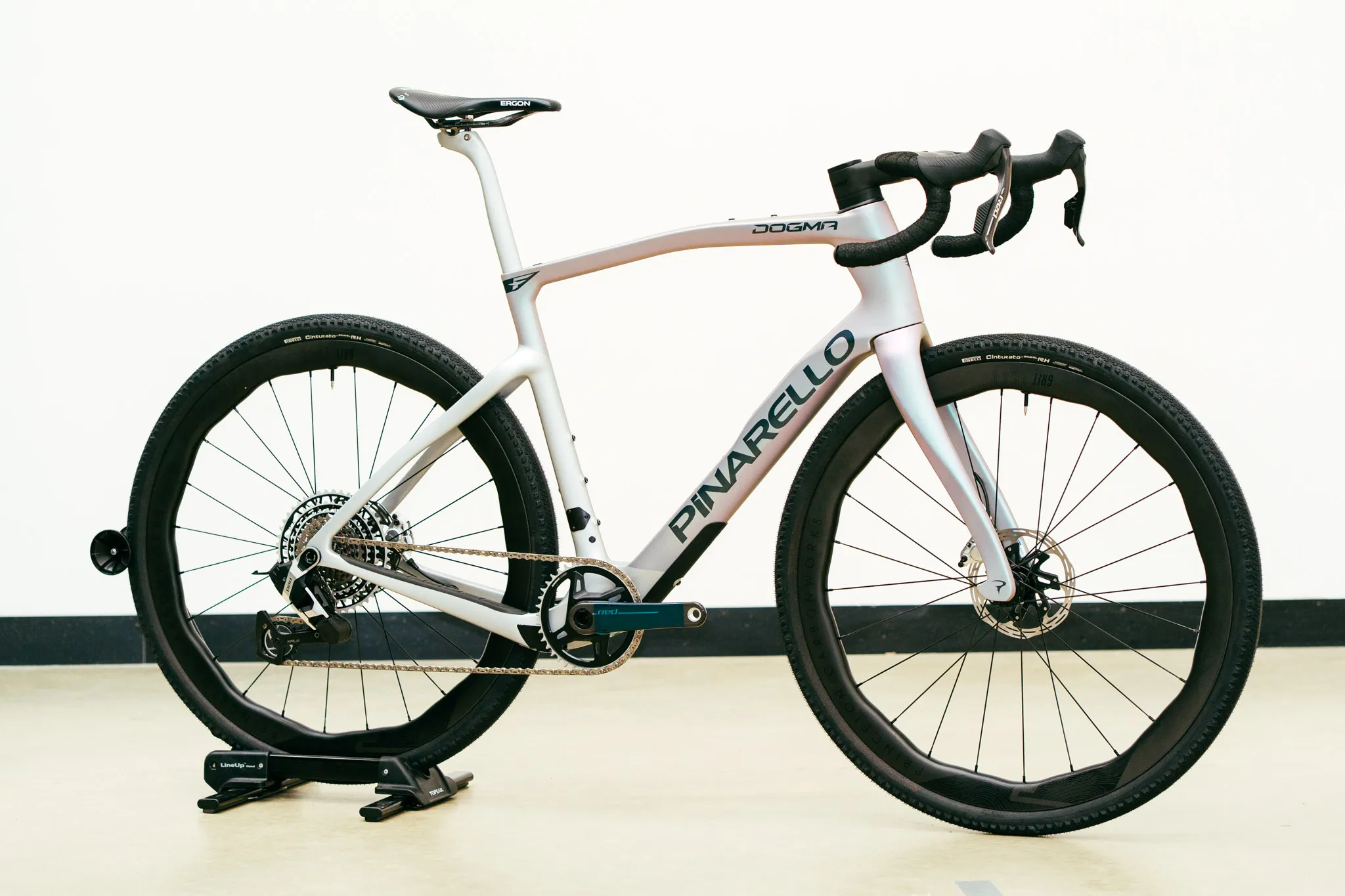
Pinarello Dogma GR
Specifications
Pinarello Dogma GR |
Bike only |
With rider |
Bike only (Enve wheels) |
|---|---|---|---|
Average CdA |
0.1294 |
0.3841 |
N/A |
Power at 35km/h |
71.35 |
211.78 |
N/A |
Watts saved vs baseline |
1.98w saved |
6.34w lost |
N/A |
Power at 30km/h |
44.93 |
133.37 |
N/A |
Power at 40km/h |
106.50 |
316.13 |
N/A |
At first, I thought the Dogma GR's 45mm tyre clearance was a miss. Most racers are looking to 50, 55 or even 60mm tyres. And indeed, it was too tight to fit the Enve wheels with 50mm tyres, so we don't have data for that test.
But as I've already outlined above, I think the bike's intentions lie elsewhere. It's pretty ideal for the 'champagne' gravel most of us will call gravel. This bike is another mad expensive one, and there's no data here that will convince you to buy it, but if you're a Pinarello superfan, this bike will give you Dogma F ride quality, with the freedom to venture off-road.
With that said, it can technically claim top spot in the rider-on tests. It landed 2.48 watts behind the Crux, so within our margin of error.
Reap Type 300
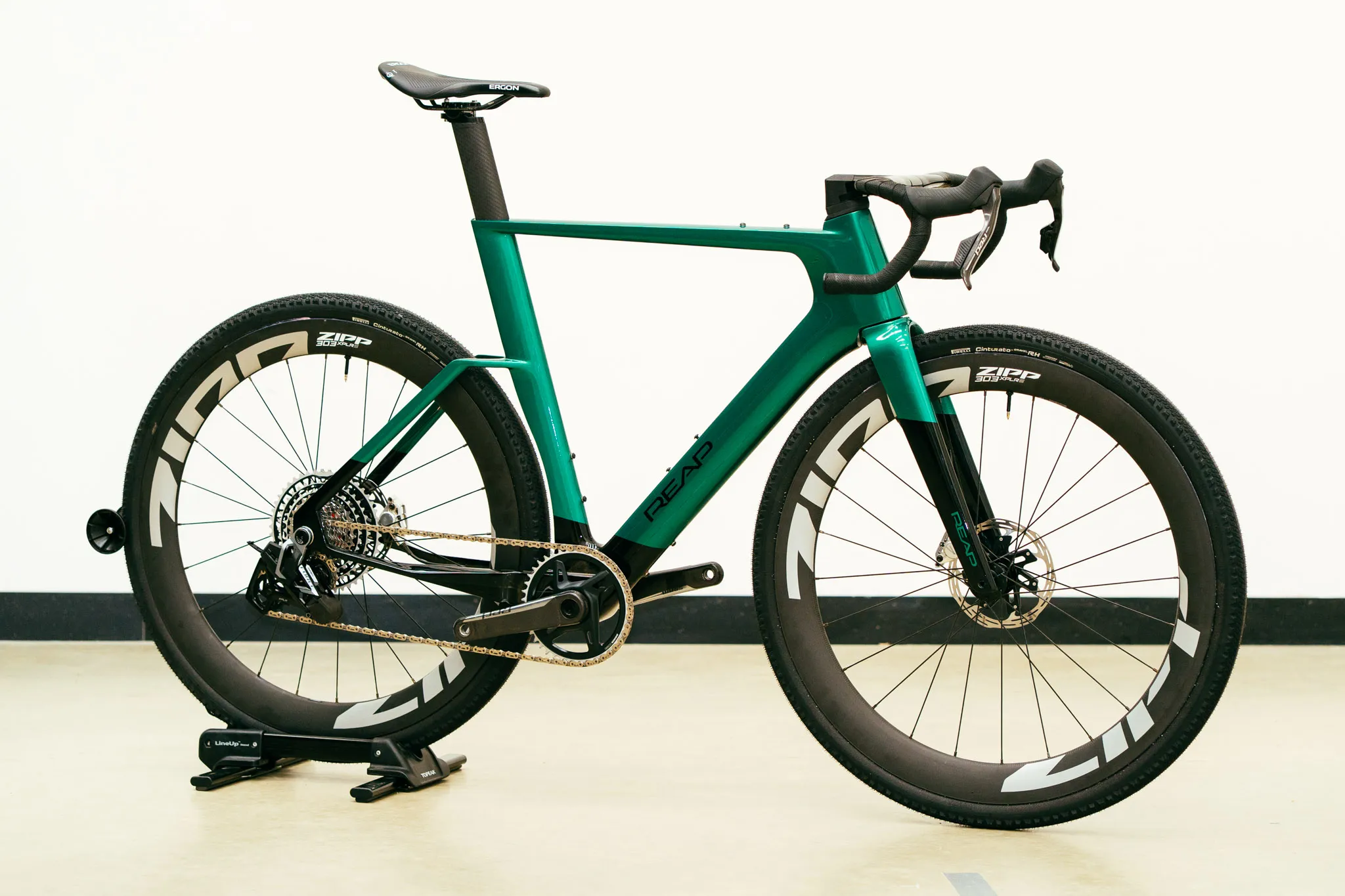
Reap Type 300
Specifications
Reap Type 300 |
Bike only |
With rider |
Bike only (Enve wheels) |
|---|---|---|---|
Average CdA |
0.1288 |
0.3856 |
0.1212 |
Power at 35km/h |
71.02 |
212.61 |
66.83 |
Watts saved vs baseline |
2.32w saved |
7.17w lost |
10.86w saved |
Power at 30km/h |
44.72 |
133.89 |
42.08 |
Power at 40km/h |
106.01 |
317.37 |
99.75 |
The Type 300 might be a surprise inclusion if you're not familiar with the brand, but I was keen to include it because I'm impressed that Reap has managed to maintain a road q-factor, despite offering 53mm tyre clearance.
It's a good-looking thing, with a proper horizontal top tube (which looks to slope downwards thanks to the perspective in the image above). Within its carbon is a clever biological fibre technology that is not only recycled, but also better able to absorb vibrations.
It's just outside the error margin of the win in the rider-on test, meaning it technically can only claim 2nd place, but it's in the ballpark and that's pretty impressive for a small British brand.
Trek Checkmate SLR
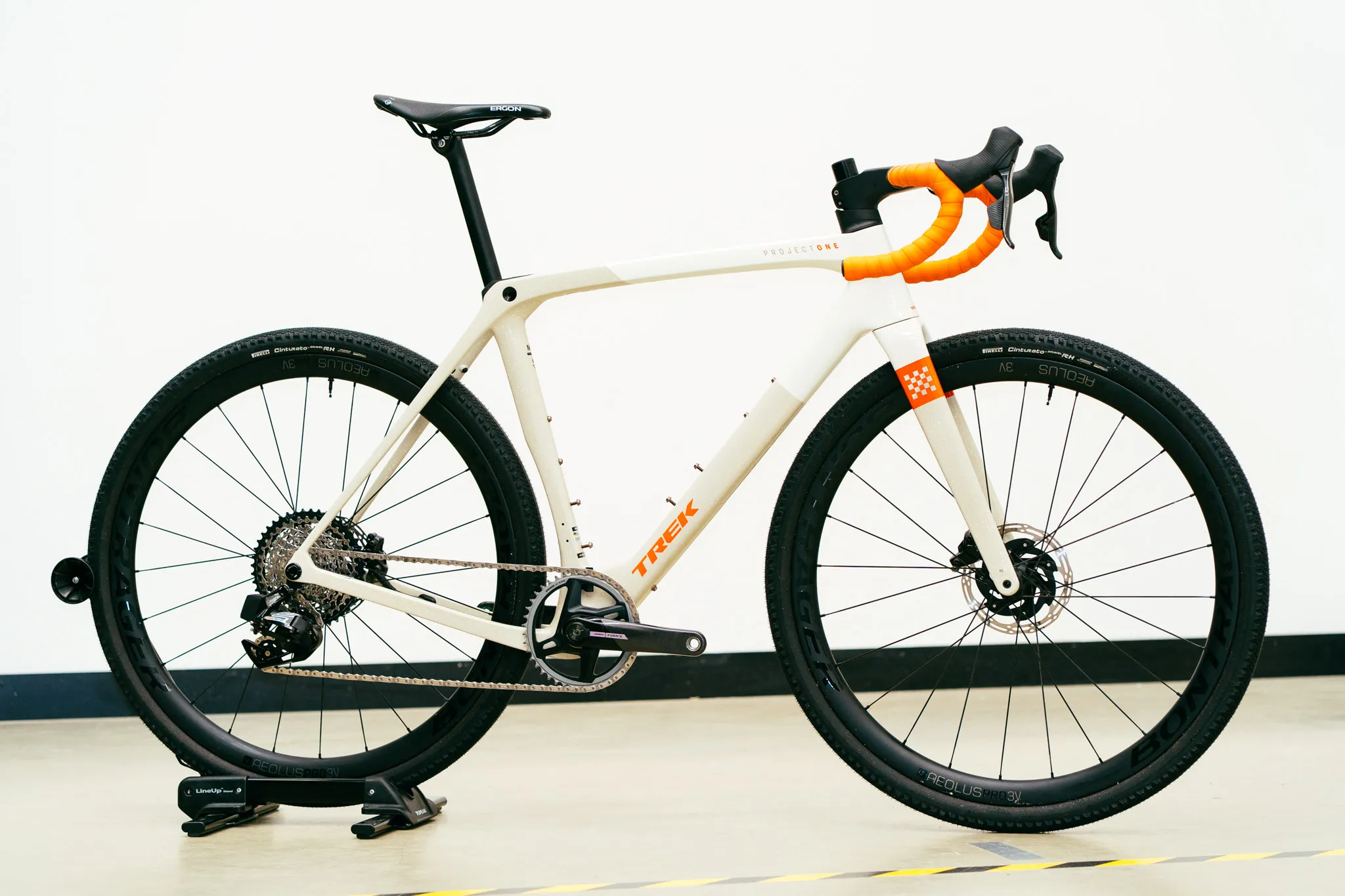
Trek Checkmate SLR
Specifications
Trek Checkmate SLR |
Bike only |
With rider |
Bike only (Enve wheels) |
|---|---|---|---|
Average CdA |
0.1389 |
0.3920 |
0.1287 |
Power at 35km/h |
76.59 |
216.14 |
70.96 |
Watts saved vs baseline |
3.25w lost |
10.70w lost |
6.73w saved |
Power at 30km/h |
48.23 |
136.11 |
44.69 |
Power at 40km/h |
114.32 |
322.63 |
105.93 |
The Checkmate SLR tested here is strangely specced, and the price is caveated.
Upon asking our contact at Trek for a bike to borrow, we were sent to the local Trek store to collect one, literally off the shop floor. Despite this, it isn't the bike you'd end up with if you went to the Trek website.
It's equipped with SRAM Force AXS, but the older version, not the XPLR version that is now available. This bike previously retailed for £8,500, as far as we can find online, but is now discounted. The XPLR version is a slightly more sensible $8,199 / £7,000 / €7,499.
Its result won't blow anyone away, and we didn't have permission to cut the steerer on this model; it landed in 7th in the bike-only test and 6th with a rider, beyond the reach of 5th place, even with the error margin in mind.
3T Racemax 2 Italia
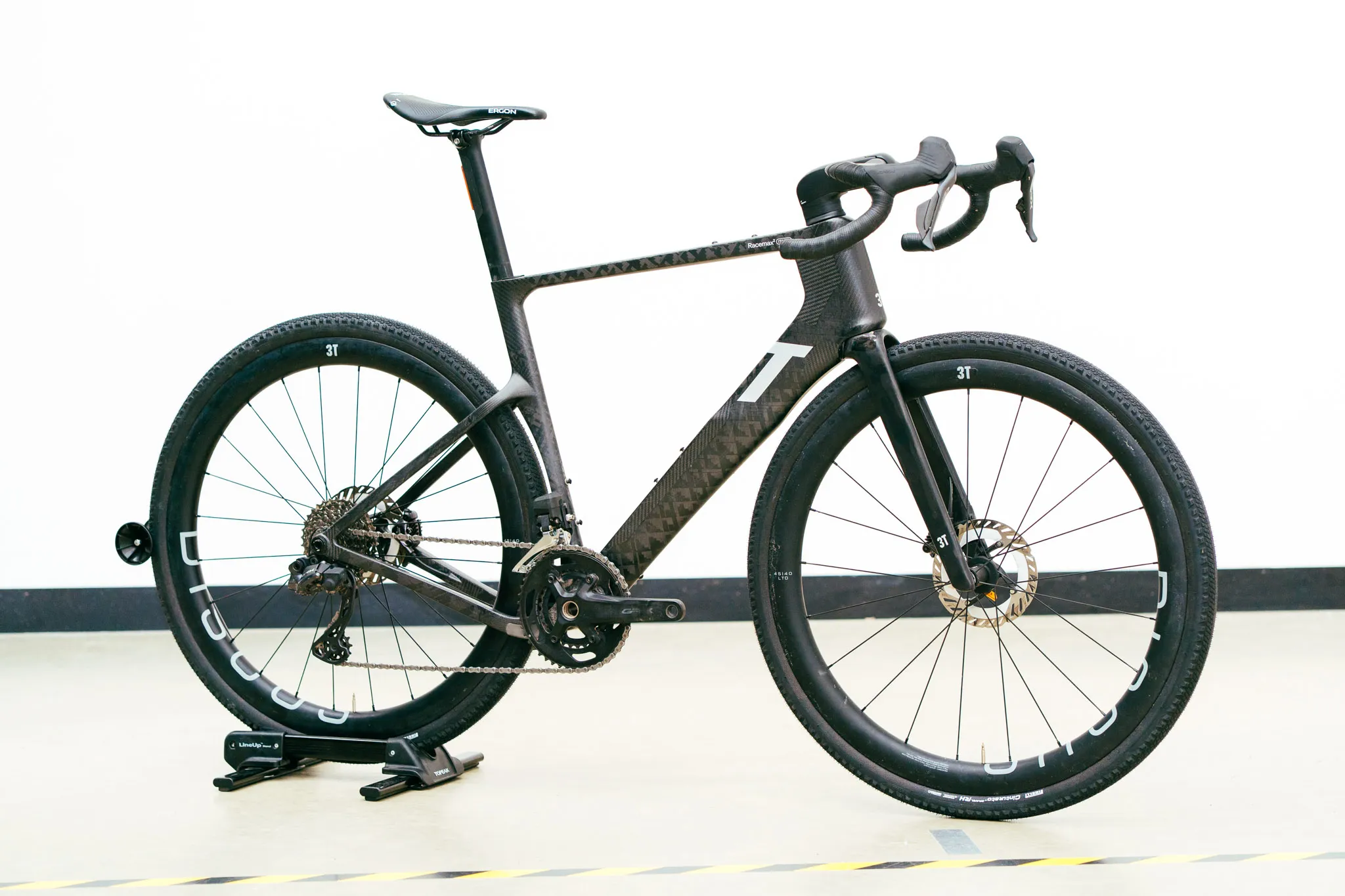
3T Racemax 2 Italia
Specifications
3T Racemax 2 Italia |
Bike only |
With rider |
Bike only (Enve wheels) |
|---|---|---|---|
Average CdA |
0.1250 |
0.3931 |
0.1204 |
Power at 35km/h |
68.92 |
216.75 |
66.39 |
Watts saved vs baseline |
4.41w saved |
11.30w lost |
11.30w saved |
Power at 30km/h |
43.40 |
136.49 |
41.81 |
Power at 40km/h |
102.88 |
323.54 |
99.09 |
The Racemax 2 Italia was a last-minute addition to the runlist, and it was a little hard done by with our protocol. Thanks to the More2 stem, we couldn't drop the handlebar without cutting the steerer, and we didn't have permission to do that, so it was run a couple of cm higher than the other bikes, which undoubtedly affected its result in the rider-on test. It also had a wide handlebar with a mega flare, which pushed my arms out wider than the rest, too. Still, it beat the Basso and Lauf.
And that aside, in the bike-only test, it performed well, landing an impressive 3rd place, dropping to 4th with the Enve wheels (which is a compliment to the 3T Discus wheels it ships with).
Basso Palta III
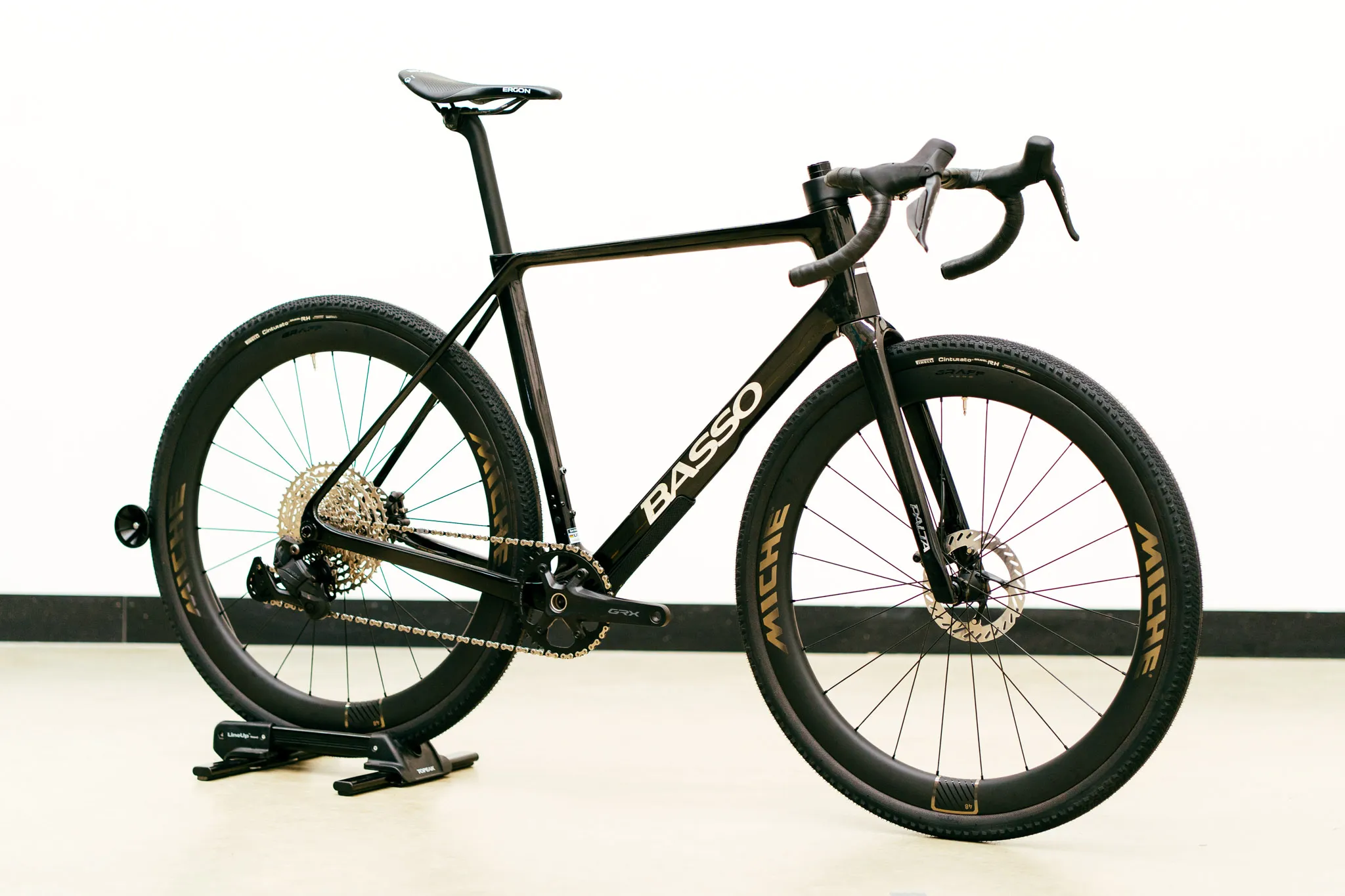
Basso Palta III
Specifications
Basso Palta III |
Bike only |
With rider |
Bike only (Enve wheels) |
|---|---|---|---|
Average CdA |
0.1433 |
0.3959 |
0.1357 |
Power at 35km/h |
79.01 |
218.29 |
74.82 |
Watts saved vs baseline |
5.68w lost |
12.85w lost |
2.87w saved |
Power at 30km/h |
49.76 |
137.47 |
47.12 |
Power at 40km/h |
117.94 |
325.84 |
111.69 |
The Palta's price is another with a caveat. We were shipped the bike with Shimano's new GRX 717 wireless Di2 groupset. For all my searching, I can't find it listed in this setup anywhere to get the price, and in the bike builder on Basso's website, the Miche wheels aren't given as an option.
Still, it's a premium bike. Some budget-friendly builds are available, but the top-spec model with Red XPLR and Fulcrum Sharq wheels lands at a few dollars shy of $11,000.
The Italian brand will be pretty disappointed with its result, but will take solace in the fact that a 1x groupset and one-piece cockpit, which are both available, would likely have helped it climb the table. They'd have probably helped its weight too, which was a notable outlier compared to the other bikes here.
Lauf Seigla
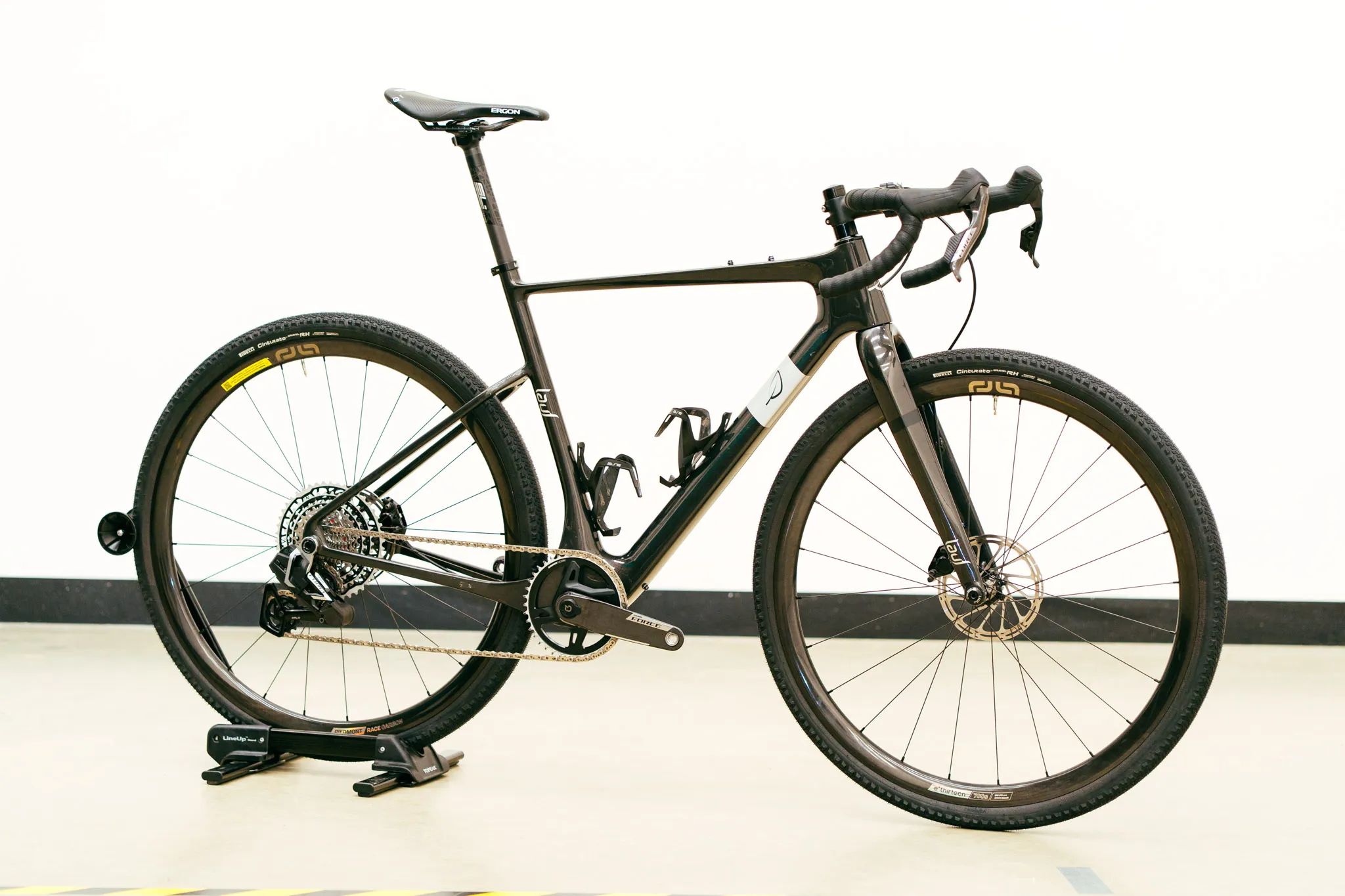
Lauf Seigla
Specifications
Lauf Seigla |
Bike only |
With rider |
Bike only (Enve wheels) |
|---|---|---|---|
Average CdA |
0.1561 |
0.4058 |
0.1409 |
Power at 35km/h |
86.07 |
223.75 |
77.69 |
Watts saved vs baseline |
12.74w lost |
18.31w lost |
0.00w saved |
Power at 30km/h |
54.20 |
140.90 |
48.92 |
Power at 40km/h |
128.48 |
333.99 |
115.97 |
Sometimes I come away from these tests and feel bad for the bike in last place. That's especially true for Lauf, whose Seigla was actually already in stock here at CN HQ for another project.
Quite insanely, you could buy almost three of these for every Dogma GR (albeit this comes with Force XPLR), so it's not exactly an apples-to-apples comparison, but it's valuable info. A lot of people still see the Seigla as the ideal race bike, and I don't disagree with them, but even just looking at it, you can see there'll be an aero detriment. Now we can put a figure to that delta, and people can decide whether it's bigger than they're willing to accept, or worth it for the massive cost savings.
It's also a bike that'll be significantly easier to work on than most others here, thanks to the external cables and two-piece bar/stem. You could easily play around with the fit, too, to optimise your own position and close that aero gap (although you could then just apply that new position to the fast bike and be even further ahead).
Also, given our rolling resistance data says a 57mm tyre can save you 14.42 watts compared to a 45mm tyre when riding on cobbles, and that the Seigla is only 11.96 watts less aerodynamic than the Dogma GR, it would actually be faster to the tune of 2.46 watts. You could then spend the ~$9k you have left in your bank on a pair of the Enve wheels, and be almost 11 watts better off!
Also worth mentioning is that for an extra $350 / €300 / £260, you can get the Grit fork, which offers more vibration-smoothing tech that would probably take this saving even further.
Of course, that's all binary, though. You could slap a set of wide tyres into the Crux, the Anti Matter, and be even further ahead. Or even the new Factor, the new Canyon, or the wild-looking new Ridley, which we've not got here, but each looks to hop on the wide tyre trend that Lauf seemingly started.
Gravel bikes are changing, and Lauf's wide-tyre party trick is becoming ever more common. It is going to need to adapt in order to keep up.
Thank yous
Many words later, I'd like to round off this feature with a few obrigados to the people and brands that helped to make it happen.
Firstly and most importantly, Cyclingnews Members: Without your support, these tests wouldn't happen. The fact you're reading this confirms you're a member, so thank you. If you want to help us spread the word even further, tell your friends to join up and share this story on social media!
Enve: For the paid placement support and loan of the G SES 6.7 wheels. It doesn't affect the impartiality of our test, but helps us add an extra stream of data to what we already have, and helps us do more of them.
Each of the brands featured: To 3T, Argon 18, Basso, Lauf, Pinarello, Reap, Specialized, Trek and Wilier. Some of which were easier than others, since we had the bike in for other things already, but Reap went out of their way to supply a bike in the exact spec we requested, even hand-delivering it via a four-hour drive. Argon 18 and Wilier also hand-delivered the bikes, while Pinarello and Trek went out of their way to ensure we had one in time.
Such an empirical test as this must have a loser, and we appreciate that accepting our request involves a risk, as well as a logistical (and oftentimes financial) cost to get the bike to us.
A special thanks to Specialized: It's not uncommon for a bike brand to let media test ride a bike under embargo before launch, but to send one for an empirical test like this carries a risk. If it does badly, it's not just one reviewer's opinion, but data laid bare for all to see, and the bike's launch could well stutter in its wake.
Trusting that the Crux is good enough to take that risk shows a confidence that should reassure potential buyers, and trusting us to perform a fair test is the biggest compliment you could give. We don't take that responsibility lightly.
Silverstone Sports Engineering Hub: For operating the wind tunnel, swapping the bikes over between tests, and providing general support on the day to keep our cadence high.
Extra UK: For the loan of the Pirelli Cinturato Gravel RH tyres.
Madison UK: For the loan of Elite Vico Carbon bottle cages, Elite Fly bottles, and Vittoria Terreno T30 tyres.
Schwalbe: In my last-minute panic to get a second 'control' tyre for all the bikes, Schwalbe kindly shipped a box full of G-One RS Pro tyres. Sadly, it landed a few hours too late to be included, but we appreciate the support all the same.
Ergon: For the loan of the Allroad women's saddles, which standardise the bike only tests a little more accurately, and make setting up the bikes a much easier process.

Josh is Associate Editor of Cyclingnews – leading our content on the best bikes, kit and the latest breaking tech stories from the pro peloton. He has been with us since the summer of 2019 and throughout that time he's covered everything from buyer's guides and deals to the latest tech news and reviews.
On the bike, Josh has been riding and racing for over 15 years. He started out racing cross country in his teens back when 26-inch wheels and triple chainsets were still mainstream, but he found favour in road racing in his early 20s, racing at a local and national level for Somerset-based Team Tor 2000. These days he rides indoors for convenience and fitness, and outdoors for fun on road, gravel, 'cross and cross-country bikes, the latter usually with his two dogs in tow.
You must confirm your public display name before commenting
Please logout and then login again, you will then be prompted to enter your display name.
