New Specialized Crux goes all in on aero gravel, with a 15-watt improvement, new geometry, and lighter builds
Does this mean 'cross is dead?
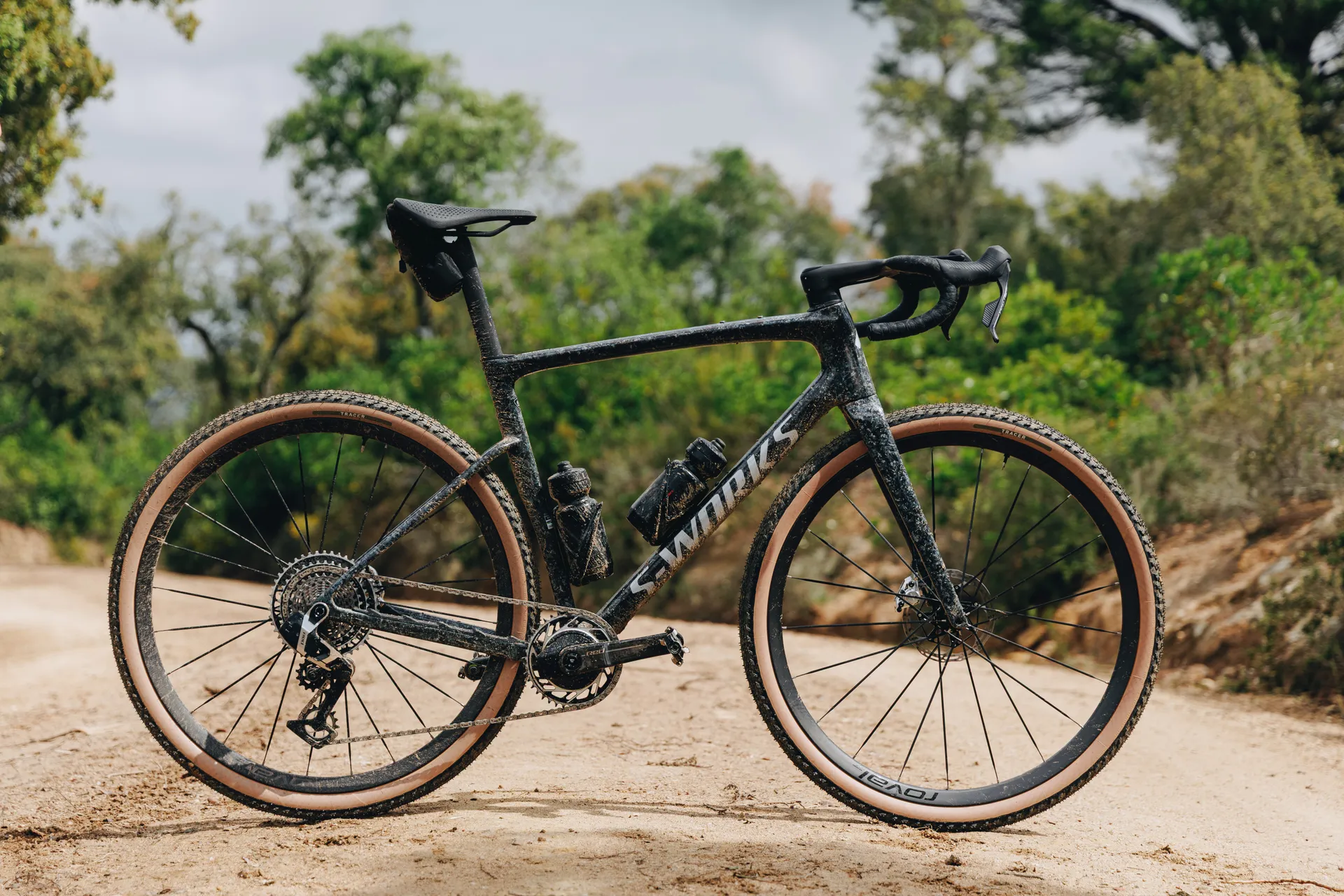
Specialized has today launched the all-new Crux 5, and in doing so, effectively killed it off as a cyclo-cross bike. With a longer, slacker geometry, the American brand has committed the platform to the trendier category of gravel racing.
The headline figures state a 15.2-watt aero saving over its predecessor, a bigger tyre clearance of 55mm (vs 47mm before), builds that start as low as 6.9kg, and the same balanced ride characteristics that tread a fine line between stiff, responsive, and compliant.
We spotted a Crux being raced at the Gralloch event in Scotland recently, and expect to see it in action at Unbound Gravel this weekend.
- 55mm tyre clearance (but specced with 45mm Pathfinders)
- 52t chainring clearance
- 789g frame weight - builds from 6.9kg (7.1kg with aero wheels)
- 1x compatible only (but compatible with mechanical groupsets)
- Internally routed cables, with a one-piece cockpit on top models
- New 'S-Level' models
Here at Cyclingnews, we’ve had it in the wind tunnel alongside competitors from Argon 18, Wilier, Reap, Basso, and more. Not only did it hold its own very well, but it was also far lighter than anything else on test.
You can head to our wind tunnel gravel bike group test for the full details and results, but here I’m going to focus on Specialized’s claims, and my (albeit short) experience of how the bike rides.
A Tarmac with wide tyres
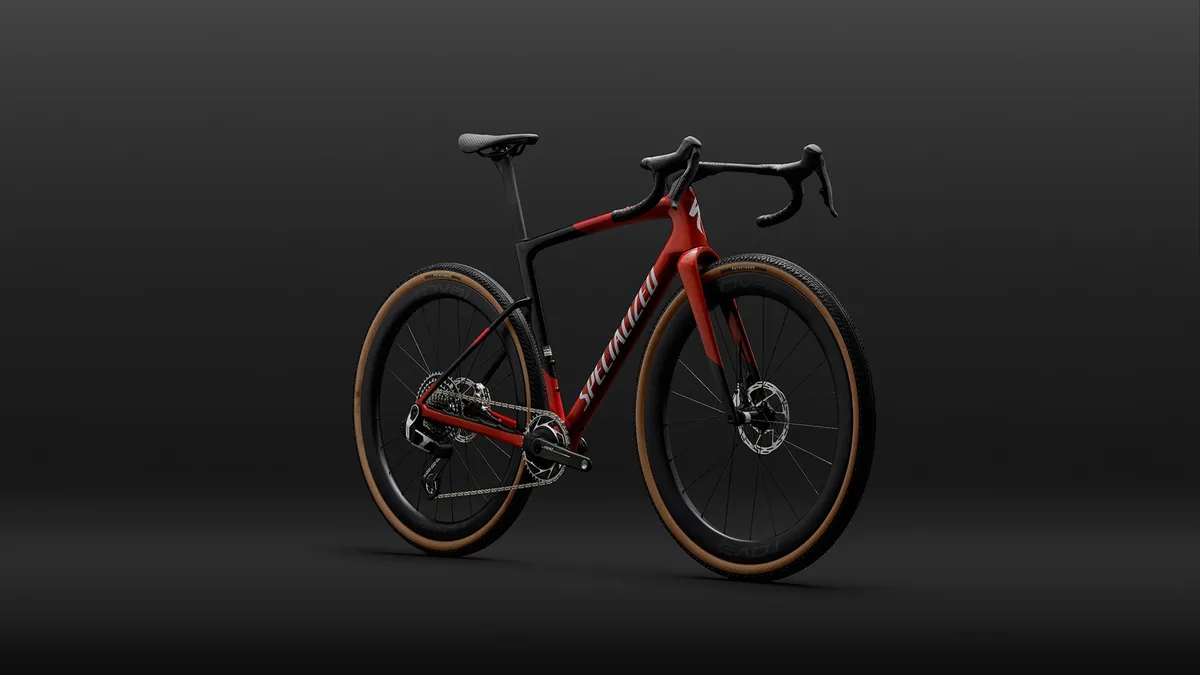
I’ve already seen commenters likening the new Crux to a Tarmac SL8 with wide tyres. The dropped seat stays, the aero seat post, and the overall visual profile make it strongly resemble the brand’s race bike.
But that would be an unfair appraisal. It’s true that the bike takes learnings from both the SL8 and the outgoing Crux, but it features entirely new tube shapes throughout, new geometry, new wheels, new cockpit, and an impressive combo of 55mm tyre clearance, clearance for a 52mm chainring, and 425mm chainstays.
The latest race content, interviews, features, reviews and expert buying guides, direct to your inbox!
The changes in geometry see the seat tube steepen by 0.5°, the head tube slacken by the same figure, the reach and wheelbase increase, a lower bottom bracket, shorter cranks, and altogether a more gravel-centred approach. And while it will likely still function perfectly well as a ‘cross bike, it’s no longer trying to tread that line between the two disciplines.
Notably, in the pursuit of those aero gains, the frame has gained a few grams - it's 64 grams heavier in the 56cm frame - but complete builds are actually now lighter, thanks to the lighter wheels and one-piece cockpit, with builds starting from 6.9kg with the Terra CLX III wheels, or 7.1kg with the 'chopped aero' Terra Aero CLX wheels.
The equation of speed
In recent years, if someone in the bike world describes something as 'faster', more often than not, they actually mean 'more aerodynamic'. Specialized is looking to change that. Using the same technology that Formula 1 uses to calculate lap times, the brand has developed what it's calling 'The Equation of Speed'.
This equation is all of the physics that sit between the power being put into the pedals, and the speed at which you travel, such as the basic metrics like weight, rolling resistance and aerodynamics, but also things like cornering traction, skill level, surface roughness, weather, and more.
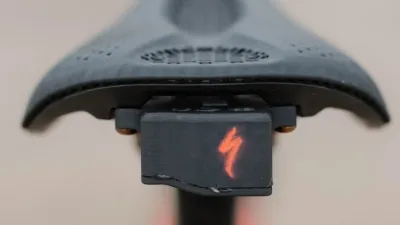
Specialized's gravel team raced most of the 2025 season with small telemetry boxes fitted beneath their saddles to measure the roughness of all of the major Lifetime Grand Prix courses. This, along with Fit files, countless hours of wind tunnel testing in various positions, and a whole load more data, means the brand can simulate races with extreme accuracy.
At its most basic, this can then advise on equipment changes for certain courses: frame selection, light vs aero wheels, tyre choice, and more. But using this tool, the brand can also measure the effect of a bike's development.
One part of this is the Crux's low weight. Given that rolling resistance scales with weight, a heavier bike will have a higher rolling resistance, in addition to the obvious fact that a heavier bike is slower to accelerate and harder to climb with.
And since the power to overcome aero drag scales with the cube of speed, when you compare to road riding, the slower speeds and rougher surfaces of gravel mean weight and rolling resistance carry an even greater importance.
Bikes aren't trucks
When you measure the aerodynamic drag of a bike, it's common to test at a variety of wind angles – known as yaw angles – for a more complete picture of how aero it is. However, since we ourselves essentially create our own headwind by moving through it, we're more likely to see a wind angle close to zero degrees (a direct headwind).
Then, as the angle increases, the amount of time you experience it reduces. So you'll see +/-1° more than +/-2°, which you'll see more than +/-3°, and so on, creating a bell curve centred around 0°. In windier areas, this bell curve flattens slightly, but the principle remains.
As a result, when averaging out the results from a wind tunnel test, it's common to 'weight' the results such that more importance is placed on lower angles, to give a fairer reflection of real-life conditions.
Specialized says that all of its existing protocols are taken from the automotive industry, which relies on ambient wind conditions measured at 3m off the ground, as it is relevant for a truck.
The problem, it says, is that the wind conditions at 3m off the ground are generally much higher than the 1m height that is more relevant for bikes, meaning that the yaw angle distribution being measured is inaccurate.
It says that at 1m, where the ambient wind conditions are slower, more weight should be focussed on 0°, meaning the fastest bike is actually one that is narrowest or has the smallest frontal area. It says that deep tubes work in those windier conditions, but for the majority of riding that cyclists will experience, they are simply dead weight. This insight provides an interesting look into the current Specialized bike design philosophy.
'Cross is dead
The big news is that Specialized no longer makes a cyclo-cross bike. The brand is now all in on gravel racing, as made abundantly clear by the ability to fit 55mm tyres, a 52t chainring, and its longer, slacker fit.
By switching to 1x compatible only (although interestingly, it is still compatible with mechanical groupsets), the bike has managed to both increase the tyre clearance and the chainring clearance, without switching to a dropped chainstay or lengthening the chainstays compared to the outgoing Crux. They are still 425mm, and the snappy handling has been retained as a result.
Combined with the steeper seat tube and zero offset post, the Crux gets shorter cranks, 2.5mm shorter than the old Crux for the same frame size. And thanks to the bigger tyres and shorter cranks, the bottom bracket was lowered by 6mm too.
The cockpit has also narrowed by 20mm, compared to an equivalent size in the old Crux. The handlebars now run from 38 to 42cm, and have a 12° flare.
First ride impressions
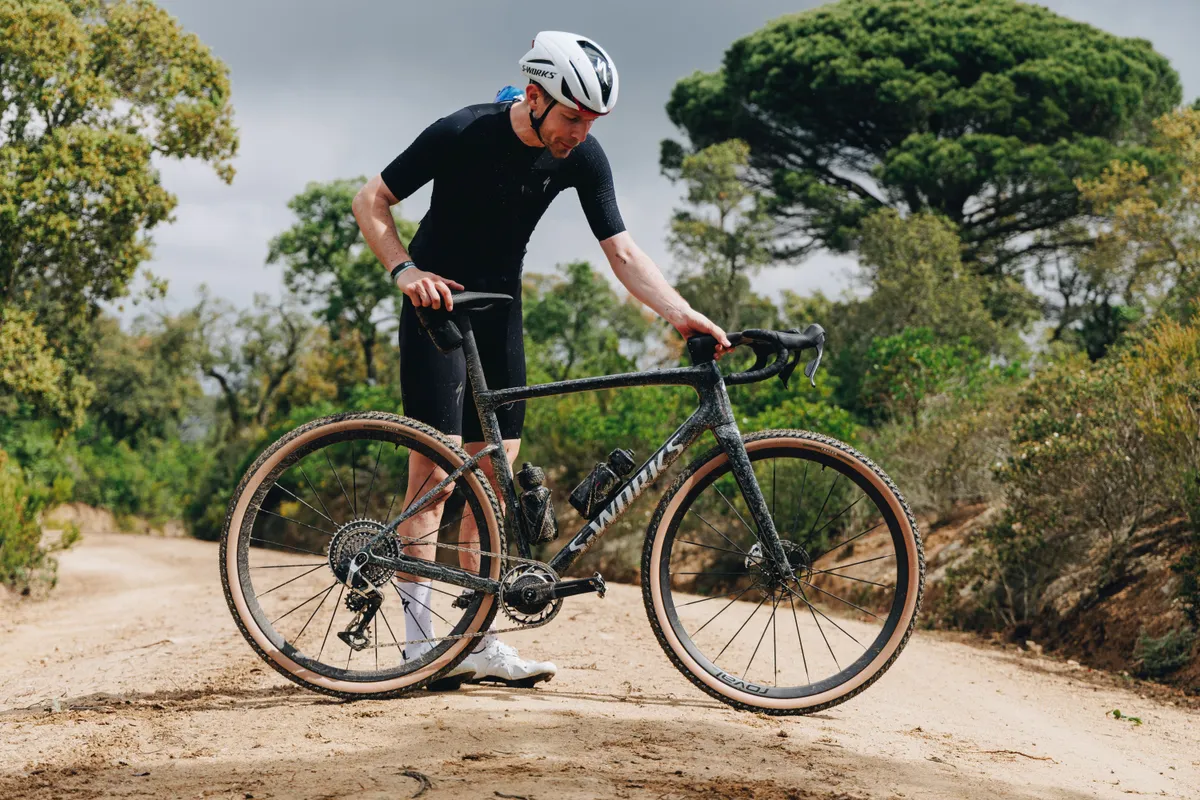
I've long been a fan of the Crux platform. I owned a Crux 2. I loved the Crux 4 when I reviewed it, yet I already think the Crux 5 is better.
I rode it with 50mm Specialized Tracer tyres, and although there are bikes that offer bigger clearances, I would be happy to own a bike with the 55mm clearance offered here.
I've ridden it twice, for a total of around 80km, in both wet and dry conditions, with a really good mix of terrain including long climbs, technical descents, singletrack, chunky fireroad, road climbs, and twisting coast road descents. It didn't miss a beat.
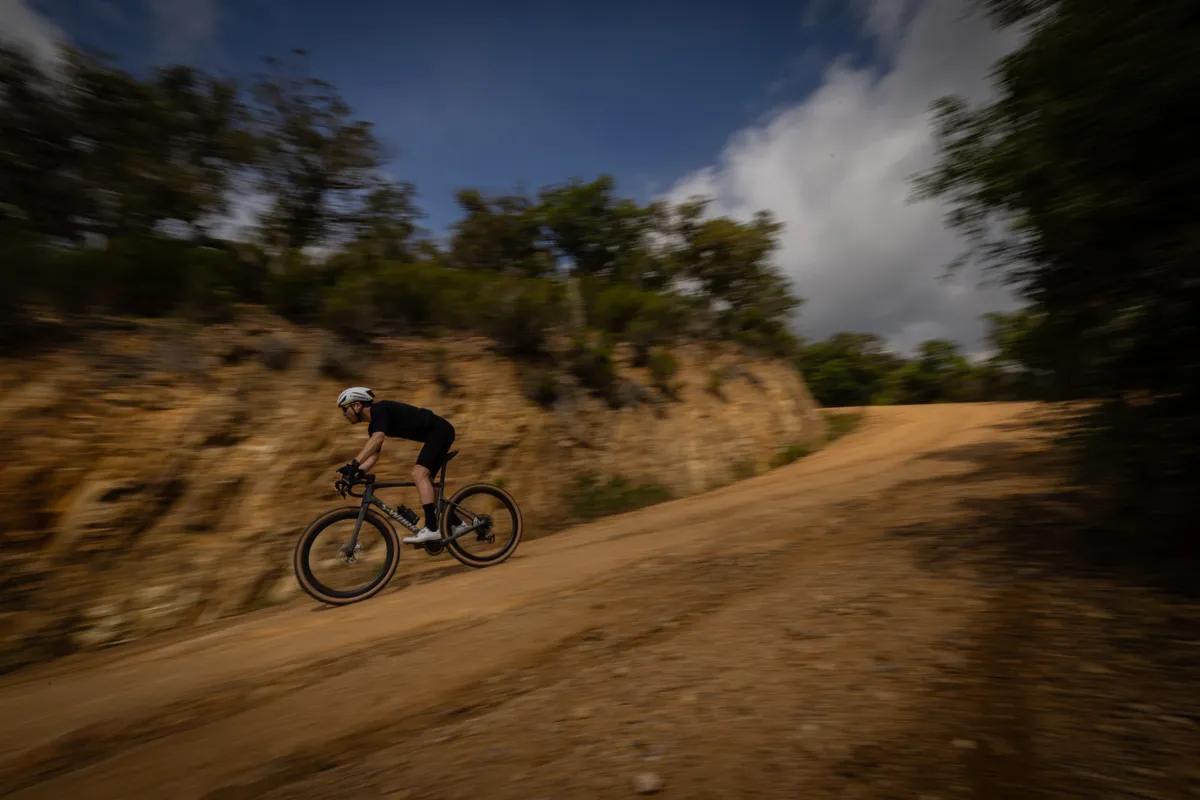
It has the same qualities as the old Crux, but now with added steamroller mode, as found on the wide-tyred Allied Able and others. This means you can straight-line chunky descents without too much worry for what you're going to hit – within reason of course – knowing that the bike won't pinball you from one rock to the next.
It has that flickable, fun nature of the outgoing Crux, so it was easy to pop it over drainage channels or bigger rocks to keep speed high. And the rim beads on the Terra CLX Aero wheels are so wide that even when you do get things wrong and slam a rock, you're probably just going to bounce off and continue riding, rather than be forced to get the plugs out.
That flickable nature also means singletrack is a hoot, and when we were pedalling across town on the start of our ride, I couldn't help but use kerbs and speed bumps as little ramps like I was 13 years old again. It's really that fun to ride.
Naturally, with the switch to the integrated cockpit, it will be slightly less fun to own, with its internal cable routing making it more complicated and thus more expensive to service.
It also means it's tougher to swap the cockpit to get the right fit, whereas you could swap the stem length or the bar width on the old bike without too much faff. Either you'll be lucky enough to have a local bike shop that will offer this service free of charge when buying, or you'll be forced to spend extra before you've even turned a pedal.
Many riders will also bemoan the decision to switch to dropped seatstays, which means it loses the traditional double diamond frame design. I've never found this an issue, so I'm perhaps the wrong person to comment. Personal tastes will remain forever personal, and I can't tell you what to like.
The new S-Level
In an interesting move, the brand is also revealing a new S-Level tier of bikes, which closes the gap somewhat between S-Works models and the rest of the range.
S-Works remains the flagship model tier, with the Fact 12R carbon, SRAM Red AXS XPLR builds, and the top-spec wheels, cockpit, and saddle.
The S-Level now pairs the Fact 10R frame with Red AXS XPLR, with the second-tier wheels and saddle. It also gets the new Terra one-piece cockpit.
This, according to Specialized, is because it believes the Fact 10R frame is good enough to compete with top-spec models from competitors, and so wants to give riders the option to spec it with SRAM's top-tier groupset.
Models and pricing
There are four fully built variants of the Crux 5. An S-Works model with Fact 12R carbon frame, SRAM Red XPLR groupset, and all the bells and whistles (outlined below in more detail). Then three models of the Fact 10R frame, with Red, Force and Rival groupsets respectively.
Then the two framesets will be sold separately, although the Fact 10R will only be available in certain territories.
S-Works Crux 5 AXS: US $14,000 / €13,999 / £11,999 / AU $19,500
- Fact 12R Frame
- SRAM Red AXS XPLR
- Roval Terra Aero CLX wheelset
- Roval Terra integrated cockpit
- 7.1kg
Crux 5 S-Level: US $10,500 / €10,499 / £8,799 / AU $14,900
- Fact 10R Frame
- SRAM Red AXS XPLR
- Roval Terra CL wheelset
- Roval Terra integrated cockpit
- 7.7kg
Crux Expert AXS: US $7,000 / €6,999 / £5,999 / AU $9,500
- Fact 10R Frame
- SRAM Force AXS XPLR
- Roval Terra C III wheelset
- Roval Terra handlebar and Rapide stem
- 8.22kg
Crux Comp: US $4,500 / €4,499 / £3,999 / AU $6,200
- Fact 10R Frame
- SRAM Rival AXS XPLR
- DT Swiss G-500 wheelset
- Alloy handlebar and Rapide stem
- 8.89kg
S-Works Crux frameset: US $5,800 / €5,799 / £5,249 / AU $8,500
- Fact 12R Frame
- 789g
Fact 10R frameset: US $3,500 / AU $5,000
- Fact 10R Frame
- 897g

Josh is Associate Editor of Cyclingnews – leading our content on the best bikes, kit and the latest breaking tech stories from the pro peloton. He has been with us since the summer of 2019 and throughout that time he's covered everything from buyer's guides and deals to the latest tech news and reviews.
On the bike, Josh has been riding and racing for over 15 years. He started out racing cross country in his teens back when 26-inch wheels and triple chainsets were still mainstream, but he found favour in road racing in his early 20s, racing at a local and national level for Somerset-based Team Tor 2000. These days he rides indoors for convenience and fitness, and outdoors for fun on road, gravel, 'cross and cross-country bikes, the latter usually with his two dogs in tow.
You must confirm your public display name before commenting
Please logout and then login again, you will then be prompted to enter your display name.
