
Free speed is the ultimate marketing tool, and seemingly every bike makes claims of being X amount faster at Y speed over Z distance. Luckily for you we've not only taken a huge number of bikes to the wind tunnel to find out which ones are actually fast, but I've also reviewed most of them (and if I haven't, then my trusted colleagues have) to let you know whether they're actually any good to ride in the real world. It's all very well being fast, but if you can't go round corners or stay comfortable over a long ride then it's all for nought.
The star in the lineup is the latest Cervélo S5, a bike that is the fastest we've ever tested with a rider on (which is how most bikes get ridden), but also a bike I found to be excellent out on the road. It's not got the most exciting handling (for that look to the Pinarello Dogma F), but it is phenomenally stable even at extremely high speeds and very well appointed without any real weak points in the spec sheet at all. If you're wanting to go fast on a budget then the Canyon Aeroad is your best bet, as the size of the brand means it can be extremely competitive in terms of price point.
Naturally you'll be needing one of the best aero helmets to go along with your new steed, and while most top spec models come with decent rubber, if you're shopping in the mid range or lower tiers then you'll almost certainly benefit from a set of the best road bike tyres to really make things come alive.
Last updated on 15th July, 2026

Will has been testing bikes for years, year-round and in all weathers. While a wind tunnel can tell you how fast a bike is by the numbers, he is able to tease out the handling and real world implications of each new superbike that comes along. He's tested everything from the full Pogačar-spec Colnago Y1Rs to more budget-friendly offerings like the Van Rysel RCR-F and everything in between.
Best aero road bikes
You can trust Cyclingnews Our experts spend countless hours testing cycling tech and will always share honest, unbiased advice to help you choose. Find out more about how we test.
Best overall
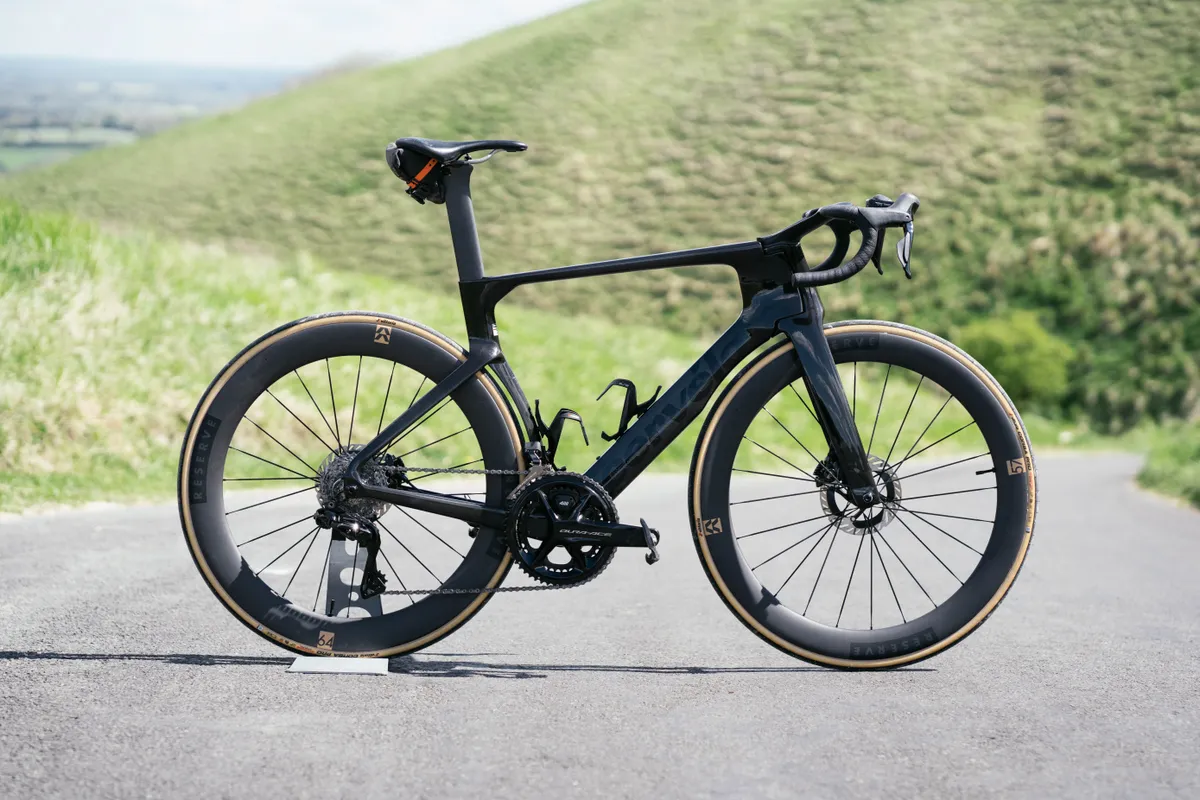
While wind tunnel results aren't necessarily the be-all and end-all, I am very pleased to report that the fastest bike we've ever tested with a rider on is also an absolute blast to ride out on the road too. It's superbly stable, even at extremely high speeds, adding a welcome sense of calm to pacy group rides. It's well specced, with excellent Reserve wheels and Vittoria tyres designed with the frame, and while the cockpit isn't the narrowest as standard, it is a marked improvement in ergonomic terms over the old version, and remains a doddle to raise or lower the bar height.
The ride experience compared to the Colnago Y1Rs, the bike's main competitor in the peloton, was chalk and cheese, with the Cervélo being far more pleasant. While the handling was confident, it wasn't all that lively compared to the likes of the Pinarello Dogma F, but given how well this thing moves through the air I was happy to sacrifice a bit of flickable fun for tucked-in blasts in surprising comfort, given how chunky the frame and seatpost are. The reality is that this is one of very few bikes that I was genuinely sad to have to send back at the end of my test period; read my Cervélo S5 review to get the full story.
Best budget aero bike

While it's not the fastest by the numbers, when you account for our margin of error the Canyon Aeroad, now a couple of years old, is very much still in the mix. If you're trying to go fast on a budget then it's a wise choice as the size of the brand and it's longstanding direct-to-consumer model mean you get more bike for your money, with a Shimano 105 build coming in a full £500 cheaper than an equivalent Van Rysel RCR-F in the UK.
My colleague, Tom, praised the handling of the Aeroad, which was precise, well-balanced, and like the Cervélo, stable at high speeds. It's stiff, too, handling sprints well, and the adjustable cockpit (which can have two different drop profiles fitted to it) wasn't floppy under load despite its modularity. Much like the Van Rysel RCR-F it could do with fitting a larger front tyre; this will make it slightly less aero, but probably faster overall unless you live somewhere entirely paved with buttery smooth, pristine tarmac.
Have a read of Tom's Canyon Aeroad review for the full details.
Best lightweight

During testing, this spot was a toss-up between the Factor Ostro VAM and the Specialized Tarmac SL8, (which now also has its newer sibling, the Tarmac SL9).
All three are excellent aero all-rounders that come in with impressively low weight, but we've not yet put enough miles into the SL9 to confidently include it, and the Factor is more configurable than the SL8 at point of sale, making it a better purchase.
Considering this is only a handful of watts slower than the S5, it's a truly stellar option for those who want an aero bike without the bulk, and also perhaps without the aesthetics that come with those hyperbikes like the S5, the Y1Rs and Factor's own ONE. The Ostro is as comfortable on the climbs as it is barrelling along the flat, handles well - albeit not quite as telepathically as the Tarmac or the Pinarello Dogma F - and is well designed with premium touches like CeramicSpeed's SLT solid lubrication technology headseat bearings to reduce the number of costly headset services you need to do.
Read Josh's Factor Ostro VAM review for a more in-depth look.
Modern position

I think the Ridley Noah Fast 3.0 was the most fun I had on a new bike in 2025, and nothing has put a smile on my face quite like it since. It's absurdly stiff and direct, and while the package is decently aero, it's the modern position that makes it such a blast to ride. A steep seat tube angle puts you over the front of the bike, coupled with a long cockpit, means an aero position that's easy to sustain and supreme front wheel traction in corners.
Considering it isn't the lightest, it muscles over climbs well, and the steep seat tube means you can stay seated on climbs you'd normally have to get out of the saddle for on other bikes.
It is, however, a pure race machine. The benefits of the progressive position mean you also have a bike that I never felt I could really chill out on; the position makes you feel like you have to ride it hard every time. I loved it, and for the right rider it's basically faultless, but as a general-use aero bike it is perhaps a bit specialist.
Have a read of my Ridley Noah Fast 3.0 review to find out why I loved it so much.
Best handling

I adore the Dogma F. Of all the superbikes I've ridden it's the one that's got most under my skin. It's reasonably aero, and while, like the Seka below, it's an all-rounder rather than a pure aero bike, the wattage deficit is pretty minor in the grand scheme of things to the pure aero machines at the very top of the tree.
Where the Dogma F shines is in the bends; it handles like nothing else out there. poised, balanced, confident without feeling unstable, composed at speed, with an ability to change lines in a corner that I really value on twisty backroads. It weighs very little, and remarkably in an age where all bikes do sort of look quite similar it also has a refreshingly unique silhouette.
The downside is the price, and the fact it's often quite hard to find one in stock. There are no budget-friendly Shimano 105 builds here, with only the top groupset from each manufacturer on offer. If I had all the money in the world, this is what I'd be riding, and if you read my Pinarello Dogma F review, you'll find out the paint alone costs €1,000.
Best Chinese option

In our 'rider-on-bike' wind tunnel tests, which is of course how bikes are ridden, the Seka Spear is the fastest all-rounder we've ever tested.
It's just over 1.8 watts faster than the Specialized Tarmac SL8, has basically identical geometry, and comes in about $600 cheaper than the standard SL8 or much, much less than the S-Works. This varies a bit depending on whether you get the RDC (race day combatant) option or not, but however you square it, it's cheaper.
The low weight and sorted geometry, combined with the stellar aero package, make this a really compelling prospect. I found it a pretty decent bike to ride, and even set my fastest ever time down Alpe d'Huez on it, but it's not all sunshine and rainbows.
The stiffness at the bottom bracket and especially at the cockpit do let it down a little, and lead to a slightly imprecise steering feel. It's not necessarily enough to kill it as a machine, but I'd definitely be wanting to spec different bars from the off, even though the Seka Rapier bars have a great variety of options to choose from that put bigger brands to shame.
And yes, I know that plenty of 'western' bikes are made in Chinese factories, but this is the most aero bike that's fully Chinese that we've tested, and despite the stiffness issues it still makes for a compelling bike.
Have a read of my Seka Spear review for the full story.
Also consider
There are plenty of excellent aero bikes on the market that haven't made the top six here but are still well worth considering. The Specialized Tarmac SL8 is an incredible machine and only really lost out to the Factor Ostro VAM by dint of it being less configurable at point of sale. The SL9 - launched recently enough that we've yet to put enough miles onto one to consider it - is befallen by that same problem, but does at least come specced with narrower bars and shorter cranks, which is what most riders are choosing to swap to.
The Wilier Filante SLR gave my colleague, Tom, some excellent first impressions and has brilliant aero credentials too, so stay tuned for a full review that could see it enter the charts properly.
The Factor ONE is another that many readers will be looking for. Josh has been riding it, and although he's impressed with the engineering and its aero results speak for themselves, it's a little like the Ridley in that it's a raceday tool, not a bike you want to live with every day. He also enjoyed riding the Noah Fast more, and the price difference makes that a better buy.
I very much enjoyed the new Cannondale SuperSix Evo, though I don't think it offers the package the Factor Ostro does, but nevertheless it's not a bike you'll have a bad time with.
Both Van Rysels, the RCR-Pro and the RCR-F are perfectly passable, though neither really set my world on fire. The X-Lab AD9, much like the Giant Propel, was brilliantly competent without being truly spectacular, but it offers another great Chinese alternative to the Seka, and one that's definitely a little stiffer.
If you want bigger tyre clearance, then the new Canyon Endurace looks to have a great deal of promise, so stay tuned for a full review soon.
And I'm afraid I didn't really get on with the handling packages of the maverick Colnago Y1Rs or the superlight Felt Nexar, despite stat sheets that promise a great deal.
How to choose the best aero road bike

Here are the factors we'd recommend taking into consideration when choosing the best aero bike for you.
- How much do you want to spend? Top specs of the best aero road bikes now routinely cost over £10,000/$12,000. While some brands offer more affordable specs, there's often not great depth to the available bike range, so if you're looking for affordable aero, your choices may be limited.
- How aero is it? If you've opted for an aero bike, you'll want to make sure that the numbers back up the aero looks. Our independent testing can help make sense of manufacturers' claims.
- What's the spec? Rather than the groupset being most important, you'll want quality deep-section wheels to get the most out of your aero bike purchase. Too deep and they can be a handful for normal riding in mixed conditions. Lower specs may swap out a one-piece cockpit for a separate bar and stem, which may also reduce the aero quotient.
- What's the weight? Many aero bikes are low in weight too, but check that the spec you're considering isn't piling on grams for those aero gains.
- How easy is it to live with? One way to make you more aerodynamic is to drop the front of the bike, so you present a lower frontal area. Make sure you're comfortable with the position for the rides you like to do. Also, make sure that aero profiles don't make for an over-stiff frame and check how easy it is to adjust and service.
Everything you need to know about the best aero road bikes
Aero is the road bike buzzword at present. But what makes an aero road bike? Why are they so expensive and why do they all look the same? Read on to find out.
What makes a bike aero?
The heart of an aero road bike is its aerofoil-shaped tube profiles. In fact, truncated aerofoils are used, which have the front end of a classic teardrop shape, but cut off the rear end sharply. This results in an aerofoil (like a plane's wing) that's as much as eight times longer than the actual tubing. Air behind the rear of the tube "completes" the aerofoil shape and results in the air flowing smoothly around the tubes.
This creates a frame that's significantly more aerodynamic than a classic round tube profile, reducing the effort required to keep the bike moving at all but the slowest speeds.
In addition, modern aero road bikes hide the brake hoses (and gear cables if these are present) within the bar and stem, routing them directly into the head tube.
As with round frame tubes, there's drag developed by exposed cables that's disproportionate to their width. This front-end integration and fitting bar-stems that are aerodynamically optimised save yet more energy.
Finally, an aero road bike will almost always be fitted with deeper section wheels, which are more aerodynamically efficient than shallower rims. The sweet spot tends to be between 40mm and 50mm deep, where there are significant watt savings, but the wheels are not too hard to handle in crosswinds.
Why do aero road bikes cost so much?
There's a significant amount of resource required to develop a modern aero road bike. That usually starts off with computational fluid dynamics (CFD) studies of airflow over the design and iteration of the design elements to optimise aero efficiency.
Life size 3D-printed models of the bikes are then usually tested in a wind tunnel, which is a pricey, labour-intensive process. Airflow may be modelled at different wind speeds and wind yaw angles to ensure good aerodynamic performance in a range of conditions.
There may be several iterations and designers may perch mannequins on the prototype frame to see the effect of the rider on airflow. Some mannequins can even pedal, as this movement can alter the results.
It's all additional work and cost over developing a traditional round-tubed bike, in addition to ensuring it passes all the relevant safety standards too. It has to be shown to be comfortable to ride and stiff enough for efficient pedalling as well.
Are aero road bikes uncomfortable to ride?
The initial crop of aero road bikes from around 10 to 15 years ago had a, not unmerited, reputation for being jarring to ride and heavy. Modern aero bikes have overcome this though, with designers learning how to maintain aerodynamics while building compliance into the frame. The ubiquity of disc brakes has seen a trend to wider, more comfortable tyres too.
Bike weight has decreased as well, with top spec modern aero bikes routinely approaching the UCI's magic 6.8kg weight limit, even with the disc brakes that are now the norm.
In most ride conditions, even on gradients of up to around 8%, aerodynamics are more important than bike weight, so an aero road bike is usually a better choice for most riders, even on hilly rides. It will be faster on the way back down too.
Why do all aero bikes look the same?
A result of the focus on aerodynamics and the need for designers to keep to the UCI's rules on frame design is that there's limited scope to innovate in frame shape. The same physics apply to airflow over every manufacturer's frame.
Features like deep aerofoil sections, horizontal top tubes, a deep bottom bracket area, dropped seat stays, integrated hose routing and sharp frame junctions have the same effect for all bikes and so feature in the majority of designs.
Having said that, there's still room for innovations like the Trek Madone's split seat tube that can potentially stir things up and change the aero calculus.
The UCI has also changed its rules on tube shapes, so deeper section, skinnier tube profiles can now be used, which has resulted in some newer bikes returning to more chunky profiles, at least at the front end.
Would an aero/lightweight bike be a better choice than a full aero road bike?
Some brands offer both a lightweight bike and an aero road bike, so you may have a choice if you've decided on a particular bike brand. The majority of lightweight bikes now include some aero features though, just not as extreme as a full-on aero bike, so there's less energy saving. In general they retain a significant weight advantage.
Examples of lightweight bikes which have had the aero treatment include the Merida Scultura, the Scott Addict RC and the Giant TCR. Other brands have merged the two categories: take the Specialized Tarmac, Trek Madone and Pinarello Dogma F for example.
For many riders, the combination of aero and lightweight may be a compelling alternative to the all-out aero road bike.
How we test aero road bikes
Our testing involves plenty of riding in a wide variety of conditions. We'll ride long, we'll ride fast, we'll race and we'll check our speed over known circuits to produce a comprehensive view of a bike's performance. We'll swap out wheels and tyres to options we're familiar with to understand their effect on the ride.
We've backed that up with a battery of wind tunnel testing for aero bikes and components. We've taken a batch of 11 aero bikes to the Silverstone Sports Engineering Hub in 2024 and another 12 in 2025 to produce our own independent tests of aero efficiency with and without a rider. Full results are available to Cyclingnews subscribers.
Our small team of testers has huge experience of riding many of the best road bikes and knows what to look for in an aero bike.
You can read more about or testing methodology on our how we test page.
