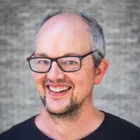
UAE Team Emirates-XRG general manager Mauro Gianetti has insisted that he had nothing to do with the behaviour of former riders who doped in a squad which he was directing in the early 2000s.
Gianetti, now overseeing Tadej Pogačar's team as he heads towards a likely record-equalling fifth Tour de France, was the manager of Saunier Duval from 2004 to 2008, where three of the riders, Leonardo Piepoli, Riccardo Ricco and Juan José Cobo, became embroiled in doping affairs. The team itself abandoned the Tour in 2008 after Ricco tested positive for EPO.
Piepoli subsequently admitted using banned drugs, as did Ricco, the latter receiving a life ban. Cobo, who was found to have abnormalities in his biological passport, was later stripped of his 2011 Vuelta a España victory.
"I made the mistake of taking them in my team. I should have reacted differently, been clearer with the press, explain that I was a victim," Gianetti told L'Équipe.
Gianetti subsequently took legal action in Italy against riders who he said "made me lose sponsors and who damaged my reputation."
The Swiss manager explained that, rather than explain himself to the press, at the time his main concern had been to try and keep the team going and "to save 70 people's jobs."
"Just as you don't know what your children do in their bedrooms, you don't know what riders do in their homes," he said to justify his lack of awareness of the illegal activity going on in his team.
Get The Leadout Newsletter
The latest race content, interviews, features, reviews and expert buying guides, direct to your inbox!
Gianetti also told L'Équipe that he had been informed that Ricco had a natural hematocrit of over 50%. That was the highest percentage possible permitted for riders to have at the time before they were suspended for two weeks for health reasons, in what was effectively an indirect method of testing for EPO.
A professional in the doping-battered 1990s era of cycling, Gianetti denied to L'Équipe that he had ever taken EPO, the drug of choice of the peloton at the time. However, he said that it was a special era.
Given his past, Gianetti was asked if that could affect the image of his star rider, Pogačar, but he brushed aside the idea.
"In any case, Pogacar is so strong that no matter the team, there will be doubts concerning him," Gianetti said. "I'm doing my job, I've brought more than 600 million euros into cycling, getting contracts signed, salaries…"
In 2021, Gianetti already issued a statement about his past, telling Velonews, "It was a very different culture and mentality."
The world’s biggest bike race deserves world-class coverage. Subscribe to Cyclingnews for unlimited access to our unrivalled reporting of the 2026 Tour de France. From Barcelona through to Paris, our experienced team will bring you breaking news, expert insight, and in-depth coverage from every stage as the battle for the yellow jersey plays out. Plus, access the Cyclingnews app to follow the action on the go! Find out more.
Alasdair Fotheringham has been reporting on cycling since 1991. He has covered every Tour de France since 1992 bar one, as well as numerous other bike races of all shapes and sizes, ranging from the Olympic Games in 2008 to the now sadly defunct Subida a Urkiola hill climb in Spain. As well as working for Cyclingnews, he has also written for The Independent, The Guardian, ProCycling, The Express and Reuters.
You must confirm your public display name before commenting
Please logout and then login again, you will then be prompted to enter your display name.