Tour de France Femmes 2027 route unveiled – Nine tough stages, a first-ever TTT, and a big Puy de Dôme finale
Race kicks off with UK Grand Départ before a challenging traverse across France
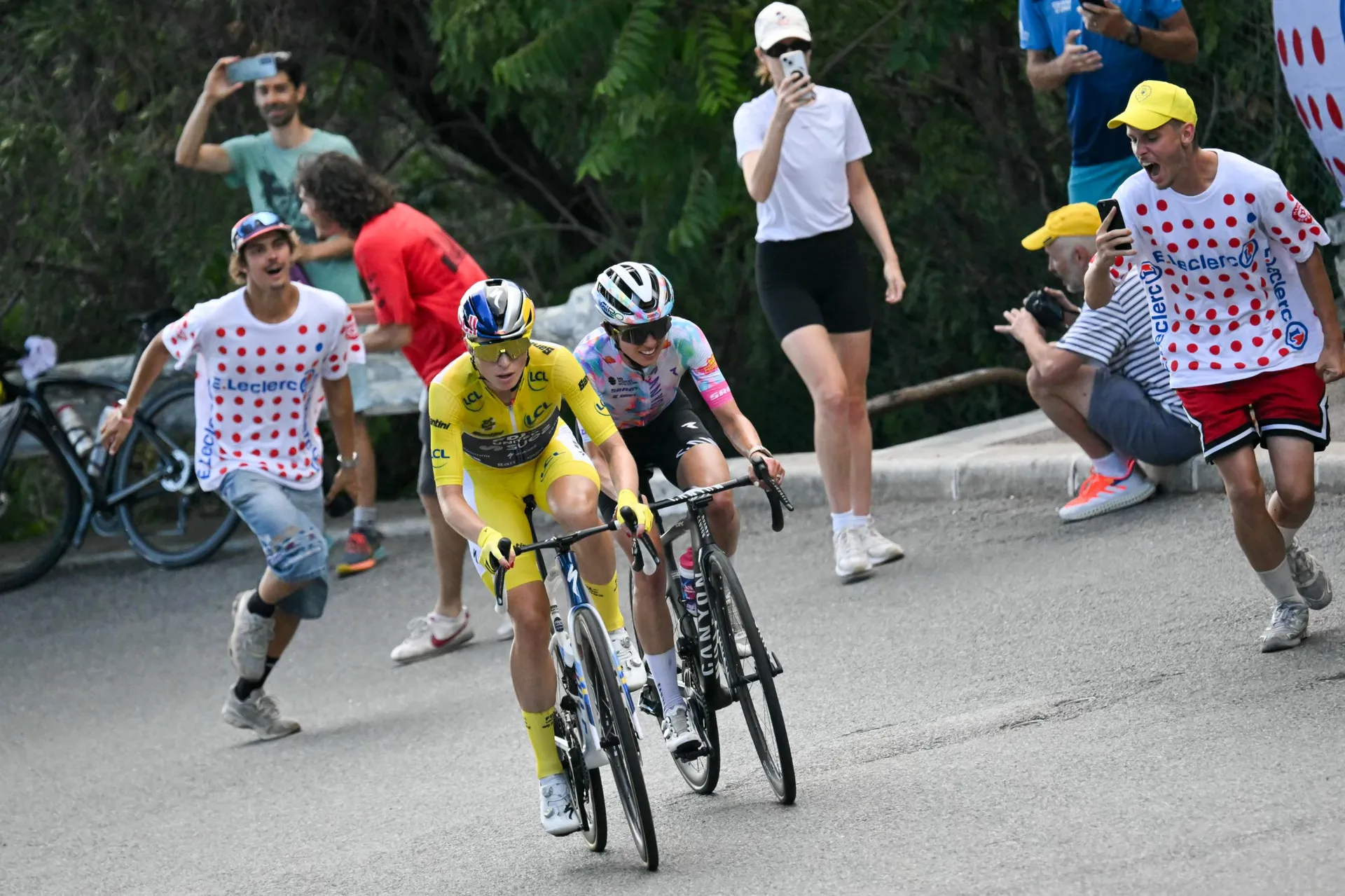
The route for the 2027 Tour de France Femmes has been unveiled, featuring a Grand Départ in the UK, a traverse across northern and central France, and a challenging finale with back-to-back mountain stages in the Auvergne.
Kicking off on Friday, July 30, 2027, the sixth edition of the race will be nine stages long, the same as in 2026, but features an extra day of travel to return to France after the Grand Départ, with the yellow jersey set to be decided on Sunday, August 7.
Starting with three stages in Great Britain – two hilly stages around Manchester and the Pennines and then the race's first-ever team time trial in London – the race then returns to France via Calais.
The showpiece climb of the race will be the Puy de Dôme, a deeply historic Tour climb that returned to the route in 2023 after a long absence, and will be the climax of the race on stage 9.
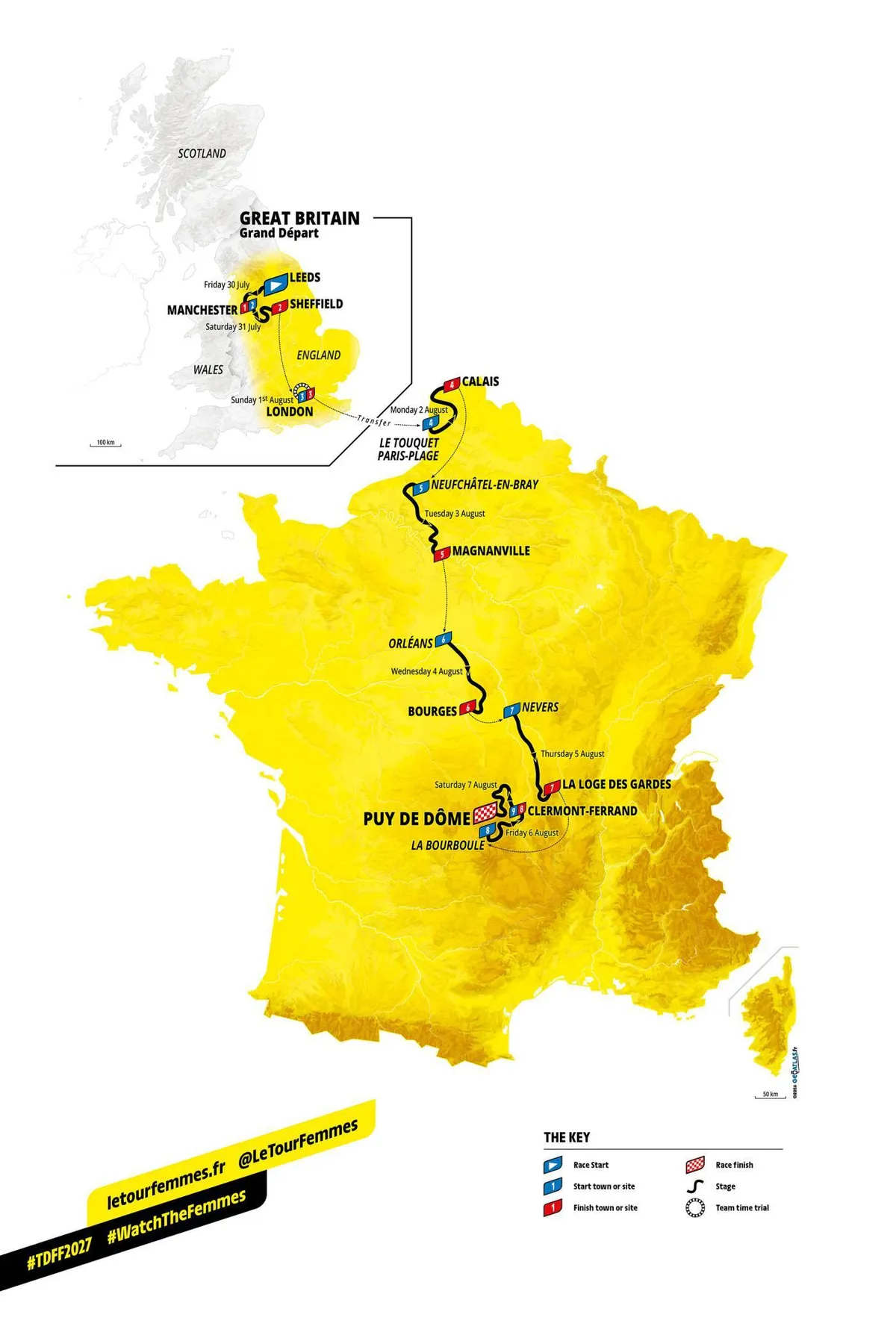
Like last year, the course looks like one where practically every day could invoke GC action, with hills and tough roads from stage 1 and the TTT ensuring a GC hierarchy will be forming before the race even returns to France. From there, the journey across France is peppered with hills before the climax in the Massif Central.
2026 winner and world champion Demi Vollering (FDJ United-Suez) will be seeking a third title, but will face tough competition from some familiar faces, including Kasia Niewiadoma-Phinney (soon-to-be Lidl-Trek), Marlen Reusser (Movistar) and Pauline Ferrand-Prévot (Visma-Lease a Bike), plus up-and-coming stars Paula Blasi (soon-to-be Movistar) and Antonia Niedermaier (Canyon-SRAM).
Where the race will be won

As we saw from this year's edition of the Tour de France Femmes, the yellow jersey isn't won on one or two big stages, it's a week-long battle with the favourites taking shots at each other wherever they can, including on the more innocuous stages. While there are still 'only' nine days of racing, and plenty of challenges on practically every day, we're expecting a similar pattern next August.
The latest race content, interviews, features, reviews and expert buying guides, direct to your inbox!
The final weekend with its back-to-back mountain stages will certainly be decisive, and will be where this race is officially won with the biggest time gaps here, but the GC action will have been brewing for several days already by the time the peloton hit the volcanic climbs.
Whilst the first two stages in the north feature plenty of spicy Pennine climbs, and the tension of the Grand Départ always throws up some twists, the flat finishes – and short length of stage 1, at only 87.5km – will likely mean we don't see huge gaps after those first stages. Some intention-laying attacks, sure, but the favourites should be on pretty even standings as the race heads to London.
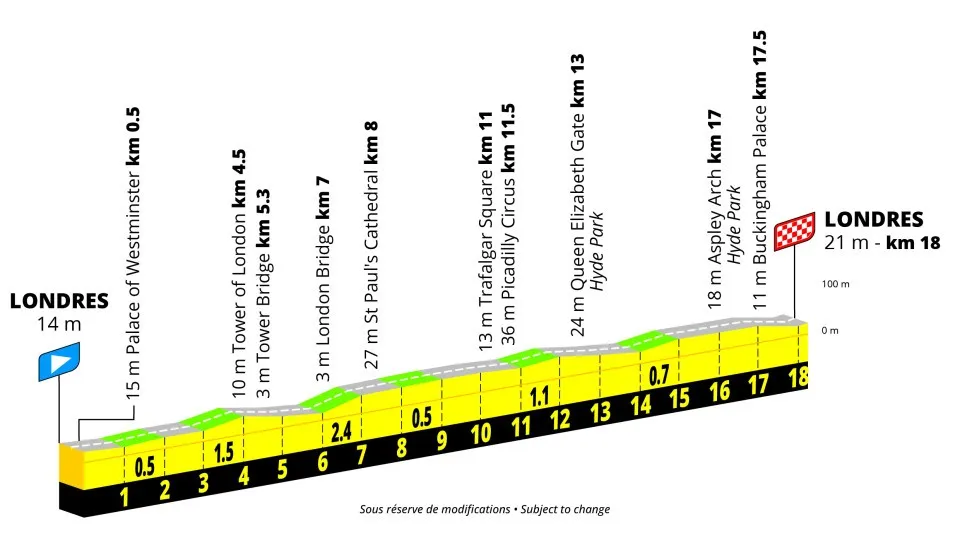
The TTT around the capital will be the first guarantee of time gaps, then, with 18km of racing set around The Mall built by design to shake up the GC standings. Relatively short at 18km, the gaps again won't be huge, but they will be there. The team element is an interesting factor, though, as the specialists like Reusser and Vollering won't be able to just take chunks out of their rivals, they'll be limited by their teams, but on the other hand, riders like Ferrand-Prévot will be able to lean on their teammates more than they can in individual efforts. The yellow jersey won't be won or lost on the streets of London, but it will mean the riders return to France with an early idea of who is where on GC.
On returning to l'Hexagone, stage 4 won't offer up much of a break in hostilities, with the punchy finale into Calais sure to tempt the favourites into action, and the same could be said for stage 5 with its uphill finish into Manganville. The action here will mainly be feeling each other out, maybe grabbing a few seconds here or there rather than a race-winning gap, but with how close the favourites were matched this year, we know that every second counts.
This means that by the time we reach stages 7, 8 and 9 and their big climbing challenges, the GC tension will have been building for a good week, and we'll have a decent idea of who is sitting near the top of the standings, but there will still be a massive test to come.
It's hard to say which of the triple-header in the Massif Central will decide the winner of the Tour. Of course, a winner won't officially be crowned until the riders cross the line on stage 9 atop the Puy de Dôme, but could someone take enough time on stage 7 or 8 to put themselves well in the lead already? It's very possible.
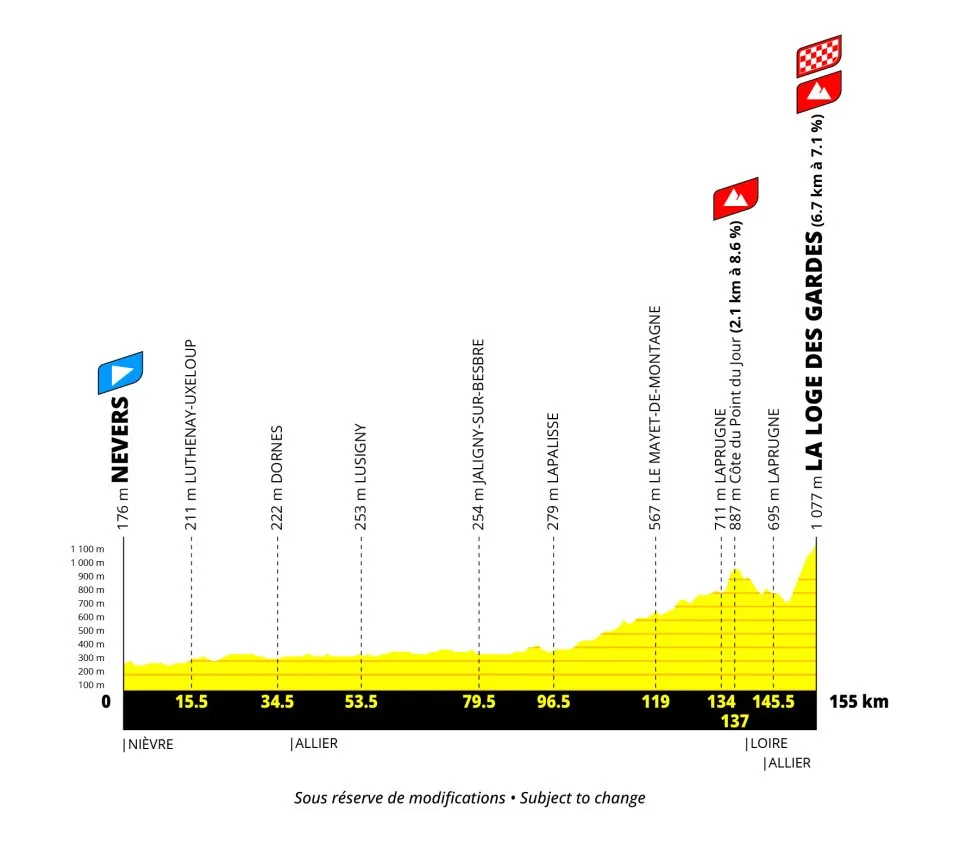
The first summit finish of the race comes on stage 7, which is relatively late, atop La Loge des Gardes, a wooded ski station climb that's featured in Paris-Nice in recent years. The 6.7km climb is preceded by 30km of gradual, uncategorised climbing, which will sap the legs and could make it harder than its profile suggests, with big time gaps possible here. No one wants to leave it late, but equally, no one wants to play all their cards too early.
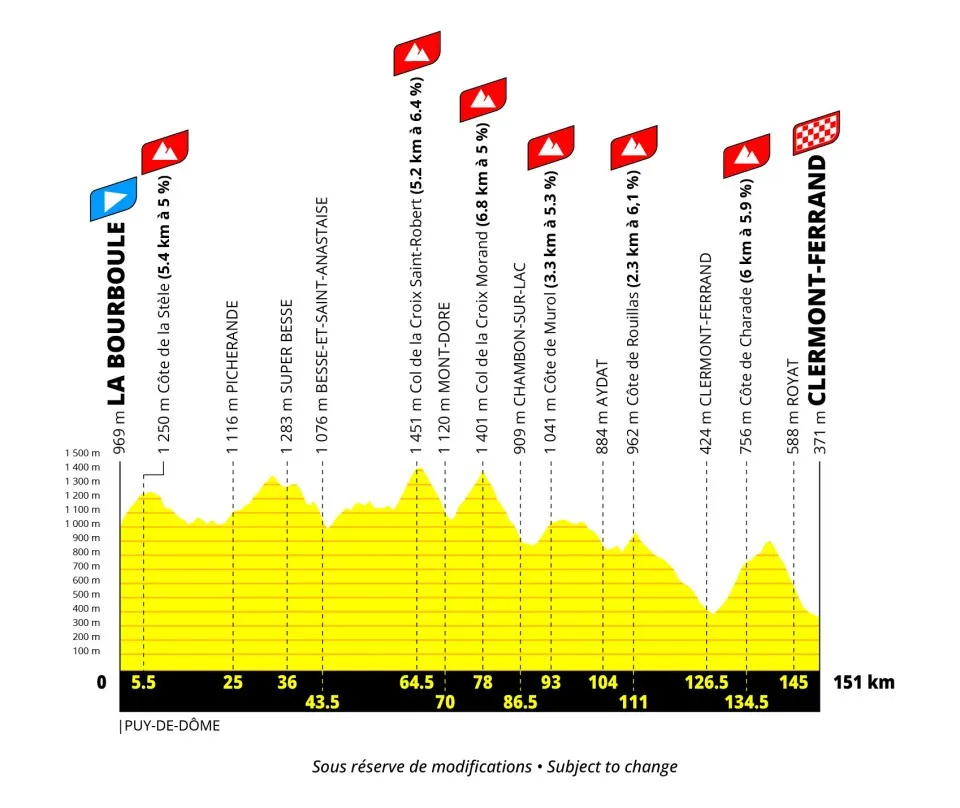
Stage 8 ramps up a level with no fewer than six climbs and 3,000m of elevation with a stage that could really rip the race apart on some of the hardest climbs in the Massif Central, but even after that, the Puy de Dôme will still be looming. A rider would have to have probably more than three minutes of a lead to feel comfortable going into stage 9.
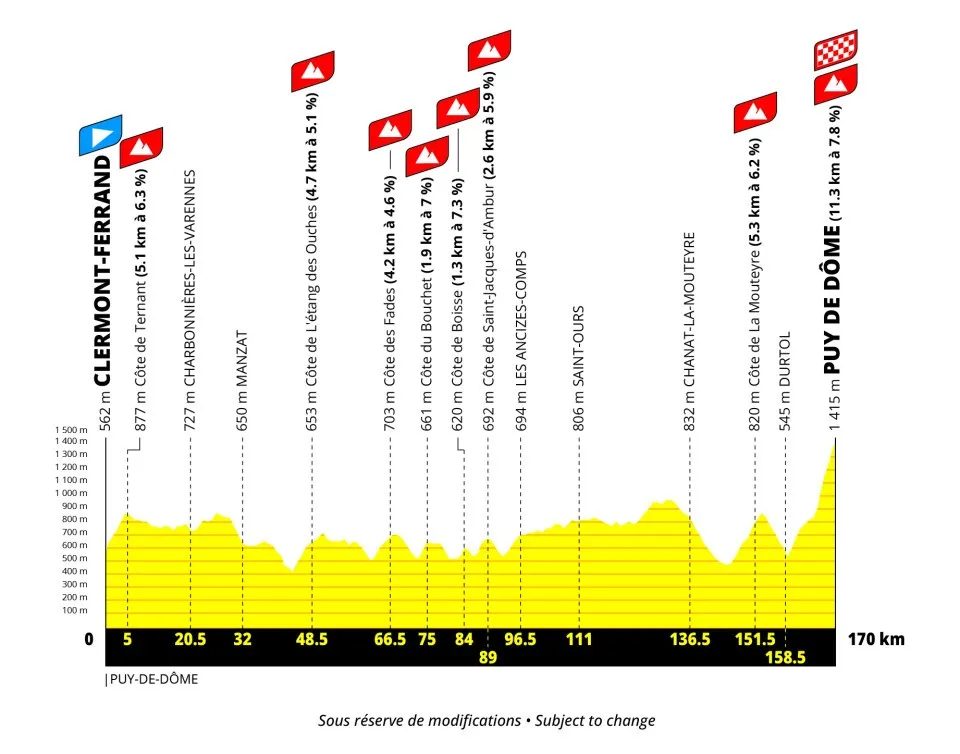
Not only is the final stage packed full of climbing with a mountaintop finish atop the volcano, but it's long, too, at 170km. It's easy to imagine a scenario where a rider comes into this stage in yellow with a solid lead, but unless that lead is really huge, all will still be to play for on the 11.3km ascent up the Puy de Dôme. It's a lonely, testing climb, where gaps can open up quickly, and a final-day raid is far from impossible.

Whilst previous editions of the Tour haven't concluded on the showpiece climb – there's often been one last day to shake things out – 2027 will do just that, so expect everyone to throw absolutely everything at stage 9. And that could have some dramatic results.
The non-GC opportunities

As we saw in this year's Tour de France Femmes, opportunities for riders not aiming at the GC can be hard to come by. In 2026, practically every stage except the pan-flat openers ended up a GC race of some sorts, with the relatively short length of the women's race meaning the favourites wanted to take every opportunity they could to take time and shake up the standings.
In 2027, a similar story is expected. The backloading of the truly big climbs could swing the earlier stages slightly more in favour of the non-GC riders, but if history has told us anything about this race, it's that the favourites will go to battle as early as they can.
Stages 1 and 2, with their flat, city-centre finishes, look primed for sprints of some sort, but the pure sprinters will probably be looking on with a hint of dismay, because there are some truly tough Pennine hills on the routes which will put some of the weaker riders in trouble. 2026 green jersey Lorena Wiebes (SD Worx-Protime) probably won't be particularly worried, though, and will see those opening days as another chance to add to her stage win haul and kick off her green jersey defense campaign.
Stage 4 looks primed for the puncheurs, though in this era, who are the true puncheurs? On these punchy finales – take the opening stage in Lausanne this year as an example – we often see all the GC riders getting involved, with Wiebes also more than capable of tackling all but the hardest climbs. The pure, non-GC puncheurs are probably the likes of Lotte Kopecky, Puck Pieterse and Kim Le Court-Pienaar, so this could be their rare chance at a stage win – if they can shake off, Wiebes, of course.
Stage 5 offers a similar opportunity, one should be for the puncheurs, but will likely see the GC contenders fighting for the win too.
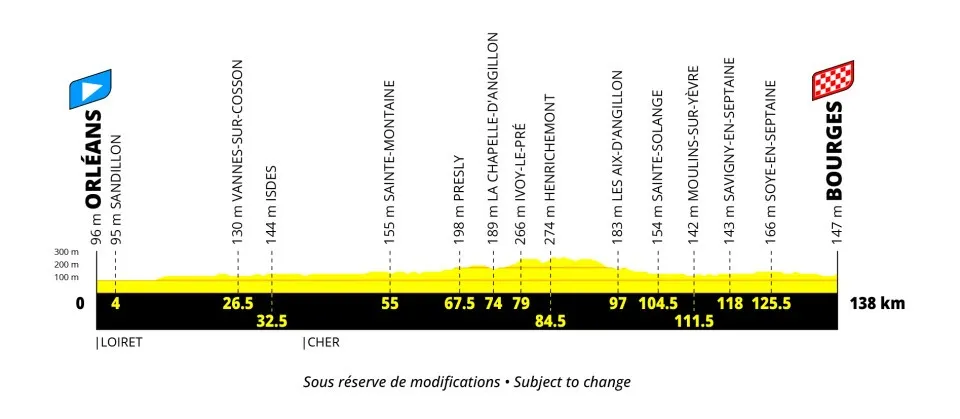
The only true, true sprint stage of the race comes on stage 6, a pretty much pan-flat day form Orléans to Bourges that will surely finish in a big bunch sprint, with no late challenges to speak of.
Apart from that, riders who aren't the GC favourites or Lorena Wiebes may be looking at this course with a little bit of a disappointment. Breakaway stages are never guaranteed, and the backloading of the mountain stages means that they will almost certainly be won by GC riders, not breaks. So where can everyone else dream of taking a stage win? The first stages in France look to be the best chances, before the GC narrative takes over.
What's missing?
One quick look at the race map shows a glaringly obvious omission: no Alps or Pyrenees. This means the sixth edition of the race will be the first time since the inaugural event in 2022 that neither major mountain range is included on the Femmes route. Instead, limited by geography and time, the race will cut France down the middle with a trip into the Massif Central and the volcanic climbs of the Puy-de-Dôme department.
Of course, the Massif Central is a mountain range in its own right, with some seriously difficult climbs – the Puy de Dôme is no less challenging just because its not in the Alps or Pyrenees – but it's just that bit less well known than the two really big French mountain ranges. And whilst the Puy de Dôme is iconic in its way, it doesn't have the global recognition that a Mont Ventoux or Alpe d'Huez does.
The other missing discipline is an individual time trial. The London TTT means that the race against the clock is on the menu, but the team discipline is a highly different demand, and will provide very different results than an ITT would. 2026's time trial in Dijon – itself only the second time an ITT has featured on the Tour de France Femmes route – was a brilliant race that threw up lots of GC intrigue, so it's a shame not to see a repeat in 2027. Many will be pleased, not least the home favourite Ferrand-Prévot who is weak against the clock, but many will be disappointed too.

With the race still only nine stages, the Tour de France Femmes can't yet go everywhere and do everything, and this 2027 route is a reminder of that and the limitations facing the race in its current form – and perhaps a good argument for making this event longer. But make no mistake: this is a super tough route that will deliver another year of fantastic, challenging racing for the yellow jersey.
Stages in full
Stage |
Start |
Finish |
Length |
Type |
Stage 1 |
Leeds |
Manchester |
87.5km |
Hilly, flat finish |
Stage 2 |
Manchester |
Sheffield |
154.4km |
Hilly, flat finish |
Stage 3 |
London |
The Mall, London |
18km |
TTT |
Stage 4 |
Le Touquet Paris-Plage |
Calais |
123km |
Punchy |
Stage 5 |
Neufchâtel-en-Bray |
Magnanville |
161km |
Uphill finish |
Stage 6 |
Orléans |
Bourges |
138km |
Flat |
Stage 7 |
Nevers |
La Loge des Gardes |
155km |
Summit finish |
Stage 8 |
La Bourboule |
Clermont-Ferrand |
151km |
Mountain |
Stage 9 |
Clermont-Ferrand |
Puy de Dôme |
170km |
Mountain |
The road season might be at an end, but Cyclingnews isn't slowing down. Subscribe for unlimited access to our comprehensive news coverage, industry-leading CN Labs testing, expert columnists, and so much more. Plus, the Cyclingnews app means you can stay up-to-date wherever you go! Join today.
Matilda is an NCTJ-qualified journalist based in the UK who joined Cyclingnews in March 2025. Prior to that, she worked as the Racing News Editor at GCN, and extensively as a freelancer contributing to Cyclingnews, Cycling Weekly, Velo, Rouleur, Escape Collective, Red Bull and more. She has reported on the ground at all of the biggest events on the calendar, including the men's and women's Tours de France, the Giro d'Italia, the Vuelta a Espana, the Spring Classics and the World Championships. She has particular experience and expertise in women's cycling, and women's sport in general. She is a graduate of modern languages and sports journalism.
You must confirm your public display name before commenting
Please logout and then login again, you will then be prompted to enter your display name.
