The latest race content, interviews, features, reviews and expert buying guides, direct to your inbox!
You are now subscribed
Your newsletter sign-up was successful
An account already exists for this email address, please log in.
Subscribe to our newsletter
Jasper Philipsen will again target the Classics in the spring of 2026 and especially Paris-Roubaix, to prove he is far more than just a world-class sprinter.
Philipsen has 58 victories in his palmarès, many of them in sprints, but he is Belgian and Flandrian at heart and fell in love with cycling as a boy while watching the Classics.
"I started racing for races like Paris-Roubaix. It's a race I'm very passionate about, and I even get emotional thinking about Paris-Roubaix," Philipsen told Het Nieuwsblad in a special interview after he was nominated for their Flandrienne of the Year award.
Article continues below
"They're in my DNA and of the team too, who are based in Belgium. Maybe in a few years I'll focus more on sprints again because that's what I'm intrinsically best at, but nothing ventured, nothing gained."
Philipsen won the stage 1 sprint at the Tour de France to take the yellow jersey in Lille and has won ten Tour sprints and the green points jersey in 2023. But he has always shown he is more than 'just' a sprinter.
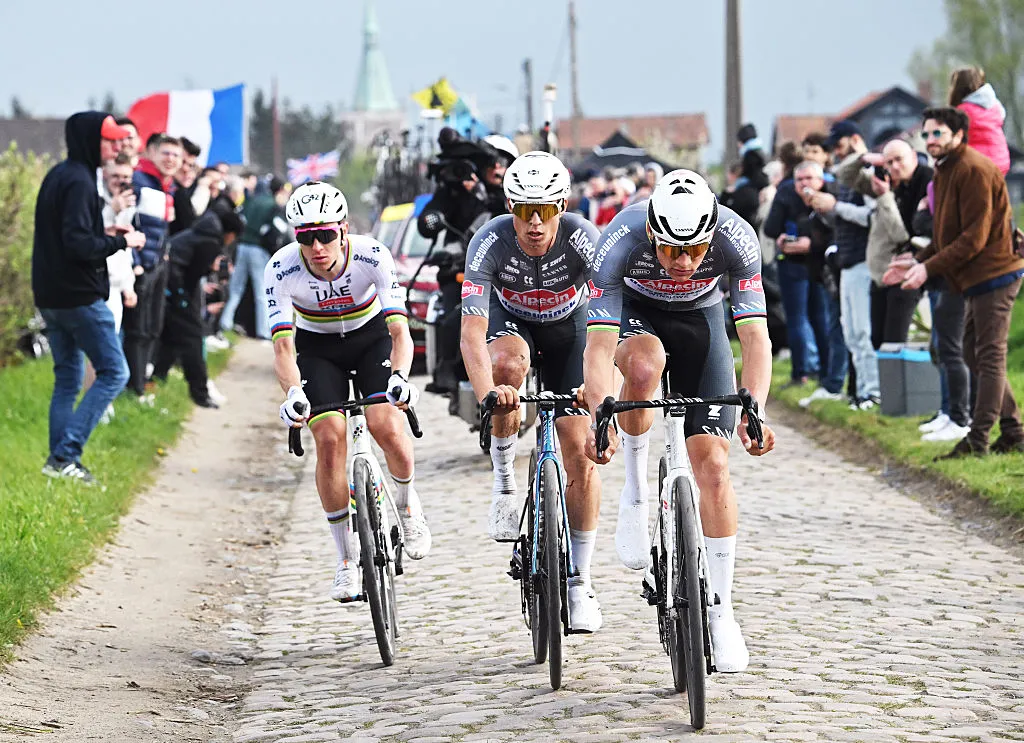
He won Milan-San Remo in 2024 despite Tadej Pogačar's attacks and was second at Paris-Roubaix in 2023 and 2024, behind teammate Mathieu van der Poel. He has won the flatter but demanding Classic Brugge-De Panne and Scheldeprijs twice and won Kuurne-Brussel-Kuurne this year.
Philipsen is ready to sacrifice sprint wins in early-season races so that he can peak for April and the biggest Classics.
Get The Leadout Newsletter
The latest race content, interviews, features, reviews and expert buying guides, direct to your inbox!
"In 2026 we’ll follow the same plan: I want to be a Classics rider in the first part of the season and focus my training around that," he confirmed.
"If you're going to sacrifice your lifestyle and build your fitness for the spring, you need something to focus on. The Classics are a goal for me.
"We also have a culture of working towards these races in the team. Our coaches and team management are skilled at developing a plan and we have a good group for it. I think Mathieu and I motivate each other to do better."
Philipsen and Van der Poel are competitive even in training but are loyal in races, using their different skills and strengths to take on Pogačar and their other Classics rivals. Van der Poel has won three consecutive editions of Paris-Roubaix, with Philipsen always there as the team's Plan B and sprint option.
Both have long-term contracts with team owners Philip and Christoph Roodhooft, and the team is expected to reveal a new title sponsor on Friday, possibly Premier Tech, after the Canadian company left the troubled Israel team.
Philipsen won seven times in 2025, but his season was twice disrupted by crashes at key moments of the year. He was third at Omloop Nieuwsblad and won Kuurne-Brussel-Kuurne, but crashed hard at Danilith Nokere Koerse later in March. He tried to race on his, but his injuries disrupted his spring, and he was 11th at Paris-Roubaix.
His winter and spring will be focused on the Classics, before a switch to more specific sprint training to be ready for the summer and the Tour once again.
He is already back in training and will soon join van der Poel and his teammates for a training camp in Spain. He will only begin specific sprint training after the Classics.
"It’s difficult because you have a certain training style that you’ve gotten used to, but after the spring, it suddenly has to change,” he explained.
"A sprinter trains either really easily or really hard. When you’re training in such a polarised, black or white way, you have to do your own thing more."
Stephen is one of the most experienced members of the Cyclingnews team, having reported on professional cycling since 1994. Before becoming Editor-at-large, he was Head of News at Cyclingnews. He has previously worked for Shift Active Media, Reuters and Cycling Weekly. He is a member of the Board of the Association Internationale des Journalistes du Cyclisme (AIJC).
You must confirm your public display name before commenting
Please logout and then login again, you will then be prompted to enter your display name.