One of the most cost-effective upgrades you can make is a set of the best road bike tyres. The right rubber can transform your ride, improving rolling resistance, grip, comfort, and in some cases, aerodynamics.
Our team of testers has covered countless miles on the road and in all weather conditions, putting road bike tyres through their paces to see how they perform in the real world.
We’ve also taken many of these tyres to the wind tunnel and assessed them using our own lab-based rolling resistance testing. Our results are combined with feedback from our expert test team, giving a complete picture of each tyre’s speed, grip, comfort and durability.
As a result, we’ve collated the best road bike tyres across a range of categories, including the fastest tyres, the best racing options, the most puncture-resistant and the best budget choices. We've awarded scores for grip and puncture protection in the specs for each tyre. Higher numbers are better.
Different riding conditions may call for more specialised options, such as the best gravel tyres where the tread pattern plays a much bigger role in providing grip on loose surfaces, or the best winter road bike tyres which feature additional tread detailing to help the rubber deform more easily and maintain grip in colder, wetter conditions.
Read on to find out which road bike tyres we recommend across a range of categories, and if you still need some help, head to the bottom of the page for some useful buying advice.
Best overall road bike tyre

✅ You want speed: In our lab testing, the GP5000 tyres are faster than many competitors, including the pro-favourite Vittoria Corsa Pro, making them ideal for performance-oriented road bikes.
✅ You want longevity: They offer excellent lifespan and feature clear wear indicators, so you know when to replace them.
❌ You don't want difficult fitting: These tyres can be notoriously hard to mount on certain rims, so be prepared for a potential fight when fitting.
There's a reason the GP5000 has become the gold standard for road bike tyres, much like its predecessor, the GP4000. Whenever I get a set specced on a test bike it's always a plus point, partially because it does wonders for the handling, but also because it means I don't have to fit them myself - they are notoriously tricky with some rims, so get some of the best tyre levers you can to make sure you don't have a bad time.
My experiences with them are backed up by the BRR data. They are faster than the Vittoria Corsa Pro, the other model that's ubiquitous amongst the pro peloton, but there is a slight penalty in grip and puncture protection as a trade-off.
While their puncture protection is a few points less, I've found their overall lifespan to be excellent, plus they come with easy-to-see wear indicators so you know when they've reached the end of their life. The sidewall protection is also going to be better than that of a cotton-cased tyre.
In short, if you've got a performance-oriented road bike and want to get the best out of it, then these are the tyres I'd recommend you opt for. They are expensive, but in the context of top-end tyres, they are similar to the competition.
If you want to know more about how they ride, be sure to check out our Continental Grand Prix 5000 S TR review.
Best budget road bike tyre

✅ You want a smooth, confidence-inspiring ride: The round profile and uniform tread deliver progressive grip with no sudden loss of traction when cornering.
✅ You want great value for money: Performance rivals premium tyres, but the price is around a third of top-tier options.
❌ You don’t want tyre fitting frustration: These tyres can be difficult to seat on various rims and may unseat after a puncture.
I really love these tyres. I first came across them by accident on a Vitus test bike and they've been a favourite ever since. The uniform tread, combined with a really lovely round profile, gives them a super progressive ride quality; there's no sudden change in grip as you go onto the shoulders.
They're fast, too, and grippy, and pretty sturdy. The stats are up there with far more premium tyres, but you can pick these up for around 1/3 the price of top-tier rubber, so if you value a bargain then look no further.
There are drawbacks, though. I found them a real pain to seat on several different rims, and when I flatted they tended to unseat. I'd suggest taking a CO2 inflator with you though, as well as a mini pump, as that'll more easily reach the pressures needed to re-seat them in the event of a flat.
Read my full Michelin Power Cup review for more.
Fastest road bike tyre

✅ You want ultimate speed: These tyres have incredibly low rolling resistance, making them ideal for time trials and competitive events.
✅ You want proven performance: They've been used successfully in top-level time trials, giving them strong race credibility.
❌ You want daily durability: The lack of a puncture protection belt makes them unsuitable for general road riding.
❌ You want easy maintenance: They're expensive and require careful setup - cheap tubes or too much sealant will compromise performance.
I really wouldn't advise fitting these to your bike for general road riding, but if you have an event where wringing out every last watt is key, then these are impossible to overlook. Perfect for that 10-mile TT, or maybe even a crit on a dedicated, well-maintained track.
The incredibly low rolling resistance is thanks to Vittoria making the central smooth portion of the tread wider, eschewing the shoulder sipes (or 'grooves' to you and I) on all but the extreme edges. What's more, the usual puncture protection belt has been removed to make the tyres even more supple.
These have been proven in top-flight time trials, so they have a real race-winning pedigree, but that doesn't come cheap – again, keep them for your race wheels, or you may have to catch a train home.
On a similar note, spending all this money on such a fast tyre and either using cheap inner tubes or overfilling them with sealant would be a waste of money and power, so take the time to set them up properly.
Best cotton road bike tyre
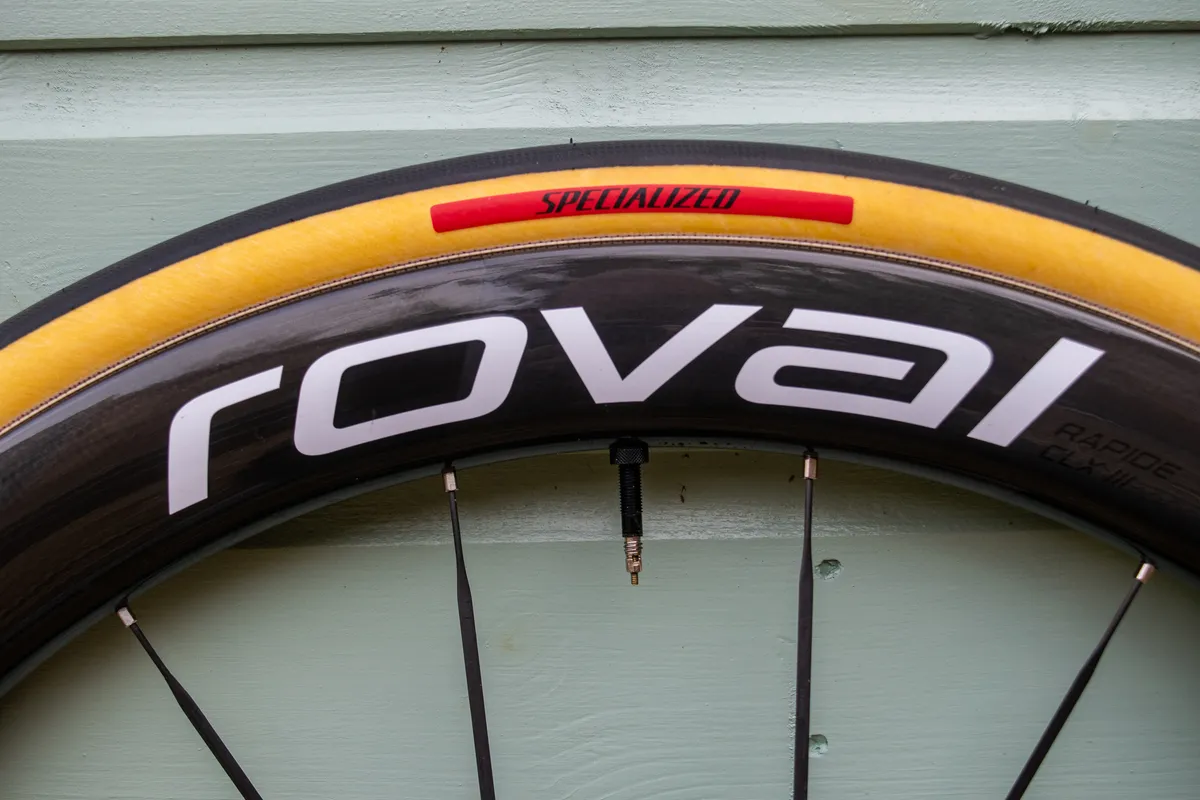
✅ You want a fast tyre with great levels of grip: The ride feeling is fast and zippy and these are strong all-round performers.
✅ You want attractive style with tubeless compatibility: This is a good looking that takes the fast Cotton design and incorporates solid tubeless compatibility.
❌ You want a year-round training tyre: It’s designed as a fast, performance-oriented summer all-rounder rather than a high-mileage winter tyre.
These are the tyres raced almost exclusively by Specialized-sponsored teams and riders, combining hassle-free tubeless performance with the fast, lively ride quality that Specialized's Cotton tyres have long been renowned for.
These tyres take the well-regarded Specialized Cotton tyre platform and make it tubeless-friendly. The tyres use a 320 TPI construction, and are available in new, bigger sizes: 28, 30 and 32mm, which makes them bang up to date.
These are performance-oriented tyres and, as such, sit in the fast summer all-rounder box, but aren't so fragile that training or general riding on them would be risky or a waste of money.
Specialized has done an excellent job with the Cotton TLR; they look good in my opinion, and are fast, engaging and grippy. Plus, there's a hint of retro styling, in a good way.
Find out more in our full Specialized Cotton TLR review.
Best road bike tyre for puncture protection

✅ You want top-tier puncture protection: The Pirelli Cinturato Velo is rated as the best for puncture resistance by Bicycle Rolling Resistance, even outperforming the benchmark Gator Hardshell.
✅ You want versatile durability: Marketed as a pseudo-touring tyre, it's well-suited for commuting, light gravel, and even bikepacking thanks to its long lifespan and added tread grip.
❌ You want a smooth ride feel: The Kevlar-reinforced casing reduces ride suppleness, which may affect comfort on rougher surfaces if you don't have clearance to size up.
The Cinturato Velo has been technically discontinued by Pirelli and replaced by the Cinturato Road TLR.
For years, the Gatorskin Hardshell (and latterly, the Gator Hardshell) from Continental has been the king of the puncture-proof world, but the specs on the new Pirelli Cinturato Velo are impossible to ignore. These have the best puncture protection on the market according to Bicycle Rolling Resistance, and not only that, but they are a few watts faster than the Gator Hardshell too.
These are marketed as a pseudo-touring tyre, with increased lifespan, and a tread that has a little more bite for tackling well-behaved gravel. For my money, they are an excellent commuter tyre, like all in this section, but I'd be happy to fit them if you are undertaking some road bike bikepacking and really can't be doing with dealing with punctures.
While puncture-resistant tyres are great, they aren't totally immune, but setting them up tubeless will add yet another layer of protection. Having a Kevlar-reinforced casing is great too, but it does make the ride less supple, so if you have the space, I recommend going up a size to maintain the same ride quality.
Best road bike tyre for winter

✅ You want added grip and confidence: The tyre offers significantly improved grip over the standard GP5000, giving you more confidence when cornering in bad conditions.
✅ You want durability and protection: With better puncture resistance and longer mileage, it’s a practical choice for everyday riders facing debris-strewn roads.
❌ You can’t run wider tyres: While it shines in larger widths, riders' narrow clearances may not get the full benefit of its all-road versatility.
We've got a separate guide to the best winter road bike tyres, which dives into the nuances of different use-cases through the colder months, but the Continental GP5000 AS TR is our pick as the best winter tyre overall thanks to its all-weather grip. It effectively blends the speed and performance of the brand's other tyres – it's faster and more surefooted than the Grand Prix 4 Season, and it's almost as fast as the standard GP5000 S TR but has added durability.
If you live in an area where there's a lot of debris on the roads, the added puncture protection and greater mileage will be a boon there too. In all likelihood, unless you're chasing every last watt or every last gram, running a pair of GP5000 AS TRs is probably a better bet for the everyday rider. The improved grip will help you corner with greater confidence, perhaps saving you more time than those few watts.
Like the GP5000 S TR, these are hookless compatible and come in widths from 25c all the way to 35c. Where I think these will really shine is in those larger widths for those of you who want to get the absolute most from your all-road and gravel bikes when riding predominantly on the tarmac.
Read our in-depth review of the GP5000 AS TR.
Best aero road bike tyre

✅ You want a fast tyre for racing: The Aero 111 delivers proven aero performance and low rolling resistance, making it a top choice for racing, time trials and fast group rides.
✅ You want a fast tyre that still inspires confidence: The Aero 111 isn’t just about straight-line speed - its Black Chili compound delivers excellent grip and cornering performance.
❌ You want an easy-to-fit tyre: The Aero 111 is tight-fitting, and getting it onto some rims can require some effort and a fair bit of patience.
The Continental Aero 111 tyre is very similar to the GP5000 line, using the same Black Chili Compound for grip and reduced rolling resistance, and the Vectran Breaker for added puncture protection.
The biggest difference is the Aero 111’s tread pattern, designed in conjunction with DT Swiss and aero experts, Swiss Side, with claims of reduced aero drag compared to the brand's ever-popular GP5000 S TR.
While we haven't published a full review of the Aero 111 yet, our Senior Tech Writer, Will Jones, has ridden them in the real world and says they feel very similar to a GP5000 S TR in terms of grip, although the thicker tread means they are slightly less supple. Continental’s claims of improved crosswind stability also appear to translate on the road, with Will noting that the increased front-wheel stability makes it easier to stay tucked in when riding in gusty conditions.
We also tested the Aero 111 and GP5000 S TR in the wind tunnel, with the Aero 111 delivering superior aerodynamic performance despite a small rolling resistance penalty.
One limitation is that the Aero 111 is currently available in just two widths, although Continental is expected to expand the range in the future.
How to choose the best road bike tyres for you
When it comes to finding the best road bike tyres for your bike, there are some questions you should ask yourself first, because the right tyres for me mightn't be the best ones for you.
Some of these questions relate to compatibility, because there's no point buying a tyre that won't actually work with your wheels or your bike. The others are centred on preference... ie, what do you want from your tyres.
We are going to assume you're running a standard 700c road wheel, but just bear in mind that some wheels are 650b, especially specced on small bikes from Canyon and others.
- How much tyre clearance do I have? Check how much clearance your bike frame and fork allow (usually listed on the manufacturer’s website). If your bike is limited to 28mm tyres, fitting anything wider could risk tyre rub, which may damage the frame/affect performance.
- What width do I need? Road bike tyres are getting wider. If your bike frame has the clearance, a 28mm is now the minimum, but you'll get a better ride on a 30mm or greater. Just make sure they'll fit.
- Do I want to run tubeless? If you want to run tubeless tyres, you’ll need both a tubeless-compatible tyre and wheels that are designed for tubeless use. If your wheels aren’t tubeless compatible, you’ll either need to upgrade them or stick with using inner tubes. A traditional tube-type clincher is usually lighter and cheaper, and remains a simple, reliable option for many riders.
- Do I have hookless rims? If you’re unsure whether your wheels use hookless or hooked rims, check the wheel manufacturer’s website for compatibility information. Most wheels use a traditional hooked bead, especially older models, but many modern carbon wheels from brands including Giant, Hunt, ENVE and Zipp now use hookless designs. It's best to be safe than sorry, so it's important to spend time finding this out.
- Do I want a folding tyre? Yes. While wired tyres are cheaper, they're also heavier, don't usually roll as well and can't be run tubeless. We'd steer clear of them and stick to folding tyres.
- How durable does the tyre need to be? If you're riding in wet and wintry conditions, consider a beefed-up winter tyre. For summer use, you can go lighter, while for time trials and short, fast rides, you may be content to fit an ultra-light tyre despite the increased puncture risk.
- What's the rolling resistance? Check out test results; a faster-rolling tyre will feel nicer to ride.
- How much does it cost? At list price, top spec tubeless tyres can be expensive. Tyres are often available with a hefty discounts, so it's worth shopping around.
- Does tread pattern matter? Unlike the best gravel tyres or the best XC MTB tyres, the tread pattern isn't too important, but you'll find that many of the best winter road bike tyres have extra tread - known as siping - to allow the rubber to deform more easily when it's cold.
- What type of riding am I doing? The best road bike tyre for you depends on how and where you ride. A lightweight, supple tyre may offer lower rolling resistance and a faster ride, but it can come with a higher risk of punctures. If durability and reliability are more important, a tyre with extra puncture protection may be the better choice, even if it adds a little weight.
Everything you need to know about the best road bike tyres
What type of tyres should I get?
The best all-round road tyres are extremely fast, grippy across a wide range of conditions, last a decent number of miles, and can shrug off at least some debris that would puncture a time trial tyre. The majority of top-end road bike tyres nowadays are tubeless, but not all. If you're running tubes, you can still run them in a tubeless tyre, but not the other way around, so do check. Some WorldTour teams are still running tubes, though they opt for latex over older butyl options, as it's more supple and that makes it faster.
If speed is your absolute goal, and primarily I'm talking about time trials here, then some tyres are created to be even faster than the all-rounders above. The tradeoff in most cases is reduced puncture protection. By reducing or eschewing entirely the puncture protection strip usually found beneath the tyre tread, it makes the whole system more supple, and therefore reduces rolling resistance, but is more puncture-prone. In our experience, it's best to keep these for specific events, rather than using them as general-use tyres.
Given that many of us live in cities, bestrewn as they often are with glass, the odd nail, and other such sharp objects, there are plenty of reasons to want a tyre with better puncture protection. If you're commuting by road bike, or just can't be doing with the faff of fixing a puncture, look for a more robust tyre. The trade-off here is that the tyres are heavier and less supple, meaning they are ultimately a little slower and feel a little more wooden.
If you aren't a winter Zwift addict and instead head into the great outdoors, you may find yourself craving a little more grip. Wet, cold tarmac doesn't grip like it does when it's hot and dry, and there are a slew of tyre options designed to better cope with this. So many, in fact, that we have a separate guide to the best winter road bike tyres. While it may appear that the greater texture on the tyre tread is to physically grip the road surface, this isn't the case. In actuality, the grooves, or 'sipes' to use proper terminology, allow the tread to flex more, which warms it up and helps the rubber grip better.
As tubeless technology has proliferated, tyre manufacturers have had to improve their tolerances to achieve the snug fit necessary. This, as well as a drift to more premium products, means a set of top-end tyres can cost you in the region of £200/$250. If, understandably, this is simply too much for you to warrant spending on what are consumable parts, then fear not, as there are plenty of more wallet-friendly options out there that still offer great performance.
What tyre width should I choose?
Tyres keep getting wider each year. If you're still using rim brakes, then 28c is about as wide as you'll be able to fit unless you have direct mount brakes, but with disc brakes now commonplace, it's not unusual to see 30c or even larger on top-tier, performance road bikes.
My choice is 32c, if available in your chosen tyre and if it'll fit. The weight penalty is minimal, the ride is improved, and the grip is too. What's more, modern wide rims are now being aero-optimised around 30c tyres, so the aero penalty isn't much either.
What's more, wider tyres mean lower pressures, which in turn means tubeless works better. If you're on the fence, try wider, and you won't regret it.
Which road bike tyres are most comfortable?
There isn't really one tyre that's more comfy than any others, but it's a matter of tyre width. The wider you go, the lower pressures you can run, and the more cushioned the ride will be. Obviously, taking this to the extreme, anything with enormous balloon tyres will be super comfy, but also very slow. If you want to be more comfortable, try going up a tyre size if you can, and do some research to make sure you aren't pumping them up too hard - this is a really common mistake.
Are tanwall tyres better?
Tanwall tyres (i.e. the sidewalls of the tyre are yellow/brown/tan) are used to indicate that the tyres have a cotton casing. This cotton casing makes for a super supple ride, better grip, and a low weight.
Brands nowadays have caught onto the fact that tanwall equals quality, and to some extent it's become the fashion, so many tyres that aren't cotton-cased are available with tan sidewalls, where it can often mean a slight weight penalty of a few grams over the all-black option.
My choice is to go for tan if they are actually cotton, like the Vittoria Corsa Pro, and black if not, like the GP5000 S TR, but really there is no tangible difference in real-world performance, so go with what your heart desires.
Are all road bike tyres tubeless?
No. Most high-performance options are now, though, as it is becoming the norm in the pro peloton, but many mid- and low-tier tyres are still designed for inner tubes only, so be sure to check before you pour any sealant in.
Are all road bike tyres hookless compatible
No. Hookless rims (i.e. rims with straight internal sidewalls) are an emerging standard that hasn't taken off entirely yet. As such, many tyres, especially those at the mid and entry level, aren't designed for use with hookless rims, which you only tend to find on premium rims (by which I mean carbon ones).
Be sure to check both your rims and tyres before embarking on fitting them up, as an incompatible combination could result in the tyre suddenly coming off the rim while riding.
What is rolling resistance?
This is effectively the drag of the tyre, or how much wattage is needed to push it forwards. It varies with pressure and is a function of the tread pattern, the suppleness of the tyre carcass, and the rubber compound used.
Using latex tubes instead of butyl ones can drastically improve rolling resistance, as can swapping to a tubeless setup.
Our road tyre specs explained
Widths:
The different size options available for each respective tyre, written in the format wheel-size x tyre width, ie 700c x 28.
700c is the most common wheel size for road bikes, but 650b also exists on some smaller bikes. Widths are measured in millimetres, and the common options are 25, 28 and 30.
Colours:
Most road tyres are available with a black sidewall, a tan sidewall, or a choice of both. Very occasionally brands get creative and offer colourful wheels, but none of those feature in this guide.
Rolling resistance vs GP5000 S TR:
We went to a lab and tested the rolling resistance of a load of road tyres. The easiest way to quantify the performance of each tyre was to say how it compared to a benchmark. We chose the Continental GP5000 S TR as the benchmark, and the difference is measured in watts.
Weight:
The weight of one tyre, in size 28mm unless stated, as measured by us.
Grip:
Tested by Bicycle Rolling Resistance, this is the average of the centre and edge grip. This is simply a 'score' system based on the friction coefficient, rather than a percentage or a 'score out of X'. But for context, the best score ever recorded by a road tyre, at the time of writing, is 86. And the worst is 55.
Puncture protection:
Tested by Bicycle Rolling Resistance, this is a combined score from three tests, which include a sharp needle, a blunt needle and a tyre thickness measurement. The best result from a road tyre is 116, and the worst is 21.
Hookless compatible:
A simple yes/no, depending on whether the manufacturer states the tyre is compatible with hookless rims or not.
How we test the best road bike tyres
In order to make this guide as useful and accurate as possible, I have taken our real-world experiences with the tyres and combined them with Cyclingnews' efficiency rig testing. We independently performed lab testing at the Silverstone Sports Engineering Hub facility using its drivetrain efficiency rig with a simulated tarmac surface. All wattage loss figures used in this guide were measured at 9 m/s (32.4 kph) and represent the difference vs our top-rated tyre, the Continental GP5000 S TR.
If you want to see the full results including wattage losses at 9 m/s and 11 m/s, tubes vs tubeless, and the effect of tyre pressure on rolling resistance, our which road bikes tyres are the fastest test feature is available to Cyclingnews Premium members.
The guide also uses data from bicyclerollingresistance.com, the 'grip' and 'puncture protection' stats are taken from publicly available data from this site, and used with permission. For reference, grip is the static wet grip, and both rolling resistance and grip are for a 28c variant unless otherwise stated. For puncture protection and grip, the higher the number the better.
Lab performance is backed up by real-world testing. We have assessed each tyre's ride feel, speed, ease of use and durability over thousands of kilometres to bring you a balanced view of its performance.
You can read more on our How We Test page.

Tyre testing was how I began my career as a bike journo, so in addition to the years of riding experience on and off-road, I have over three years of testing tyres under my belt professionally. I have a crate of hoarded tyres saved 'for best' under my desk and I am forever swapping them in search of the best setup. My judgment is of course informed by our recent tyre rolling resistance testing, but lab results can only tell you so much and are no direct substitute for real world riding. I also tend to commute on my road bike too, so these tyres get to see not only lovely pristine tarmac, but the worst of the UK's cycling infrastructure, with glass, potholes, moss, and random surprise gravel.