With the dust settling on Paris-Roubaix and a long drive back through the tunnel to the UK for the Cyclingnews tech team, we've put our heads together to reflect on what we've learned.
Throughout our days on the ground in Northern France, we've spotted a host of new, old and unusual tech hacks as teams sought to smooth the cobbles of Hell.
Article continues below 
32 is the new 28
Even a couple of years ago 32mm tyres were considered quite wide for the rough cobbles of Paris-Roubaix. Most road bikes couldn't handle them, at least not with any real clearance. Now, with the latest generation of aero bikes being able to handle 32c tyres with relative ease, almost all teams were using this size, to the point that the ubiquity of 32mm tyres was reminiscent of the days of everyone running 28mm tyres with the occasional 30mm as this was what most rim brakes would allow.
The UCI was out in force with a new tool to check nobody was running anything too wide (as a proxy for tyre height, oddly), and while Tadej Pogacar was using 35mm tyres that plumped up to a value noticeably wider, nobody was exceeding 35mm in stated tyre width at least.

Tyre clearance is advisory when you don't buy your frames
Tadej Pogačar certainly led the big tyre brigade, with his front tyre barely having enough room for a cigarette paper between rubber and carbon, but he wasn't alone in trying to eke out every last millimetre of clearance.
Decathlon CMA CGM also had 35mm front tyres fitted, and like UAE, they also fitted a smaller 32mm rear; the back end of a bike flexes a lot more than the front, and so tyre rub is more of a risk. Even so, there were plenty of frames that were pushing it to the limit, but teams know that Roubaix bikes get battered.
A great many had battle scars on them already before the start of the race, indicating that they are probably second or third bikes for the key riders, or even their training bikes.

Shimano has some catching up to do
The difference between the SRAM teams and the Shimano teams was starker than ever this year. 1x makes total sense for Roubaix, and while SRAM bikes could easily be set up with a neat, well thought out 1x setup, perhaps with a hacked derailleur to allow the use of a smaller road block for those using XPLR, Shimano teams were either using 2x and taking the risk of more frequent chain drops, or cobble together a mish-mash of aftermarket chainrings and gravel or MTB parts.
It's not so much that it's ugly or unorthodox, though it's certainly exciting to see from a tech perspective. It just feels like SRAM is ahead of the game in terms of making life easy.
I'm totally sure the Shimano system works perfectly well, even though it isn't officially sanctioned, but it creates a perception that reflects badly by comparison. With new Dura-Ace being teased by some new (and potentially disastrous) prototypes, there's scope for a big catch-up, but there needs to be a 1x option now.

Sponsors don't count at roubaix
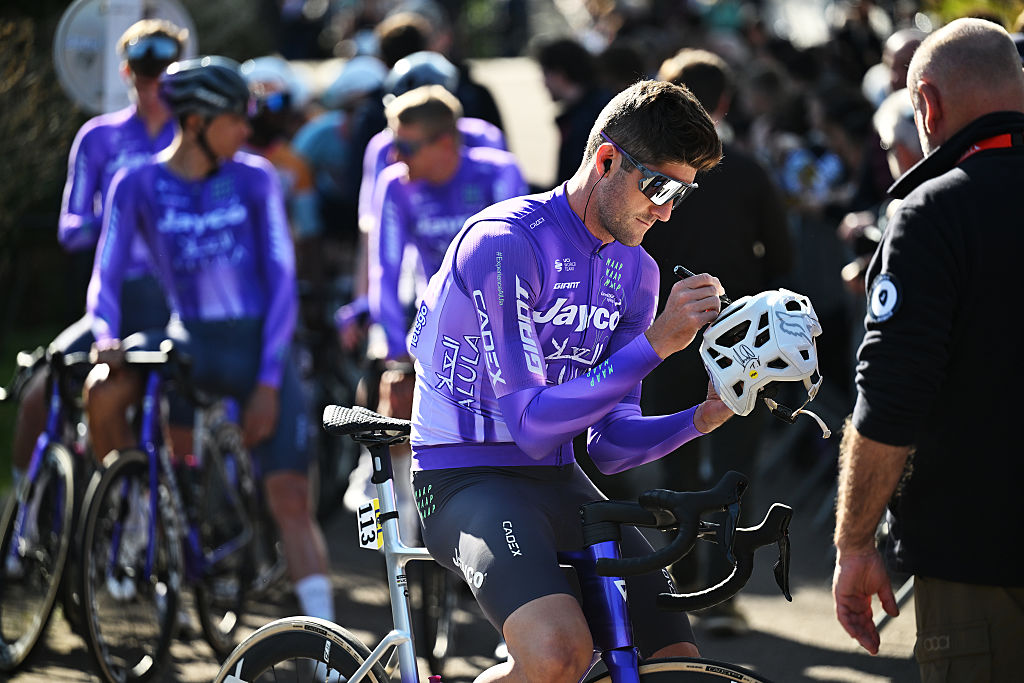
Aside from the off-script drivetrains that Shimano teams were using there were several other noteworthy sponsor incorrect incidents that I spotted. Picnic and Jayco were both using Vittoria Corsa Pro tyres, despite being sponsored by Michelin and Cadex, respectively.
The former team’s mechanics used up what must have been several Sharpies to try and save their sponsor's blushes (unsuccessfully, I might add; the giant black rectangles do rather draw the eye), while the latter team was quite up front about it.
In any case, it seems like there's a good case to be made that if you're going to upset the sponsors at any race, it may as well be at Roubaix.

Whatever you do, you can't cobble-proof a bike
I'm not sure there were any more punctures than normal this year, but it certainly seemed that there were more unfortunate tyre disasters affecting the big names than in previous editions. Mathieu van Der Poel, Wout van Aert, Filippo Ganna, and Mads Pedersen all suffered flats, as did Tadej Pogačar, excitingly resulting in him having to use a neutral service bike for a time.
While big tyres might help, as may high-tech double-valve tyre safety systems, it seemed like the cobble gods struck down those with seemingly cobble-proof setups like Pogačar and those with pretty stock builds like Van Aert and Van der Poel with an even hand. There may be some who came away yesterday thinking that Van der Poel should have raced the new Endurace, but I am not in that camp.
He's won on the Aeroad three times, and there's nothing to suggest that if he were aboard the Endurace, he wouldn't have ended up having the same outcome.

Don't try something new on the biggest race of the year
There's a reason we head out to the Critérium du Dauphiné every year; teams don't want to use brand new equipment at the Tour de France, so they road test it at earlier, less important races first. Alpecin’s pedal disaster was a perfect storm of prototype parts not playing well with existing systems, and could easily have been avoided.
Perhaps it's the clarity of hindsight, and there's every likelihood that the team were told the pedals were compatible with what is likely a new cleat system, but why would you take the chance of having your key domestique running a different rider-to-bike interface at the biggest one-day race of the year?

You must confirm your public display name before commenting
Please logout and then login again, you will then be prompted to enter your display name.