Much of my riding this year has revolved around ultra racing, so when it comes to my favourite gear and tech from the last 12 months, it's unsurprising that much of my focus has been on kit that will help me ride faster, further and more comfortably. What makes you faster at an ultra-endurance event isn't always what you think it will be.
Marginal gains can become major advantages when a race stretches over multiple days, but the time savings aren't always from the conventional upgrades that you would expect. While my colleagues have been busy testing aerodynamics and rolling resistances for Cyclingnews Labs, I was spending a lot of my time thinking about how to minimise stop time, optimising on-bike storage and poring over bikepacking kit lists.
1. Enduro Bearings XD-15 Ceramic Hybrid Jockey Wheels

In early 2024, I was destroying jockey wheels at an alarming rate. With all the mud, grit and water that winter was dishing out, it would only take me a couple of weeks before a brand new set would refuse to spin and be fit for the bin.
Enduro Bearings sent me a set of its XD-15 Ceramic Hybrid Bearing, Machined Delrin Derailleur Pulleys, and they have been faultless since I fitted them a year and a half ago.
It's not just the grimness of winter; summer hasn't been much kinder either. Yet no matter how much grotty riding or lazy pressure washing I have subjected them to, they are still spinning perfectly.
They promise more than just bearing longevity in bad weather. The top pulley is manufactured to a CN (tight tolerance) for better shifting under load, while the lower pulley has a C4 (floating tolerance) bearing to optimise chain alignment when you're at the extremes of a 12sp cassette. It's a perceivable improvement too, and I found shifting to be a little crisper with the Enduro pulleys fitted.
There is no getting around the fact that these are an expensive upgrade; however, Enduro Bearing's warranty covers you against corrosion for life, so you should only need to buy these once. If you are riding in all conditions, especially off-road, and want to eliminate potential failure points, this is a worthwhile upgrade.
2. Gloria All Terrain
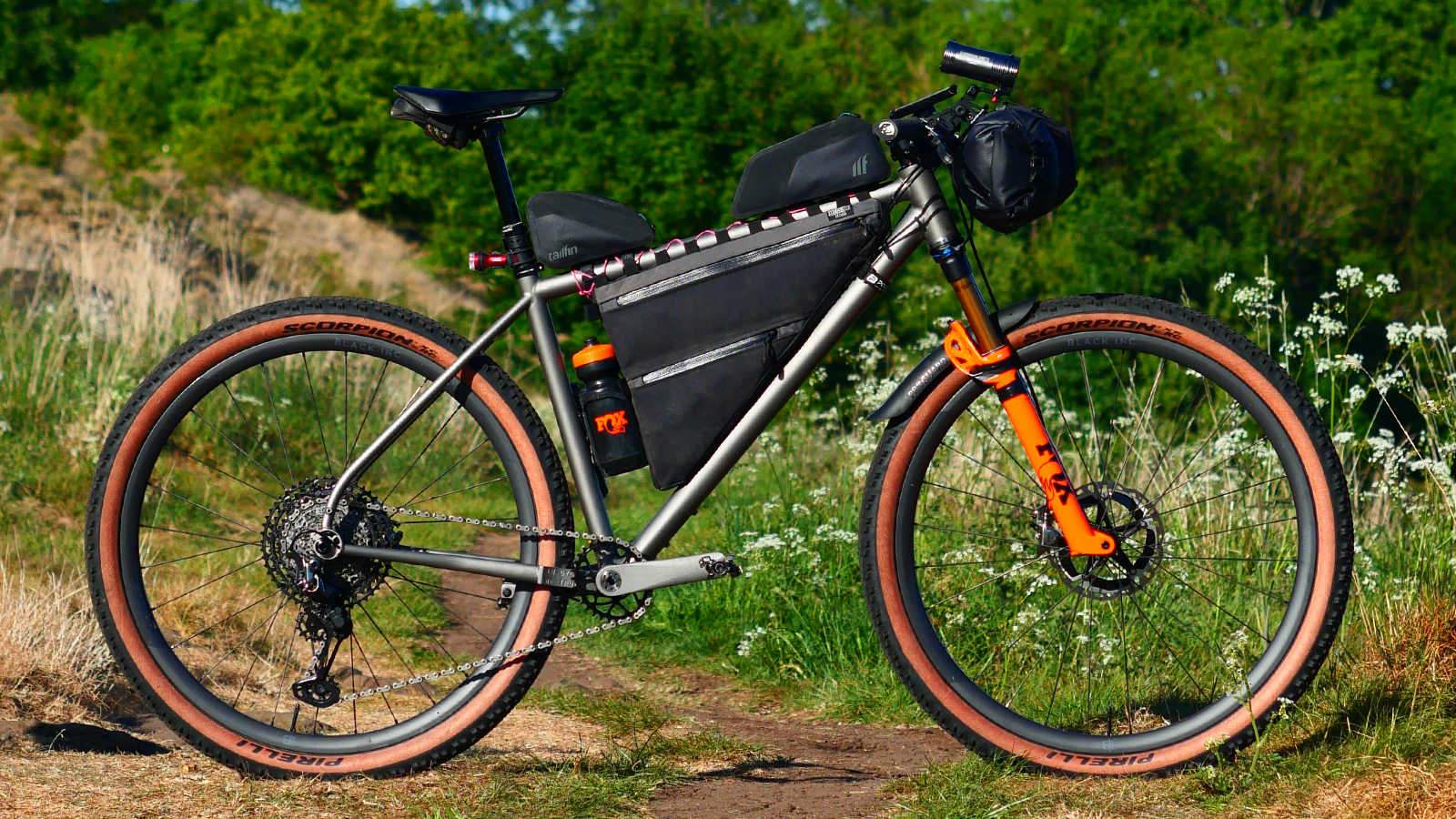


When I set about building a bike for my ultra-racing and riding at the beginning of the year, I had some very specific criteria that I was looking for. Considering the durations and varied terrain that I would be facing, I wanted something simple, versatile and, most importantly, fun to ride.
A lot of thought went into choosing this frameset and its components, and I will delve into all the details of my build in a future article for those who want to nerd out on my setup.
Long story short, the Gloria All Terrain has been a perfect fit. It's a blast to ride and has proven to be a capable machine, having completed two ultra races, set an FKT (fastest known time) and got me a podium at a cross-country race this year.
The frame is only part of the equation. Building a bike from the ground up with your hand-picked components is a wonderful yet stressful process. Fox's 32 Step Cast suspension fork is very impressive and the matching Transfer SL dropper post helps shave more grams off the build. I went for a mechanical Shimano XTR for the drivetrain and brakes, beautifully finished with a set of Sturdy Cycles titanium cranks. I was very impressed at how well the bike rode when I took it out on its first test ride and have made very few changes since.
It's reminded me how much fun cross-country biking is too, whether it's short blasts after work or longer weekend epics in the hills.
My gravel bikes have seen less action as a result. With the increased capability of an XC mountain bike, it has allowed me to have more fun and ride more terrain
3. MAAP Alt_Road Cargo bib shorts

When people talk about their favourite bib shorts, it’s usually quantified by time in the saddle. How long do your favourite bib shorts keep you comfortable? 5 hours, 8 hours, maybe even 12 or more?
My favourite bib shorts are the Maap Alt_Road Cargo bib shorts, and they kept me comfortable for 96 hours and 13 minutes, to be exact. I rode in them, I slept in them, I lived in them for four days straight.
Most riders would expect the result to be a nightmarish scene, but there was no gory aftermath. I didn’t suffer from any saddle sores, discomfort or trouble sitting down. Of course, there is more to comfort on the bike than having the best cargo bib shorts and an honourable mention has to go to the Gore Wear Endure Gore-Tex pants that kept me dry, the Fizik Tempo Argo R3 saddle and the two liberally applied dollops of Sudocrem along the way.
After that resounding success, I treated myself to a fresh pair for a 35-hour ultra race later in the year, and yet again they performed flawlessly. Conditions were warmer and drier, and the MAAP Alt_Road shorts were comfortable from start to finish.
It's not just big rides I use these for either, they are my go-to choice for summer training rides too, whether it's short intense blasts on the road bike or an XC skills session on the mountain bike. It should be caveat that everyone is different, so although the MAAP Alt_Road works really well for me, you might be different. I also wouldn’t recommend wearing bib shorts for four days straight unless you really have to.
4. Roof Tents

With all my adventure riding plans this year, I decided to buy a roof tent for my car as I wanted a fuss-free sleeping solution for races and other trips. As the starting points for these things are often in remote areas, accommodation can be difficult to come by, so having your own place to stay controls a lot of variables and saves a lot of stress.
Kitting a van out into a mini camper would be the ideal solution; however, it was too expensive when I already have a car. A tent was another option, although a good night's sleep is reliant on there being flat, dry ground. Tents also come with a lot of faff, and I couldn’t think of anything worse than trying to erect a tent at night in the rain after an ultra race.
A roof tent seemed to be the best of both worlds. I could sleep wherever there was space to park my car; it takes no more than a few minutes to but up or pack away and would offer a comfortable and warm place to sleep.
I bought the TentBox Go, and I chose this one for a few key reasons. Firstly, I needed the lightest roof tent possible as the dynamic load capacity of my car's roof wouldn’t be able to handle heavier models. I didn't want a tent that folded out to take up more space than the footprint of the car, so I could maximise camping spot options. Finally, the Go is also one of the cheapest roof tents available in the UK, which was a bonus.
It has not disappointed either, and I have used it roughly 10 times this year, for solo trips and with my partner, and it has been brilliant. It's very comfortable and has weathered several wet and windy nights without issue. It is a bit cosy for two people, but there is still enough space, assuming you aren’t bothered by a little bit of touching. Stuff can be stored inside the tent as well, so if you are doing a multi-day trip, you can keep your sleeping kit up there ready for the next night. It’s really opened up a lot of new riding possibilities, and I am already looking forward to doing some more road trips next summer.
The TentBox Go isn’t my ideal setup. If my car had a bit more capacity, I would have chosen a hard shell roof tent instead, as they are more streamlined, a little easier to set up and a bit more durable. That said, the TentBox Go has been a great home away from home this year.
5. Proper mudguards


I have been staunchly against mudguards for a long time. I’m not sure where this came from; I just hated them. They looked goofy, rattled over rough roads and added unnecessary weight to the bike. This year, while setting up a bike for a winter of riding and training, I finally succumbed. I was sick of getting a face full of road spray, the wet shoes, the constant bike cleaning and sitting in my soggy chamois in the cafe.
Why didn't I listen to the full mudguard evangelists before? It's a revelation, I don’t know if I could ever ride in winter without full mudguards again. All those years of winter hardship, the frozen toes, the washing machine clogged with grit from winter cycling kit. It was for nothing, needless suffering inflicted on myself for what reason?
Plus, not only do I look better because I’m not covered in road crud, but I even think the bike looks pretty good. It’s a functional aesthetic, the smooth squared profile of the Kinesis Fend Off Wide sits close tyre without rattling, keeping road spray at bay while almost blending in with the voluminous 42mm slicks I have fitted underneath. The look is finished perfectly with some proper flaps too, the mark of a discerning winter rider.
You must confirm your public display name before commenting
Please logout and then login again, you will then be prompted to enter your display name.