The Giro d'Italia's most feared climb – A closer look at the mighty Monte Zoncolan ahead of its return in 2027
From Luperini and Simoni to Rogers and Froome, the next chapter of the modern Carnic Alps brute's history will be written at the 110th edition in May
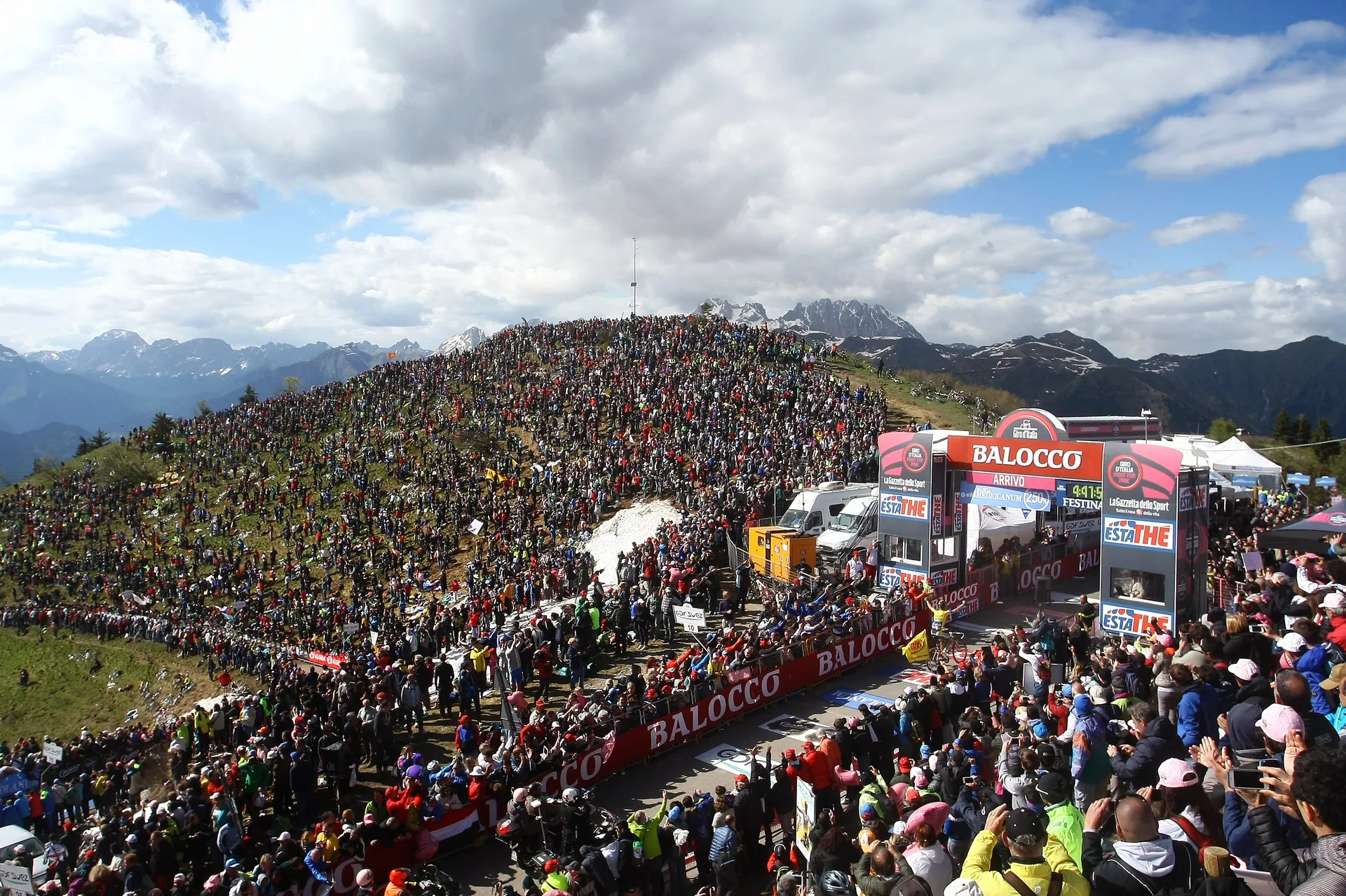
A modern icon of the Giro d'Italia will return for the 2027 race after six years out of the action: the Monte Zoncolan. The brute of the Carnic Alps, one of Italy's most fearsome climbs, and on its eighth appearance at the men's Giro, it will serve as the grand finale to the race for the maglia rosa on stage 20.
It will be approached from the traditional Ovaro side in Friuli-Venezia Giulia, roughly 120km northwest of where the 110th Giro starts in Trieste, offering up an average gradient of 11.9% across the 10.1km to the summit as one of the sport's most savage double-digit beasts.
Even worse than the average gradient, though, is what is hidden underneath the profile on paper – the steepest sections exceed 20%, where even the most elite climbers in the world can be made to look ordinary as they battle to survive, and the suffering barely repents as the road up to 1,750m ticks by.
After an eye-opening 1.65 km at 9.1%, the riders are lulled into a false sense of security as they hit a tiny flat section between Liariis Piazza and Inizia Strada Zoncolan, but they will all know the worst is still to come, and this only brings the climb into the most difficult sector.
The subsequent 4km are raced at a vicious average gradient of 15.3%, and it's here where the steepest pinches will be found, upwards of 22%, and the group will start to thin at a rapid rate as those unable to live with the tempo are forced to fight for cadence and position on the mountain.
With several important mountain days already in the legs, whoever is in pink before Zoncolan will be hoping their gap is all but out of sight by this point, but race organisers RCS have opened the door to late drama as an off day could cause total capitulation.
Anyone could falter on the section after the village in Liariis, but it doesn't get much easier from thereon out, with the next 3km still averaging 13.9% gradient, and the final 2km to the line – where the legs will already be empty and screaming – are taken on at 7.1% and 8.9% respectively.
The latest race content, interviews, features, reviews and expert buying guides, direct to your inbox!
The riders will traverse through tunnels marking the final kilometre, having almost completed the narrow, often snow-lined in May and exposed roads overlooking the Gorto valley, arriving at the foot via 120km of mostly flat roads, and then two late warm-up ascents up the Passo Duron and Sella Valcalda.
All the way up will be massive crowds roaring on the GC favourites and pushing those in the grupetto to survive the climb, which vies for the top spot when it comes to professional cycling's most difficult ascent alongside the Alto de l'Angliru and Passo del Mortirolo – which, in the 2027 Giro, the riders will have already tackled twice in the same day on stage 16.
Emerging from the tunnels, the strongest competitors will still have a steep final run to the line to contend with, but by this point, it will be clear who is going to add their name to the short list of iconic winners atop the Zoncolan, and it will also be certain on stage 20 that the holder of the pink jersey after its 10.1km is completed will be the champion in Rome a day later.

Giro d'Italia history
Lacking the same history as fellow Giro icons such as the Passo dello Stelvio and Blockhaus, the Zoncolan has established itself as a modern icon, with the list of winners in the men's race including Gilberto Simoni (twice, in 2003 and 2007), Ivan Basso (2010), Igor Anton (2011), Michael Rogers (2014), Chris Froome (2018), and most recently Lorenzo Fortunato (2021).
The Zoncolan was first introduced to the Giro on stage 10 of the women's race in 1997, where Fabiana Luperini took victory. A legend of the Giro and the holder of the most titles in what was then called the Giro d'Italia Femminile, Luperini said there was "a lot of fear of a climb like the Zoncolan" and that "To win on a climb like the Monte Zoncolan is a great thing, so I feel proud of my victory there." Victory there propelled her towards the third of her five eventual titles.
Six years later, it made its maiden appearance in the men's race, where Gilberto Simoni conquered the steep slopes en route to his second maglia rosa triumph in '03.
However, on both occasions, the riders started the climb from the less steep and steadier side in Sutrio. It was from this side, too, that the Zoncolan last featured in the Giro in 2021, with Lorenzo Fortunato taking a stunning breakaway win in the fog and cold, as Egan Bernal extended his overall lead.

Bernal's impressive performance saw him break Simoni's record from the Sutrio side by more than a minute, but it's the Ovaro side the Giro peloton will be concerned with in 2027, and it's here that the Italian still holds the record from his 2007 victory.
Four years after its maiden ascent, the organisers introduced the steeper and now more traditional side to the Grand Tour, but it was Simoni who still emerged on top. By this point, he was 35 and sat fourth in GC, but alongside teammate Leonardo Piepoli and Andy Schleck, still had the climbing power to distance maglia rosa Danilo Di Luca on the steepest sections.
Crossing the line alongside his fellow Saunier Duval teammate, Simoni and Piepoli hold the climbing record from Ovaro to Zoncolan to this day at 39:03.

The stage profile for the 2027 race is similar to that from the 2010 edition, when Ivan Basso dropped everyone on the steep slopes and defeated World Champion Cadel Evans in the rainbow bands by more than a minute.
Having started the day 7:43 off the lead, it served as a major gain in Basso's GC fightback against David Arroyo, taking back 3:50. He went on to complete the pursuit of pink four days later as he left Arroyo behind on the Mortirolo alongside teammate Vincenzo Nibali and Michele Scarponi en route to Aprica, where the latter won the stage, but Basso took hold of the maglia rosa.
Returning a year later, the Zoncolan stage was marked by controversy and shortened, with the removal of the brutal Monte Crostis climb being announced to fans' disappointment the night before the race. A replacement climb was inserted up the Tualis, but the race route was eventually diverted to avoid the village where the volunteers protested against the judges’ decision.
The drama didn't stop when the rider finally reached the Zoncolan either. Anton won the stage solo, attacking in the steepest sections, but the most important battle was happening around 30 seconds behind him between Alberto Contador and crowd favourite Vincenzo Nibali.

Contador was booed by the vociferous fans, accusing him of playing a role in the Crostis' removal, and after he waited in Nibali's wheel and eventually dropped him in the final 500 metres, a move which the Italian described as showing "a lack of respect from him". Neither would end up as the overall winner of the 2011 Giro, though, despite Contador originally triumphing in pink, as he was stripped of his title in February 2012 for doping and Michele Scarponi was named the champion.
When the Zoncolan returned in 2014, the stage was taken by the breakaway instead of the GC favourites, but this didn't mean it was without more controversy.
On paper, it points to Michael Rogers riding away solo from the remnants of the early 20-man move, but he was actually locked into a close battle with Francesco Manuel Bongiorno until the final 3km.

As Rogers took his hands off the bars several times to part the crazed fans in their thousands, it was the Italian rider who actually came undone by the actions of a supporter; a fan in a rainbow jersey's decision to try and push him forward in excitement led to the Bardiani rider unclipping and putting a foot down as Rogers powered away to the win.
By this point on stage 20, Nairo Quintana already had the GC sewn up, comfortably defending his lead up the steep slopes of the Zoncolan. With it, he became the first Colombian to win the Giro d'Italia, and the first South American Grand Tour winner since compatriot Luis Herrera at the 1987 Vuelta.
The most recent ascent up Zoncolan from Ovaro dates back to the 2018 race, when eventual winner Chris Froome attacked away 4.3km from the summit and held off a late charge from maglia rosa Simon Yates in the final few hundred metres.

After a slow start at the Giro, Froome had started the day way down in 12th overall, jumping up seven spots to fifth with his exhibition on Zoncolan. Way down on his best, it looked somewhat like a consolation prize for the four-time Tour de France champion, but his best trick was still to come on the Colle delle Finestre four stages later, where Yates completely capitulated, and Froome's audacious 80km attack saw him move into pink at the last gasp with a second stage win.
In the same season, Annemiek van Vleuten became the first and to date only woman to win a professional race atop Monte Zoncolan starting from the Ovaro side. Taking victory ahead of Ashleigh Moolman-Pasio, the Dutch star claimed the summit with a dominant solo victory en route to the first of her four pink jersey Giro titles.
Who will join the list of winners in 2027, and what drama will come on the brutal steeps of the Monte Zoncolan? That will have to wait until stage 20 in May, but if history is anything to go by, the modern icon of the Giro d'Italia is just awaiting its next chapter.
The road season might be at an end, but Cyclingnews isn't slowing down. Subscribe for unlimited access to our comprehensive news coverage, industry-leading CN Labs testing, expert columnists, and so much more. Plus, the Cyclingnews app means you can stay up-to-date wherever you go! Join today.

James Moultrie is a gold-standard NCTJ journalist who joined Cyclingnews as a News Writer in 2023 after originally contributing as a freelancer for eight months, during which time he also wrote for Eurosport, Rouleur and Cycling Weekly. Prior to joining the team he reported on races such as Paris-Roubaix and the Giro d’Italia Donne for Eurosport and has interviewed some of the sport’s top riders in Chloé Dygert, Lizzie Deignan and Wout van Aert. Outside of cycling, he spends the majority of his time watching other sports – rugby, football, cricket, and American Football to name a few.
You must confirm your public display name before commenting
Please logout and then login again, you will then be prompted to enter your display name.
