
Cyclingnews Verdict
With longer battery life, broader detection range and FOV, and finally USB-C charging, the Varia RearVue 820 is a huge upgrade on the previous RTL515. Many new features have also been added, but all of these updates do come with an equally updated and boosted price.
Reasons to buy
- +
Best detection range of any radar tested
- +
Wide FOV for detection
- +
Huge array of mount adjustments
- +
Long battery life
- +
Customisable modes
Reasons to avoid
- -
This is now the most expensive standalone rear radar light
- -
Many of the features are limited to Garmin head units
- -
Battery drains quickly with additional features running
- -
Bluetooth connection was at times patchy
You can trust Cyclingnews Our experts spend countless hours testing cycling tech and will always share honest, unbiased advice to help you choose. Find out more about how we test.
- Price: £259.99 / €299.99 / $299.99
- Weight: 86g/3oz, 123g/4.3oz with mounting hardware
- Light modes: 4 plus customisable modes
- Battery life: 30hr max claimed
- Lumens: 100 maximum
- Field of view: 60˚ radar, 220˚ light visibility
- Detection range: 175m claimed


View Original

View Original

View Original

View Original

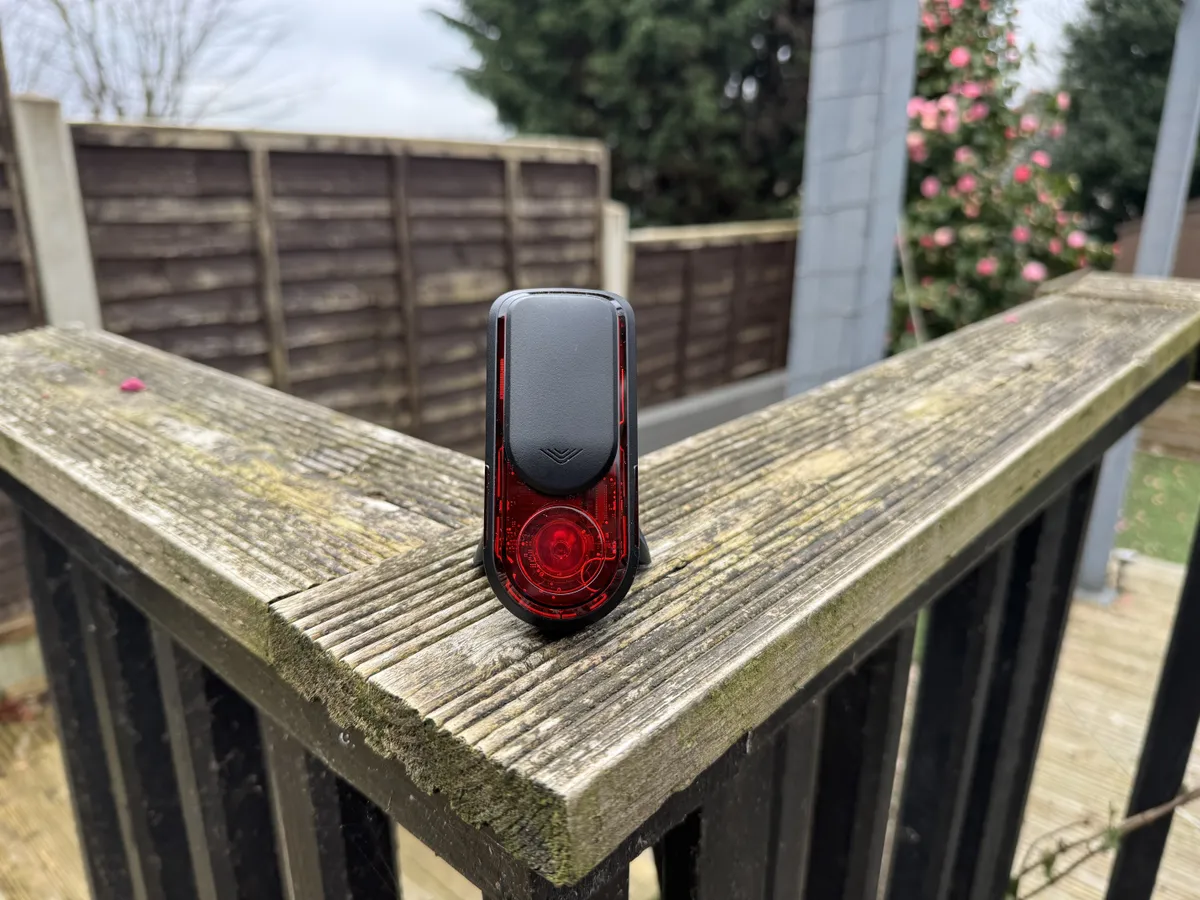
The Garmin Varia RearVue 820 has taken over as the premium radar light offering from Garmin. It finally adopts the USB-C charging port after years of micro-USB, but far more than that it has massively beefed up performance across the board, making it a contender for our guide to the best bike lights. More lumens, larger detection radius, longer radar range, greater battery life, and a whole host of new features that make it possibly the most complete radar light offering on the market right now.
But that’s not to say it’s perfect. With this inflated performance comes an equally inflated price, making it the most expensive radar light on the market (without a camera, at least) by some margin. It also gate keeps certain features and limits them to specific Garmin devices over specific bluetooth connections. When paired with the right bike computer though, it is a mighty device and superb for enhancing awareness while riding out on the roads.
Design and specifications
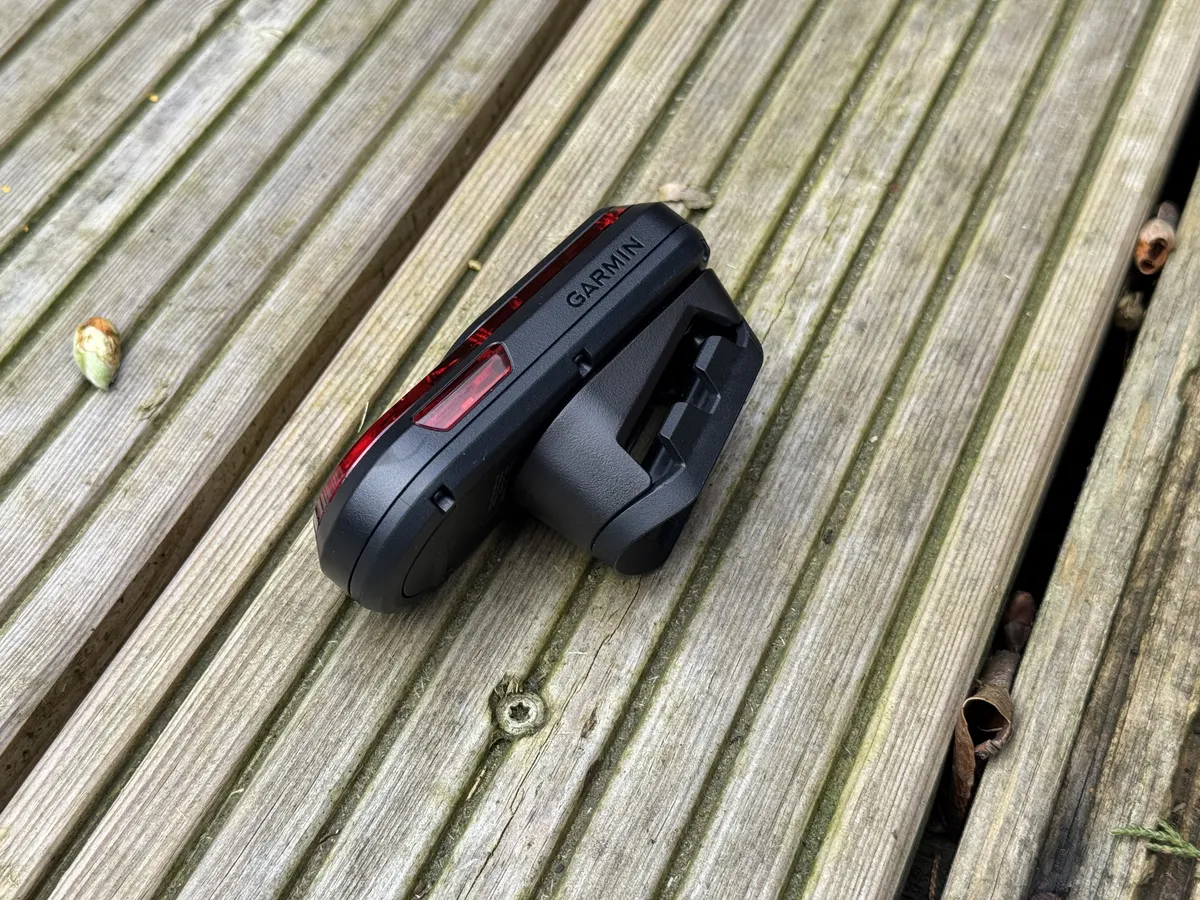
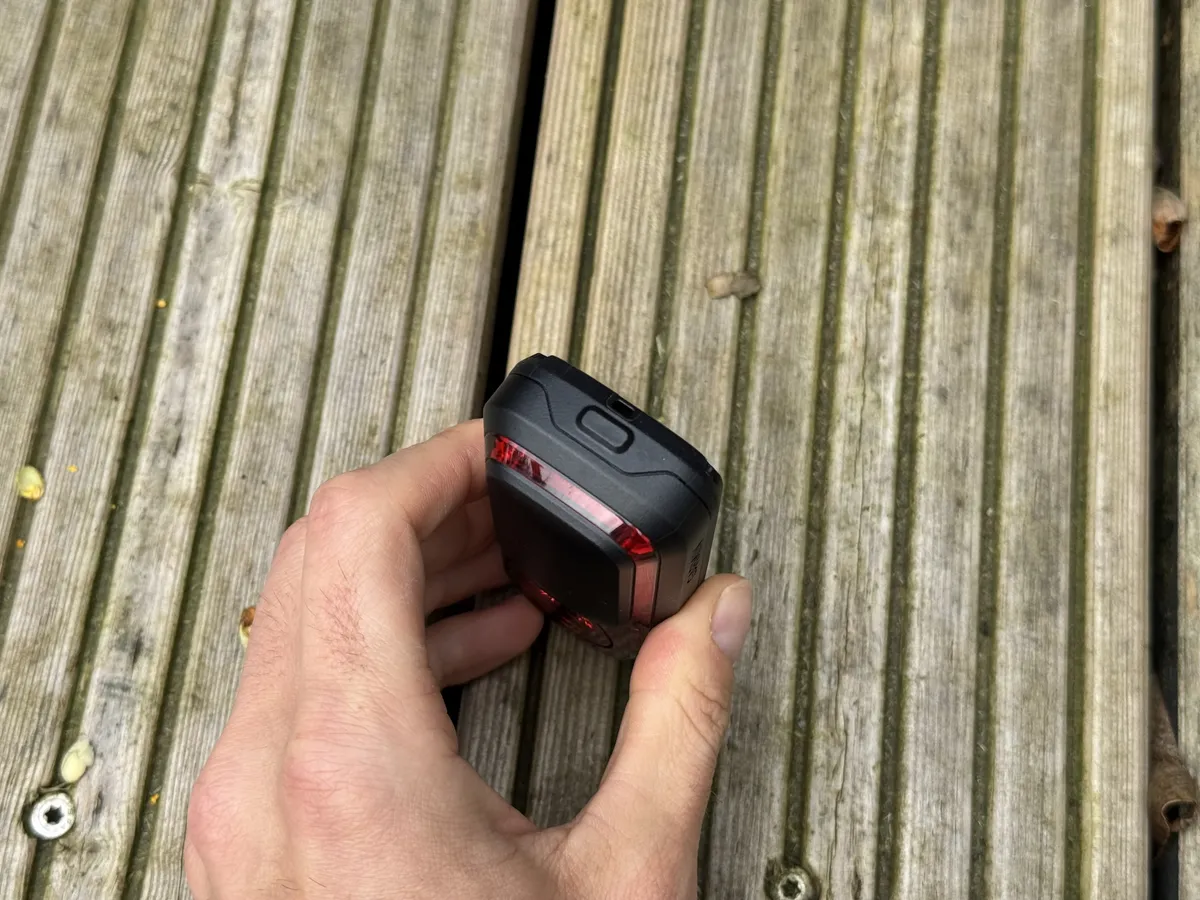
The Garmin Varia RearVue 820 builds heavily on the footprint of the original Varia, which has been a common template for many other brand attempts at radar lights. The same quarter turn Garmin mount is present, and is the same depth as previously so will fit existing Varia mounting options. Design wise, it’s an inverse of the previous Varia, with the radar detection panel now being located at the top of the unit, while the main light is at the bottom. The charging port remains at the rear base of the unit but is now, finally, USB-C. The main control button also remains on the top of the unit. You can run the device in either orientation (light at the top or bottom) and it will still work the same.
In terms of the light itself, it comprises three separate lights. There is the main one that faces rearwards and has a maximum brightness of 100 lumens, but there are also two smaller LEDs which face out to the side to allow for greater side visibility. This light only works at 100 lumens in the Day Flash mode, while Peloton is just 8, Solid is 25, and Night Flash is 40. Radar only is also another option with no light active, while customised light modes can be created in the Varia app.
Battery life for these modes is a claimed 10 hours for Solid, 15 for Peloton and Night Flash, 24 for Day Flash, and 30 for Radar Only. With the inclusion of the side LEDs, the visibility range is 220˚, while the Day Flash light is claimed to be visible from 2 kilometres away. There is also an option to have a brake light active, which can either flash or brighten as your speed changes, but does impact the battery life.


View Original

View Original

View Original

View Original

View Original

View Original

Of course this is a radar light, and the radar has really been bolstered. Radar range is claimed to be 175m, with a 60˚ FOV (up from 40˚ and 140m). As well as detecting the speed of the approaching vehicles, it also tracks the size. Standard speed and sized vehicles register as an Orange warning, while faster or larger ones register as a Red warning. It is also able to track multiple vehicles at once and give their position relative to the rider, and can keep track of them as they maintain the same speed or move laterally.
This can all connect to a headunit or phone, via ANT+ or Bluetooth, but several of the features are Bluetooth restricted and also limited to specific Garmin headunits. An interesting discovery while testing was also that if the RearVue is connected to your phone, and you have headphones in, you will get an audio alert to cars behind without the need for any form of visual display unit.
The latest race content, interviews, features, reviews and expert buying guides, direct to your inbox!
The Varia RearVue 820 is 98.9 x 25.9 x 43.2 mm and a weight of 86g without the mount. With the mount, the weight is 123g. Also supplied are several different mounting plates for fitting behind the main mount. These account for different seatpost angles as well as shapes, be that rounded, bladed, or flat profiled. Two ladder straps are supplied to account for different seatpost depths. A USB-C to USB-C charge cable is also supplied, along with a lanyard to keep the unit attached to your seatpost if it falls off the mount.
Performance
When it comes to performance, the Garmin Varia RearVue 820 is something of a powerhouse. The 100 lumens max brightness on the day flash mode beats many of the competition when it comes to peak brightness, and therefore expected distance the light can be seen from. It’s not as high as some standalone lights such as the Lezyne Strip Drive Pro, but it is more than bright enough to be seen from well over a kilometre away out on the road.
The other big benefit of the RearVue is the side light. Rather than having an exposed side to the light to be seen from the peripherals, it instead features two small red LEDs that are mounted on the side of the unit giving a genuinely great visibility for more than 180˚. There aren’t a heap of light modes as standard, but the ones provided work well enough for all circumstances I have found myself riding in. Peloton mode is dim enough to not blind other riders but still be nicely visible, Day Flash is exceptional in bright conditions, Night Flash does not glare other road users, and the full beam modes are visible enough. There are tailored modes that can be adjusted in the Varia app as well if you want to add to that collection of modes.
The Garmin Varia app is also where you control additional features, similar to the Wahoo Trackr Radar and the Wahoo app. The brake light can be set to flash or blush when slowing down to let other road users know your speed is changing. You can also set a disruptive flash pattern to occur when a vehicle is detected behind. These are both great features, but do have a big impact on the total battery life.
24 hours is the claimed battery life for the Day Flash mode, but in reality I’ve seen closer to 10 hours on a full charge. I have had the same occur with the Wahoo radar, where the flash upon detection and brake light activates frequently and therefore drains the battery significantly faster than without these modes. The brake light also activates when you go from a downhill to an uphill, as there is a significant change in speed. It’s a useful feature, and one I always keep on, but it does impact battery life a lot. When used on radar only (not my preferred mode) or without the brake light and detection flash, the battery life is far closer to what is claimed. However, you miss out on a lot of features if you want to prioritise longer battery run times.
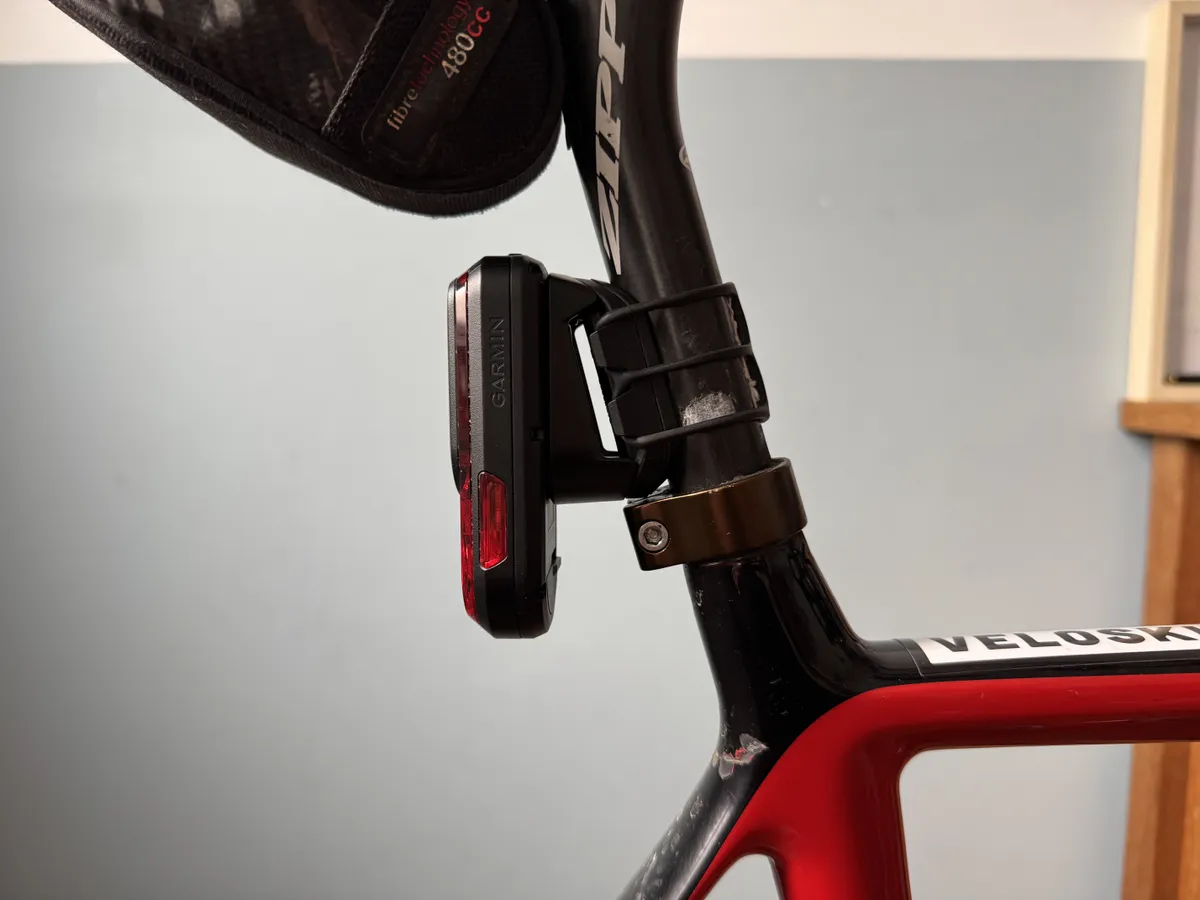


There is of course the star of the show, the radar itself. The RearVue has flipped the design from the previous Varia light, and most other radar lights. The bulb is at the base of the unit, rather than the top, and the radar detector occupies that space now. In reality this has no impact on aesthetics as it’s behind you, and performance wise there is nothing in the way regardless of the orientation of the light or radar detector.
The radar is an interesting one as the claimed detection range is 175m, however, it is actually further and there’s a smart way of telling. When you connect a radar light via ANT+, it can only detect cars on screen at around below ~200m, anything more than that and the vehicle shows as being right behind you on the indicator to the right of the screen. It’s an odd broadcasting flaw of radar information, so in reality, the headunit displays that the vehicle might be 20m away rather than 220m away. Once the car hits 200m, it shows on the device as being the maximum distance detected away. Only the Trek Carback has managed this before, as it has a long, yet narrow, detection range. The RearVue also has this, picking cars over 200m away consistently. However, using a bluetooth connection with certain Garmin devices, it does actually detect further than 200m without this ANT+ bug, showing them as being at the edge of the distance scale on the right hand side.
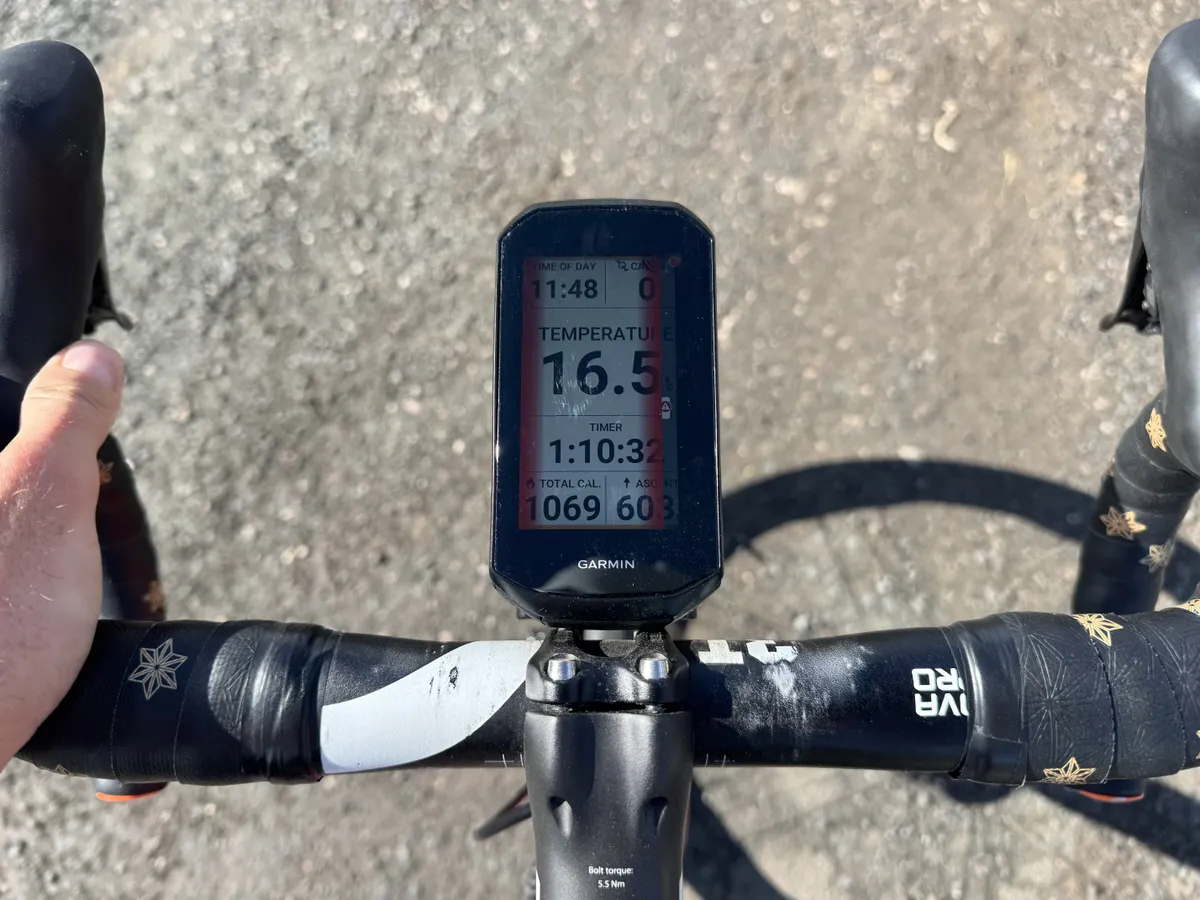
When connected with the Garmin Edge 1050, 550, and 850 devices, the RearVue also comes alive with a host of new features. As well as detecting cars behind, it also detects them to the side with the 60˚ FOV. A new Radar screen on Garmin devices shows you where vehicles are relative to you, both distance behind and also which side they are. This is great when taking exits off and across a busy road where you need to move across, or go into different lanes for roundabouts or junctions. It is just a shame that this is limited to specific Garmin devices via their own Bluetooth signalling, effectively gatekeeping these features from other headunits, even lower tier Garmin models.
The radar also does an exceptional job at detecting multiple vehicles behind you at once. Often radar devices can get maybe 2-3 simultaneously, whereas the RearVue was easily able to keep track of 6+ objects. I had a few false positives as well, where there was no vehicle behind, but never a false negative. Cars also didn’t fall out of detection if they maintained the same speed as me, a big problem I had with the Carback. Yet another feature I love with the radar is that it differentiates between different vehicle sizes. Whereas most radars have an orange or red warning for fast approaching or regular speeds, the RearVue also turns red for large vehicles like lorries or buses that can have a greater suction effect on a bike as they pass. It’s a superb feature as even with radar lights I have been shocked before when a lorry has passed close at speed and I’ve felt the bike destabilise. Now there is a warning so you can prepare and be less affected.

View Original

View Original

In the advanced radar format via Bluetooth to a Garmin Edge 1050, this goes a step further showing different object markers based on a load of facts. Vehicles are represented by a thin small rectangle (bikes and motorbikes), a wider squared rectangle (cars), and a longer thicker rectangle (vans and lorries). As their speed increases they get given a hazard warning. If the vehicle is travelling fast, this turns from orange to red, or if it is a larger vehicle. It does a great job at keeping you more aware of surroundings and so far has been flawless at detecting and differentiating between vehicles.
Another great feature I discovered was when the RearVue is connected to the Garmin Varia app on your phone. You can have the app running passively in the background, and it still connects simultaneously while it is connected to your headunit. I generally ride with a single ear bud in on the left hand side, and realised that the RearVue was sending notifications to my phone which then sent to my ear bud. It’s a useful feature as it means you can run the radar without the need for any form of heads-up display, and without the loud alert that the BBB Signal Radar gives. It still needs an external device, a phone in this case, but it’s a useful feature for commuters.
I will mention that I had some difficulties maintaining the Bluetooth connection between Radar and Edge 1050 whenever the unit switched off and I’m unsure on the reasons. Often it would ‘setup light network’, but not connect the radar itself. I then had to reconnect via ANT+ for the meantime. It appears that it worked more consistently when my phone was also connected via Bluetooth to the RearVue 820, and it would then connect more consistently to the Edge 1050. This of course meant that with an ANT+ connection I missed out on the Advanced Radar capabilities that set this radar apart from the rest of the field.
Value
Value is always going to be somewhat subjective based on the value that you put upon different attributes and technologies. The glaring obvious fact about the new Varia RearVue 820 is that the price has increased dramatically from the old Varia model. Now sitting at £259.99 / $299.99 it is the most expensive standard radar light on the market, save for the Varia RTC715 radar, light, and camera combo.
For reference, the Wahoo Trackr Radar is £179.99/$249.99, the BBB Signal Radar is £119.99, and the Trek CarBack is £169.99/$199.99. Even the old Varia RTL515 is £169.99/199.99, but now can be found on Garmin’s own site for $149.99. The old RTL515 is certainly better value for money for US buyers, while the BBB is exceptional value for UK and EU.
It is a fact that the RearVue has a greater FOV for radar detection, brighter LEDs, and longer radar detection range than many other radar lights. Lumens wise the other key competitors are under 100 lumens maximum, while the Trek CarBack is the only radar with a longer range, but poor FOV and detection retention.
Battery wise the RearVue also struggles, especially when using some of the additional features. These features are shared with some lights like the Wahoo Trackr Radar, but total ranges of the performance of the RearVue does mean it outperforms the Trackr. However, I would argue that it isn’t so much better to justify the price, at least not with other bike computers.
A lot of the advanced radar tracking capabilities are limited to Garmin only devices, and newer ones at that. Testing with an Edge 1050, the performance is notably better and the advanced radar capabilities are exceptional. But when used with a Wahoo Roam 3, those additional capabilities are diminished. This would be the same with older Garmin units, such as the Explore 2 I’ve also used, or Hammerhead devices. It still works as any other radar does, but at that point the price hike seems unjustified.
It’s a lot like Apple accessories that work best with an iPhone. If you have a Garmin Edge 550, 850, or 1050, then the RearVue is likely worth the added cost. Otherwise, there is not enough justification to purchase this over other solidly performing radar light options.

View Original

View Original

Verdict
The Garmin Varia RearVue 820 is an impressive step up from the previous generation Varia light, and outperforms most other radar lights in pretty much any capacity that matters. It also comes with a superb advanced radar tracking feature, but unfortunately this is locked to use with specific Garmin models and is not available on other devices.
With these new features, and long desired USB C charging, comes a hefty increase in price. This is undoubtedly the best radar light that I have tested, but with many of the advanced features somewhat gatekept to specific Garmin devices, for buyers without those Garmin devices this does not represent great value. If you have a newer Garmin model however, this is an exceptional device that really enhances road safety.
Attributes |
Notes |
Rating |
|---|---|---|
Design and aesthetics |
The mounting options cover most seatpost fittings, while the mount itself is secure. It also works with old Varia mounts as an incentive to upgrade. The new upside look is unoffensive, and works just as well. A single button and hidden charge port are useful and easy to use. Bluetooth connectivity was at times temperamental though. |
8/10 |
Light performance |
The light is superb, the modes are highly visible and able to be customised in the Varia app. The visibility from range is great while the side light enhances side visibility greatly. |
10/10 |
Radar Performance |
This has the largest detection FOV and range I’ve tested, and never gave a false negative. It can keep track of multiple vehicles as well as differentiating between sizes and position on the road. |
10/10 |
Practical features |
The advanced radar metrics are incredible, but annoyingly limited to specific Garmin devices. Brake light and flash upon detection work on any unit however, and are very great additions. Connecting via your phone to headphones also opens up the usability without a heads-unit display. |
8/10 |
Battery and charging |
The battery has the potential to be very good, and does well when additional features are not active. However the brake light drains the battery quickly, and I rarely got the advertised battery life in respective flash modes. Charging however is now USB C and on par with other radar units, no complaints there. |
7/10 |
Value |
If you already have a compatible Garmin device to access the advanced radar metrics, this is well worth the cost even with the relatively high price. If you have a different head unit, then you will need to invest another few hundred pounds or dollars to get the best out of it though. At which point other options are much better value. |
7/10 |
Overall |
Row 6 - Cell 1 | 83% |

Freelance cycling journalist Andy Turner is a fully qualified sports scientist, cycling coach at ATP Performance, StemNotes, and Venturi Dynamics.
He spent 3 years racing as a UCI Continental professional and held a British Cycling Elite Race Licence for 7 years. He now enjoys writing fitness and tech related articles, and putting cycling products through their paces. Predominantly road focussed, he is slowly venturing into the world of gravel too, as many ‘retired’ UCI riders do.
When it comes to cycling equipment, he looks for functionality, a little bit of bling, and ideally aero gains. Style and tradition are secondary, performance is key.
You must confirm your public display name before commenting
Please logout and then login again, you will then be prompted to enter your display name.
