


Tour de France: Tadej Pogačar equals record with fifth yellow jersey as Mathieu van der Poel wins thrilling stage 21
Pair of World Champions steal away on the cobbled climb of Butte Montmartre with Van der Poel holding off Jasper Philipsen and Mads Pedersen in frantic sprint to the line on Champs-Élysées
When is the Tour de France? |
July 4-26 |
Tour de France starts in: |
Barcelona |
Tour de France finishes in: |
Paris |
Category |
WorldTour |
Distance |
3,333km |
Previous edition |
|
Previous Edition - Winner |
Tadej Pogačar (UAE Team Emirates) |
The first few days of the race saw an early GC battle, with Visma-Lease a Bike winning the opening TTT to put Jonas Vingegaard in yellow before Tadej Pogačar won stage 3 to take the lead.
Then on stage 4 a large breakaway that was allowed to move ahead by more than 12 minutes turned the tables, with Torstein Træen (Uno-X Mobility) taking the yellow jersey, in the reduced group where Mads Pedersen (Lidl-Trek) won the stage.
The Dane retained the race lead on Wednesday, as the sprinters had their day into Pau, Olav Kooij (Decathlon CMA CGM) winning the first sprint stage of the first week.
The tables turned on the first major mountain stage over the Col du Tourmalet and into Gavarnie-Gèdre, where Tadej Pogačar returned to the maillot jaune with an attack 5km from the summit of the Tourmalet and 43km to go. Gaining time on Vingegaard, Pogačar seemed poised for a fifth Tour victory after just six days of racing.
Patrick Fletcher writes in his analysis that the Tour de France organisers wanted 'suspense to the end,' but the Tourmalet stage design backfired dramatically – and they should have seen it coming.
The sprinters returned to the picture on stage 7 and stage 8, with Tim Merlier (Soudal-QuickStep) taking back-to-back victories in Bordeaux and Bergerac, respectively. But in a new development Pogačar says an agreement has been reached by the GC favourites to sit at the back and stay safe on Tour de France sprint finishes.
The shortened stage 9 into Ussel saw Mathieu van der Poel power to a breakaway victory, just a whisker ahead of the bunch sprint. Pogačar went into the first rest day on Monday, July 13, as the overall leader 2:42 ahead of Jonas Vingegaard (Visma-Lease a Bike).
Pogačar unleashed a vicious attack on the penultimate ascent of stage 10, riding solo for his third stage win of the race. Vingegaard defended second overall, after fading in final stretch, while Remco Evenepoel (Red Bull-Bora-Hansgrohe) overcame a tough spot and moved onto the podium with a second-place finish.
Sprinters showcased aggressive speed on Wednesday and Thursday, with Uno-X Mobility earning their second-ever stage win on stage 11, Søren Wærenskjold going long on the tight straightaway for the win.
Tim Merlier (Soudal-QuickStep) charged to victory on stage 12, his third win of the Tour, riding ahead of Kooij and Philipsen, who trailed in a two-three finish for a second day. Behind them with 400 metres to go a large crash took down Fernando Gaviria (Caja Rural-Seguros RGA), stage 11 winner Søren Wærenskjold (Uno-X Mobility) and many more.
Stage 13's long route and late climbs beckoned breakaways, with a reduced group forming on the Ballon d'Alsace and then two riders getting away on the descent. Mauro Schmid (Jayco-AlUla) out-sprinted Harold Tejada (XDS Astana) for the win, with Tom Pidcock (Pinarello-Q36.5) leading the chasers for third, in turn boosting himself from 10th to fourth on GC.
Pogačar waited until the final two kilometres on the brutal Col du Haar to launch his blistering acceleration that no rival can match to take a solo win on stage 14, and claim his fourth stage victory, so far. Dropped on the climb, his teammate Isaac del Toro, caught back onto the select chase group to take second place ahead of Paul Seixas (Decathlon CMA CGM) while Vingegaard had to settle for fourth place.
The second week of racing concluded in a dramatic fashion with Evenepoel taking stage 15 win ahead of Pogačar and Del Toro on a summit finish. Second on GC going into the stage, Vingegaard crashes with about 20 kilometres to go, and abandoned the race. Evenepoel moved up to second, 5 minutes from Pogačar with Del Toro, a further 58 seconds down.
Evenepoel continued his winning streak on Tuesday with a commanding victory in the stage 16 individual time trial.
The sprinters came to the fore on stage 17, with Jasper Philipsen finally nabbing a stage win thanks to a massive lead-out from Mathieu van der Poel from a 40-rider breakaway.
On the first of three days in the Alps, Richard Carapaz (EF Education-EasyPost) soloed to the stage 18 solo win on the summit finish at Orcières-Merlette. The battle for the mountains classification got much tighter, as Valentin Paret-Peintre (Soudal-QuickStep), fourth on the stage, closed to just one point behind KOM and GC leader Pogačar.
Carapaz was on the attack again on stage 19, but could not hold off the charge of Pogačar, who set the record on Alpe d'Huez to win the stage and extend his race lead.
The finale in the Alps was filled with theatrics, with Carapaz scoring major mountain points to secure the climbing classification and then mounting a charge into Alpe d'Huez for the stage 20 victory. This time he caught and passed lone leader Sepp Kuss (EF Eduction-EasyPost), who crashed twice, in the final 6km and won a second mountain stage. Evenepoel would catch and pass Kuss in the final 500 metres for second place on the stage, Pogačar then riding to fourth.
The conclusion on Sunday was not short on drama, as the shortened course also had GC times frozen before the final three climbs at Côte de la Butte Montmartre. The race heated up on that climb, with the third pass led by race leader Pogačar and former world champion Mathieu van der Poel, who would power his way to a long-awaited victory in Paris.
- As it happened: Astonishing finale to a dramatic last stage of the Tour de France as Pogačar is crowned
- Tour de France super combativity award goes to Richard Carapaz after lighting up final week with attacks, EF Education-EasyPost make it three in a row
- US road champion Quinn Simmons named best teammate at the Tour de France for second year running
Who will win the Tour de France 2026? That's the question, and writers Matilda Price and James Moultrie tried to answer it with our definitive ranking of the yellow jersey favourites.
As usual, you can read our comprehensive Tour de France team-by-team guide for a rundown of every single squad on the start list and their goals, leaders, ones to watch and more.
We also have expert analysis from Philippa York, who says that Jonas Vingegaard will try, but in reality, no one is likely to upset the Tadej Pogačar show.
Alasdair Fotheringham spoke to UAE Team Emirates' Head of Performance in an eye-opening Q&A about how they have constructed Pogačar's search for a fifth Tour title, with part 2 revealing the 'game changing' tool that has transformed the team's training.
Important Tour de France news
- All the special kits for the Tour de France - Red Bull-Bora-Hansgrohe unveil switch-out jersey
- Tour de France team-by-team guide – Line-up, leaders and ambitions for every squad on the start list
- How to watch the Tour de France 2026 – TV, streaming, official broadcasters for the biggest race in the world
2026 Tour de France start list
Who is riding the Tour de France?
The start list is taking shape as teams confirm their line-ups, and the riders who will be in action to support the likes of Pogačar, Vingegaard and Evenepoel.
See the Tour de France start list.
2026 Tour de France route

The 2026 Tour de France heads to Spain for the Grand Départ in Barcelona on July 4, 2026 where the race will begin with a team time trial.
It's been rare for a Grand Tour team time trial to land on the first stage, and the last time the Tour de France began with one, it was 1971, and the opening stage was an 11-kilometre TTT in Mulhouse, won by Eddy Merckx's Molteni team.
The Tour de France will have three stages in northern Spain, centred around Barcelona and the climb to Montjuïc, before entering France and the Pyrenees as early as stage 3 to Les Angles.
See the full details of the 2026 Tour de France route.
The world’s biggest bike race deserves world-class coverage. Subscribe to Cyclingnews for unlimited access to our unrivalled reporting of the 2026 Tour de France. From Barcelona through to Paris, our experienced team will bring you breaking news, expert insight, and in-depth coverage from every stage as the battle for the yellow jersey plays out. Plus, access the Cyclingnews app to follow the action on the go! Find out more.
How does the Tour de France work?
The 113th edition of the Tour de France starts in Barcelona on July 4 and ends three weeks later.
Riders have to cover all 21 stages of the 2026 Tour de France route.
The rider who completes the distance in the fastest time wins the race, also known as the 'overall classification'. Each day, the rider who has completed the entire distance raced the quickest is the leader of the Tour de France, and wears a yellow jersey to signify him as such.
Read more about the jerseys of the Tour de France and the Tour de France prize money.
There is a secondary time classification for the best rider under the age of 26, the best young riders' classification, and he wears a white jersey if leading.
Riders also gain points for their position at the end of each day of racing, known as "stages". There is a secondary prize for the rider who gains the most points - the points classification, and the leader each day wears a green jersey.
There are also points atop a select number of mountain passes for the first riders to cross the top, with more points available the harder the mountain is to climb. The leader of the mountains classification wears a white jersey with red polka dots.
Most days, the peloton race the distance of the Tour de France stage as a bunch. This year's Tour de France features two individual time trials, where riders race a set distance alone against the clock.
There are other prizes, too. Read about the Souvenir Henri Desgranges and Souvenir Jacques-Goddet.
Find out how to watch the Tour de France.
Get unlimited access to all of our coverage of the Tour de France - including breaking news and analysis reported by our journalists on the ground from every stage of the race as it happens and more. Find out more.
-
Tour de France4 July 2026 - 26 July 2026 | France | WorldTour
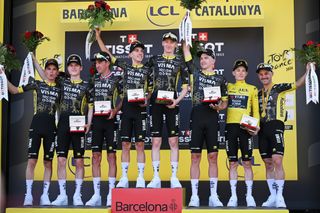
- 2026 Tour de France route - the complete stage-by-stage guide
- Who will win the Tour de France 2026? Our definitive ranking of the favourites for the yellow jersey
- Tour de France past winners


Latest Content on the Race

News Pogačar due to join Merckx, Indurain, Anquetil and Hinault as five-times Tour winner this evening

News Lidl-Trek domestique wins prize and €3,000 ahead of final stage in Paris

News Ecuadorian rider lost public vote to Mads Pedersen but was awarded prize for second time in his career after combination with jury votes

News Decathlon's Nicolas Prodhomme says 'There was nothing vicious, it was... not intimidation either' after Col de Sarenne moment

News Ecuadorian captures two stage wins in three days, the King of the Mountains title in standout Alpine performance, and super-combativity prize

News Once in Paris, Dane will become the sixth rider to win the points classification at all three Grand Tours

How to watch Here's how you can watch Stage 21 of the Tour de France for free from anywhere in the world.

How to watch All the ways you can watch or stream the 2026 Tour de France, on TV, on your devices and more from wherever you are in the world, including free options

News Over 10 kilometres between summit of climb and finish on Champs-Elysées

News Mexican set to finish alongside Tadej Pogačar on Paris podium as yellow jersey supports teammate on Tour's toughest stage
-
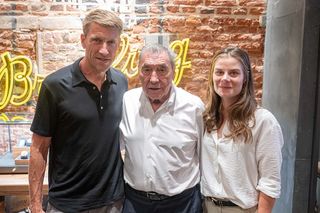
Eddy Merckx out riding a bike again as lengthy recovery from hip operation progresses
81-year-old's condition improving, back on rollers and riding an e-bike -
'A tool in this fight' – UCI president David Lappartient backs night-time anti-doping testing in men's Tour de France
Ongoing lack of ITA communiqués of positive doping tests from race is potential indication that 'there was nothing in the Tour' -
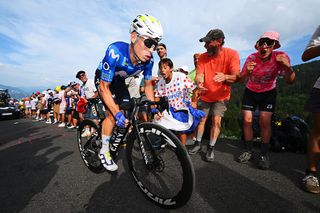
'We can learn from these situations' - Einer Rubio calls for better Tour de France safety regulations following his Alpe d'Huez crash
Colombian rider collided with the back of the UAE Team Emirates-XRG car after a spectator fell into the road


-
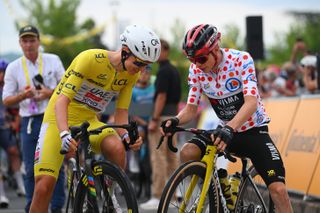
Jonas Vingegaard reveals Tadej Pogačar messaged him after Tour de France crash, says rivalry has 'become a lot friendlier there in the last couple of years'
Dane echoes long-term adversary's words from Tour on the positive development of their relationship -
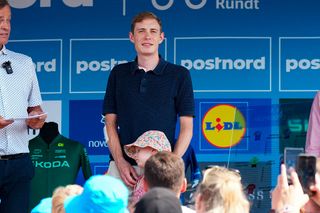
Jonas Vingegaard brushes off 2028 retirement rumours as he talks about Tour de France crash on visit to Tour of Denmark
'I'm still just Jonas' Dane says after mass hometown crowd celebrates his Grand Tour triple crown in Glyngøre -
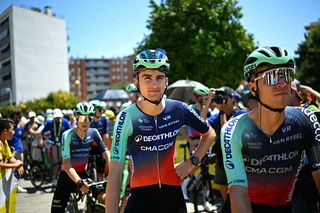
'Paul will win with us' – Decathlon CMA CGM hope Tour de France performance will convince Seixas to stay with French team beyond 2027
Seixas joins marketing agency Sportfive as he becomes a global sports star


-
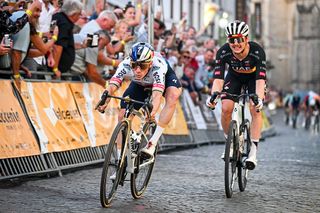
'I'll stay focused until Saturday' – Remco Evenepoel's 24 hours of Tour de France celebrations end with a criterium win and a night at home
Belgian wins in Aalst but keeps riding to target the Saturday's Clásica San Sebastián -
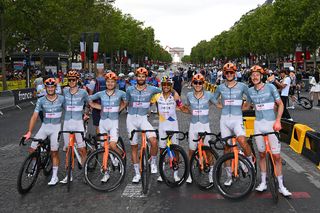
'It was a tough race' - Netcompany Ineos kick-off Tour de France review after failing to win a stage
British team tries to be up beat for the 2027 Tour de France Grand Départ -
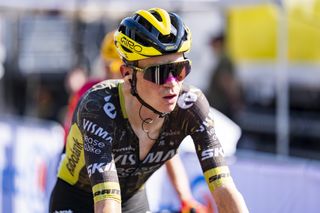
Sepp Kuss hoping to ride Vuelta a España for Grand Tour treble after 'crazy fast' but 'enjoyable' Tour de France
Former Vuelta winner feeling motivated into the final part of the season


-
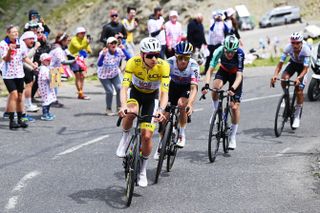
Battle of the brands: Which sponsors came out on top at the 2026 Tour de France?
Specialized vs Colnago, Continental vs Vittoria, 1x vs 2x, tubeless vs tubes - we unpack the tech trends from the 2026 Tour de France -
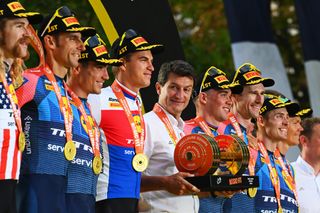
Rating every Tour de France team's performance – The good, the great and the downright disappointing
We look at each squad's achievements, failures and areas of improvement after a race that saw plenty of winners, but plenty of losers too -
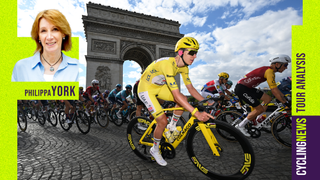
Tadej Pogačar's five-star Tour de France performance was his least stressful yet, and paved the way for his very promising successor - Philippa York analysis
Cyclingnews' expert columnist marvels at Pogačar's fifth Tour victory and searing Alpe d'Huez ascent, analyses his GC rivals' progression, and reflects on a memorable final stage -
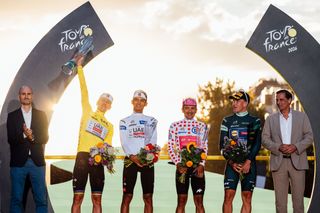
Eight conclusions from the Tour de France – A new Pogačar, Evenepoel's next challenge and questions over racing in July
On their way home from Paris, the Cyclingnews team dissects what we can take away from this edition of the Tour, covering everything from the racing and the route to anti-doping and the climate -
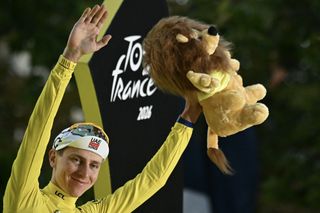
‘I’m not thinking about any history, clubbing, or whatever' - Tour de France winner Tadej Pogačar has his name in lights but keeps his feet on the ground
Slovenian schedules 'homework' for his own events and rest to 'enjoy the small things in life' rather than add travel for post-Tour criteriums


