
The organisers of La Vuelta Femenina by Carrefour.es have revealed one of the toughest routes in its 12-year history with a double-header finale in Asturias that will showcase summit finishes atop Les Praeres. Nava and the famed Alto de l'Angliru.
This year's race, which will take place from May 3 to May 9, will be held in Galicia. The 815km route will not include a time trial or team time trial, but will take the peloton through the area's notoriously lush, green terrain and relentless climbing, suitable for opportunists, breakaways and reduced-group finishes in what the organisers have called a 'balanced' parcours before reaching the final weekend.
Article continues belowIn an interview with Cyclingnews, Kiko García, the Vuelta's technical director, stated that pivotal moments of this year's route were intentionally saved for the final weekend of racing, where the peloton will take on Les Praeres on stage 6 and the fearsome L'Angliru on stage 7 in what will surely decide the winner of this year's Vuelta Femenina.
Stage 1: Marín to Salvaterra de Miño, 113km

The opening day of racing at La Vuelta Femenina will feature a 113km route from Maín to Salvaterra de Miño.
It is not a completely flat stage, but it will take the peloton over back-to-back mid-race climbs: Alto do Cruceiro at the 38.4km mark and Alto da Portela at the 49.4km mark.
The peloton will then race along an undulating route through Ponteareas and into the punchy uphill finish at Salvaterra de Miño, where the winner will collect the event's first leader's jersey.
Stage 2: Lobios to San Cibrao das Viñas, 109km
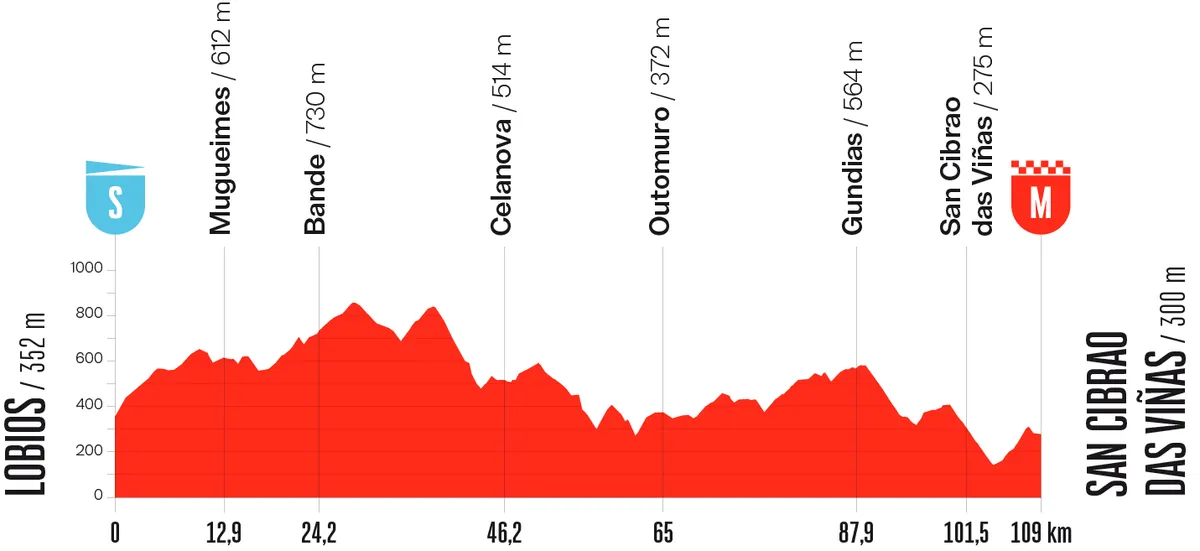
There are no categorised mountains on tap for stage 2, however, the 109km route profile is anything but flat.
The course is either up or down and likely to be a good opportunity for a breakaway or a reduced group on the roads toward the finish.
It is not a flat finish either, but the peloton will tackle a short, steep ascent in the final kilometres before a short descent into San Cibrao das Viñas.
Stage 3: Padrón to A Coruña, 121km

Again, there may not be categorised ascents on tap for stage 3, but the theme of this Vuelta will be in the route's relentless ups and downs.
The third day of racing begins in Padrón, and the peloton will race for 121km along a lumpy course into the finish, where a reduced group could, again, play for a sprint finish.
Stage 4: Monforte de Lemos to Antas de Ulla, 115km

As the race heads toward the mountains, stage 4 brings the field a 115km race that begins in Monforte de Lemos.
There are two category 3 ascents during this stage, starting with the Alto de Oural at 19.5km and then the Alto de A Vacariza at 83.6km.
It won't be a flat finish as the parcours looks to take a turn upward in the final kilometres to the finish line in Antas de Ulla.
Stage 5: León to Astorga, 119km

The climbing continues through on stage 5, but there will have been limited true tests of high-mountain ascending, yet.
The peloton will race 119km beginning in León on stage 5 with two category 3 ascents on the menu: Collada de Olleros de Alba at the 42.6km mark, followed by the Alto de La Garandilla at the 73.7km mark of the race.
The climbing is followed by a predominantly low-grade descent for the last 30km into the finish line at Astorga.
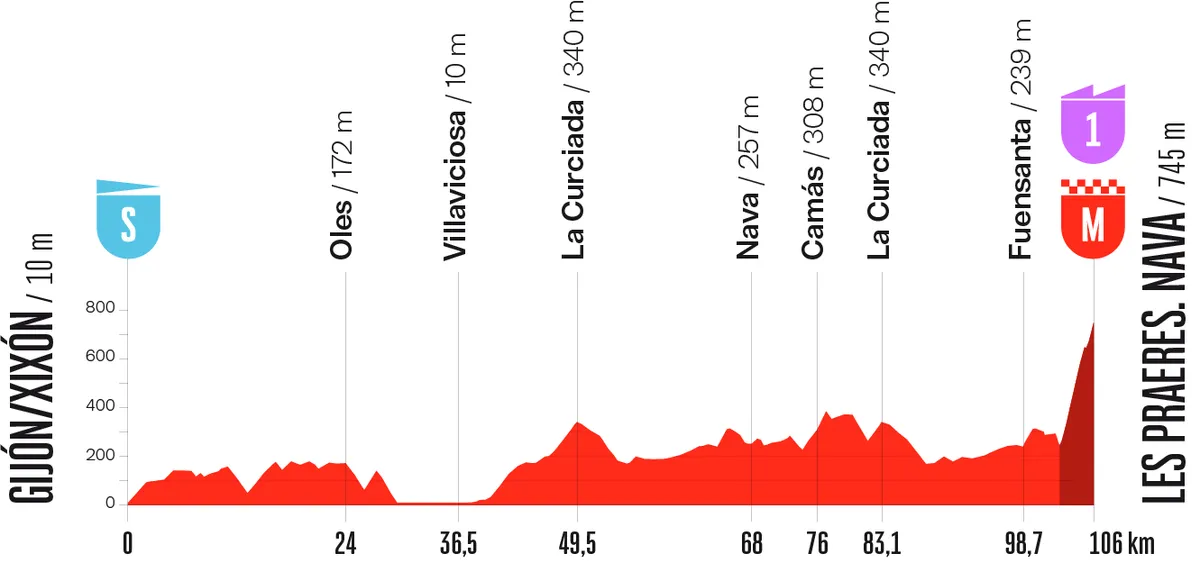
Stage 6: Gijón/XiXón to Les Praeres.Nava, 106km
The organisers intended to bring the excitement of the general classification into the final two days of racing with double-header mountain stages to conclude this year's race.
Stage 6, which begins in Gijón/XiXón, will cover 106km.
It is the shortest day of racing, but also a route meant for the strongest climbers in the peloton with a finish on the category 1 'wall' Les Praeres.Nava is a nearly four-kilometre climb with an average gradient of 13.5%, but it reaches sections as steep as 20%.
It will be the first real test for those riders pursuing the overall title, but not the final one, because they will face the fearsome L'Angliru as the ultimate decider at this year's Vuelta.
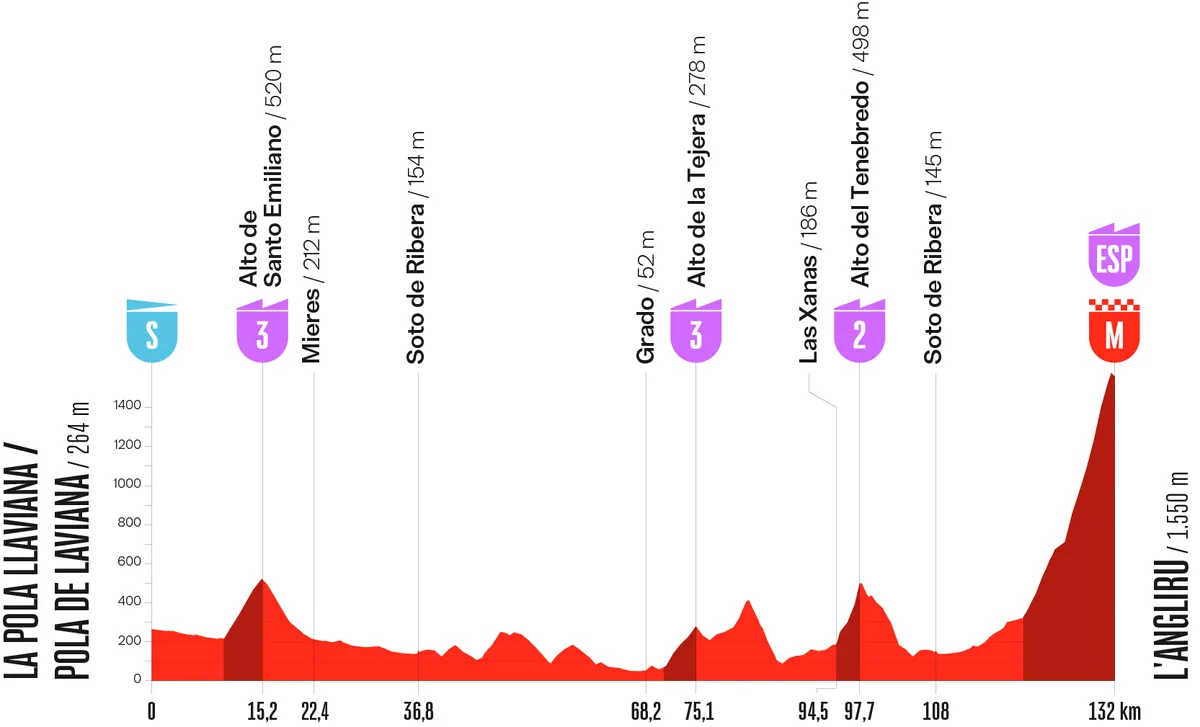
Stage 7: La Pola Llaviana / Pola de Lavianna to L'Angliru, 132km
The organisers were unsure whether they would include the L'Angliru in this year's race, but after consulting with the teams and riders, they decided this was the year to make it happen.
The race will begin in La Pola Llaviana / Pola de Lavianna, and the peloton will contest 132km, which is the longest stage of this year's race.
The field will tackle three categorised ascents before the final: category 3 Alto de Santo Emiliano at the 15.2km mark, category 3 Alto de la Tejera at the 75.1km mark and the category 2 Alto del Tenebredo at the 97.7km mark.
The main field will likely be reduced to the strongest climbers as the race approaches the base of the final ascent. L'Angliru is 13km in length with an average gradient of 9.7%, but it's closer to 13% in the second half, and is certain to decide the winner of the 2026 La Vuelta Femenina.

You must confirm your public display name before commenting
Please logout and then login again, you will then be prompted to enter your display name.
