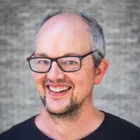
When Stefan Küng used his newly acquired knowledge of Spanish to answer questions in the mother tongue of most people in the Vuelta a España press room, it sparked considerably more surprise amongst the media than his second stage victory in three years in the Grand Tour.
Both his stage win and his near-fluent use of Spanish were born of the same determination to make the most of his time after a bad injury this spring - and in Jerez de la Frontera's 32.1 kilometre time trial, the success on both counts, sports-wise and in terms of his language skills, was clear.
Küng's other great speciality apart from time trialling is the Classics, but his campaign collapsed almost as soon as it had begun this Spring when the Swiss racer crashed in Omloop Het Nieuwsblad and fractured his femur, an injury so bad, he told reporters, "that sometimes I was very worried I might not get my time trialling strength back. A big thanks to my team, my physio and everybody who supported me for helping me to get back again."
The first big sign that he was hitting the heights against the clock again came on the last day of the Tour de Pologne when he won the 12.5km time trial.
His comeback was cemented when the 32-year-old hit the highest heights in a Grand Tour, winning stage 18 of the Vuelta by a scant but sufficient two-second margin over Callum Thornley (Red Bull-Bora-Hansgrohe) on Thursday.
At the same time he was rebuilding his time trialling, he has been practising his Spanish, he told reporters, "because I decided to set myself a challenge and learn another language. We've got a wedding coming up in the family, and I want to be able to talk with my new relatives. It's much easier that way to get to know them."
Küng revealed he has another connection to the Vuelta, as he lives in the same village in Switzerland as Alex Zülle, another time-trialling great who won the race twice in the 1990s.
Get The Leadout Newsletter
The latest race content, interviews, features, reviews and expert buying guides, direct to your inbox!
Not only does he run into Zülle when training, most recently five days before heading to the Vuelta, "My sister was in the same cycling club, and she went to his retirement party," he revealed.
Following his chance meeting with Zülle, when Küng reached Spain, it was clear that, just like in 2024, the final individual time trial was going to be his biggest goal, "although this one was a bit longer, and we had two easier days beforehand, which wasn't the case two years ago," he added.
"It was very fast with the tailwind, which explains, too, why the differences were so small, and I had to work at it all the way. There were quite a few bends in the final seven kilometres, but I told myself that I had to go flat out and if things fell apart, then they fell apart.
"Today, only the victory counted. But in any case, it's a victory for the whole team."
For unbeatable coverage across road, gravel and tech, subscribe to Cyclingnews. You'll get comprehensive race coverage of La Vuelta a España, subscriber-exclusive analysis from our expert columnists, in-depth features and industry-leading tech insight. Plus, the Cyclingnews app lets you follow the action wherever you go! Join today.
Alasdair Fotheringham has been reporting on cycling since 1991. He has covered every Tour de France since 1992 bar one, as well as numerous other bike races of all shapes and sizes, ranging from the Olympic Games in 2008 to the now sadly defunct Subida a Urkiola hill climb in Spain. As well as working for Cyclingnews, he has also written for The Independent, The Guardian, ProCycling, The Express and Reuters.
You must confirm your public display name before commenting
Please logout and then login again, you will then be prompted to enter your display name.