The latest race content, interviews, features, reviews and expert buying guides, direct to your inbox!
You are now subscribed
Your newsletter sign-up was successful
An account already exists for this email address, please log in.
It was an Il Lombardia for big statements, from a long overdue safety protest to Paul Seixas riding like a real champion – Sean Kelly's Classics column
Cyclingnews' expert columnist, and three-time Il Lombardia winner, weighs in on the riders' calls for safety improvements and Seixas' convincing first Monument victory
Paul Seixas put in a champion's ride to claim his first Monument title(Image credit: Dario Belingheri/Getty Images)
I'll come back to the Frenchman's victory in a little while, but let's talk about the five-minute protest first. It needed to be done and, honestly, it was long overdue. If the UCI doesn't start taking visible action, then I suspect the riders will carry out more protests and strikes because they know the situation, experience the issues, and have unfortunately seen the heartbreaking consequences too. Now, the riders will hope that this protest doesn't fall on deaf ears, and that action is taken.
The sport's governing body needs to do something with race organisers, both for route safety and to prevent external vehicles from entering the route. Someone experienced from the UCI needs to work with the organisers to raise issues ahead of time, not just when the riders turn up to race, or worse, once an incident has occurred. They need to get their acts together and call the shots with race organisers, and I'm not surprised the riders have said, 'Okay, we have to do something here,' just to highlight it and get things moving.
I'm conscious you can't make a route completely risk-free, but races are only getting faster and tight corners and traffic islands continue to appear in the final kilometres. I've been really concerned in the last number of years that there's going to be a big smash on a finishing straight caused by the late corners and many obstacles; amazingly, there hasn't yet, but much needs to improve.
The same applies to keeping cars off the race route, which has been a talking point lately following the tragic death of Finlay Tarling and an incident where two Pinarello-Q36.5 riders were involved in a crash caused by a vehicle during Tre Valli Varesine; it's so difficult to make A to B routes 100% safe, but there needs to be someone giving orders to the organisers, ensuring that measures are being taken. Circuit racing is one suggestion to reduce the risk of cars entering the route when they shouldn't, but even those routes have challenges, and I feel like a major change like this is still quite a long way off.
Ultimately, the UCI have stood back and let this issue happen, but protests like this mean they can't sit on their hands any longer. There are so many things to look at, but in my eyes, first and foremost they need to tackle the issues that can be resolved without drastically impacting the race organisers, and that means removing potential crash risks from race finishes.
Remco Evenepoel was the peloton's spokesperson during their pre-race protest at Il Lombardia (Image credit: Dario Belingheri/Getty Images)
Seixas seizes the moment in style
It was a first Monument victory for Paul Seixas, and he won it in dominant fashion. He was by far the best rider in the end, by quite some way. It was the kind of performance that says this guy is looking like a real champion, not only performing in stage races, but also in one-day Monuments.
In recent editions of Il Lombardia, Pogačar's team made the race difficult, putting everyone into the red before he finally launched an attack they couldn't respond to. This year's edition played out differently; we knew where it would happen, and UAE Team Emirates-XRG and Red Bull-Bora-hansgrohe positioned themselves well, but who would actually open things up? Of course, Seixas was the one. The fact that it was somewhat forecasted and not an all-out explosive burst of power says a lot about Seixas' level, because despite it being a steady, seated attack, no one could live with that infernal pace.
Seixas was well placed to deliver his attack, but others were too – Giulio Ciccone, Tom Pidcock and Enric Mas – yet if you haven't got the power to follow, then it's not going to happen for you. They were simply not at the same level as Seixas on Saturday.
I've often said that Il Lombardia is a race that's easy to ride because, tactically, there's not a lot to it. I was talking to one of Pinarello-Q36.5's sports directors ahead of the race about it being a simple race compared to other Monuments, and that rang true this weekend. Certain teams will control, but you just have to follow until eventually you're into the final 30 or 40 riders. Then position yourself for that race-winning attack.
It's a script that has been played out so many times. There's a much higher likelihood of mechanicals or crashes ruining your chances in other Monuments or one-day Classics, particularly on the cobbles, but the Race of the Falling Leaves typically favours the rider with the best legs. That was undoubtedly Paul Seixas this time around.
It brings to an end a stellar season for the youngster, who at just 20 becomes the youngest winner of Il Lombardia in its long history. His Decathlon CMA CGM squad have ridden incredibly well for him this year, and they've proven that they have the power and strength in depth across both one-day and stage races; I expect that to only improve next year now that he has confirmed he'll remain with the French team in 2027. The question Seixas will be asking next season, with his current deal expiring in a year, is more likely going to be one of: who can afford my next contract?
No one could match Seixas' pace as the race reached Como (Image credit: Luca Bettini - Pool/Getty Images)
Remco Evenepoel led the main chasing group over the line on Saturday, and while he has picked up yet another Worlds TT title and added the European road race to his palmarès in 2026, I think he's struggled with his climbing this year. When the pace goes beyond a certain point, he struggles to follow.
In Grand Tours, that's less of an issue because fatigue typically drops the pace, especially later in the three weeks, and Remco seems to recover better than others, which is an advantage for him. But in one-day races, a lot of riders – even domestiques nowadays – can put in an unbelievable tempo, which at times can catch him out.
Lastly, Ciccone and Pidcock both attempted to stick with Seixas' wheel with varying degrees of success, while Mas, albeit displaying good legs, didn't have the pace to reel in Seixas. The former pair will be on the same team next season, with Ciccone signing for Doug Ryder's squad. The Italian can win races in a variety of formats and should offer more support for Pidcock in the mountains. The Briton was looking very strong on Saturday, but then suddenly started to struggle.
I worry that when he loses contact with the rider in front, he just seems to lose his head a bit too much, and you cannot do that in a race. You have to be really strong in the head, and fight like a dog. If you're really over the limit trying to follow the guy up the road, you knock it back a bit, and then you go with the next guy. I think he was capable of doing that, but just lost his way a bit and ultimately fell back to the main group of chasers.
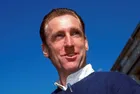
"King Kelly", the greatest Irish cyclist to have graced the peloton, brought the Emerald Isle to the fore alongside compatriot Stephen Roche in the 1980s. Points winner at the Tour de France four times, GC in the 1988 Vuelta, and a record-breaking seven consecutive wins at Paris-Nice feature during his glittering career – alongside double victories at Paris-Roubaix, Milan-San Remo and Liège-Bastogne-Liège.
You must confirm your public display name before commenting
Please logout and then login again, you will then be prompted to enter your display name.