Van Rysel announces the new RCR-R Pro bike featuring its lightest ever frame
The RCR-R Pro has already won a monument this year under Paul Seixas
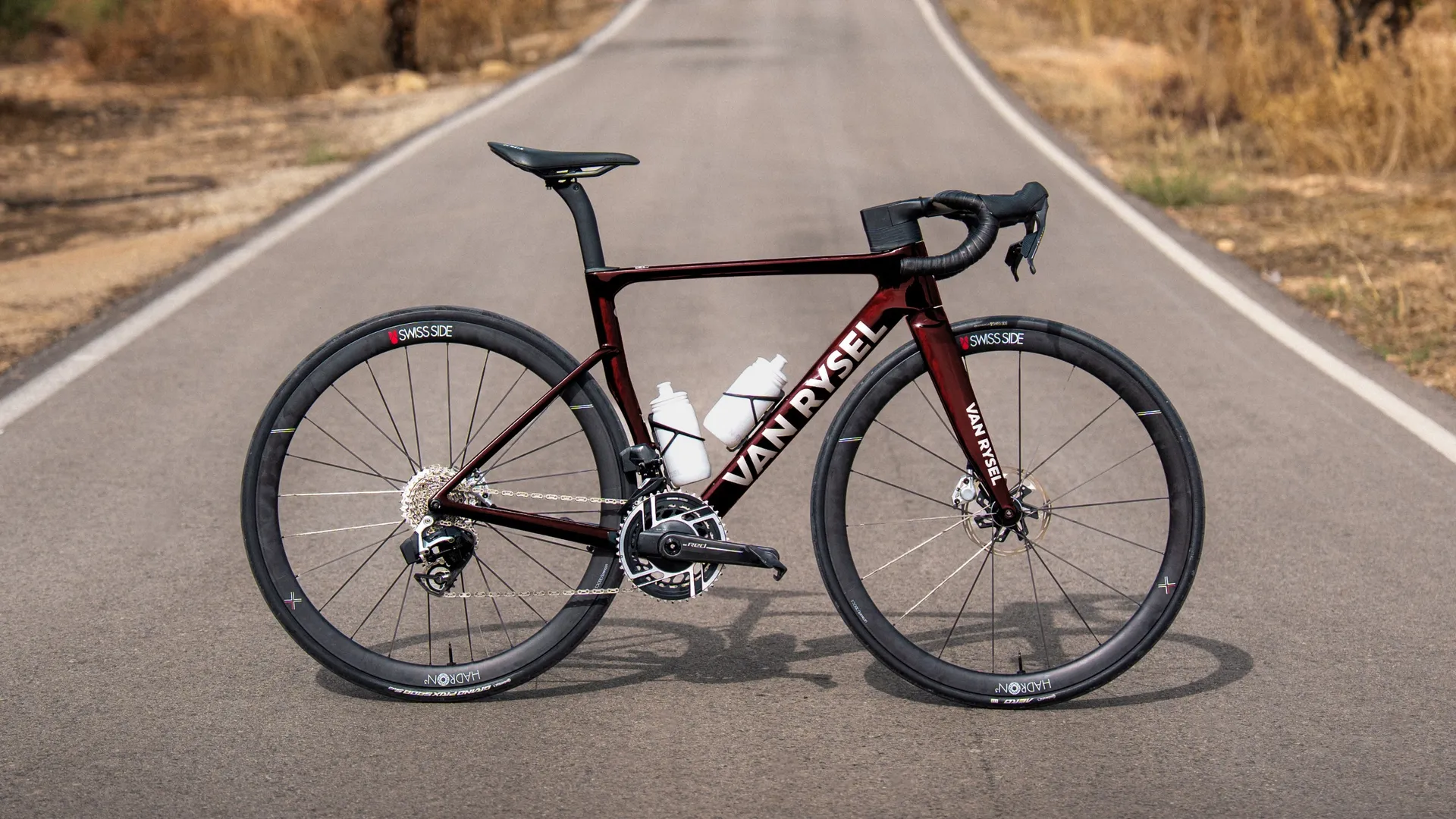
Van Rysel has announced two new additions to its range today in the form of new RCR-R Pro and RCR-R models.
The RCR-R Pro is an existing model in the brand's range, but this updated version offers the same frame design in two carbon fibre layup specs and build ranges.
If this news jogs your memory to chatter about Van Rysel prototypes from the summer, you would be right. We first spotted a prototype being raced by Paul Seixas at the Tour Auvergne-Rhône-Alpes back in June.
We also got another good luck at said bike at the Tour de France in July, before Seixas took a thunderous solo win on it at Il Lombardia later in the year.
The time is now seemingly right to unveil the bike officially, coinciding with the bike going on show at Rouleur Live, which takes place in London this weekend.
All bikes will be available to buy from the 5th of January 2027, and Van Rysel says it will be providing a white paper between now and then with more technical details on the bike; here's what we have so far.

Van Rysel has an aero bike in the form of the RCR-F Pro and categorises the RCR-R Pro as a lightweight aerodynamic road bike. The brand says it's been developed to be fast across a range of terrains.
The latest race content, interviews, features, reviews and expert buying guides, direct to your inbox!
Development has taken place over a span of two and a half years with feedback from the Decathlon CMA CGM team, and as is often the case, the brand says that CFD (computational fluid dynamics), wind tunnel testing, and pro feedback have gone into the development.
Both bike models share the same frame design, but vary in their weights and carbon layups.
The RCR-R Pro uses a mix of super high modulus and high modulus carbon fibre. It weighs a claimed 705 grams for a size medium and is, according to the brand, Van Rysel's lightest ever frame.
The RCR-R frame uses high-modulus carbon and weighs in at a claimed 883 grams for a size medium. The frames both use the same 360-gram fork.
As is the case with most bikes, a blend of features has been sought; Van Rysel says it has looked to combine front-end stiffness with rear-end flex.
Van Rysel tested 13 CFD prototypes, five wind tunnel prototypes and seven frame lay ups before arriving at the bike's final form.
A new aerodynamic water bottle and cage has also been developed, the aero bottles will be released seperately from the bike, but the brand is claiming up to a 6.3 watt saving at 45km/h compared to the previous generation in testing with 'turning legs and turbulence.'
Some WorldTour teams have aero bottles and cages at their disposal but are limited by sponsorship agreements, it remains to be seen whether the team will race with the new components.

Van Rysel says Decathlon CMA CGM riders tested the bike in training and competition this year, with at least Paul Seixas, Nicolas Prodhomme and Matthew Riccitello testing RCR-R PRO prototypes, with Seixas himself saying:
"The bike is lighter, more aerodynamic and, above all, more stable on descents. When you’re travelling at over 100 km/h, confidence in your kit is paramount.
"I clocked up the kilometres in training and worked closely with the Van Rysel engineers to fine-tune the final settings before switching to race mode for the second half of the season. Winning a Monument on this bike is the ultimate validation."
We got a look at one of Seixas' prototypes before the Tour de France kicked off in Barcelona earlier in the year. It was a good chance to take a look at the bike's curved seat tube and profiled stem cover and spacers.
The frame design looks largely the same, but Seixas appeared to ride a raw, unpainted version, which must have saved some extra weight over a painted model.


View Original

View Original

View Original

View Original

RCR-R Pro bikes will be available in Shimano Dura-Ace Di2 and Ultegra Di2 builds, as well as SRAM Red and Force.
Complete weights for a medium are a claimed 6.6kg for a SRAM Red build, 6.8kg for a Dura-Ace, and 7.1kg for both Ultegra and Force options.
RCR-R builds will be available in SRAM Force and Rival, as well as Shimano Ultegra and 105 Di2.
Complete weights for a medium are claimed at 7.4 kg for a Shimano Ultegra build, 7.5kg for Force, 7.8kg for 105 and 7.9kg for Rival.
Bikes will range from €3,299 to €8,499, but we don't have any model-specific pricing right now.

Tom joined the Cyclingnews team in late 2022 as a tech writer. Despite having a degree in English Literature he has spent his entire working life in the cycling industry in one form or another. He has over 10 years of experience as a qualified mechanic, with the last five years before joining Cyclingnews being spent running an independent workshop. This means he is just as happy tinkering away in the garage as he is out on the road bike, and he isn’t afraid to pull a bike apart or get hands-on with it when testing to really see what it’s made of.
He has ridden and raced bikes from an early age up to a national level on the road and track, and has ridden and competed in most disciplines. He has a keen eye for pro-team tech and enjoys spotting new or interesting components in the wild. During his time at Cyclingnews, Tom has already interviewed some of the sport's biggest names including Mathieu van der Poel, Tadej Pogačar and Alberto Contador. He's also covered various launches from brands such as Pinarello, Ridley, Specialized and more, tackled the Roubaix Challenge sportive aboard his own rim-brake Cannondale SuperSix Evo, tested over 20 aero helmets in the wind tunnel, and has created helpful in-depth buying advice relating to countless categories from torque wrenches to winter clothing.
You must confirm your public display name before commenting
Please logout and then login again, you will then be prompted to enter your display name.
