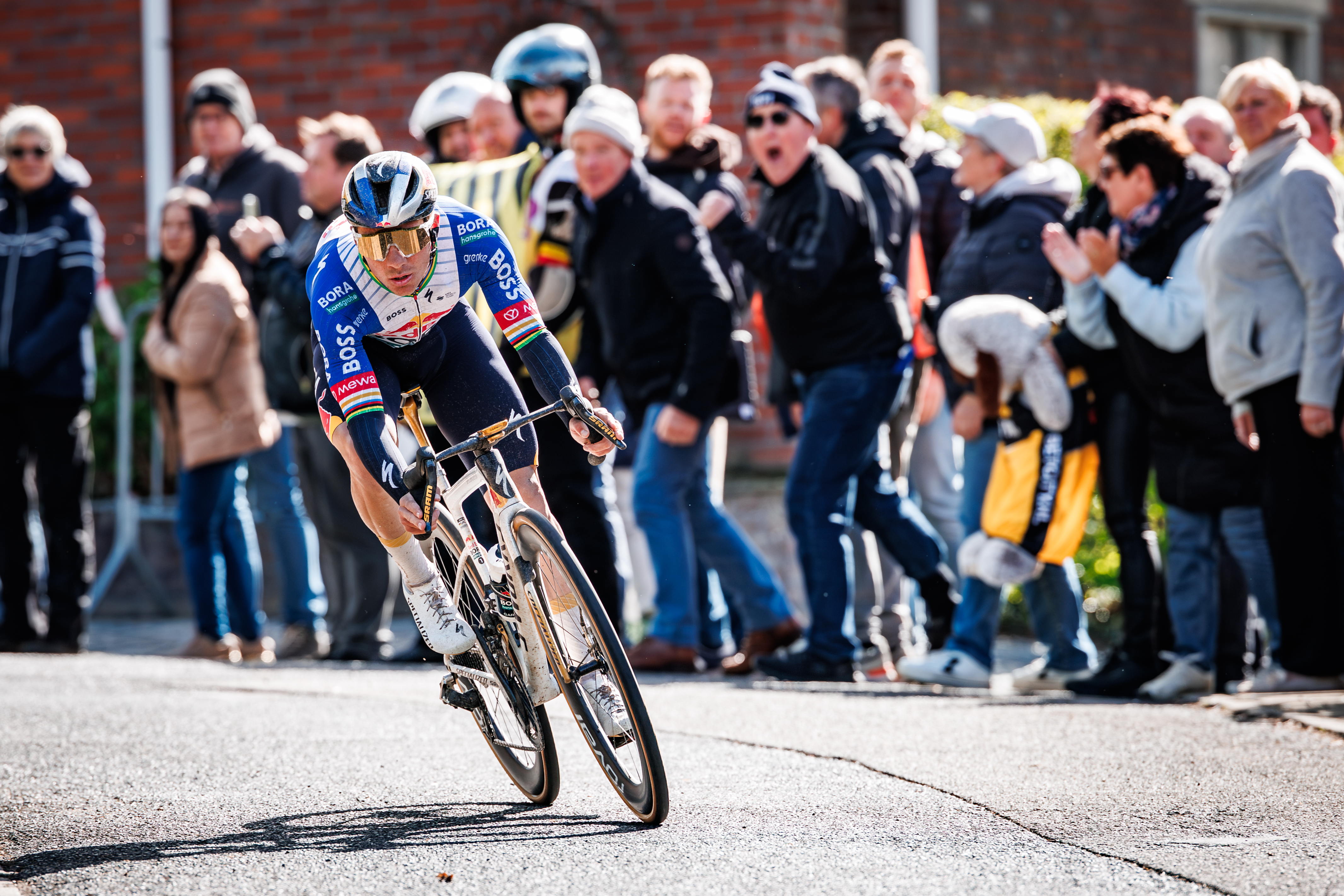
'In any sport I think it's impossible to go: Oh yeah, the sport is 100% clean' – 2025 Tour de France leader Ben Healy points out potential upper limit of anti-doping measures
Irishman dreaming of Tour de France success but recognises World Championships as major priority in 2026 and 2027
2025 Tour de France stage winner and race leader Ben Healy has highlighted the limitations anti-doping measures have to face, while he also pointed out that cyclists are tested "thoroughly and pretty often" as a major part of the struggle against banned drugs in sport.
In a lengthy interview with The Irish Mirror, Healy pointed to the recent Oier Lazkano case as one of the examples where testing has proved effective in rooting out a potential doping case.
Lazkano has been provisionally suspended and lost his place at Red Bull-Bora-Hansgrohe for unexplained abnormalities in his biological passport. Lazkano has insisted on his innocence.
In the wide-ranging interview, the EF Education-Easy Post racer also discussed his goals for 2026, saying that after his bronze medal in the World Championships in Rwanda last September, the rainbow jersey in Canada this autumn was a major target. As for the Tour de France, while he did say that every cyclist dreams of winning it, he recognised that for now "it's potentially a bit of a stretch."
Asked about the current state of the anti-doping battle in sport, Healy made it clear that absolute certainty that a sport was completely clean was all but impossible. "In any sport I think it’s impossible to go, ‘Oh yeah, the sport is 100% clean,'" Healy told the Irish Mirror.
"That’s not to take away from anything that the sport and the governing bodies are doing to try and keep it clean and catch people out.
"Look at Oier Lazkano, everyone’s being tested thoroughly and pretty often, to be honest, potentially even more than other sports."
The latest race content, interviews, features, reviews and expert buying guides, direct to your inbox!
Healy pointed to the vast improvements in equipment in recent years as a key reason why the average speed in the Tour de France continues to rise relentlessly.
"I think the biggest thing to attribute to why racing is so fast now – look at the equipment that we’re using now to even when I was racing first year at Under-23, which is only five years ago.
"The bikes are night and day different almost, that’s the first thing. And then just the way that we’re racing now.
"Look at UAE" – four-times winner and defending champion Tadej Pogačar's squad – "they just set up their train and one by one the riders pull the race along at maximum speed possible. That makes a big difference."
As for Healy and the Tour de France himself, according to the newspaper, Healy's main spring goals will be Strade Bianche and the Ardennes, prior to a return to cycling's biggest stage race in July.
Then he'll be heading for the Worlds again. Healy's stand-out result in Rwanda, where he became the first Irish rider to win an elite men's road race medal at the World Championships since Sean Kelly in 1989, has given him high hopes of more success. For the next two years, he said, he'll be making that a major focus.
"If you think one thing is going to keep on working forever, then you’re only fooling yourself, so it’s just a natural progression to different things," he said.
"But nothing major is going to change in 2026. I’ll probably have a pretty similar calendar."
Alasdair Fotheringham has been reporting on cycling since 1991. He has covered every Tour de France since 1992 bar one, as well as numerous other bike races of all shapes and sizes, ranging from the Olympic Games in 2008 to the now sadly defunct Subida a Urkiola hill climb in Spain. As well as working for Cyclingnews, he has also written for The Independent, The Guardian, ProCycling, The Express and Reuters.
You must confirm your public display name before commenting
Please logout and then login again, you will then be prompted to enter your display name.