The sail effect is an interesting phenomenon in cycling aerodynamics where, if the wind is coming at the bike from an angle rather than head-on, it can actually decrease the aerodynamic drag of the bike.
Normally, we would expect wind coming from the side to result in more drag, since more of the bike is in the face of the wind. But certain frame or wheel shapes can actually harness this wind, utilising the 'sail effect' to generate forward propulsion, in the same way an aircraft's wings generate upward lift, to make you faster.
Article continues belowWhen riding out on the road, we very rarely experience true 0° yaw, which is the equivalent of a dead-on headwind. Track riders, on the contrary, will experience 0° yaw a lot more often.
Our Cyclingnews Labs tests of bikes, wheels, helmets, aero socks and other equipment in the wind tunnel have all used a range of yaw angles, going from -15° to 0° to 15°, in steps of 5°. It’s important that we measure this, as something that is fastest at 0° might not be as fast across all the other measurements, and therefore, in the real world, might not be that effective.
The impact of 'sailing'
Much like a nautical sail, the sail effect happens when wind coming at the bike from an angle actually reduces the coefficient of drag relative to the 0° yaw measurement by generating thrust, which, in a nutshell, can help us go faster.
You can see in some of our bike-only testing that one frame stood out as generating a sail effect as yaw angles increased, and actually became faster at higher yaw angles (more crosswind-y). This happens mainly due to the deeper frame tube profiles being used on some of these bikes, as there is more of an effective ‘sail’ provided by them. Deeper headtube and bottom bracket clusters can also assist this, as well as deeper seatposts.

As the air approaches the frame the side, the airflow can then generate a side force that partially offsets aerodynamic drag. We can see in our own wind tunnel bike tests that on some bikes, the Factor ONE in this instance, the frame actually has lower drag at 15˚ and -15˚ Yaw than at 0˚. The results change when a rider is placed on the bike, but the performance is still greater at higher Yaw angles relative to, for example, how the Trek Emonda (our old reference machine) performs at them.
The drop in sail effect when a rider is placed on the bike happens because once we put a rider on the bike and have the wind coming from an angle, there is a larger area of effectively moving parts across that plane of motion. A rider's body and legs are notoriously un-aerodynamic. This is where aerodynamic clothing comes into play to reduce drag on those areas.
Rule28 also created a (UCI illegal) WingSuit back in 2020 that resembled a flying squirrel with fabric between the elbows and waist to create an actual sail that was significantly faster at higher yaw angles.
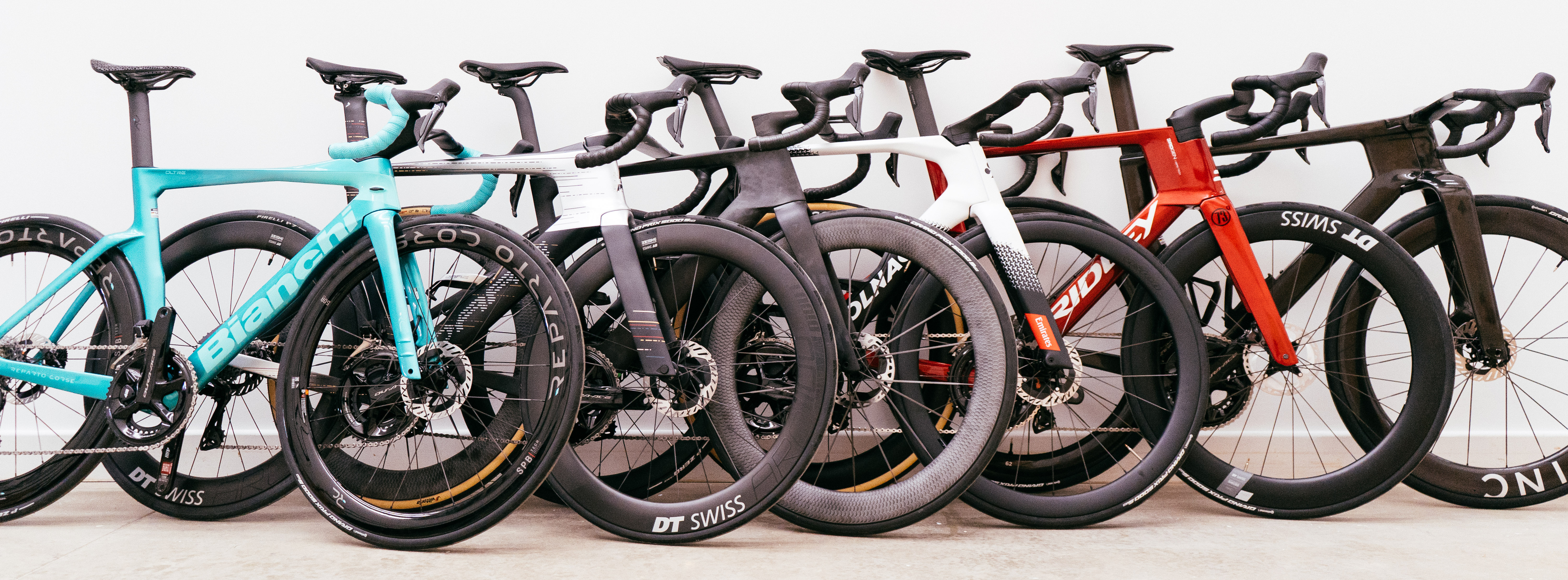
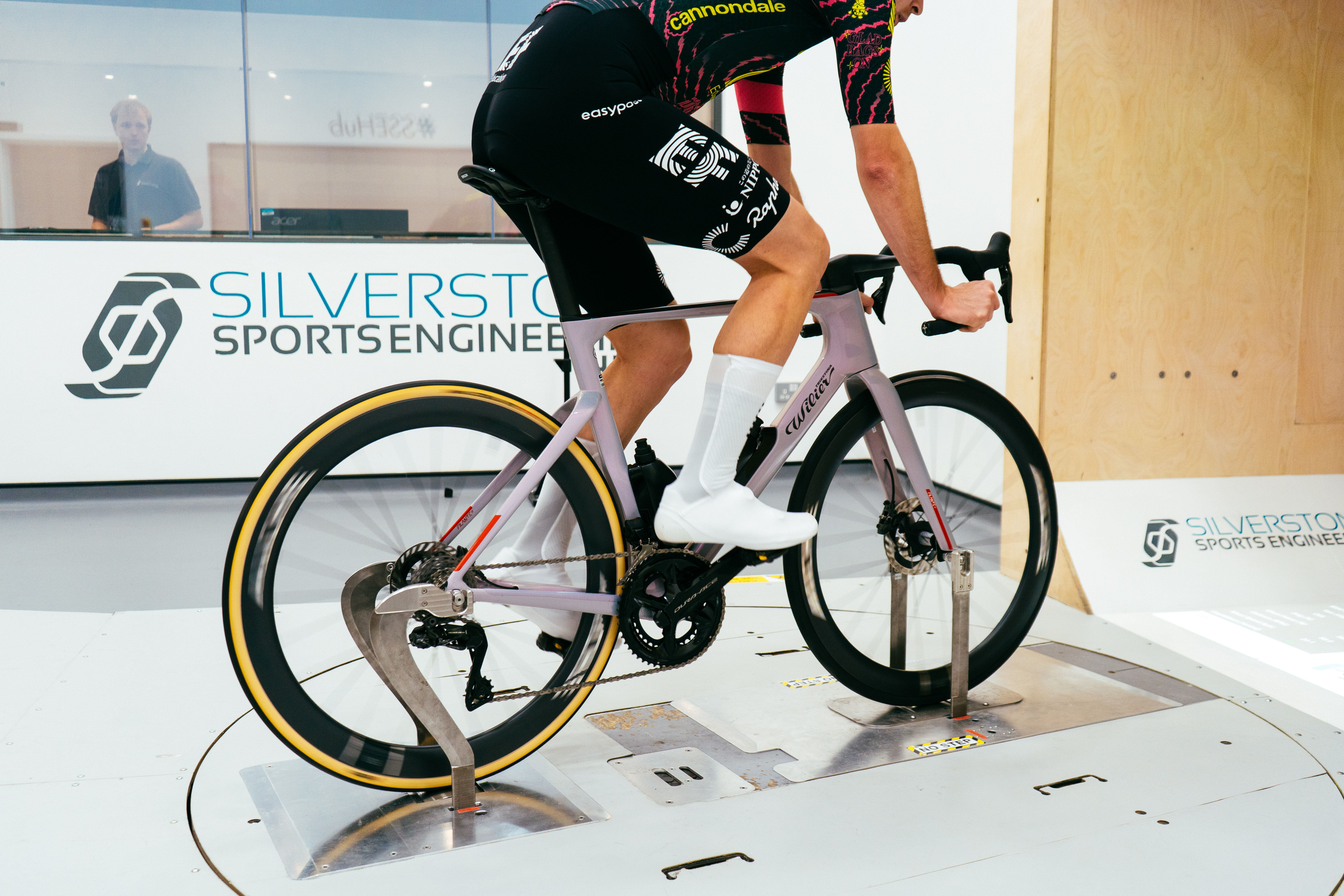
If we look at the sail effect of just the Factor One frame, and extrapolate that into 40k TT performance when travelling at 40kph, it is interesting to see that a frame with this sail effect might actually be 47 seconds and 0.5kph faster with an effective yaw experienced of 15°.
Likewise, in our wind tunnel wheel test, we saw that often, wheels had a lower CdA at yaw angles of 15° or -15° than at 5° or -5°.
Looking at the Scope Artech 6A wheel, for example, the difference between 0° and -15° Yaw was equivalent to a saving of 3 minutes 54 seconds over 40km, or 2.8kph, in favour of -15°.
Of course, it's rare that anyone will experience 15° - or indeed any single yaw angle - for an extended period of time. The very nature of, well, nature is that wind speed will constantly be changing, as will its direction. This is why a bike that can perform well across all wind angles should outperform a bike that is fast only at 0°, assuming all else is equal, of course.
Wheels
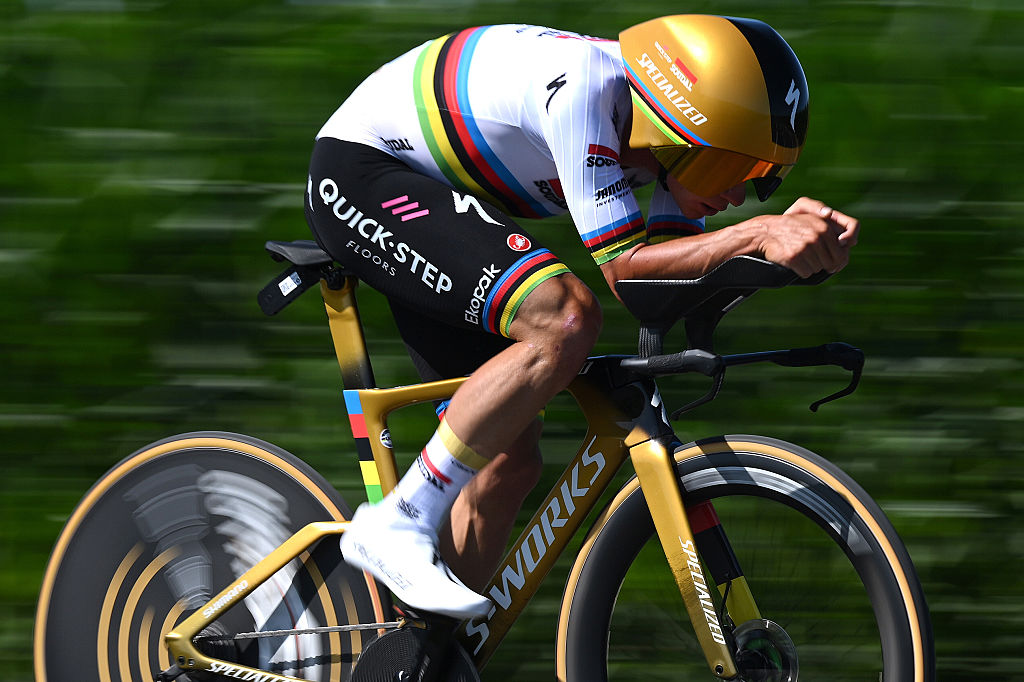
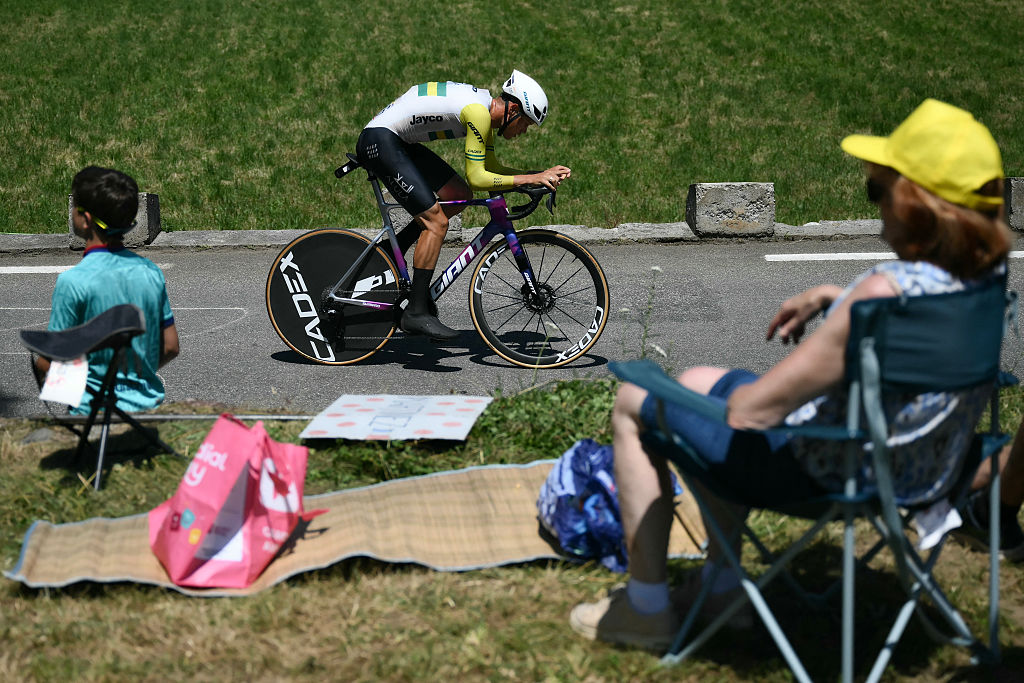
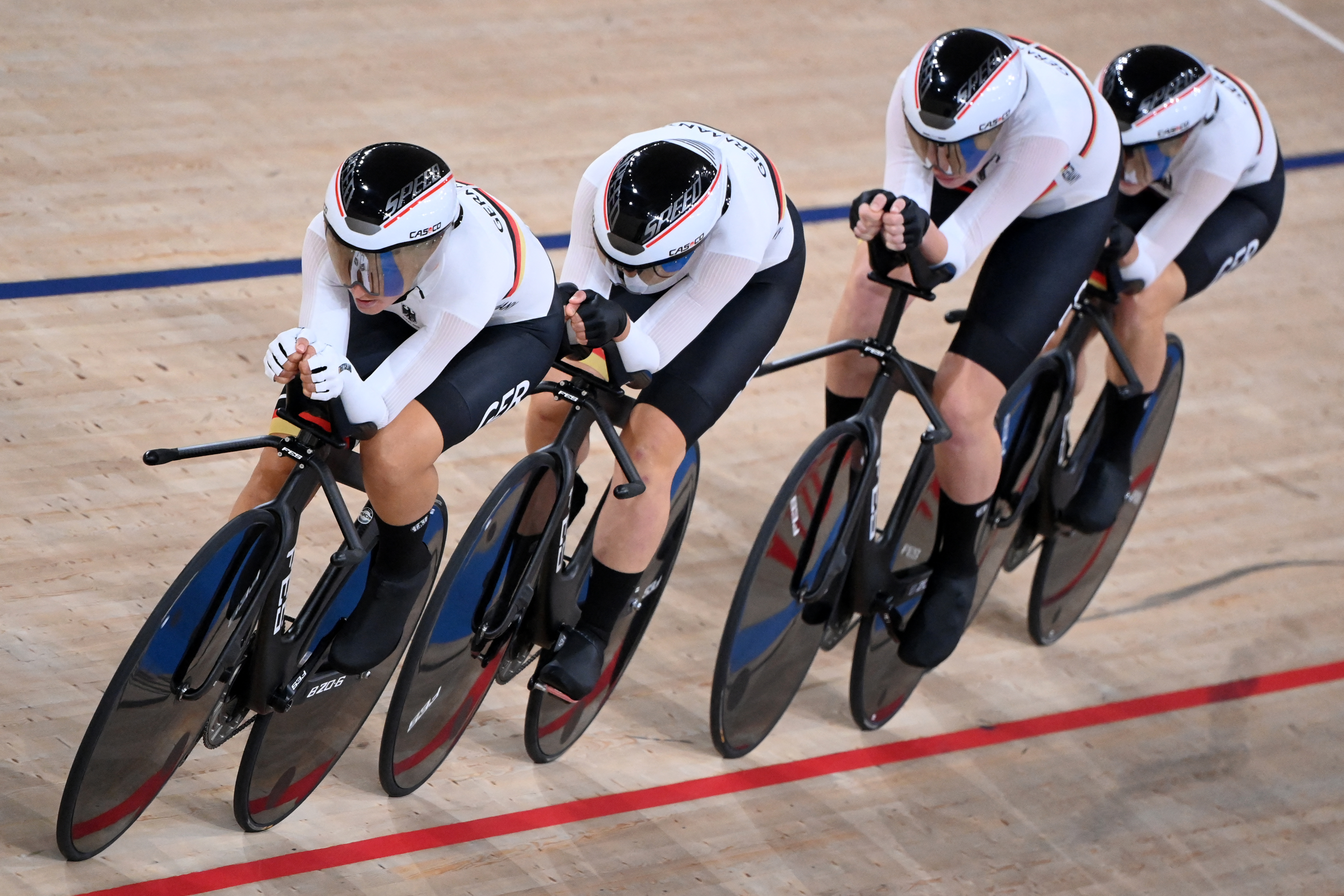
There is one way that the sail effect can be more easily achieved, even with a rider onboard, and that is by using a disc wheel. Disc wheels are generally reserved for triathlon, time trials and track events, but their impact on the sail effect can be huge.
As part of my coaching and aerodynamics consulting business, I conduct quite a lot of wind tunnel testing on time triallists and triathletes, and when we test across different yaw angles, a disc wheel almost always results in lower drag for the same speed as the wind angle increases.
This happens because the disc works as a wonderfully effective sail. It is also why, even with the extra weight compared to a trispoke or a traditional spoked wheel, a disc wheel is often a very smart option even for something like a mountain TT.
We saw at the 2025 Tour de France the use of disc wheels by riders on the mountain TT stage. In part, this is because the aero savings outweighed - literally - the added weight. But the nature of this time trial also unveiled another area where disc wheels can actually perform relatively better.

Higher speed = lower yaw
Yaw angle is not only about the speed and direction of the wind, but how they combine with the speed and direction of you on the bike. For example, if you travel at 30km/h with a wind of 10km/h coming at you from a 10° angle, the effective yaw is only 2.5°. If you are travelling at 50km/h, the effective yaw angle decreases to 1.7°.
So the faster you go, the lower the yaw angle will be in the same wind conditions. And the slower the wind speed, the lower the yaw will be.
This is why disc wheels can actually be even more advantageous when travelling at slower speeds, such as in the above case of an uphill time trial, since riders might be more susceptible to greater sail impacts due to higher potential yaw angles.
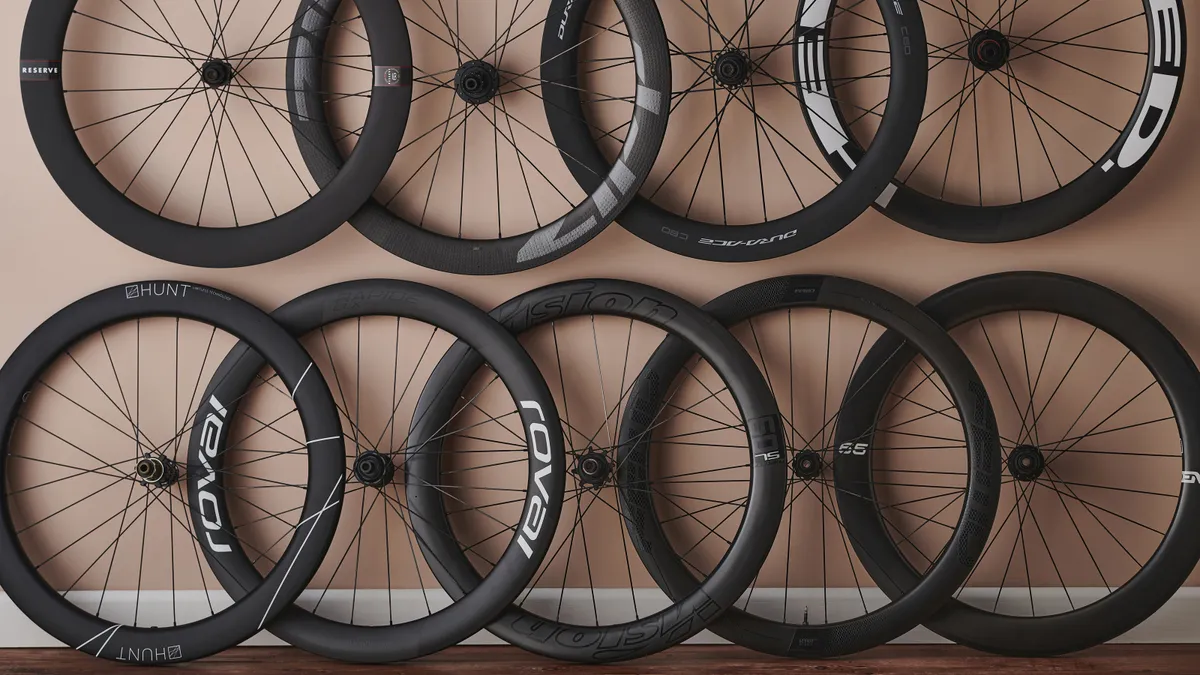
This means there are bigger gains to be made by amateurs, given our slower speeds, than there are for pros. We can’t ride rear disc wheels everywhere, but where safe to do so, deeper-section wide rim wheels can still be more susceptible to sail effects in crosswinds than shallower options. Just be careful not to use them on too blustery days, where they can also negatively affect your handling.
As a little side note, very rarely do brands test at angles as extreme as 20° yaw. This is because, even at a rider speed of 30km/h, for the yaw angle to be 20°, a 20km/h wind has to be coming at you at an angle of 51°.
If that wind is just 10kph, the required angle actually becomes unachievable since it is more than 90°, so a cross-tailwind. And given most aero-focussed products are developed for racers, they are often designed to be ridden at much higher speeds where the likelihood of experiencing 20° or more is vanishingly small.
In reality, yaw angles such as 20° or more are unlikely to be experienced by a rider, so it is not really worth testing at those levels.
It is sometimes used to create headline-grabbing marketing claims, but that's a complaint for another day!

You must confirm your public display name before commenting
Please logout and then login again, you will then be prompted to enter your display name.