Cyclingnews Verdict
If you’ve been flicking between YouTube channels and retailer sites, wondering which electric mountain bike to get, you can stop now. It’s this one. The combination of power and control is unmatched on anything I’ve ridden in 20 years of testing MTBs, while Amflow has built a bike around its now-famous motor with uncanny aplomb. This bike is utterly brilliant, arguably the best mountain bike you can buy, but also utterly clinical in its performance, bordering on soulless.
Reasons to buy
- +
Most powerful motor available
- +
Energy-dense 700 Wh battery
- +
Customisable geometry
- +
Great spec choices and details, such as a built-in bar light and phone charging port
- +
Superb performance down and uphill
- +
Suitable for new and experienced riders
Reasons to avoid
- -
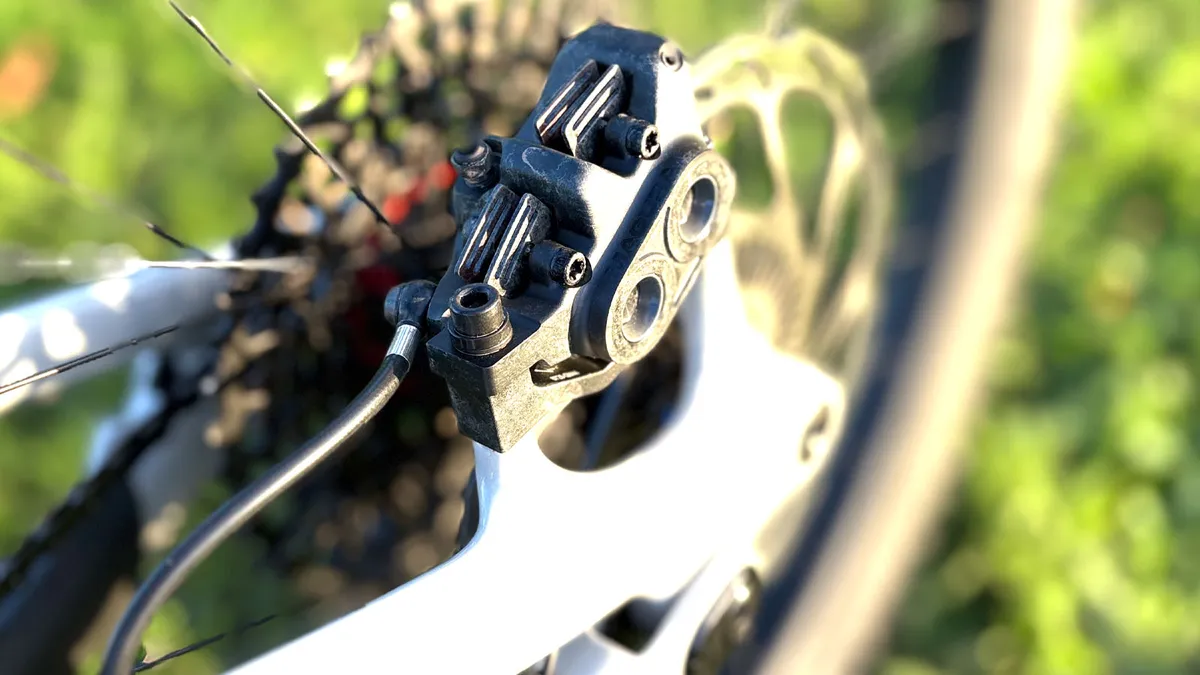
Brakes feel underpowered, and the pads sit very close to the rotor
- -
Non-removable battery
- -
Hefty price tag
- -
No small frame sizes
You can trust Cyclingnews Our experts spend countless hours testing cycling tech and will always share honest, unbiased advice to help you choose. Find out more about how we test.
- Price: £8,999 / $10,199 / €9,999
- Weight: 21.4kg (size L)
- Sizes: M, L, XL, XXL
- Fork: Fox Float 36 Factory, GRIP X2 damper, 160mm travel, 44mm offset
- Shock: Fox Float X Factory, 210x55mm
- Motor: Avinox M2S Drive Unit
- Battery: Avinox Integrated Battery, 700Wh
- Drivetrain: Avinox SL alloy cranks, SRAM X0 Eagle AXS Transmission
- Brakes: Magura Gustav Pro, 4-piston callipers, Magura Sensor 203mm rotors
- Wheels: Amflow XMC-30 Carbon Mullet (29in front / 27.5in rear)
- Colours: Grey only
Amflow carries no legacy pedigree in the mountain bike world. Until mid-2024, the brand was virtually unheard of outside China. Formed under the umbrella of drone titan DJI to showcase its proprietary Avinox electric drive system, industry lore has it that Amflow was born only after established mountain bike brands turned down DJI’s motor partnership.
True or not, Amflow has bypassed the usual apprenticeship: it is already setting the benchmark the rest of the industry is scrambling to match. But does its PX Carbon Pro offer genuine trail dynamics, or is it merely an exercise in raw wattage?
What is now clear to me and many others is that Amflow is now one of the most desirable e-bike brands, thanks to its combination of power and performance. It now represents the industry standard that every other bike brand is playing catch-up to. But does this bike represent more than just the best watts-to-cash ratio of anything going? And can it match the established brands for ride feel and sheer joy?
Design and aesthetics
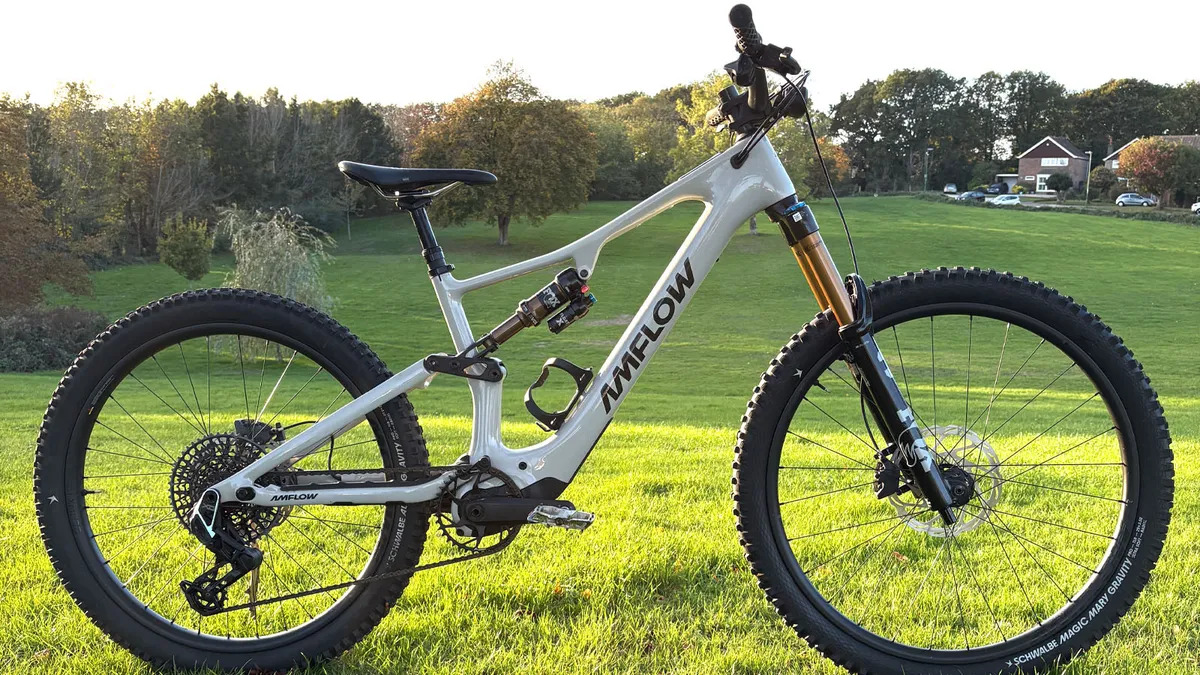
The original Amflow (launched in 2024) was arguably a more radical step forward for e-bike design, introducing 1,000W of peak power and 120Nm of torque. The latest Amflow bike uses a new Avinox M2S Drive Unit that generates 150Nm of max torque (130Nm nominal) and 1,500W of peak power, which is unmatched by anything from Specialized, Bosch, Shimano, Bafang, Mahle, Fazua, Yamaha or Brose. In short – everyone else.
The Amflow range comprises three new models, all powered by the same DJI Avinox Drive System.
The PL weighs a claimed 19.2kg with a 2.27 kg carbon frame, 105 Nm continuous torque (120 Nm Boost), and 600Wh or 800Wh removable battery options. The PR is burlier, with heavier-duty FOX AWL HD/Float X suspension, SRAM Eagle Transmission, and Magura or Tektro brakes.
The range-topping PX I'm reviewing here has 150 Nm of torque, adjustable geometry (including chainstay lengths and head angles), a non-removable 700Wh battery, and SRAM X0 Eagle components.


Components and build
You’ve probably heard plenty about the motor already, but it’s pivotal to understanding this bike and I can’t move on without filling in a few more details.
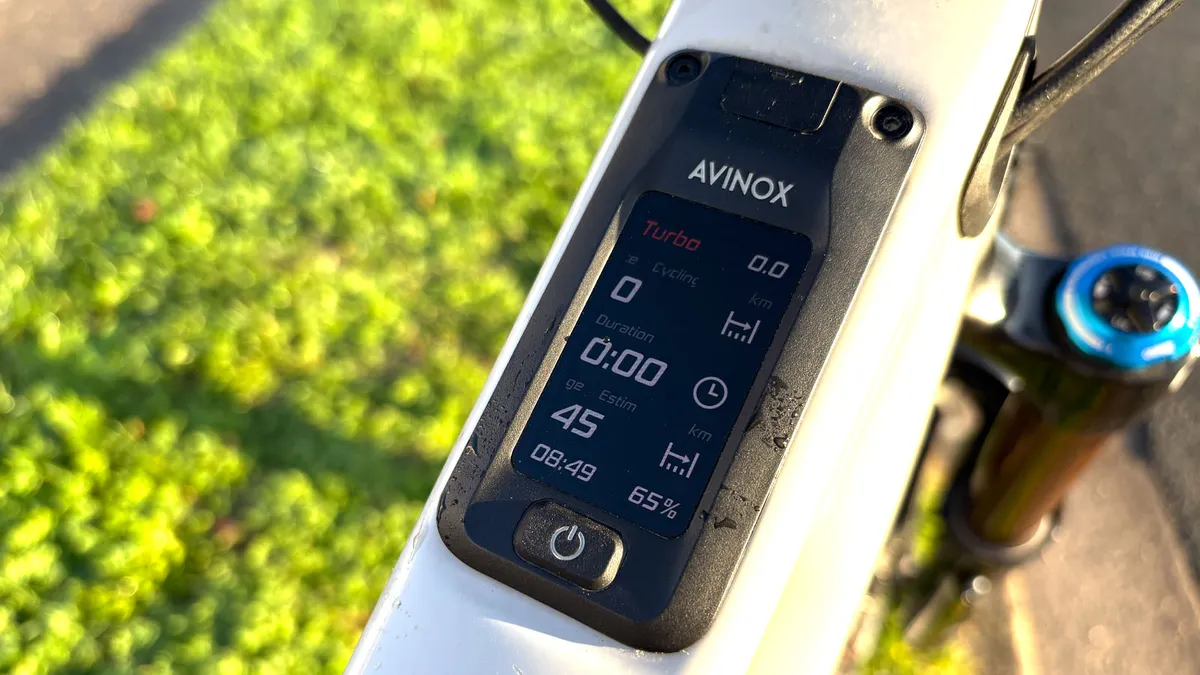
The Avinox M2S Drive Unit is almost exactly the same size as the M1 from the previous generation bike, which only makes the increased power claims more impressive still. Amflow says it’s also quieter than the old motor, while the 700Wh fixed internal battery has greater energy density and will outperform the older 800Wh version of old.
Fitting a 700Wh non-removable battery might seem like Amflow has shot itself in the foot by not giving riders the option to fit their desired battery size or swap out batteries for big ride days, but it worked for me. Without it, the extra complexity of a removable battery would have made the svelte downtube bigger - which not only looks ugly, but actually gets in the way on some bikes, reducing space for water bottles, gear, suspension components and even your knees.
I’d also argue you’ll never need a second battery on this bike. There’s no incentive to swap out the new 700Wh version for an older-designed 600Wh battery that saves just a few hundred grams. But more importantly, the fast charger took my flat battery from empty to full in around 90 minutes, so you could conceivably top it up at your lunch spot or from a mobile power bank.
While the Amflow name is relatively new, the four-bar linkage (Horst pivot) suspension design, with its telltale linkage on the chainstay, and general frame layout most certainly are not. It’s strikingly similar to bikes like the latest Specialized Stumpjumper Gen 3, YT Capra, Megamo Reason and many more bikes. It’s a sensible choice - long proven, easy for engineers to tune the suspension performance, and it leaves plenty of space around the bottom bracket and uninterrupted downtube for a big battery.
It uses a carbon fibre frame that Amflow says has 40 different geometry configurations in total, something we’ve seen before on bikes like the Stumpjumper. It has a choice of two bottom bracket heights, five head angles, and four chainstay lengths. You can run the bike with 29in front and rear, or as amixed wheel mullet using a 27.5in at the back. This adds complexity for Amflow, but it takes away any last-minute buying jitters about which wheel size to opt for.
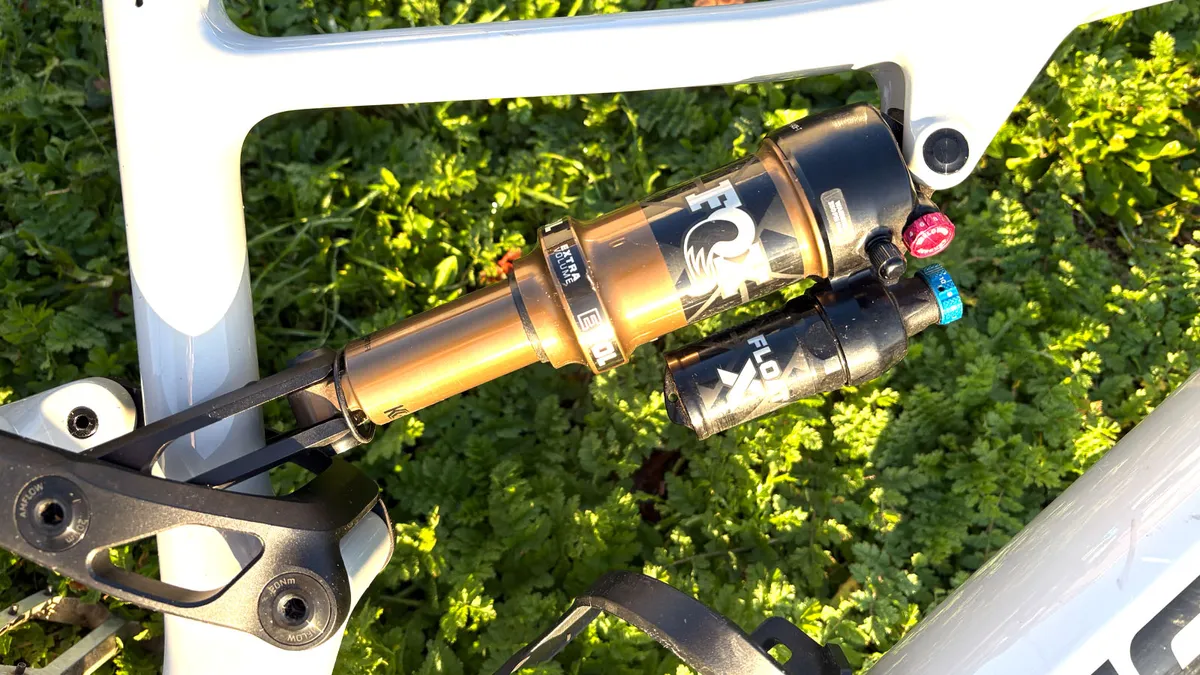
This is the flagship bike for Amflow, and uses Fox Factory suspension components. It has a 160mm 36 fork with a GRIP X2 damper providing four-way high/low-speed compression and rebound adjustments, and a 210×55mm Float X shock with low-speed compression and rebound tuning.
That’s a lot more complexity than most of us need, but it means you can tinker and learn as you go. Using the smaller 36mm stanchioned fork with 160mm travel, and generating just 150mm travel through the rear wheel proves Amflow has done its research and will appeal to the majority of mountain bikers.
It has a wireless SRAM X0 Eagle Transmission setup, consisting of an X0 derailleur, XS-1295 10–52T cassette, X0 Flattop chain, an AXS Pod Rocker controller, and a 38T SRAM Direct Mount chainring on Avinox SL cranks (155mm on M/L, 160mm on XL/XXL). The rear derailleur is powered directly from the main e-bike battery via an internal Avinox power cable.
Four-piston Magura Gustav Pro hydraulic disc brakes paired with thick 2.5mm, 203mm Magura Sensor rotors front and rear. The bike rolls on an Amflow XMC-30 carbon mullet wheelset (29″ front with a 28H hub; 27.5″ rear with a 32H XD freehub) laced with SAPIM E-Light spokes. These are fitted with radial-carcass Schwalbe tyres: a 29×2.5″ Magic Mary Radial in Ultra Soft compound up front and a 27.5×2.5″ Albert Radial in Addix Soft compound at the rear.


Performance
I first rode an e-bike at Copper Mountain, Colorado, in 2013 and spent most of the ride giggling uncontrollably as I whined and wheelied past bemused riders. I then spent the next 10 years enjoying e-bikes in a more sombre, jaded journalist way. But I’m right back in 2013 with the Amflow, it’s a huge leap forward even from bikes with more than 100Nm of torque.
There are five power modes to choose from, and a boost button that will temporarily raise the torque to 150Nm for 30 seconds. There’s no limit to the number of times you can press this during a ride, except the ultimate limiting factor of the battery capacity and range. More on that in a minute.
I spent time in all five modes, and they’re genuinely useful. Set the power low enough and you can ride this e-bike with friends on naturally aspirated bikes… and really tedious a time you will have. I finished a ride like this recently, and proceeded to complete a second powered ride afterwards. If it sounds like I’m antisocial, it’s more that I can’t leave 700Wh of battery power burning a hole in my bike.
Set the power high enough and you’ve got the jump on everything you’re legally allowed to ride on a mountain bike. It will pick its way up the steepest of climbs, and on occasion I’ve used it to winch me straight back up the fall line tracks I’ve just descended… just because I can. And because it’s often the quickest way back up to the top.
Traditional e-bikes rely on frame-and-spoke magnets recording a single data point per revolution of the wheel. The Avinox system pairs with Magura’s Sensor rotor using an optical pick-up that measures 42 pulses per revolution. The resulting traction control is uncanny: instead of breaking traction and tearing up soft trails or scrabbling in the dust, the motor micro-modulates power delivery the instant wheel-slip is detected. Combined with a balanced front-end stack that prevents the front wheel from wandering, you can winch up technical, fall-line singletrack that would defeat almost any other machine.
The riding position suits this setup. There’s a 40mm high riser bar that shifts rider weight further backwards, but it’s not pronounced enough to stop me weighting the front wheel even when the winch uphill seemed impossibly vertiginous. I’m talking about those trails that have you hugging pressing yourself against the stem, as the front wheel hovers dangerously just a few inches from the ground.
As much as I enjoy climbing on the Amflow (and I really do, because it’s so easy and natural), I’m more interested in the descents. The motor cuts out at 25kph, like on any (UK and Euro) legal e-bike, but I’d hazard that most of us are under this threshold for most of the time when descending. It’s often either too steep or too tight. And it’s here I really noticed the beautiful way the DJI motor delivers its power - there’s a huge groundswell of support, but it’s never snatchy or unsettling, and it fires you out of a corner when you mess it up, or up a little rise in the trail to keep your speed up. It’s a lovely way to ride, keeping the bike fast and fluid, and a sensation I’ve honestly not had on any other e-bike.
Fox’s 36 Factory fork with the GRIP X2 damper strikes a sound balance between tracking and compliance, something I love on home trails in Surrey or rocky tech at BikePark Wales. I think the Amflow could easily justify the 38mm chassis of a Fox 38, the 36 saves a few hundred grams, and only fully formed enduro riders will miss the extra stiffness of a 38. Out back, I found that the Float X shock was supple in its initial stroke with a reassuring ramp-up through the mid-stroke. This let me run slightly deeper sag in the low BB setting without suffering harsh bottom-outs on squared-off square edges and drops.
It offers incredible grip and plenty of high-speed support to keep the bike nice and flat on janky stuff, but I did have to work hard to set it up perfectly, systematically winding on damping until I found the sweet spot. I think the Amflow could easily take a bigger 38 fork, which wouldn’t be out of place on a bike with enough stiffness like this one, but it adds weight, which is something Amflow has been keen to avoid on this bike, with its smaller 700wh battery and carbon bar and wheels.
The rear suspension is very good indeed. I found it beautifully supple when you’re charging over rough ground and feeling the trail under your wheels fly past, with the shock free and active and rear wheel eager to move out of the way of small rocks and roots. It’s also controlled and supportive when it’s time to slow it down and pick through rocks or over big roots, and I didn't have a harsh bottom out on drops or landings.
There’s a lot of support when you get to the mid-stroke, and that let me run more sag and drop the already-low BB down even further to improve the bike’s stability and cornering aplomb. The fantastically well-damped Schwalbe Radial tyres add to the grip and control this generates, taking some of the pressure off the bike’s suspension, and my hands. I didn’t like the Trail version of the Schwalbes on a previous bike, but the Gravity casing and Ultra Soft compound is probably the best tyre I’ve ridden in a long time.
It’s not just a low bike, though; it’s also slack (both the head angle and seat angle), and long. I kept the bike in its standard headset angle, because it’s still plenty slack enough even for proper enduro riding, and plonked the bike into its low BB setting for stability. For my kind of riding, the bike felt best with the longest chainstay setting, which seemed to calm the bike down on steeper trails. In the shortest setting, the rear wheel could break loose too readily.


Value
This bike costs more than my car and my personal e-bike combined, and I would struggle to justify buying it. Price is subjective, though, and I think this is an astonishing machine for those who can drop nine grand on a mountain bike. The spec is fantastic - from Amflow’s own carbon wheels to the Fox Factory suspension - while the adjustable-geometry frame and ride feel show that Amflow have done their homework. And then there’s the motor, which other brands can’t touch right now.
That said, you can get a lot of the performance and most of the power from bikes lower in the Amflow range, or indeed other brands’ bikes using the M2S motor. When MBR tested the entry-level original Amflow PL Carbon, Alan Muldoon said the basic in-line Fox shock was better than the Float X piggyback shock on the Pro model. I’ve yet to ride the entry-level, second-gen bike, but if they’ve got the tune right, there’s every chance it could pull off the same trick.
Verdict
The Amflow has received so much praise online and on the socials that I wanted to hate it. But I absolutely fell in love with this bike. I’ve ridden scores of e-MTBs over the years and this one feels like nothing else. It’s so fast on singletrack and everything just short of full-on enduro tracks, where you come up against the inevitable - the end of its travel.
It reminds me of Whyte’s brilliant E-Lyte Evo. It’s comfortable and compliant in the same way, and absolutely razor sharp when cornering thanks to its brilliantly supportive suspension and geometry that means it can be whatever you want it to be.
It has a lot more power than the E-Lyte, though, much greater battery capacity, but the same light weight. And it’s here that the Amflow really makes the difference for me and noses ahead of other e-bikes: It’s stupidly good fun, easy to ride and move around, and forgives you when you mess up.
I said earlier the Amflow PX Carbon Pro is utterly soulless, and I love it for that. I have no idea who’s behind the DJI engineering, I don’t know where the bikes were designed and engineered, and which hills inspired their minutiae of design. Amflow just lets the power and performance do the talking.
Design and aesthetics |
A capable-looking bike that hides its e-bike battery and motor well. Handsome, not beautiful. |
8/10 |
Build |
It’s solid without being harsh, stiff enough to work at the bike park but still supple enough to ride in the slop. Amflow has been sensible where it needs to - the suspension design and component choices - but hugely creative where it can with the motor. |
9/10 |
Performance |
Astonishing performance. Nothing else out there can touch this bike on the climbs, and it’s both thrilling and flattering on the descents. |
10/10 |
Weight |
A bike with this much power and battery capacity should not weigh this little - at 22kg it’s in the sweet spot to generate grip without feeling heavy, |
10/10 |
Value |
This bike costs a lot of money, particularly when there are alternative Amflow models for less than half this. But it’s subjective, and I think it’s good value for the performance gains. |
7/10 |
Overall rating |
Row 5 - Cell 1 | 88% |