Cyclingnews Verdict
I really enjoyed riding on these wheels. They feel fast when they’re up to speed, they’re light enough to use even in mountainous terrain, and their hooked rim means there’s no headaches with tyre compatibility or safety. But, their aero claims are based around a more ‘old-school’ tyre width, and the carbon spokes and quality hubs do make these prohibitively expensive for most.
Reasons to buy
- +
They just feel so fast.
- +
Very light for a wheelset of this depth.
- +
Hooked rims will keep the masses happy.
- +
Surprisingly durable for a full on race wheel
Reasons to avoid
- -
Aero optimisation based on 28mm “narrow” tyres.
- -
Pricey.
- -
Carbon spokes won’t be for everyone.
You can trust Cyclingnews Our experts spend countless hours testing cycling tech and will always share honest, unbiased advice to help you choose. Find out more about how we test.
- Price (US, UK, Euro): £2,998, $3,398, €3,498
- Weight as measured: 1395g (with valves & tape)
- Colours: Satin Carbon/Gloss Black (tested) or Gloss Carbon/Gloss White
- Dimensions: Front Rim Dimensions - Depth: 63mm, External Width (at widest point): 35mm, Internal Width: 21mm, Bead Hook Width: (4.3)mm, Rear Rim Dimensions - Depth: 58mm, External Width (at widest point): 34.4mm, Internal Width: 21mm, Bead Hook Width: (4.2)mm
- Materials: Carbon fibre rims & spokes, titanium spoke hardware, alloy nipples
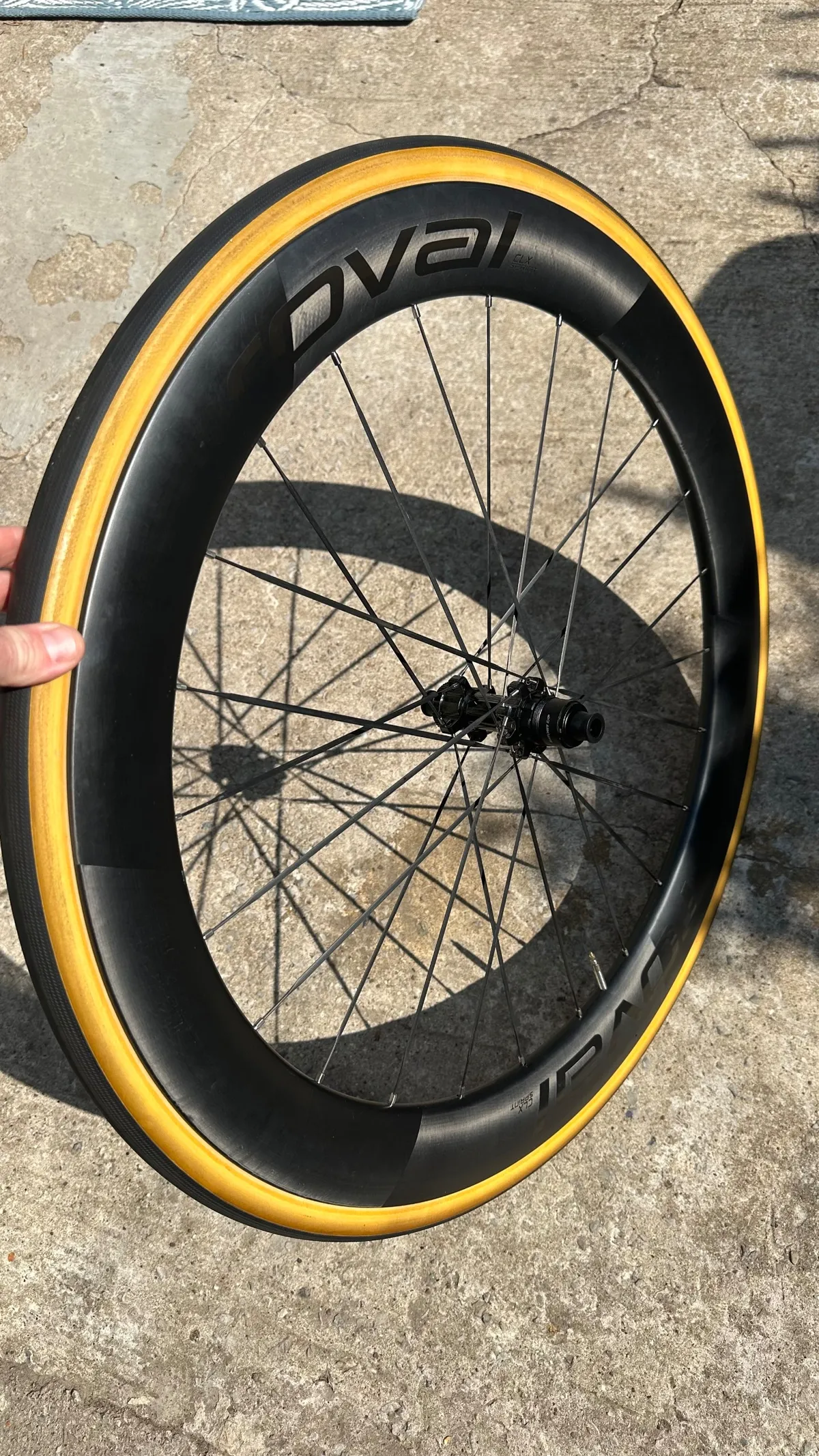
Roval claims that the Rapide CLX Sprint are ‘the fastest road wheels [they’ve] ever tested’. When they were launched in the summer of 2025, they turned heads and raised eyebrows with their revolutionary (to the road market, at least) mullet dimensions; a deeper front wheel and shallower rear wheel.
A front wheel depth of 63mm and a rear wheel depth of 58mm, paired with carbon spokes and ceramic DT 180 hubs makes the intended use of this wheelset exceedingly clear; these are for racing. Fast.
I’ve been testing these wheels for the last few months on the road in pretty much all conditions. I’ve ridden them on fast flat group rides, up long mountains, and battered them over a broad variety of road surfaces from smooth asphalt to fine gravel on unpaved bike paths.
By way of comparison, I’ve actually ridden (and owned) both previous generations of Roval’s Rapide wheelsets, and currently use a set of Reserve 57/64 Turbulent wheels on my race bike - as well as having tested dozens of other wheels over the last few years; so I have a pretty deep pool of experience to compare with.
These Rovals are positioned as one of the best road bike wheels in the market, and have all the credentials - on paper, at least - to live up to Roval’s speed claims.
Design and Aesthetics
Let’s address the elephant in the room first; the difference in depth between the front and rear wheel is nowhere near as noticeable as you might think. At a glance, you’d be hard pushed to see a 5mm difference in rim depth when standing still - let alone when whizzing past - and when we first spotted these wheels at the Spring Classics in 2025, it was only the eagle eye of senior tech writer Will Jones - who really is frightfully attuned to 5mm differences in wheel depth - who spotted these on the Red Bull-Bora-Hansgrohe bikes.
When explaining this design choice, Roval claimed that “90% of aero benefit comes from the front wheel”, so they optimised this whilst reducing the depth of the rear wheel to save weight and keep the overall package as light as possible. I can’t validate these aero claims myself, but the theory is sound. I’ll get into my experience with the performance of these wheels later on.
The latest race content, interviews, features, reviews and expert buying guides, direct to your inbox!
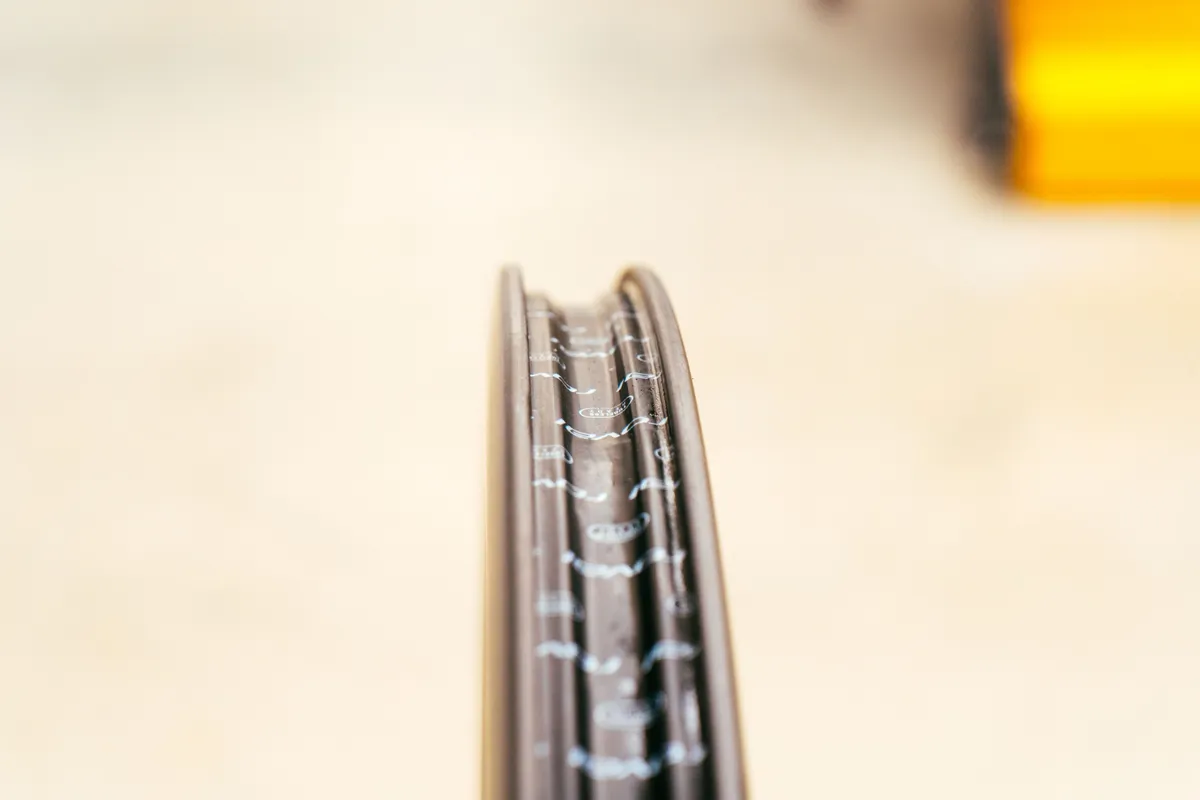
Depth aside, the rest of the rim dimensions are equally as interesting. Both front and rear internal widths are 21mm. This was somewhat of a surprise to me and - dare I say it - quite narrow for a modern wheelset. Roval’s reasoning for this width is that the rim profile is aerodynamically optimised around a 28mm tyre. For comparison, the Reserve 57|64 are 25.4mm internally at the front and 24.4mm at the rear - so are much better suited to more modern tyre widths of 30mm, 32mm, or even wider; not uncommon even on racing bikes in 2026.
My main surprise with the internal rim width is that it’s exactly the same as the previous two generations of Rapide wheels - which were first launched alongside the Specialized Tarmac SL7 in 2020. At the time, 21mm was plenty wide enough for the narrower widths riders chose back then - I was still racing on 23mm rubber - but a lot’s changed since then, and the choice to retain a 21mm internal width feels a little out of touch with the choices riders are making in 2026.
The wheels came to me in ‘review spec’, meaning they were missing a lot of the accessories they are supposed to include (such as wheel bags or tubeless valves), but they did come with a set of 28mm Specialized cotton folding racing only tyres. When mounted, these looked a lot narrower than 28mm, and left a noticeable lip of the rim showing. The external widths are 35mm at the front and 34.4mm at the rear, which accentuated how narrow the 28mm tyres looked, and they measured up closer to 27mm. Roval claims that the wheels are rated for tyres ranging from 24mm up to 38mm - I would suggest that the profile of a 38mm tyre on these rims would be sub-optimal, at least aerodynamically.
After a few weeks on the 28mm cotton tyres with inner tubes (which were amazing by the way - these were my race tyres of choice a few years ago, and it was lovely to revisit them and remind myself how fast and chattery they feel compared to modern, fatter rubber) I switched to some tubeless options; namely Continental’s GP5000 S TR in a 30mm and then a 32mm spec. I’ll get onto how this impacted the wheels in the performance section of the review.
At this point, it’s worth noting that the Rapide range of wheels are available in three specifications; the CLIII, the CLXIII, and these Sprint CLX. The CLIII and CLXIII both use a shallower rim combination of 51mm at the front and 48mm at the rear. All three variants share the same carbon rim construction, with the differences being the choice of spokes and hubs specced. The CLIII are priced at £1,548 and use DT Swiss Competition Race Straight Pull spokes and DT Swiss 350 stainless steel hubs, and the CLXIII uses the same spokes and hub combo as these sprints and are priced the same at £2,998.
Carbon spokes are still fairly rare on stock wheels from mainstream brands, but Roval has plumped for composite spokes manufactured by Arris Composites.
Arris is a brand I wasn’t familiar with before diving into the spec sheet of these wheels, but a quick glance at its website shows that it primarily produces ‘drone & defense’ products, alongside carbon plates for running shoes. In the interest of brevity, I won’t be diving too much further down the rabbit hole beyond their company motto: “Making products radically lighter and stronger”. Safe to say, it delivers on these goals.
The front wheel has 18 two-cross radially laced spokes, and the rear 24 one-cross / three-cross. All the spokes have alloy nipples and titanium endpieces.
I haven’t used carbon spokes before, and to be honest I don’t think I noticed that much of a difference. Of course, they’ll contribute to the feather light weight of these wheels, but in terms of stiffness or compliance, I can’t say they moved the needle for me compared to other wheels with steel spokes. I did have thoughts of their fragility in the back of my mind for the first few rides, but these quickly vanished after battering over a few cobbled sectors around Bristol and having no issues. In terms of practicality, they are pretty proprietary spokes, but Roval supplies four extra spokes and nipples should anything happen.
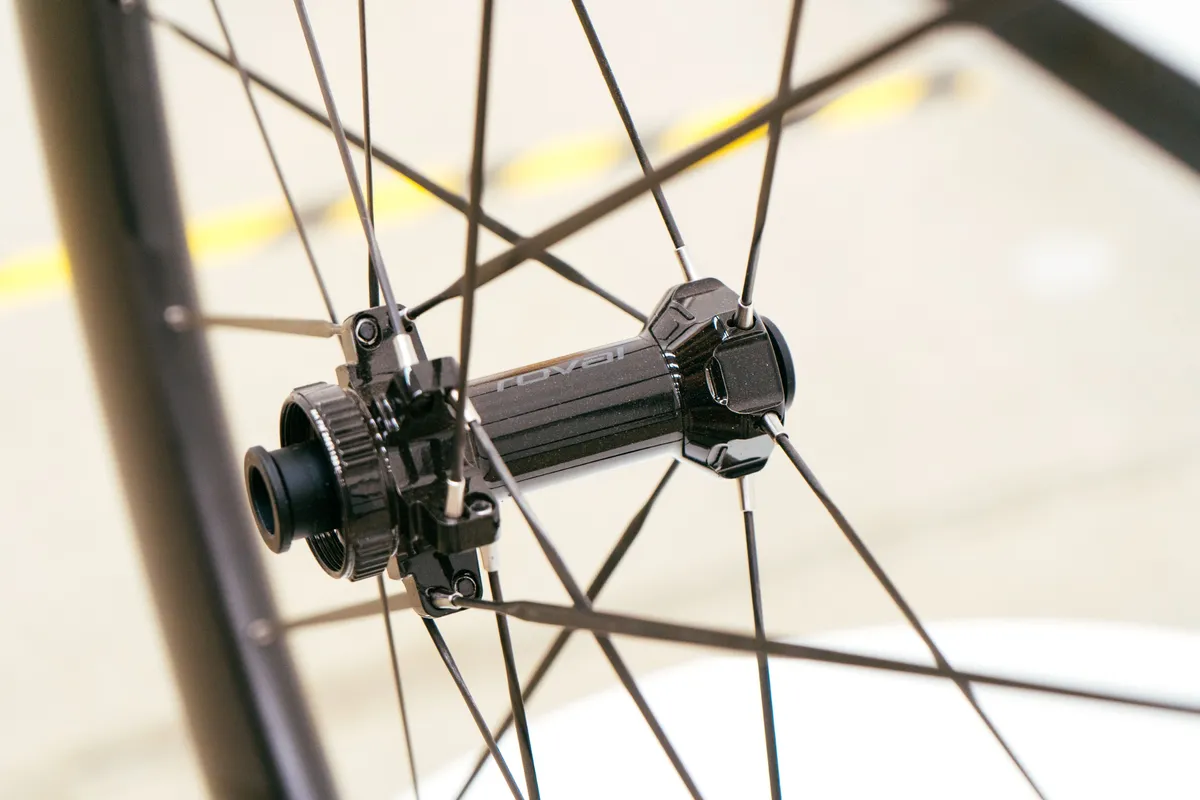
Roval has specced the ‘Sprint’ variation of these Rapide wheels with some pretty bling hubs. The hub body is a custom machined Roval alloy hub loaded with DT Swiss 180 ceramic bearings. These are really beautiful hubs that look as premium as they feel - even down to the minimalist centrelock rotor hubs with fewer splines to further reduce weight.
Performance
Riding with these wheels felt great. The combination of deep, aerodynamic rims picking up the wind and pushing me along like a sail combined with the low rotational weight and super smooth hubs gave me the sensation of having really good legs on every ride. Those subtle sensations - when you punch over the top of a climb and get back up to speed a little quicker than normal, or when you look at your speed on the flat and find your going a few kilometers an hour quicker than you thought you were - are hard to find when you’re an experienced rider and usually ride pretty fast equipment, but these wheels really did feel special.
Of course, there’s every chance that this was the placebo effect of having some shiny new equipment, but it didn’t really diminish much throughout the test period, so I’m inclined to say the wheels are actually just really fast.
They were stiff without being jittery, deep without being easily led by crosswinds, and light enough to flick up climbs out the saddle without the sensation of being dragged backwards that some aero wheels can have.
I rode these wheels in some pretty heavy rain throughout the testing, and - although I haven’t put thousands of kilometers into them - the hubs are still running smoothly and showing virtually zero signs of wear.
Gushing aside, I did have one qualm with the wheels that I couldn’t shake. Using the 28mm inner-tube-only cotton tyres pumped up to about 80psi felt a bit jittery; they were firm and translated a lot of road noise through to my hands. I didn’t necessarily mind this - it’s about what I expected and reminded me of how bikes used to feel. I also knew that the narrower tyres are the specification the wheels are designed around, so running them was offering the maximum aerodynamic benefit; which I’m sure played some part in making these wheels feel so…zippy.
However, when I switched up to 30mm tyres, the wheels did feel slightly more muted. The profile of the tyres on the rims was also much wider than the 28mm Specialized tyres (which suggests to me that the Specialized tyres actually come up a little undersized) and had an ever so slight lightbulb looking profile to them, which I knew would impact the aerodynamics.
They were, of course, more comfortable than the 28mm tyre, but knowing they were costing watts and losing that real edge that these wheels had presented up until now didn’t feel great. The 32mm tyres were even wider, and ballooned out significantly from the rim.
Comparing this to the Reserve wheels I run day-to-day, which have a 25.4mm internal width at the front and 24.4mm at the rear and accept 30 and 32mm rubber with a much smoother profile, and the impracticality of the Roval’s rim width becomes clearer.
Race bikes have changed a lot in recent years. We’ve seen riders up-sizing their tyres for a number of years now, and not just in the Spring Classics where wider tyres have always been the norm. A wheel optimised for a 28mm tyres does make me think the Rapide Sprint CLXs will become outdated quite quickly as more and more riders follow the pros lead and switch to fatter rubber.
Now, I’m not suggesting there’s anything wrong with 28mm tyres, nor am I suggesting that there’s anything wrong with 21mm internal rim widths; much like rim brakes - they still work absolutely fine. But, you can’t deny, they are measurements that are becoming increasingly outdated as the industry progresses, and if you wanted to future proof yourself with a set of wheels that will stand the test of time, these probably aren’t quite wide enough to do so.
Personal preference aside, I’m pleased to say that the hooked rims were a doddle to set up tubeless with just a track pump using both the 30mm and 32mm Continental tyres.
If you plan on using these with inner tubes, make sure you stock up on long-valve spare tubes or valve extenders, as the 63mm front rim is too deep for most standard tubes, and you may get caught out…which DEFINITELY didn’t happen to me…
Value
There’s no two ways about it; these wheels are expensive. Just under £3,000 is getting on for the most it’s possible to spend on stock wheels, and there are much less expensive wheels out there that will offer much of the performance you find in the Rapide CLX Sprints.
The Hunt 5AM Limitless wheels, reviewed by Will Jones recently, are a strong alternative. But even within Roval’s own Rapide range, the CLIIIs are £1,548 - almost half the price - and, although they lose the carbon spokes and drop down to a slightly shallower rim depth, will still be a significant upgrade on a lot of stock wheelsets.
However, these particular hoops are tricked out with some of thez finest components money can buy, and they feel wicked fast. Can you really put a price on that feeling?
Comparing them to the Reserve 57|64 SL Turbulent Aero wheels - which retail for a mere £1 more - and the spec sheet is broadly the same, bar the Reserve’s favouring a Tune hub. However, the Reserve wheels do include both the Shimano HG and the SRAM XDR driver in the box - so creep ever so slightly ahead on the value front. They also do have a more modern rim profile, so will hold their stock a bit better as the years roll on and tyres continue to get wider.
Verdict
Overall, I really did enjoy riding these wheels, but I probably wouldn’t buy them. As fast and sprightly as they felt, I just wouldn’t want to part with that much cash for a rim of this width given my preference for more modern tyre widths.
You might disagree. If you’re a fan of (what I would call) narrower tyres and want a fast, stiff, light race wheel package, and are happy knowing that if you wanted to fit wider tyres to these wheels you’d be missing out on a lot of their claimed aero benefit, then these are great. If you want to run tyres wider than 28mm, I’d say there are better options out there.
Design and aesthetics |
Really well built package let down slightly by their less-than-modern internal rim width. |
8/10 |
Build |
I wouldn’t change a thing with this build. Carbon spokes surprised me and the hubs are perfect. |
10/10 |
Performance |
These are lightning fast and make you feel like a better cyclist. |
9/10 |
Weight |
Incredibly light for a wheel of this depth, thanks to a premium no-holds-barred build. |
10/10 |
Value |
Almost justifiably expensive given the spec sheet, but will be outdated pretty fast |
8/10 |
Overall percentage |
90% |
Ollie Smith is a freelance cycling writer based in Bristol in the UK. Since getting a job as a tea boy in his local bike shop aged 15, Ollie's lived and breathed cycling and has worked his way up through the ranks from bike shops to some of the biggest media companies in the industry - working behind the scenes on the documentaries team at GCN+, and has since worked as a scriptwriter, director, and producer with teams like Lotto, UAE Team Emirates, Uno-X, and FDJ-Suez, as well as producing Mitch Docker's 'Life In The Peloton' podcast.
You must confirm your public display name before commenting
Please logout and then login again, you will then be prompted to enter your display name.