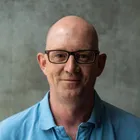
The UCI confirmed a number of minor safety and bike technology improvements after the recent Management Committee. Some people quickly dismissed them as too little and too late but Brent Copeland, who sits on the SafeR Supervisory Board, has defended the work of the structure dedicated to race and rider safety in professional cycling.
Copland is also the Jayco AlUla team manager and the President of the AIGCP teams association. He spends time in SafeR meetings and represents the teams in discussions with the UCI and the other stakeholders.
The UCI announced the extension of the yellow cards punishment process for dangerous riding and other offenses in races. Race safety signalisation will also be harmonised, while the UCI have ruled that finish straights, especially when races are likely to end in sprinter finishes, have to be "as long as possible, at least 200 metres."
"Unfortunately people do not see all the work SafeR does, instead it just gets continuous criticism," Copeland said.
"There is a lot that's happening in the background. There's a lot of energy, there's a lot of meetings happening where people are discussing motorbike slipstreams, airbags, concussion detection devices on helmets. All of those things are all works in progress, which when they're ready, we'll be able to roll them out."
Copeland highlighted the limits in technology for the delay in implementing some safety improvements. The tragic death of Muriel Furrer during the 2024 UCI Road World Championships in Zurich understandably sparked calls for accurate rider tracking.
The current systems use mobile phone data but are not always reliable.
Get The Leadout Newsletter
The latest race content, interviews, features, reviews and expert buying guides, direct to your inbox!
"When you take a deep dive into the technology of it, it's pretty complicated," Copland said of rider tracking.
"For example, at the moment on Veloviewer, you can see a red or green light; if a ride is moving it's green, if they stop it's red. But did the rider stop for a natural cause or because they had an accident?
"We'd like to get to the point that the technology also detects the angle of the bike, but the problem is technology. The satellite systems that are similar to TV signals work well but are very expensive and not yet really in place."
The SafeR Case Management Committee meets on Monday afternoons to analyse race incidents, gather data and suggest improvements.
"Until you're in those meetings, no one really understands the challenges that everyone's facing. All stakeholders and all families in the sport are trying to improve things," Copeland said.
"You need data collection in order to make improvements and now we have that. Like in everything in life, everyone's going to have their own point of view. If you have data, you can get to the facts and make confirmed decisions."
Copeland was in Milan for the Giro d'Italia stage finish, when confusion arose about road safety decisions and some riders suggested the breakaway had benefited from television motorbike's slipstream.
Copeland suggested SafeR could carry out an analysis of rider data from the race to confirm or deny any slipstreaming.
He hopes for less squabbling and more unity between everyone in the sport.
"Everyone's got a responsibility to ease the tension about safety and the frequent accusations that emerge," Copeland told Cyclingnews.
"The teams are putting too much pressure on the riders to get ranking points, riders then want better contracts and there's also less respect between riders. They've got to start to respect each other more, they must discuss things with each other more.
"Organizers are often to blame regarding race safety and certain improvements need to be made. We've all got to look at ourselves in the mirror and make improvements together."
Subscribe to Cyclingnews for unlimited access to our Tour Auvergne-Rhône-Alpes and Tour de Suisse coverage. Don't miss any of the breaking news, race analysis, and expert insight as the riders make their final preparations for Le Tour. Plus, access the Cyclingnews app to follow the action on the go! Join today.
Stephen is one of the most experienced members of the Cyclingnews team, having reported on professional cycling since 1994. Before becoming Editor-at-large, he was Head of News at Cyclingnews. He has previously worked for Shift Active Media, Reuters and Cycling Weekly. He is a member of the Board of the Association Internationale des Journalistes du Cyclisme (AIJC).
You must confirm your public display name before commenting
Please logout and then login again, you will then be prompted to enter your display name.