'Five years ago I decided to take my own life. With support, I very narrowly avoided going through with it' – Why one cyclist is riding 4,000km after a stranger saved his life
After overcoming his own struggles with suicidal thoughts, Martin Hills is riding from North Wales to the southernmost point of Spain on his 36-year-old Kona Explosif to encourage men to open up and talk about their mental health
This article discusses suicide. If you are experiencing suicidal thoughts, please reach out for support. In the UK, call Samaritans on 116 123. In the US & Canada, contact the 988 Suicide & Crisis Lifeline. In Australia, call 13 11 14 to reach Lifeline. Help is always available.
Men’s mental health is now a major issue. Over 75% of suicides are by men, and sadly, a large proportion of men are still reticent to talk about their internal struggles. In professional sport, it is now recognised that the pressures of performance, securing income and the impact of injuries can all lead individuals down a dangerous path. Mental health associations and campaigners are working hard to encourage men to open up.
One of these campaigners is Martin Hills, a 51-year-old cycling guide who, on June 9, 2026, began a post on his personal Facebook page with these words: "Five years ago I decided to take my own life." By telling his story, we hope to shed some light on how individuals can find themselves on this path, share Martin’s story of how he managed to handle his feelings, and encourage anyone struggling with similar issues to seek help. He finished his first sentence with "With support, I very narrowly avoided going through with it."
With our social media feeds saturated with folk posting ‘living their best life’ content, the juxtaposition of this post truly made an impact on his close friends, family, and many acquaintances across the cycling industry.
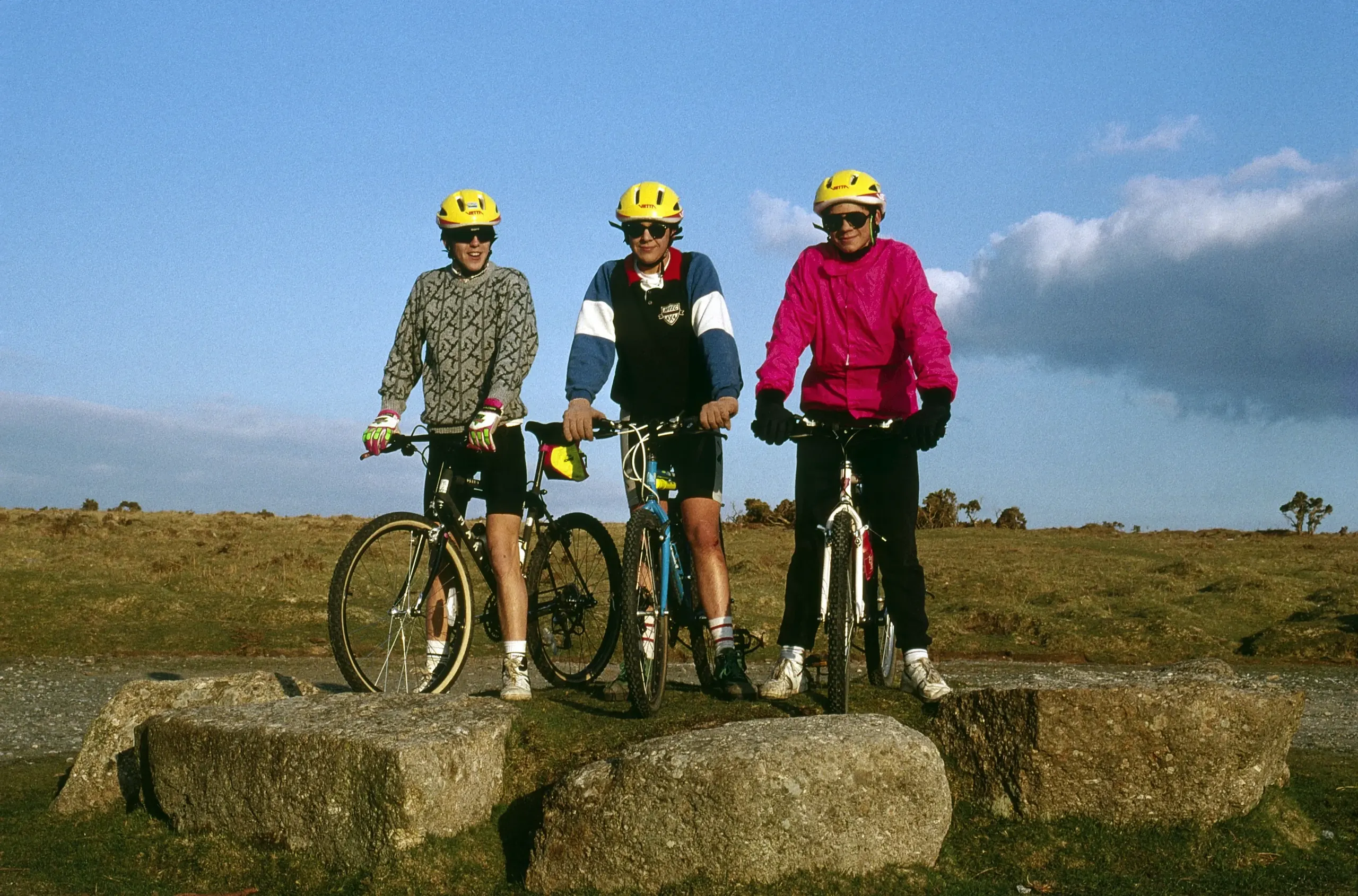
Hills is a lifelong cyclist. Growing up in a very rural village on the edge of Dartmoor in southwest England, he was a popular teenager in a very active cycling community there. He was very detail-oriented, researching and sharing information with his friends about the latest developments in those exciting days when mountain biking emerged worldwide in the 1990s.
He was an active member of the local Cycling Touring Club, whose twice-weekly group rides were among the few activities for the village's youth. Together with best friends Julian Duquemin and Dayle Guy, they inspired the next generation of cyclists in the village, with some, like mountain biker Llewelyn Holmes, going on to represent Team GB, and several others working in the cycling industry to this day.
He enjoyed the competitive side of the sport, taking part regularly in the local off-road racing scene, and many summers were spent working in bike shops like the iconic Hot Pursuit in the nearby market town of Totnes, mainly to fund or get discounts on always-needed spares.
As an adult, Martin then moved into mountain bike guiding, working across Europe for over two decades. In 2010, he launched the Singletrack Safari business, offering bespoke guided MTB/Enduro off-road cycling holidays in the stunning mountains of Andorra.
His company was featured in several leading mountain biking magazines, a partnership with leading MTB brand Commencal (based in Andorra) was established, and the pipeline of bookings grew nicely. Hills was travelling regularly from his home in the UK to Andorra, leading rides, identifying new ride leaders and trails, and truly living his best cycling life.

In January 2020, everything changed. The first reports of the Coronavirus were circulating, and on March 11, the World Health Organisation declared a global pandemic. The travel and tourism industry entered a near two-year shutdown, with all bookings cancelled, refunded, or deferred. As an international travel operator, Hills faced an uncertain future. However, he was determined to keep things together. Then the floor fell out of his world when his long-term relationship came to a sudden end.
His partner at the time was an avid mountain biker. Living together in North Wales, with some of the UK’s best off-road riding on their doorstep, their relationship - and wider friendship group - was built around riding in the local area. Following the end of their relationship, Hills struggled with the prospect of going riding and encountering his former partner and their shared friendships. His greatest passion became his greatest fear.
“It was a totally unexpected and devastating end to my long-term relationship, which came completely out of the blue, and that relationship was centred around bikes. I became terrified of riding a bike, they became a trigger. It just wound me into a complete twisted panic," he said.
Over the next few months, Hills suffered a complete mental collapse. He said he felt trapped, hopeless, and isolated. He felt he could not forgive himself for what his depression made him think; he convinced himself that he had had a life of poor life choices, which had led him down this road. And at this point, his thoughts turned truly dark.
“I made careful plans and gave a lot of thought to how to manage my death. I prepared my house to make sure everything was in order. I drafted a letter of explanation for my family and friends and made an informal will. Finally, I made sure that my remains would be found by the emergency services," he said. At his lowest, Martin was convinced there was no way out. That he is here to tell this story is a measure of how far he has come, and why he now speaks so openly about it.
Shockingly, this is a thought process that many middle-aged men in the UK, like Hills, go through. According to data from the Men's Minds Matter non-profit, 76% of contemplated suicides in the UK are by men, and one man dies by suicide every two hours.

This alarming phenomenon is not limited to the UK; in the USA, three-quarters of suicides are by men, with 39,000 taking their own lives each year. In Australia, the ratio is the same, with suicide being the leading cause of death for men aged 15 to 44. These figures are profoundly disturbing.
This crisis has also been identified in professional sports, including cycling. Several major studies have recently been commissioned to identify the triggers and warning signs of growing issues, and to understand why men remain quiet on these issues. Several high-profile cyclists have shared their challenges, and we are now seeing several large cycling federations put in place robust infrastructure for athletes and recreational cyclists to access, helping address this issue.
High-profile sportspeople like Fabian Cancellara talking openly about these issues is seen as a key enabler for men to feel it would be OK to reach out and seek help and support.
Cancellara was a high-level athlete, a team leader, Classics winner and time trial world champion. Now, as the owner of Tudor Pro Cycling, he sees the pressures his riders face and makes a concerted effort to ask his riders if they are happy. Tudor are trying to compete at WorldTour level, but are also trying to help and support their riders as much as possible.
"I see how tough being a rider in modern cycling really is," Cancellara said. "Science is important, but at the end of the day, we're all human, and that's important for us; we need to protect our riders."
Ricardo Scheidecker is the Head of Sports at Tudor and a vital cog in the team, managing the riders and staff, their performance, results and their well-being.
"I worked outside of cycling for several years and soon realised that successful companies are always centred around their people. If you don't help your people, you're not going to get the best out of them, and you're not going to be successful. In cycling, you have to care about your riders and about your staff too," Scheidecker explained.
"We try to do this in a very constructive and human way, because we consider the psychological impact on the athletes," he added.
"We've seen more and more examples of riders who were huge talents but ended their careers because they didn't have the support to help them deal with all their needs and responsibilities. We cannot be like that as a sport, and Tudor definitely won't be like that. We have to protect our riders from burnout."
In August 2025, Cyclingnews published a piece on mental health issues in the pro peloton, and that 76% figure re-emerged, with author James Witts stating that there is evidence that over a quarter of professional riders battle with mental health issues during their career, with riders like Tom Dumoulin and Bradley Wiggins sharing their challenges in recent years.
Mark Cavendish was diagnosed with clinical depression in August 2018. At the launch of the 'Mark Cavendish: Never Enough' Netflix special in 2023, the 35-time Tour de France stage winner described his battle with the Epstein-Barr virus and how a subsequent diagnosis of clinical depression left doctors worried about the prospect of self-harm.

“The irony is that you feel so alone if you suffer when, in fact, everyone is probably there thinking they are alone. If you talk, you would be surprised how much you have got in common. It is an understanding that there is a ladder in the middle of that spiral down, and you can get on that ladder and climb up," Cavendish said. "It doesn't matter where you're at. It's keeping that hope and good people around you."
According to a recent report, titled Prevalence of anxiety and depression in former elite athletes: a systematic review and meta-analysis by Adam Runacres and Zoe Marshall, the causes of poor mental health are complex and multifaceted but are thought to be a combination of social factors such as occupation, socioeconomic status, education level and physical factors including age, sex, body mass index and low physical activity levels.
Consequently, elite athletes were long thought to be immune to mental health disorders due to their high physical activity levels and superior physical fitness. Runacres and Marshall’s in-depth study and interviews with many athletes turned this thinking on its head, and they discovered that the prevalence of both anxiety and depression in former elite athletes was over twice that of the general population. They went on to cite a large-scale study of 1,620 current elite athletes who shared that they were three times more likely to have a subclinical mental health condition compared with a non-elite control group.
There is one major barrier when trying to counter this issue: only one in four men who experience anxiety or depression seek help or try to get treatment for it. This is changing, and with more high-profile athletes being open about their mental health, it is reducing the stigma.
The British Association for Counselling and Psychotherapy recently reported seeing unprecedented levels of inbound approaches by men suffering from mental health issues, and an increasing number now seek help to cope.
The sporting world is reacting to this, putting in place much better resources and infrastructure to help athletes identify, accept and seek help for their mental health challenges.
In 2021, the International Olympic Committee introduced the Sport Mental Health Assessment Tool (SMHAT), which is designed to help team doctors detect and prevent mental illness early, ensuring a safer environment for professionals.
Many of the world’s cycling federations have also reacted, and their websites are well stocked with resources, contacts and partner organisations that can help athletes and recreational cyclists with their mental health issues. Full information about the SMHAT protocol is available in several languages on the UCI website.
USA Cycling offers a Mental Health Grant that aims to ensure financial barriers do not prevent athletes from receiving professional mental health support. Eligible athletes can receive up to $2,500 per year to support their mental health.
In the UK, the British Cycling Federation announced in 2021 that it would be providing Mental Health First Aid England courses, offering low-cost, accessible training to British Cycling members and volunteers. The British Cycling announcement was clear on the aims of this partnership:
“With the ongoing challenges presented by the pandemic with regards to both physical and mental health, it is more important than ever that more people know how to identify when someone is experiencing ill health – and how to support them.”
For Hills, that help came by total chance, but it was life-changing.
“Unexpectedly, I met a complete stranger who really understood what I was going through as she had dealt with mental health issues herself. It seemed easier to talk to a stranger than someone I knew, and before I knew it, I was telling her everything, and we quickly became friends. She made me feel…I don’t know…of worth, maybe? She certainly proved that life can suddenly switch direction in a positive way, and that not all surprises are negative," Hills said.
Hills contacted his local doctor, who connected him with a mental health first-aider, who he found incredibly supportive. They knew how close he was to taking his own life, placed him on a list of at-risk patients, gave him a suicide prevention plan, and called him daily to check in, to talk, and to give him a real connection. Happily, this began to work, and he started to see the value of life, and his recovery began. He recently shared that the first aider, to whom he spoke daily and who saved his life, remains anonymous.
As his recovery continued, his new friend, also a passionate mountain biker, convinced Hills to get back on the bike, and he began to rediscover his passion for cycling. His guiding business began to recover, and bookings resumed; he started a new relationship; and he began restoring and rebuilding some of his earliest bikes, classic Saracen and Kona mountain bikes from the mid-1990s.
Sadly, in early 2025, his dear friend’s mental health issues re-arose and although seemingly in a good place to her friends and family, she took her own life. Although devastating for Hills, it was a trigger for him to want to do something to try and help those suffering with their mental health.
“Her suicide was the impetus I needed to commit to a plan that had been forming in my head. In 2026, I would undertake an epic bike ride to raise funds for Men’s Minds Matter, to create awareness of the mental health struggles so many of us battle with every day. It would represent my personal journey with mental health, and along the way, I want to talk very openly about my mental health experiences and difficulties, to help encourage other men not to suffer alone silently," he said.
Starting in June 2026, Hills will be cycling over 4,000 kilometres across Europe, solo and unsupported. He is riding from the northernmost point of mainland Wales – the lighthouse at Talacre – to the southernmost point of mainland Spain – the lighthouse at Tarifa.
He is undertaking this journey on the 36-year-old mountain bike that he owned as a teenager, a rare 1990 Kona Explosif. It is a special bike that has been renovated and tweaked by the legendary English bike-builders Mercian Cycles. The team at ORTLIEB have also supplied him with their best front, rear and frame-mounted bike bags.

Hills' bike and equipment weigh around 43kg, and he will have to ascend over 30,000m on the trip to southern Spain, as well as endure one of the hottest European summers on record. His route takes him through three mountain ranges across Wales, across to London, and on to Dover in north-east France. He will then head southwest to Bordeaux, up the Pyrénées into Andorra, down to Barcelona, and then parallel the southern Spanish coast, past Valencia and Seville, to Tarifa, the southernmost tip of mainland Europe, where he will finish.
Rather than be fully clad in Lycra, he has decided to take on the ride in semi-casual clothing, as he wishes to be approachable and open to everyone he meets on this journey. He believes this is a vital part of telling his story to the strangers he meets along the way and of ensuring he takes his time to experience the flora, fauna, landscape, and people he encounters on this epic journey.
A stranger on a bike truly saved Hills' life. If he is able to do the same for someone else through this ride and the fundraising for Men’s Minds Matter, the many hours in the saddle will all be worth it.
“This truly is the biggest, most challenging, and most important event of my life – and anything people can do to sponsor and support me means the world to me personally. Together we can genuinely help save lives. We can help men who are suffering and suicidal – men who are in the same place I was just a few years ago.”
If you would like to follow Martin Hills’ journey and updates, check out his ‘My Singletrack Mind’ accounts on Instagram and YouTube. He is hoping to raise over £5,000 for the Men’s Minds Matter charity during his journey; donations can be made here.
This article discusses suicide. If you are experiencing suicidal thoughts, please reach out for support. In the UK, call Samaritans on 116 123. In the US & Canada, contact the 988 Suicide & Crisis Lifeline. In Australia, call 13 11 14 to reach Lifeline. Help is always available.
